 by
by Glaciers are often imagined as permanent features of the Earth—vast, silent masses of ice that seem untouched by time. Yet this perception is becoming increasingly outdated. Around the world, glaciers are shrinking at accelerating rates, and many are projected to disappear within the coming decades if current warming trends continue.
Their loss is not just a visual or environmental change. It represents a deep transformation of water systems, ecosystems, cultural identities, scientific knowledge, and even the way future generations will understand the planet itself.
To fully grasp what is at stake, it helps to look beyond the ice itself and consider everything glaciers quietly support.
The Loss of a Natural Water Storage System
One of the most important roles glaciers play is acting as long-term water storage.
Throughout winter, they accumulate snow and ice. During warmer months, they release this stored water gradually, feeding rivers and maintaining flow during dry seasons.
When glaciers disappear, this system breaks down.
In the short term, melting may increase water flow. But over time:
- Rivers that depend on glacier melt become irregular
- Dry-season water shortages become more common
- Agricultural systems that rely on steady flow are disrupted
This change will not be limited to remote mountain regions. Many downstream communities depend directly or indirectly on glacier-fed water systems.
Future generations may inherit a world where water availability becomes less predictable and more uneven.
Ecosystems Built Around Cold, Glacial Water
Glaciers support ecosystems that exist only in very specific conditions. Cold meltwater streams and lakes create habitats for organisms adapted to low temperatures and high oxygen levels.
As glaciers retreat:
- Water temperatures rise
- Oxygen levels decrease
- Specialized species lose their habitat
Some fish, insects, and microorganisms that evolved over thousands of years to survive in glacial environments may not be able to adapt quickly enough to warmer conditions.
This leads to a gradual but irreversible reshaping of biodiversity. Entire ecological networks built around cold-water systems begin to break apart.
Future generations may never encounter these specialized ecosystems at all—not even in reduced form.
Rising Sea Levels and Coastal Transformation
Another major consequence of glacier loss is its contribution to rising sea levels.
Unlike sea ice, which already floats in water, glaciers are land-based ice masses. When they melt, the water they release flows into oceans, increasing total sea volume.
Over time, this leads to:
- Gradual flooding of low-lying coastal areas
- Increased erosion of shorelines
- Greater vulnerability to storms and extreme weather events
Even small increases in sea level can have large consequences for densely populated coastal regions.
For future generations, this means adapting to a coastline that is constantly shifting—sometimes slowly, sometimes dramatically during storm events.
The Disappearance of Cultural and Historical Identity
Glaciers are not only physical features; they are deeply embedded in the cultural identity of many regions.
In mountain communities around the world, glaciers:
- Appear in folklore and traditional stories
- Serve as landmarks for navigation and identity
- Hold spiritual or symbolic meaning
As glaciers disappear, these cultural connections weaken.
In some places, communities have already begun holding ceremonies to acknowledge the loss of nearby glaciers. These events reflect not just environmental change, but emotional and cultural grief.
Future generations may grow up without ever seeing the landscapes that shaped these traditions. Over time, cultural memory becomes disconnected from physical reality.
Loss of Earth’s Natural Climate Archive
Glaciers are also one of the most important natural archives of climate history.
As snow accumulates and compresses into ice, it traps:
- Air bubbles from ancient atmospheres
- Dust and volcanic particles
- Chemical traces of past environmental conditions
By studying these layers, scientists can reconstruct climate patterns going back hundreds of thousands of years.
When glaciers melt completely:
- This record disappears permanently
- Future scientific research loses valuable data
- Understanding long-term climate behavior becomes more limited
In effect, glaciers function like frozen libraries. Their disappearance is equivalent to losing entire volumes of Earth’s history that can never be rewritten or recovered.
Changing Landscapes and Vanishing Natural Landmarks
Glaciers are also powerful landscape-shaping forces. They carve valleys, form lakes, and define entire mountain regions.
As they retreat:
- Valleys lose their icy features
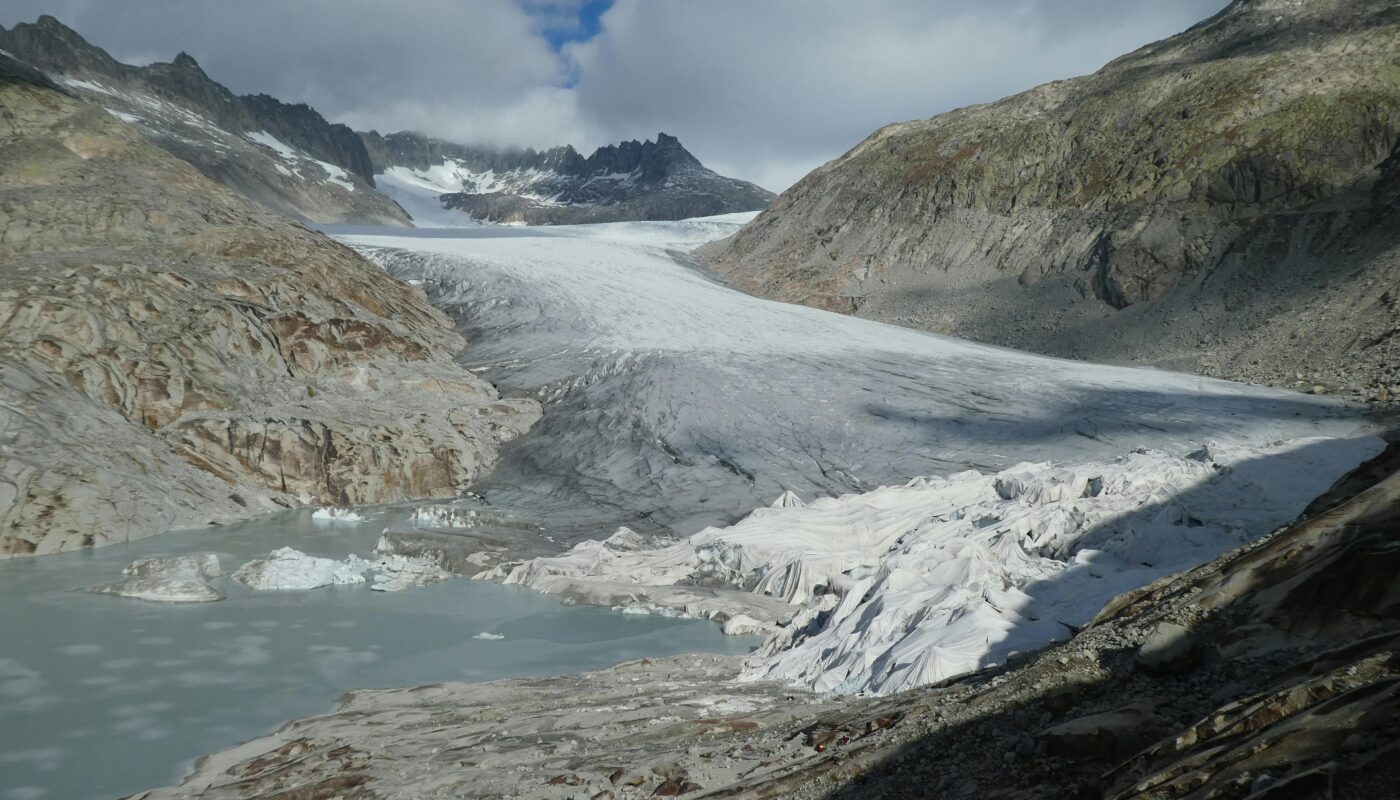
- Bare rock replaces reflective ice surfaces
- Familiar landscapes become unrecognizable
Many iconic views associated with mountain regions are directly dependent on the presence of glaciers.
These vistas might only be familiar to future generations through descriptions or pictures. The lived experience of witnessing active, moving glaciers may become rare or nonexistent in many regions.
Increased Natural Hazards in Mountain Regions
Glacier loss does not only remove features—it can also create new environmental risks.
As ice melts, it often forms unstable meltwater lakes. These lakes can suddenly release large volumes of water if natural barriers fail, causing destructive floods.
Other risks include:
- Landslides triggered by unstable slopes
- Sudden changes in river flow
- Increased erosion in mountain valleys
These hazards can affect both remote areas and downstream settlements.
For future generations, mountain regions may become more unpredictable and require greater monitoring and adaptation.
Climate Regulation and Feedback Effects
Glaciers play a role in regulating local and global climate systems.
Their bright, reflective surfaces help bounce sunlight back into space, reducing heat absorption. As glaciers shrink:
- More dark land and water surfaces are exposed
- More heat is absorbed by the Earth
- Local warming effects intensify
This creates feedback loops that can accelerate regional warming trends.
Future generations will inherit a climate system that is less stable and more sensitive to change, partly due to the absence of glacial ice.
Emotional and Psychological Loss
Beyond physical and environmental consequences, glacier loss also carries emotional weight.
For many people, glaciers represent:
- Stability in a changing world
- A connection to deep time
- A sense of awe and natural scale
As they disappear, people may experience:
- A feeling of loss or environmental grief
- Reduced connection to natural heritage
- A sense of disorientation about environmental change
Future generations who never see glaciers firsthand may lose an important emotional reference point for understanding the planet’s history and fragility.
The Speed of Change Matters
Glaciers have always changed over geological time, advancing and retreating across millennia. What makes the current situation different is the speed of change.
Many glaciers are now shrinking faster than they can naturally stabilize or recover. This rapid transformation leaves little time for:
- Ecosystems to adapt
- Communities to prepare
- Scientists to document changes fully
As a result, future generations are not just experiencing a different planet—they are inheriting one that is changing faster than many systems can respond to.
A World Without Glaciers: What It Could Look Like
If current trends continue, future landscapes may include:
- Mountain ranges without permanent ice
- Rivers with highly seasonal or reduced flow
- Coastal areas continually reshaped by rising seas
- Ecosystems reorganized around warmer conditions
- Cultural traditions detached from their environmental origins
While some glaciers will remain in colder regions, many smaller and mid-sized glaciers are the most vulnerable—and also the most visible to human populations.
Their disappearance will be widely felt, even far from the mountains themselves.
Final Reflection: More Than Just Ice
The disappearance of glaciers is not simply an environmental change—it is a transformation of Earth’s systems, histories, and identities.
Future generations will lose:
- Reliable natural water storage
- Unique cold-water ecosystems
- Cultural and spiritual connections
- Scientific records of Earth’s past
- Iconic and irreplaceable landscapes
Perhaps most importantly, they may lose the ability to witness one of the planet’s most powerful and visible expressions of time in motion.
Glaciers remind us that Earth is dynamic and alive. Their retreat marks not just the end of ice in certain places, but the beginning of a fundamentally different relationship between humans and the natural world.
And while some changes may be unavoidable, understanding what is being lost is the first step toward recognizing its true significance.