 by
by Glaciers are often viewed as timeless features of the natural world, but in reality, they are constantly changing. Every year, glaciers grow during snowy seasons and shrink during warmer months. This natural cycle has occurred for thousands of years and is a fundamental part of how glaciers function. However, in recent decades, scientists have observed a different and more concerning pattern in many regions of the world: glaciers are not only melting during summer but are also retreating over the long term, losing more ice than they gain each year.
Although the terms seasonal melting and long-term glacier retreat are sometimes used interchangeably in everyday conversation, they describe two very different processes. Seasonal melting is a normal part of a glacier’s annual life cycle, while long-term retreat represents a persistent reduction in glacier size over many years or decades.
Understanding the distinction is essential for interpreting scientific research, climate reports, and news about glacier change. This article explains how glaciers naturally fluctuate throughout the seasons, why long-term retreat occurs, how scientists measure these changes, and why distinguishing between the two processes is crucial for understanding our changing planet.
Glaciers Are Constantly Changing
A glacier is not a static block of ice. Instead, it behaves like a slow-moving river made of compacted snow and ice.
Throughout its lifetime, a glacier experiences two continuous processes:
- Ice gain
- Ice loss
The balance between these two determines whether the glacier grows, remains stable, or shrinks.
Even glaciers that appear unchanged from a distance are constantly responding to weather, snowfall, temperature, and gravity.
What Is Seasonal Melting?
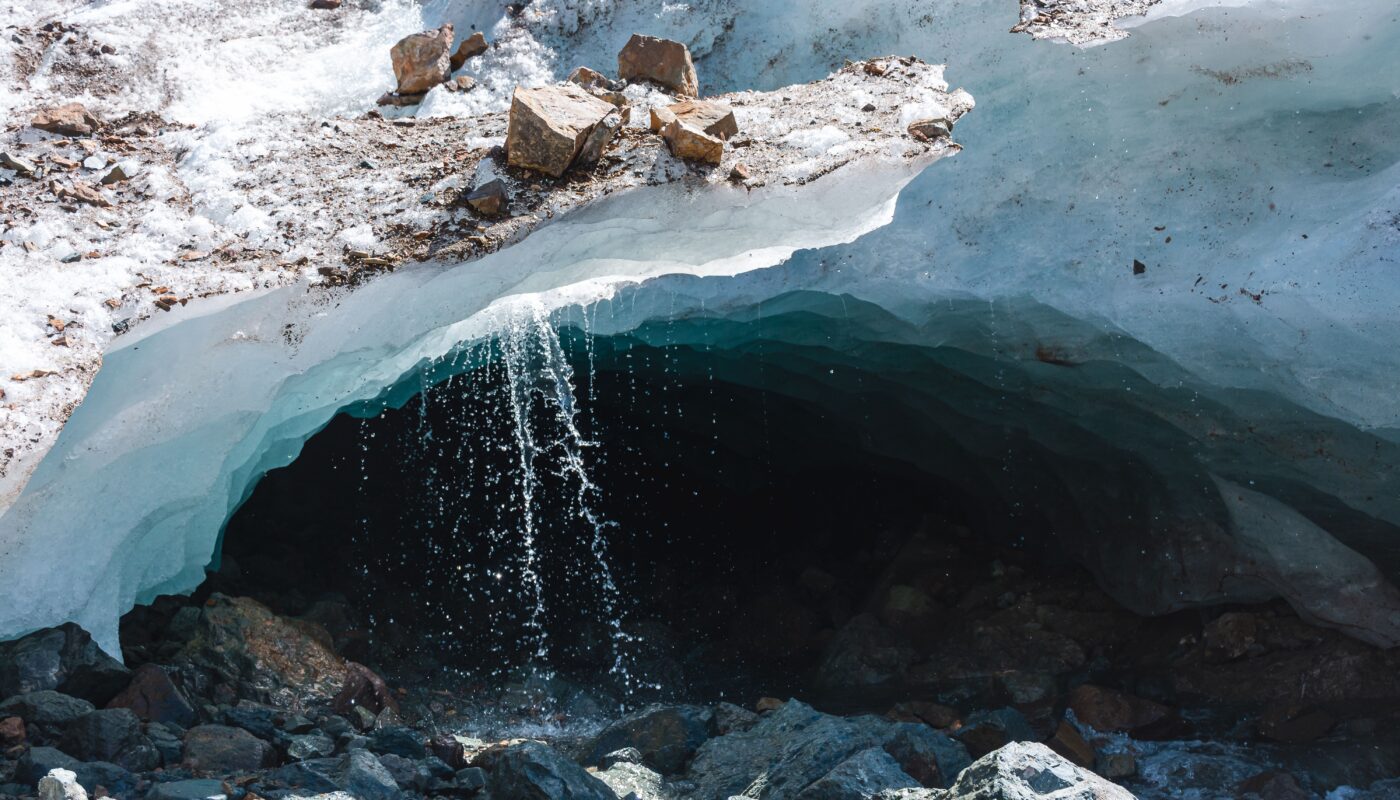
Seasonal melting is the natural process in which part of a glacier’s surface melts during the warmer months of the year.
This process occurs because:
- Air temperatures rise.
- Sunlight becomes more intense.
- Days become longer.
- Warm rain may fall on the glacier.
Surface snow melts first, followed by exposed glacier ice if temperatures remain sufficiently warm.
Importantly, seasonal melting is expected and has occurred for thousands of years.
The Annual Glacier Cycle
Most glaciers follow a predictable yearly rhythm.
Winter: Accumulation Season
During winter:
- Snowfall exceeds melting.
- Fresh snow accumulates.
- Glacier mass increases.
- The glacier stores water as snow and ice.
This period is known as the accumulation season.
Spring: Transition Period
As temperatures begin rising:
- Snow starts melting.
- Streams form.
- Meltwater flows across the glacier surface.
Some melting begins, but snowfall may still occur at higher elevations.
Summer: Ablation Season
Summer is typically when glaciers lose the greatest amount of ice.
Processes include:
- Surface melting
- Ice evaporation through sublimation
- Ice calving into lakes or oceans (for certain glaciers)
This is called the ablation season.
Autumn: Cooling Returns
As temperatures decline:
- Melting slows.
- Snowfall gradually resumes.
- The glacier prepares for another accumulation season.
The cycle then repeats.
What Is Long-Term Glacier Retreat?
Long-term retreat occurs when a glacier loses more ice over many consecutive years than it gains through snowfall.
Instead of recovering during winter, the glacier experiences a persistent decline.
Signs of retreat include:
- Shorter glacier length
- Reduced ice thickness
- Smaller surface area
- Lower overall ice volume
This process may continue for decades or even centuries.
Retreat Does Not Mean the Glacier Stops Moving
One common misunderstanding is that a retreating glacier is moving backward.
In reality:
- Glaciers always flow downhill because of gravity.
- The ice itself continues moving forward.
- The visible front, or terminus, retreats because melting exceeds the arrival of new ice.
Imagine a moving walkway where people walk toward an exit, but more people leave than arrive. The crowd moves forward, yet the front edge gradually moves backward. A retreating glacier behaves in a similar way.
Seasonal Melting Is Natural
Seasonal melting plays several important roles in mountain environments.
It:
- Feeds rivers during summer.
- Supports freshwater ecosystems.
- Provides water for agriculture.
- Replenishes reservoirs.
- Maintains stream flow during dry periods.
Without seasonal melting, many glacier-fed rivers would not function as they do today.
Long-Term Retreat Indicates an Imbalance
Unlike seasonal melting, long-term retreat signals that the glacier’s natural balance has changed.
This occurs when:
- Summer melting consistently exceeds winter snowfall.
- Ice loss accumulates year after year.
- The glacier cannot fully recover during colder seasons.
The glacier gradually becomes smaller even though seasonal cycles continue.
Glacier Mass Balance
Scientists use the concept of mass balance to evaluate glacier health.
Mass balance compares:
Ice gained
versus
Ice lost
Positive Mass Balance
A glacier grows when snowfall exceeds melting.
Characteristics include:
- Increasing ice thickness
- Expanding glacier area
- Stable or advancing glacier front
Negative Mass Balance
A glacier shrinks when melting consistently exceeds snowfall.
Over time this leads to:
- Glacier retreat
- Thinner ice
- Reduced volume
- Changing landscapes
Many glaciers worldwide have experienced predominantly negative mass balance in recent decades, although conditions vary by region.
Why Seasonal Melting Alone Is Not a Cause for Alarm
A glacier melting during summer does not automatically indicate environmental decline.
Healthy glaciers have always:
- Melted during warm months.
- Recovered through winter snowfall.
- Maintained long-term stability when accumulation and melting remained balanced.
Scientists therefore examine changes over many years rather than focusing on a single season.
Why Long-Term Retreat Matters
Persistent retreat affects far more than the glacier itself.
Consequences may include:
- Reduced freshwater availability
- Changing river flows
- Rising sea levels (for glaciers connected to the ocean)
- Increased glacial lake formation
- Altered mountain ecosystems
- Changes to tourism opportunities
- Greater exposure of unstable rock slopes
Because glaciers influence both local and global systems, long-term retreat is an important area of scientific study.
What Causes Seasonal Melting?
Seasonal melting primarily depends on annual weather conditions.
Key factors include:
Higher Temperatures
Warmer air transfers heat to snow and ice.
Increased Sunlight
Long summer days provide more solar energy.
Warm Rain
Rain falling on glaciers can accelerate melting because it transfers heat to the ice.
Wind
Warm winds increase melting by transporting heat.
These factors vary naturally from year to year.
What Causes Long-Term Retreat?
Long-term retreat results from persistent changes that affect glaciers over extended periods.
Important influences include:
Reduced Snowfall
Less winter accumulation means less ice is available to offset summer melting.
Warmer Average Temperatures
Higher average temperatures lengthen the melt season and may increase annual ice loss.
Longer Summers
Extended warm seasons provide more time for melting to occur.
Changes in Ocean Temperatures
For marine-terminating glaciers, warmer ocean water can increase melting where the glacier meets the sea.
Surface Darkening
Dust, ash, soot, or biological material can reduce the reflectivity of glacier surfaces, allowing them to absorb more sunlight and melt faster.
The combination of these factors determines how each glacier responds over time.
How Scientists Measure Seasonal Changes
Researchers monitor annual glacier behavior using several techniques.
Snow Stakes
Poles inserted into glacier ice reveal how much snow accumulates and how much ice melts during the year.
Snow Pits
Scientists dig pits to measure:
- Snow depth
- Density
- Water content
These observations improve estimates of winter accumulation.
Weather Stations
Automatic stations record:
- Temperature
- Snowfall
- Rainfall
- Wind
- Solar radiation
These measurements help explain seasonal variations.
How Scientists Measure Long-Term Retreat
Long-term glacier monitoring requires continuous observations over many years.
Methods include:
Satellite Imagery
Satellites monitor:
- Glacier area
- Length
- Surface elevation
- Ice movement
Repeated observations reveal gradual trends.
Aerial Photography
Historical photographs allow researchers to compare glacier positions across decades.
GPS Surveys
Ground measurements provide precise information about glacier movement and surface elevation.
Laser and Radar Mapping
Modern remote sensing technologies create highly detailed maps of glacier thickness and volume.
Seasonal Melting Around the World
The timing of seasonal melting differs by region.
European Alps
Peak melting usually occurs during mid-to-late summer.
Himalayas
Melting coincides with warm temperatures and may overlap with monsoon rainfall.
Alaska
Long summer daylight contributes to substantial seasonal melting.
Patagonia
Strong winds, heavy precipitation, and changing temperatures create complex seasonal patterns.
Despite these regional differences, seasonal melting remains a normal part of glacier behavior.
Examples of Long-Term Retreat
Many glaciers have experienced noticeable retreat over recent decades.
Examples include:
- Mountain glaciers in the European Alps
- Numerous glaciers in Alaska
- Several glaciers in the Andes
- Many glaciers in Iceland
- Glaciers throughout the Canadian Rockies
The rate and extent of change vary considerably depending on local climate, elevation, and snowfall.
Effects on Water Resources
The distinction between seasonal melting and long-term retreat has important implications for freshwater supplies.
Seasonal Melting
Provides:
- Predictable summer river flow
- Reliable irrigation water
- Stable aquatic habitats
Long-Term Retreat
May eventually lead to:
- Reduced late-summer runoff
- Greater seasonal variability
- Increased pressure on water resources
Communities that rely on glacier-fed rivers are paying close attention to these long-term changes.
Common Misconceptions
Several myths often create confusion.
Myth 1: Every Melting Glacier Is Disappearing
Not necessarily.
All glaciers melt seasonally. What matters is whether they recover through snowfall.
Myth 2: A Cold Winter Means Glacier Retreat Has Stopped
One snowy winter does not necessarily reverse decades of cumulative ice loss.
Scientists evaluate long-term trends rather than isolated years.
Myth 3: Glacier Retreat Means Ice Is Moving Backward
Incorrect.
The glacier continues flowing downhill while its front retreats because ice loss exceeds ice supply.
Why This Difference Matters for Climate Science
Distinguishing seasonal melting from long-term retreat allows scientists to:
- Interpret climate trends accurately
- Improve glacier models
- Predict future water availability
- Estimate contributions to sea-level rise
- Inform adaptation strategies
Without separating these two processes, short-term weather variations could easily be mistaken for long-term environmental change.
What the Future May Hold
Future glacier behavior will depend on many interacting factors, including regional temperatures, snowfall patterns, elevation, and local geography. Some high-altitude glaciers may remain relatively stable for longer periods, while lower-elevation glaciers are generally more sensitive to prolonged warming.
Scientists continue refining climate models, expanding satellite observations, and conducting field measurements to better understand how glaciers will evolve in the coming decades.
Ongoing monitoring is essential because glaciers respond differently across the globe, and local conditions often influence the rate of change.
Final Thoughts
Seasonal melting and long-term glacier retreat are related but fundamentally different processes. Seasonal melting is a natural and essential part of every glacier’s annual cycle, replenished by winter snowfall in healthy glacier systems. It sustains rivers, supports ecosystems, and has shaped mountain environments for thousands of years.
Long-term retreat, however, occurs when glaciers consistently lose more ice than they gain over many years. This persistent imbalance gradually reduces glacier size, alters freshwater supplies, reshapes mountain landscapes, and influences both regional and global environmental systems.
Understanding the difference between these two processes helps us interpret scientific observations more accurately and appreciate the dynamic nature of glaciers. Rather than viewing every summer melt as a sign of permanent change, it is the long-term balance between accumulation and melting that reveals how glaciers are responding over time.
As research continues and monitoring technologies improve, our understanding of glacier dynamics will become even more precise, helping communities, policymakers, and scientists make informed decisions about water resources, conservation, and climate adaptation in a changing world.