 by
Introduction
Glaciers are among the most remarkable natural features on Earth. These enormous bodies of ice shape landscapes, influence weather patterns, store freshwater, and play an important role in maintaining the planet’s climate system. Although glaciers can be found in different parts of the world, they are most commonly associated with two major geographical environments: high mountain regions and the polar regions of Antarctica and the Arctic.
This raises an interesting question: Why do glaciers usually develop in mountains and polar regions instead of warmer, lower-elevation areas?
The answer mainly lies in temperature, snowfall, altitude, latitude, and long-term climate conditions. Where snow builds up more quickly than it melts over many years, glaciers are created. Mountains provide the necessary cold conditions through high elevation, while polar regions remain cold because they receive relatively little direct solar energy throughout the year.
Understanding why glaciers are concentrated in these environments helps explain how they form, why they survive for thousands of years, and why many are now shrinking because of global warming.
1. Understanding What a Glacier Is
A glacier is a large, long-lasting mass of ice that develops from accumulated snow and gradually moves under its own weight. Unlike ordinary snowfields that disappear during warmer seasons, glaciers survive throughout the year because enough snow remains after each summer.
Glaciers develop through a gradual process. Initially, snowfall collects on the ground. When additional snow covers earlier layers, the lower snow becomes compressed. Over time, the snow changes into a dense material known as firn. With continued pressure and the gradual removal of air spaces, firn eventually transforms into solid glacial ice.
Once the ice becomes sufficiently thick, gravity causes it to move downhill or outward. This movement may be extremely slow, but it is an important characteristic that distinguishes glaciers from stationary ice deposits.
Glaciers are natural indicators of long-term climate conditions. Their growth and retreat provide valuable information about changes in temperature, snowfall, and environmental conditions.
Two major requirements determine whether a glacier can develop:
- Snow must accumulate over several years.
- Annual snow and ice losses must remain lower than the amount of new snow received.
These conditions are most easily achieved in high mountains and extremely cold polar environments.
2. Why Mountains Provide Ideal Conditions for Glaciers
Mountains are among the most important natural environments for glacier formation. Their high elevations create colder atmospheric conditions, allowing snow to remain frozen even when surrounding lowland areas experience warm temperatures.
As elevation increases, air temperature generally decreases. This relationship makes mountain peaks and high-altitude valleys suitable places for snow accumulation.
For example, a mountain summit may remain covered in snow throughout the year, while nearby valleys experience relatively warm summers. If enough snow accumulates on the upper slopes, a glacier may gradually develop.
Several geographical and environmental factors explain why mountains are particularly suitable for glaciers.
High Elevation Creates Lower Temperatures
One of the main reasons glaciers develop in mountains is the relationship between altitude and temperature.
As air rises through the atmosphere, it expands because atmospheric pressure decreases. This expansion causes the air to cool. In the lower atmosphere, the average environmental lapse rate is approximately 6.5°C per 1,000 meters, although actual temperature changes vary depending on humidity, weather conditions, and location.
This means that a place located several thousand meters above sea level can be significantly colder than an area at a much lower elevation.
For instance, tropical countries such as Nepal, India, and Pakistan have extensive mountain glacier systems despite experiencing warm conditions in their lowland regions.
The high elevations of the Himalayas, Karakoram, and Hindu Kush create temperatures low enough for snow and ice to survive throughout the year.
Mountains Receive Heavy Snowfall
Many mountain regions receive substantial snowfall because of their geographical position and atmospheric conditions.
When moisture-filled air encounters a mountain range, it is forced to rise. As the air moves upward, it cools, and its moisture condenses into clouds. Eventually, precipitation occurs, often in the form of snow at higher elevations.
This process is known as orographic precipitation.
Mountain slopes facing moisture-bearing winds can receive particularly heavy snowfall. When snow accumulates over several seasons, it creates the foundation for glacier development.
The Himalayas, Alps, Andes, and other major mountain ranges receive snowfall that supports numerous glaciers.
However, snowfall alone is not enough. Temperatures must remain sufficiently low to prevent most of the accumulated snow from melting.
Mountain Valleys Help Preserve Ice
Mountain landscapes contain natural depressions, valleys, and high-altitude basins where snow can accumulate.
These geographical features help protect snow from direct sunlight and strong winds. Deep valleys may also remain colder than surrounding slopes, especially during certain seasons.
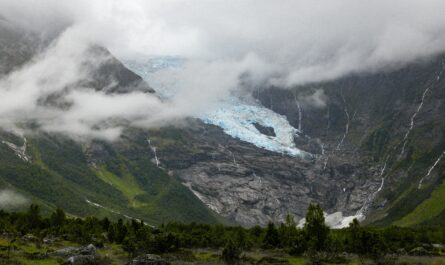
Over time, accumulated snow becomes compressed into glacial ice. As the ice grows thicker, gravity pulls it through the mountain valley, creating what is known as a valley glacier.
Some glaciers extend for many kilometers through mountainous landscapes, carving distinctive valleys and shaping the surrounding terrain.
Shaded Slopes Reduce Melting
The direction a mountain slope faces can influence how much sunlight it receives.
In the Northern Hemisphere, north-facing slopes generally receive less direct sunlight than south-facing slopes. As a result, snow can survive longer in shaded areas.
In the Southern Hemisphere, the opposite pattern generally applies, with south-facing slopes receiving less direct solar radiation.
Shaded mountain locations may therefore provide favorable conditions for glacier development, particularly when combined with high elevation and sufficient snowfall.
3. Why Polar Regions Are Perfect for Glacier Formation
Polar regions are another major environment where glaciers develop and survive. Unlike mountain glaciers, which depend heavily on elevation, polar glaciers benefit from extremely low temperatures associated with their geographical location.
The polar regions include Antarctica in the Southern Hemisphere and the Arctic region surrounding the North Pole.
These environments remain cold throughout much of the year because they receive less direct solar energy than areas closer to the equator.
Antarctica contains the largest concentration of ice on Earth, while Greenland holds the second-largest ice sheet.
Several factors make polar regions particularly suitable for maintaining enormous quantities of glacial ice.
Extremely Low Temperatures
The most important reason glaciers survive in polar regions is the consistently cold climate.
Antarctica experiences some of the lowest temperatures recorded anywhere on Earth. Its interior is especially cold because of its high elevation, dry atmosphere, and distance from relatively warm ocean influences.
In many parts of Antarctica, temperatures remain below freezing throughout the year. This allows snowfall to accumulate over long periods without experiencing substantial summer melting.
Greenland also has extensive areas where temperatures remain sufficiently low for snow to survive year after year.
Because melting is limited in these environments, accumulated snow can gradually transform into thick ice sheets.
Limited Direct Solar Radiation
Polar regions receive sunlight at a much lower angle than tropical and many temperate regions.
During winter, certain areas experience polar night, a period when the sun remains below the horizon for extended periods. During summer, the sun may remain visible for many hours or even continuously.
However, continuous summer daylight does not necessarily mean intense heating.
Because sunlight arrives at a low angle, its energy is spread over a larger surface area. Snow and ice also reflect a considerable portion of incoming solar radiation back into space.
This helps maintain relatively low temperatures and supports the long-term survival of polar ice.
Large Areas of Land Support Ice Accumulation
Antarctica and Greenland contain enormous land areas that can support the development of thick ice sheets.
Unlike many mountain glaciers, which are restricted by narrow valleys and steep slopes, continental ice sheets can spread across vast geographical areas.
As snowfall accumulates over thousands of years, the weight of the ice compresses the lower layers. The resulting ice sheets can become several kilometers thick.
The Antarctic Ice Sheet covers almost the entire continent, while the Greenland Ice Sheet occupies a large portion of Greenland.
These enormous ice masses contain a significant proportion of the world’s freshwater.
Low Melting Rates Allow Ice to Survive
Polar regions generally experience much less melting than warmer parts of the world.
Even when temperatures rise slightly during summer, large areas remain cold enough to preserve much of their accumulated snow and ice.
In some coastal areas, however, summer temperatures and ocean conditions can contribute to significant ice loss.
This is particularly important because warmer ocean water can melt glaciers from below, especially where glacier ice extends into the sea.
Nevertheless, the extremely cold interior environments of Antarctica and Greenland remain major centers of global ice accumulation.
4. The Importance of Latitude in Glacier Formation
Latitude is another important factor explaining why glaciers are concentrated in polar regions.
Latitude measures the distance of a location north or south of the equator. Locations near the equator generally receive more direct sunlight throughout the year, while places closer to the poles receive sunlight at lower angles.
This difference affects the amount of solar energy reaching Earth’s surface.
Near the equator, temperatures are generally warm enough to cause rapid snow and ice melting at low elevations. However, extremely high mountains can still support glaciers because elevation creates colder conditions.
As latitude increases toward the poles, average temperatures generally decrease. Consequently, glaciers can survive at much lower elevations than they can in tropical and subtropical regions.
For example:
- In tropical regions, glaciers are mainly restricted to very high mountains.
- In temperate regions, glaciers commonly develop in high mountain ranges.
- In polar regions, glaciers can exist at relatively low elevations because of the naturally cold climate.
This demonstrates that both latitude and altitude influence glacier distribution.
5. How Temperature and Snowfall Work Together
Temperature and snowfall are closely connected when it comes to glacier formation.
A region may receive heavy snowfall but still fail to develop glaciers if summer temperatures are high enough to melt most of the accumulated snow.
Similarly, a location may experience extremely cold temperatures but receive very little snowfall. In this situation, glacier growth can be slow because there is not enough new snow to build up substantial ice.
Successful glacier formation requires a balance between accumulation and ablation.
Accumulation refers to the addition of snow and ice through snowfall, windblown snow, and other processes.
Ablation refers to the loss of ice and snow through melting, evaporation, sublimation, and the breaking away of icebergs.
When accumulation exceeds ablation over a sufficiently long period, a glacier can grow.
When losses become greater than accumulation, the glacier gradually loses mass.
This relationship is known as a glacier’s mass balance.
The mass balance explains why some mountain and polar regions support large glaciers while other cold locations have very little permanent ice.
6. Why Glaciers Are Rare in Lowland and Tropical Regions
Most lowland regions do not have the environmental conditions required for glacier formation.
They generally experience warmer temperatures, particularly during summer. Snow that falls in these areas usually melts before enough layers can accumulate and transform into glacial ice.
Tropical lowlands face an even greater challenge because temperatures remain relatively high throughout the year.
Although some tropical areas receive heavy rainfall, precipitation usually occurs as rain rather than snow.
Without permanent snow accumulation, glaciers cannot develop.
However, tropical locations are not completely without glaciers.
High-altitude mountains in tropical regions provide an important exception. For example, the Andes in South America contain glaciers despite being located partly within tropical latitudes.
Mountains in East Africa, including Mount Kilimanjaro, have also historically supported glaciers.
These examples demonstrate that elevation can compensate for relatively warm geographical locations.
The presence of glaciers depends more on the local climate and long-term snow balance than on latitude alone.
7. Major Mountain Regions Where Glaciers Are Found
Several major mountain ranges around the world provide ideal conditions for glacier formation.
The Himalayas
The Himalayas contain thousands of glaciers spread across countries including Nepal, India, Bhutan, and Pakistan.
Their high elevations, extensive mountain valleys, and seasonal snowfall create favorable conditions for glacier development.
Important glaciers include Gangotri Glacier in India and Zemu Glacier in the eastern Himalayas.
These glaciers contribute to river systems that support millions of people across South Asia.
The Karakoram
The Karakoram Range is located across parts of Pakistan, India, and China.
It contains some of the world’s largest non-polar glaciers, including Baltoro Glacier and Siachen Glacier.
The region’s exceptionally high mountains and substantial snowfall allow large glacier systems to survive.
The Karakoram is also scientifically important because some glaciers have behaved differently from the general global pattern of glacier retreat.
The European Alps
The European Alps contain numerous glaciers across countries such as Switzerland, France, Italy, and Austria.
Aletsch Glacier in Switzerland is the largest glacier in the Alps.
High elevations, cold winters, and substantial snowfall historically supported extensive glacial coverage throughout the region.
However, rising temperatures have caused significant glacier retreat in recent decades.
The Andes
The Andes Mountains stretch along the western side of South America.
They contain glaciers in countries such as Chile, Argentina, Peru, and Bolivia.
The tropical Andes are particularly interesting because their glaciers survive at high elevations despite their proximity to the equator.
Further south, colder climatic conditions allow glaciers to exist at lower elevations, particularly in Patagonia.
8. Major Polar Regions Where Glaciers Are Found
Polar regions contain some of the largest and most important ice masses on Earth.
Antarctica
Antarctica contains the world’s largest ice sheet.
Its enormous ice coverage developed through millions of years of snowfall and gradual compression.
The Antarctic Ice Sheet is divided broadly into the East Antarctic Ice Sheet and the West Antarctic Ice Sheet, with the Antarctic Peninsula forming another important glacier-rich area.
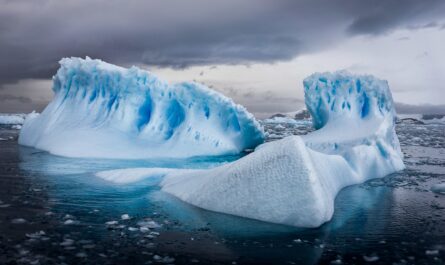
Many glaciers flow from the interior toward the surrounding ocean, where sections of ice may break away and form icebergs.
Greenland
Greenland contains the second-largest ice sheet on Earth.
Its interior is covered by thick ice, while numerous outlet glaciers transport ice toward the coastline.
Some of these glaciers terminate in the ocean and release large icebergs through a process known as calving.
Greenland is especially important in climate research because its ice loss contributes directly to global sea-level rise.
The Arctic
The Arctic includes northern areas of Canada, Russia, Norway, Greenland, and other surrounding regions.
It contains numerous mountain glaciers, ice caps, and smaller ice fields.
The archipelago of Svalbard is an important example of an Arctic region with extensive glacier coverage.
Unlike Antarctica, the Arctic is largely an ocean surrounded by land. Its glaciers are therefore distributed across islands and northern mountain regions.
9. Why Some Glaciers Exist Outside Mountain and Polar Regions
Although mountains and polar regions contain most of the world’s glaciers, these are not the only environments where glacial ice can exist.
Some glaciers survive in unusual geographical locations because local conditions create sufficiently cold environments.
For example, certain high-altitude tropical mountains contain glaciers despite being surrounded by warm climates.
Mount Kilimanjaro in Tanzania is a well-known example. Its summit has historically supported ice because of its elevation, although its glaciers have experienced substantial shrinkage.
The Quelccaya Ice Cap in Peru is another important example of high-altitude ice in a tropical region.
In addition, some glaciers exist on volcanic mountains and isolated islands where elevation, snowfall, and cold oceanic conditions support permanent ice.
These examples demonstrate that glaciers are not determined by geographical labels alone. Their formation depends on the environmental conditions found at a particular location.
10. How Climate Change Is Affecting Mountain and Polar Glaciers
Although mountains and polar regions provide favorable conditions for glacier formation, climate change is affecting many glacier systems around the world.
Rising global temperatures are increasing ice loss, changing snowfall patterns, and altering the seasonal balance between accumulation and melting.
Mountain glaciers are particularly vulnerable because even relatively small temperature increases can cause substantial changes in their mass balance.
In regions such as the Himalayas and Alps, rising temperatures have accelerated glacier retreat. Some smaller glaciers are losing ice rapidly and may eventually disappear.
Polar regions are also experiencing significant changes.
Greenland is losing ice through increased surface melting and the discharge of glaciers into the ocean. In Antarctica, certain glaciers are experiencing increased ice loss, particularly in West Antarctica and parts of the Antarctic Peninsula.
Warmer ocean water can reach the undersides of floating ice shelves and weaken them. This may allow grounded glaciers behind these shelves to flow more rapidly toward the ocean.
The consequences of glacier loss extend far beyond the ice itself.
Rising Sea Levels
When land-based glaciers and ice sheets lose ice to the ocean, they contribute to global sea-level rise.
This creates serious risks for coastal cities, islands, and low-lying communities.
Antarctica and Greenland are particularly important because they contain enormous quantities of land-based ice.
Water Supply Problems
Mountain glaciers act as natural freshwater reservoirs.
Their seasonal melting contributes to river systems that support agriculture, drinking water supplies, hydropower, and ecosystems.
In regions such as the Indus River basin, glacier-fed water is particularly important.
As glaciers shrink, river flows may initially increase during periods of rapid melting. However, long-term ice loss can reduce the amount of freshwater available during dry seasons.
Changes in Mountain Landscapes
Glacier retreat exposes rocks, sediments, and newly formed lakes.
These changes can affect mountain ecosystems and create new environmental hazards.
For example, lakes formed near retreating glaciers may become unstable. If natural barriers fail, sudden floods can travel downstream and threaten communities.
Effects on Wildlife and Ecosystems
Glacier-dependent environments support specialized plants, animals, and microorganisms.
As ice disappears, these ecosystems may experience changes in temperature, water availability, and habitat conditions.
Polar wildlife can also be affected by changing ice conditions, particularly species that depend on sea ice for feeding, resting, and movement.
11. Can Glaciers Form in a Warming Climate?
Yes, glaciers can still form in a warming climate, but their formation becomes more difficult in regions where temperatures increase and snowfall becomes insufficient.
The most important factor is whether annual accumulation exceeds annual ice loss.
Even when average global temperatures rise, certain high-altitude and high-latitude areas may continue receiving enough snowfall to maintain glaciers.
For example, some regions of the Karakoram have historically experienced relatively stable glacier conditions compared with other mountain ranges.
However, this does not mean these glaciers are protected from future climate change.
If temperatures continue increasing, the balance between snowfall and melting may eventually shift toward greater ice loss.
Glacier formation is therefore possible under a range of climatic conditions, but long-term stability requires a suitable balance of temperature and precipitation.
12. Why Understanding Glacier Distribution Matters
Understanding why glaciers are concentrated in mountains and polar regions is important for several scientific and environmental reasons.
First, glaciers provide valuable information about Earth’s climate history. Their ice layers contain records of past atmospheric conditions, including trapped air bubbles that preserve samples of ancient atmospheres.
Second, glaciers influence freshwater availability. Many communities depend on glacier-fed rivers, making glacier monitoring essential for long-term water management.
Third, glaciers help regulate Earth’s energy balance. Their bright surfaces reflect sunlight back into space, reducing the amount of solar energy absorbed by the planet. This effect is known as the ice-albedo effect.
When glaciers shrink, darker surfaces such as exposed rock, soil, and ocean water absorb more solar energy. This can contribute to additional regional warming.
Finally, glacier monitoring helps scientists understand future environmental changes, including sea-level rise, water shortages, and natural hazards.
By studying glacier distribution, researchers can identify vulnerable regions and improve predictions about the future of mountain and polar environments.
Conclusion
Glaciers are usually found in mountains and polar regions because these environments provide the cold temperatures and snowfall conditions necessary for long-term ice accumulation.
In mountain regions, high elevation lowers air temperatures and creates suitable conditions for snow to survive throughout the year. Mountain slopes, valleys, and snowfall patterns further support glacier development.
In polar regions, extremely low temperatures, limited direct solar radiation, and enormous areas of land allow snow and ice to accumulate over thousands of years, forming massive ice sheets and extensive glacier systems.
Although glaciers can also exist in unusual locations, such as tropical mountain peaks, their survival always depends on a favorable balance between snowfall and melting.
Today, climate change is disrupting this balance in many parts of the world. Mountain glaciers are retreating, polar ice sheets are losing mass, and the consequences are becoming increasingly important for freshwater resources, sea levels, ecosystems, and human communities.
Ultimately, glaciers are not simply frozen landscapes. They are essential components of Earth’s climate system, and understanding why they form in particular regions helps us appreciate their environmental importance and the need to protect the conditions that allow them to survive.