 by
by Glaciers are among Earth’s most awe-inspiring natural phenomena. These massive rivers of ice shape mountains, carve valleys, and hold critical freshwater reserves. Yet, most people rarely consider the incredible journey that transforms ordinary snowflakes into colossal glaciers spanning miles. Understanding how glaciers form provides insight into Earth’s climate, geology, and hydrology. This article takes you step by step through the life of a glacier, from falling snow to an ice giant slowly flowing across the landscape.
1. The Birth of a Glacier: Snowfall Accumulation
Every glacier begins with snow. Glaciers typically form in regions where snowfall exceeds snowmelt over many years, allowing snow to accumulate and persist through multiple seasons. These regions include high mountains, polar regions, and areas with cold climates.
Key Conditions for Glacier Formation
- High Elevation or Polar Location: Cold temperatures prevent snow from melting completely during warmer seasons.
- Sufficient Precipitation: Regular snowfall is essential to build the ice mass over time.
- Protected Terrain: Valleys, basins, and shaded mountain slopes help retain snow, reducing loss due to wind or sun.
At this stage, the snow is fluffy, low-density, and consists of loosely packed snowflakes. Each winter adds a new layer, gradually compressing older snow beneath.
2. Snow Compaction: From Flakes to Firn
After several seasons of accumulation, snow begins a transformation process due to pressure and recrystallization. This intermediate stage is called firn, which is granular snow with higher density than fresh snowfall but not yet solid ice.
How Firn Forms
- Compression: Layers of snow pile on top of each other, and the weight of the overlying snow compresses lower layers.
- Air Expulsion: Tiny pockets of air between snowflakes are gradually squeezed out, increasing density.
- Partial Melting and Refreezing: Meltwater percolates through the snowpack, refreezing and cementing grains together.
- Crystalline Transformation: Snowflakes gradually lose their individual shapes and form rounded ice grains.
Firn can take 5 to 15 years to transform into glacier ice in temperate regions, though polar glaciers may take centuries due to slower snow accumulation and colder temperatures.
3. Formation of Glacier Ice: The Giant Awakens
Once firn becomes dense enough—typically around 830 kg/m³ (about 82% of the density of liquid water)—it transforms into glacial ice. This ice is much harder and less porous than snow or firn, giving glaciers their massive, flowing structure.
Characteristics of Glacial Ice
- Blue Coloration: Glacier ice often appears blue because ice crystals absorb red light and scatter blue light.
- Dense and Heavy: Each cubic meter weighs nearly a ton, allowing glaciers to slowly deform and flow under their own weight.
- Plasticity: Despite being solid, glacial ice behaves plastically over long periods, allowing it to move like a slow river.
At this stage, the glacier is no longer just accumulated snow; it becomes a dynamic, moving entity, capable of carving valleys, transporting debris, and influencing landscapes.
4. Glacier Flow: Moving Ice Over the Landscape
Glaciers are not static. Once ice has formed, gravity causes glaciers to flow from higher elevations to lower valleys. The flow rate varies depending on slope, ice thickness, temperature, and bedrock characteristics.
How Glaciers Move
- Internal Deformation: Ice crystals slowly deform under pressure, causing the glacier to creep.
- Basal Sliding: Meltwater at the base of the glacier acts as a lubricant, allowing the glacier to slide over bedrock.
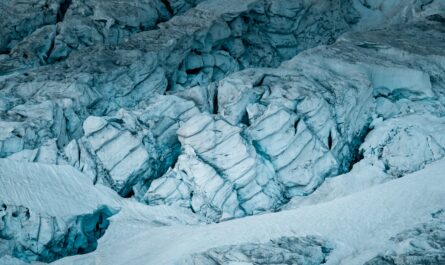
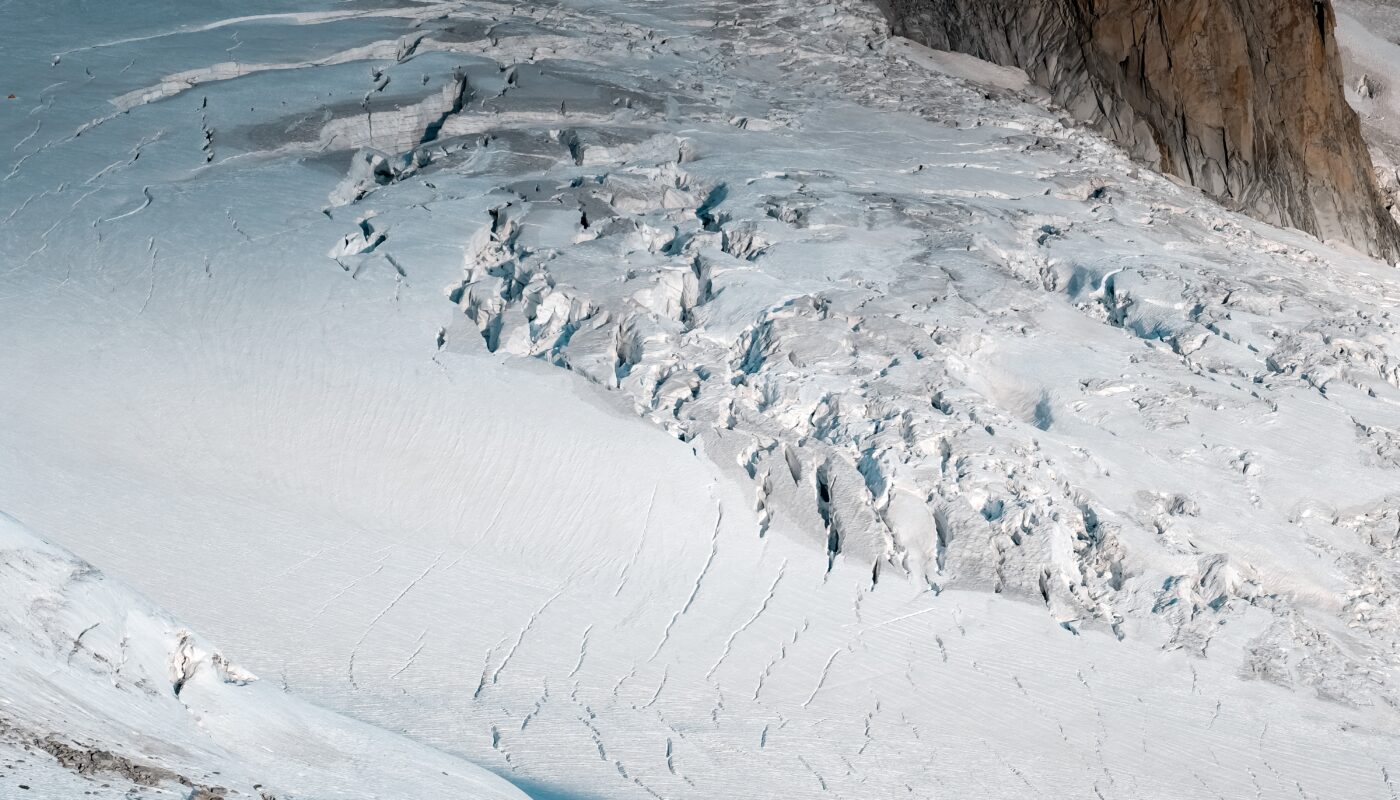
- Crevassing and Fracturing: Movement causes cracks, or crevasses, which may appear dramatic and dangerous on the glacier surface.
Glacier flow is often slow—ranging from a few centimeters to several meters per day—but the cumulative effect over years is immense, carving valleys, fjords, and U-shaped troughs.
5. Glacial Accumulation and Ablation Zones
Glaciers have distinct zones that control their mass balance:
A. Accumulation Zone
- Located at higher elevations.
- Snowfall exceeds melting.
- Ice thickens as more snow accumulates.
B. Ablation Zone
- Located at lower elevations.
- Ice loss exceeds snowfall due to melting, sublimation, or calving (breaking into lakes or oceans).
- Determines the glacier’s retreat or advance.
The balance between accumulation and ablation determines whether a glacier grows, shrinks, or remains stable. Climate change is affecting this balance globally, causing widespread glacial retreat.
6. Glacial Erosion and Landscape Sculpting
As glaciers flow, they act as powerful agents of erosion, sculpting Earth’s surface over millennia.
Erosion Processes
- Plucking: Glaciers pull rocks from bedrock as ice moves over the surface.
- Abrasion: Rocks embedded in ice grind against bedrock, polishing and carving striations.
- Valley Formation: Glaciers carve U-shaped valleys, contrasting with the V-shaped valleys formed by rivers.
This erosive power is responsible for some of the world’s most dramatic landscapes, including fjords in Norway, glacial lakes in Canada, and jagged peaks in the Alps.
7. Deposits and Glacial Landforms
Glaciers not only carve but also deposit sediment, creating distinctive landforms:
- Moraines: Ridges of debris deposited along glacier edges.
- Drumlins: Streamlined hills formed under moving ice.
- Outwash Plains: Sediments deposited by meltwater rivers.
- Glacial Erratics: Large boulders transported long distances by glaciers.
These features serve as evidence of past glacial activity and help scientists reconstruct ancient glacial landscapes.
8. Glaciers as Climate Indicators
Glaciers are sensitive to climate variations. By studying glaciers, scientists can gain insights into past and present climate conditions.
Glacial Records
- Ice cores reveal trapped air bubbles, providing a historical record of greenhouse gases.
- Layering in glaciers indicates annual snowfall and temperature patterns.
- Retreating or advancing glaciers signal local climate changes.
The transformation from snow to ice giant is not just a geological process; it is a chronicle of Earth’s climate history.
9. Human Interaction and Glacier Observation
Humans have long studied glaciers for scientific, economic, and aesthetic purposes. Observing glaciers provides insight into water resources, climate trends, and natural hazards such as glacial lake outburst floods.
Tourism and Recreation
- Skiing, mountaineering, and glacier hiking attract adventure seekers.
- Educational tours highlight glacier formation, movement, and climate significance.
Scientific Monitoring
- Satellite imagery and GPS tracking allow scientists to measure glacier flow and volume changes.
- Ice core drilling provides invaluable climate data spanning thousands of years.
10. The Future of Glacier Formation
Modern glaciers face unprecedented challenges due to global warming. Many glaciers are retreating, thinning, or disappearing entirely, disrupting ecosystems and freshwater supplies. While the natural process of glacier formation continues where conditions remain cold and snowy, the rate of formation is slower than the rate of melting in many regions.
Implications
- Reduced glacial ice affects sea levels, freshwater availability, and regional climates.
- Landscapes sculpted by glaciers may evolve differently as ice retreats.
- Glacier loss serves as a visual warning of climate change and its global consequences.
Preserving conditions for natural glacier formation requires addressing climate change, reducing greenhouse gas emissions, and protecting high-altitude and polar ecosystems.
Conclusion
Glaciers are nature’s slow-moving giants, formed through a meticulous transformation from snow to dense ice. Their journey begins with snowfall, progresses through compaction and crystallization, and culminates in a massive river of ice capable of shaping entire landscapes. Glaciers sculpt mountains, feed rivers, support ecosystems, and record Earth’s climate history.
Understanding how glaciers form reveals not only the geological and hydrological wonders of our planet but also underscores the importance of preserving these fragile ice giants in a warming world. Without glaciers, landscapes, water systems, and even global climate patterns would look profoundly different, highlighting the critical role of these frozen monuments in Earth’s natural balance.