 by
by Glaciers are among Earth’s most powerful geological forces — seemingly static rivers of ice that, over centuries and millennia, carve valleys, shape mountains, and transform landscapes. Yet behind their calm, timeless appearance lies a world of dynamic movement and complex physics. For centuries, explorers and scientists have asked a deceptively simple question: How do glaciers move?
Understanding glacier motion is not just a question of curiosity. It helps scientists predict the future of ice sheets, estimate sea‑level rise, and understand how climate change is reshaping our planet. In this article, we’ll explore the hidden mechanics of glacier movement — from internal deformation to basal sliding, from meltwater dynamics to the role of gravity and geology.
If you’ve ever wondered why these colossal rivers of ice don’t stay still, you’ll find that the answer is as fascinating as the landscapes they create.
What Is a Glacier? A Quick Overview
Before delving into how glaciers move, it’s helpful to define what a glacier is.
A glacier is a large, persistent body of ice formed from snow that accumulates over years, compresses under its own weight, and transforms into dense ice. Most glaciers form in regions where snowfall exceeds melting over long periods — such as polar regions or high mountain ranges.
There are two major types of glaciers:
- Valley (or alpine) glaciers: Found in mountainous regions and flow down valleys.
- Ice sheets: Vast ice masses, like those covering Antarctica and Greenland, which can span millions of square kilometers and bury underlying topography.
Despite differences in size and setting, all glaciers share one remarkable trait: they move.
Why Do Glaciers Move? Gravity Is the Driving Force
At the most fundamental level, glacier movement is driven by gravity. Ice, like any other material with mass, is pulled downhill by gravity. But glaciers don’t simply slide like ice cubes on a table. Their movement involves a combination of processes that together allow the ice to deform and flow.
A glacier’s ability to move depends on:
- Its mass and thickness
- The slope of the underlying terrain
- The temperature of the ice
- The presence of water at the base
- The properties of the bedrock underneath
Let’s explore these in detail.
1. Internal Deformation: Ice as a Slow‑Moving Fluid
Although ice at the surface looks rigid and brittle, under pressure deep within a glacier it behaves very differently. Ice can slowly deform and flow like a viscous fluid when subjected to stress over long periods.
This deformation happens because:
- Snow that has compacted into glacier ice contains microscopic weaknesses.
- Under the tremendous weight of overlying ice, these weaknesses allow ice crystals to gradually deform and realign.
- The deeper the ice, the greater the pressure and deformation.
Scientists refer to this process as internal deformation or creep.
How Internal Deformation Works
Imagine a stack of cards leaning slightly to one side. As the stack grows taller, the pressure increases, and the cards begin to shift slowly under stress. Glacier ice works similarly. The weight of ice above applies pressure to ice below, causing slow, persistent changes in shape.
This internal flow contributes to movement throughout the entire glacier, especially in the deeper, warmer ice.
2. Basal Sliding: Ice Riding on a Film of Water
Another major mechanism of glacier movement is basal sliding — the process by which a glacier slides over its bed.
At the base of a glacier, high pressure can cause melting even if the air temperature is well below freezing. Water at the base lubricates the ice‑bed interface, reducing friction and allowing the ice to slide more easily.
This happens in several ways:
- Pressure melting: Under high pressure, the melting point of ice decreases slightly, causing basal melt even in cold climates.
- Meltwater channels: Surface meltwater can travel through cracks and crevasses to the glacier’s base, lubricating the bed and enhancing sliding.
- Bed sediment: Soft sediments at the base — like gravel or sand — can behave like a cushion, further reducing resistance.
Basal sliding is especially important in warmer, temperate glaciers where meltwater is abundant. In cold polar glaciers, it plays a lesser role because the base remains frozen for much of the year.
3. Subglacial Deformation: When Bed Material Flows Too
In addition to ice deformation and basal sliding, subglacial deformation can contribute to glacier motion when the bed itself — often sediments beneath the ice — behaves plastically and shifts under stress.
When soft sediments exist at the base of a glacier, the glacier’s weight and movement can cause these sediments to deform and flow. Instead of sliding purely on a hard rock bottom, the glacier effectively moves over a moving bed of sediment.
This process adds complexity to ice movement and is especially relevant in regions where glaciers have thick deposits of glacial till or sediment.
4. Ice Fracturing and Crevasse Formation
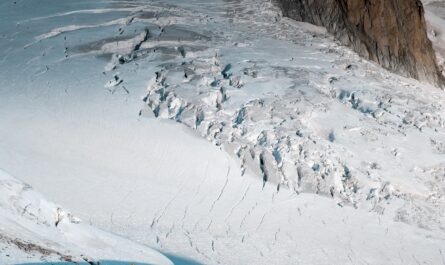
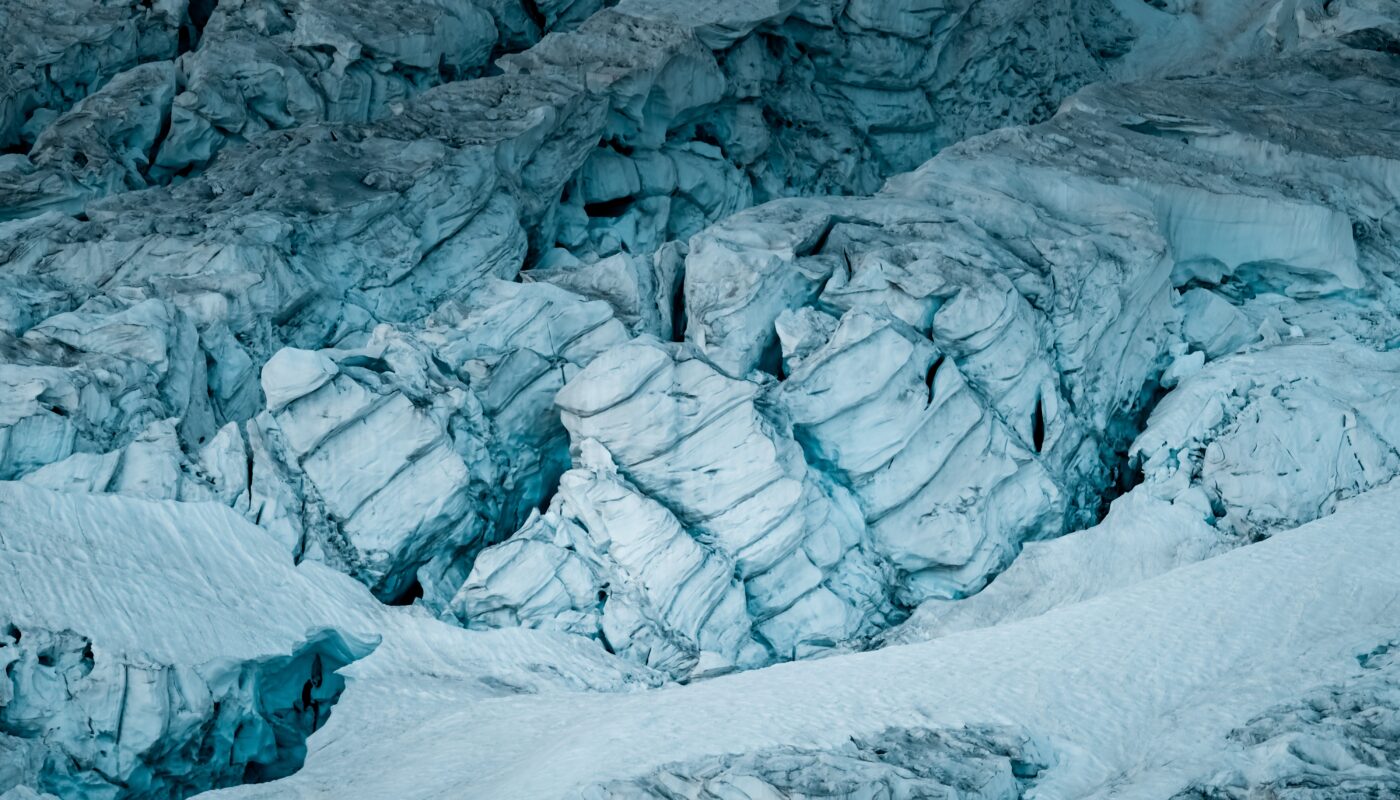
Glacier movement is not always smooth. The rigid upper layer of a glacier can fracture when stress exceeds the strength of the ice. These fractures are called crevasses, and they form most commonly in regions where the glacier is accelerating or flowing over uneven terrain.
Crevasse formation reveals important information about glacier motion:
- They can indicate zones of high stress or rapid flow.
- Crevasses make the glacier surface dangerous to traverse.
- Their patterns reflect underlying movement mechanics.
Crevasses themselves do not make glaciers move, but they are dramatic evidence that ice is under stress and responding dynamically to forces.
5. Glacier Surge Events: Rapid, Episodic Movement
While most glaciers move slowly — often only a few centimeters to a few meters per day — some glaciers undergo surges, where they briefly accelerate dramatically, sometimes moving tens or even hundreds of meters in a short period.
What Causes a Glacier Surge?
Surges are not fully understood, but scientists believe they involve sudden changes in:
- Basal water pressure
- Subglacial sediment conditions
- Ice deformation mechanisms
During a surge, a glacier may swell in its accumulation zone (where ice builds up) and then rapidly push ice downstream. After a surge, the glacier typically returns to slower movement.
Surging glaciers are rare and unpredictable, but they demonstrate how dynamic ice systems can be.
6. The Role of Climate in Glacier Movement
Climate influences glacier motion in several ways:
Temperature
- Warmer temperatures increase surface melt and create more meltwater.
- Meltwater can travel to the glacier bed and enhance basal sliding.
Precipitation
- Increased snowfall adds mass to the glacier, increasing stress and potentially speeding movement.
- Conversely, reduced snowfall starves the glacier of new ice and can slow its advance.
Seasonal Variability
- Glaciers often move faster in warmer months (summer) due to increased meltwater.
- In winter, when meltwater is minimal, movement may slow.
Climate change is accelerating glacier melting worldwide, affecting not only ice loss but also movement patterns. As glaciers thin and lose mass, their dynamics change — a topic scientists monitor closely to understand future sea‑level rise.
How Fast Do Glaciers Move? The Answer Isn’t Simple
Glacier movement varies widely depending on location, climate, and internal dynamics.
General Movement Ranges
- Slow glaciers: A few centimeters to a few meters per year
- Moderate glaciers: A few meters to tens of meters per year
- Fast glaciers: Dozens to hundreds of meters per year
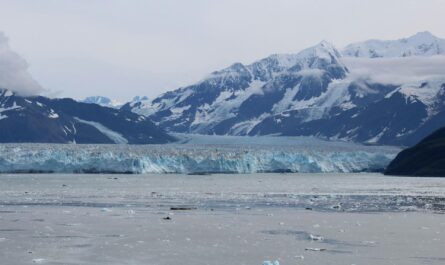
Some of the world’s fastest moving glaciers — often tidewater glaciers that end in the ocean — have been recorded moving over 1 kilometer per year during certain episodes.
It’s important to understand that glacier velocity is not constant. It varies both in space (different parts of the glacier move at different speeds) and in time (seasonal or episodic changes).
Glacier Motion in Ice Sheets: Antarctica and Greenland
Large ice sheets behave differently than valley glaciers. Whereas valley glaciers are constrained by mountain terrain, ice sheets spread outward across vast regions.
In ice sheets:
- The ice is thick and under enormous pressure
- Movement is influenced by internal deformation over greater depths
- Basal sliding can be enhanced by meltwater at the base
- Ice streams — fast‑flowing corridors within the ice sheet — can transport ice rapidly toward the ocean
These dynamics have implications for sea‑level rise. For example, if ice streams in Antarctica or Greenland accelerate, they can deliver large ice volumes into the ocean more quickly, contributing to global sea‑level rise.
Measuring Glacier Movement: How Scientists Track Ice Flow
Scientists use several tools to measure how glaciers move:
1. GPS Markers
Researchers attach GPS receivers to the glacier surface to monitor changes in position over time.
2. Satellite Tracking
Satellites equipped with radar and optical sensors can measure glacier motion with high precision over wide areas.
3. Time‑Lapse Photography
Cameras tracking fixed points allow researchers to observe movement patterns over days or seasons.
4. Ground‑Based Sensors
Instruments placed near the glacier bed or within boreholes provide insights into deformation and basal conditions.
These technologies help scientists understand how and why glaciers are changing in response to climate and internal forces.
Glacier Movement and Landscape Change
Glacier motion is not just a scientific curiosity — it reshapes landscapes. Over time, glaciers:
- Carve U‑shaped valleys
- Form cirques and fjords
- Grind bedrock into sediment
- Create moraines (deposits of glacial debris)
- Influence river systems and drainage patterns
The movement of ice is a geological force, shaping terrain on timescales of centuries to millennia.
Why Understanding Glacier Movement Matters Today
Understanding how glaciers move is critical for several reasons:
1. Sea‑Level Rise Predictions
Melting and dynamic ice flow contribute to changing sea levels. Accurate models of ice motion improve projections of future changes.
2. Water Resources
Many regions depend on glacier meltwater for rivers and freshwater. Knowing how glaciers respond to climate helps manage water resources.
3. Natural Hazard Assessment
Rapid glacier movement or surge events can trigger glacial lake outbursts, avalanches, and other hazards.
4. Climate Feedback Mechanisms
Ice dynamics interact with climate systems, influencing albedo (reflectivity), ocean currents, and heat exchange.
In short, glaciers are not relics of the past. They are active participants in Earth’s changing climate and environmental systems.
Conclusion: Glaciers Are Dynamic Systems Governed by Hidden Mechanics
So how do glaciers move? The answer is both simple and profound:
Glaciers move because gravity pulls them downhill, and the ice responds through a combination of internal deformation, basal sliding, subglacial sediment flow, and episodic shifts.
But the full story goes deeper. Ice behaves in surprising ways under pressure and stress. Meltwater can lubricate massive ice sheets. Sediments can flow beneath frozen giants. Crevasses open as stress is released. Some glaciers surge dramatically, while others creep slowly over centuries.
Understanding glacier motion reveals how Earth’s icy realms are alive with change — constantly sculpting landscapes and responding to climate forces. As scientists continue studying flowing ice, they uncover new insights that help us track glacier behavior, predict future changes, and appreciate the hidden mechanics that lie within the world’s great rivers of ice.