 by
by Glaciers are among the most powerful and enduring witnesses to Earth’s climatic past. These massive rivers of ice, slowly flowing over mountains and valleys, are not just symbols of frozen wilderness — they are natural archives that hold invaluable information about our planet’s environmental history. By studying glaciers, scientists can reconstruct past climates, understand the mechanisms behind climate change, and predict future environmental shifts.
In this article, we explore how glaciers serve as climate recorders, the methods used to extract and interpret this information, and what these icy archives reveal about Earth’s climate history.
1. What Are Glaciers?
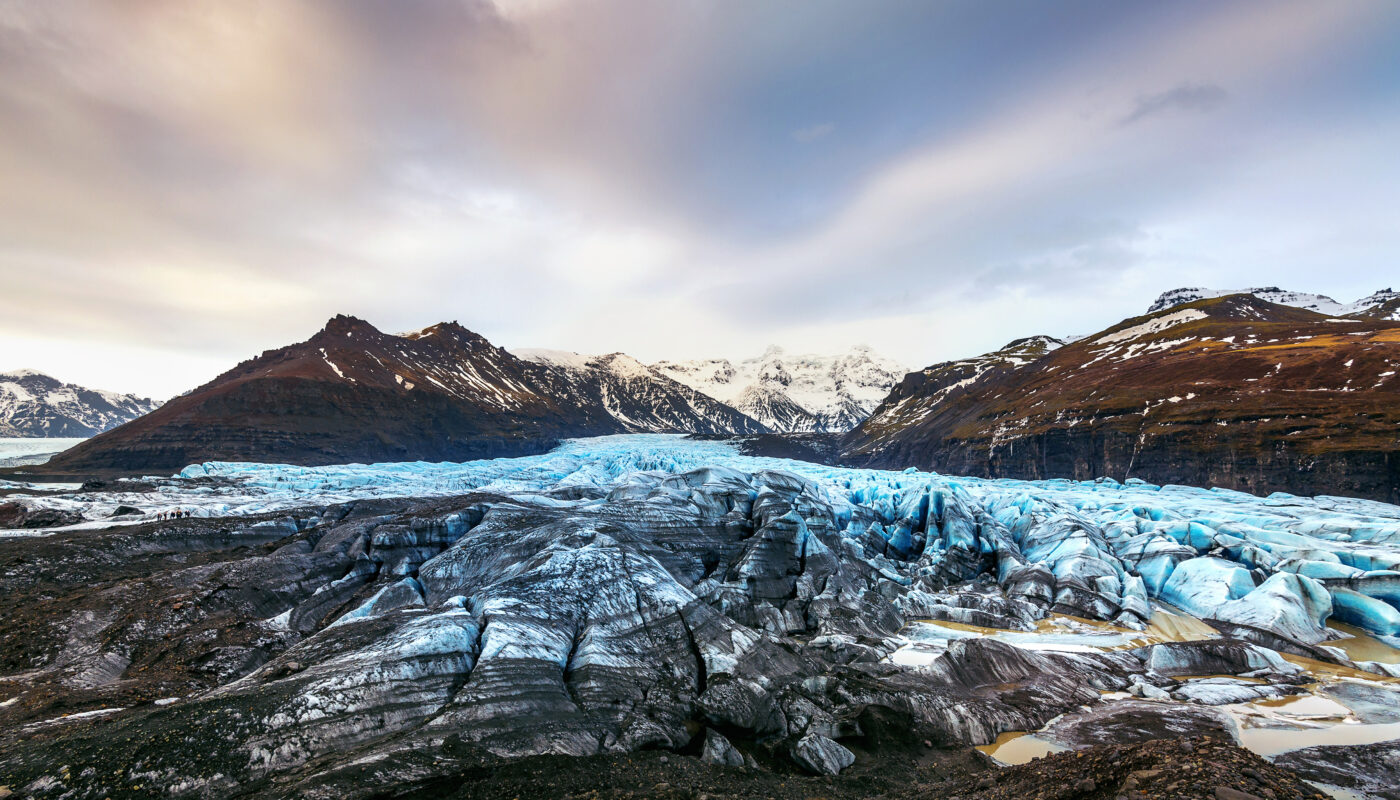
Glaciers are large, persistent bodies of ice that form over many decades from the accumulation and compaction of snow. They exist in polar regions, such as Antarctica and Greenland, as well as in mountainous regions worldwide, including the Alps, Himalayas, and the Andes.
A. Formation Process
The process begins with snowfall:
- Accumulation: Snowfall builds up layer by layer over years.
- Compaction: The weight of overlying snow compresses the lower layers into firn, a granular intermediate stage between snow and ice.
- Transformation: Continued compression and recrystallization eventually turn firn into dense glacial ice.
This process, often taking decades to centuries, creates a layered ice structure that acts as a chronological record of snowfall, temperature, and atmospheric conditions.
B. Types of Glaciers
Glaciers can be classified by their location and flow patterns:
- Valley Glaciers: Flow through mountain valleys, shaping landscapes with U-shaped valleys.
- Ice Caps: Dome-shaped ice masses covering smaller areas than continental glaciers.
- Continental Glaciers/Ice Sheets: Massive ice bodies covering extensive regions, such as Greenland Ice Sheet and Antarctica Ice Sheet.
Regardless of type, all glaciers preserve records of environmental conditions in their layers.
2. Glaciers as Climate Archives
Glaciers act like time capsules, recording climate data as they form and evolve. Each layer of ice corresponds to a specific period, often capturing information about seasonal weather, atmospheric composition, and volcanic activity.
A. Ice Cores: Windows into the Past
The primary method for studying glacier climate history is through ice cores:
- Scientists drill deep into glaciers to extract cylindrical sections of ice, sometimes reaching depths of several kilometers.
- Each layer represents a year or season of snowfall, trapping air bubbles, dust, and chemical compounds.
- These layers allow scientists to reconstruct climate over hundreds of thousands of years.
B. What Ice Cores Reveal
Ice cores provide multiple types of climate information:
- Air Bubbles: Tiny bubbles trapped in ice preserve ancient atmospheres. By analyzing their CO₂, methane, and oxygen isotope concentrations, scientists determine greenhouse gas levels and infer temperature fluctuations.
- Isotopes of Oxygen and Hydrogen: Variations in the ratio of oxygen-18 to oxygen-16 or deuterium to hydrogen reflect changes in temperature and precipitation.
- Volcanic Ash and Dust: Layers containing volcanic ash, dust, or soot indicate major eruptions, wind patterns, and atmospheric circulation shifts.
- Chemical Signatures: Ions like nitrate, sulfate, and chloride reveal information about pollution, ocean activity, and biological productivity in the past.
3. Reconstructing Climate History
By analyzing ice core data, scientists can reconstruct past climate conditions with remarkable accuracy.
A. Temperature Records
Oxygen and hydrogen isotope ratios help reconstruct temperature changes over thousands of years:
- Colder periods, such as ice ages, are marked by lower ratios of oxygen-18 to oxygen-16.
- Warmer periods show higher ratios, indicating increased melting and snowfall.
This information is crucial for understanding long-term climate cycles and natural variability.
B. Greenhouse Gas Concentrations
Air bubbles trapped in ice provide a direct record of past atmospheric composition:
- Analysis shows a correlation between CO₂ levels and global temperatures over the past 800,000 years.
- Sudden increases in greenhouse gases often coincide with rapid warming events, providing insights into climate feedback mechanisms.
C. Volcanic Activity and Climate Events
Layers containing volcanic ash can be matched to known eruptions. These layers help scientists:
- Date specific ice layers accurately.
- Understand the short-term cooling effects of volcanic aerosols on climate.
- Study how volcanic events influenced ancient human civilizations and ecosystems.
4. Glacial Geology and Landforms
Beyond ice cores, glaciers leave physical evidence of past climates in the landscapes they shape.
A. Moraines
Moraines are accumulations of rock and debris pushed along by glaciers. They indicate historical glacier extents and help scientists reconstruct past ice coverage.
B. U-Shaped Valleys
Glacial erosion carves valleys into distinct U-shapes, contrasting with the V-shaped valleys formed by rivers. The presence of these valleys indicates past glacial activity and climate conditions.
C. Fjords and Cirques
- Fjords: Deep, glacially carved inlets filled by the sea, such as Sognefjord, reveal the power of past glaciers.
- Cirques: Bowl-shaped depressions at the head of glaciers show ancient ice accumulation zones.
These geological features act as long-term markers of climate change, complementing ice core data.
5. Modern Techniques in Glacial Climate Studies
Advancements in technology have enhanced our ability to study glaciers as climate archives:
A. Remote Sensing
Satellites and drones track:
- Glacier movement and flow rates
- Surface melt and snow accumulation
- Seasonal changes and ice thickness
B. Ground Penetrating Radar
This technique allows scientists to map internal layers without drilling, revealing accumulation patterns and historical flow changes.
C. Radiometric Dating
Techniques like carbon dating of trapped organic material or volcanic ash layers help assign accurate ages to ice layers.
6. Glaciers and Climate Change
Glaciers are not just archives of the past; they are indicators of current climate change:
- Many glaciers worldwide are retreating at unprecedented rates due to rising global temperatures.
- Shrinking glaciers affect freshwater availability, sea-level rise, and ecosystem stability.
- Continuous monitoring of glaciers allows scientists to track the rate of climate change and refine predictive models.
The melting of glaciers reveals previously trapped air bubbles and sediments, providing an ongoing opportunity to study climate history while reminding us of the urgent need for climate action.
7. Case Studies: Glaciers as Climate Recorders
A. Greenland Ice Sheet
- Ice cores from Greenland, such as the GISP2 ice core, have provided climate data spanning over 100,000 years.
- These records reveal cycles of ice ages, interglacial periods, and rapid warming events.
B. Antarctic Ice Sheet
- Cores from Antarctica, including EPICA Dome C, extend climate records up to 800,000 years.
- Antarctic data complements Greenland findings, offering a global perspective on climate patterns.
C. Alpine Glaciers
- Smaller glaciers in the Alps and Andes provide regional climate records, showing local temperature fluctuations and human impacts over centuries.
8. Lessons Learned from Glacial Records
The study of glaciers teaches us critical lessons:
- Natural Climate Cycles: Earth has experienced recurring ice ages and warm periods, often triggered by orbital changes and volcanic activity.
- Human Impact: Current greenhouse gas levels are unprecedented compared to natural variations observed in ice cores.
- Predictive Power: Glacial records help refine models for future climate scenarios, informing policy and mitigation strategies.
- Interconnected Systems: Glaciers link atmosphere, oceans, and land ecosystems, highlighting the complexity of Earth’s climate system.
9. Preserving Glaciers for Future Study
As climate change accelerates, glaciers are disappearing at alarming rates. Preserving them is crucial not only for ecosystems but also for continued climate research:
- Establishing protected glacier reserves
- Reducing carbon emissions globally
- Promoting sustainable tourism and research practices
- Documenting glacier data before ice loss erases historical records
Conclusion
Glaciers are far more than frozen rivers; they are living libraries of Earth’s climate history. Through ice cores, glacial landforms, and modern technologies, scientists can reconstruct past temperatures, atmospheric composition, and environmental changes over hundreds of thousands of years. These icy archives reveal the rhythms of natural climate cycles, the profound influence of greenhouse gases, and the consequences of rapid environmental shifts.
Studying glaciers is essential for understanding both our past and future. As glaciers retreat under the pressures of global warming, the urgency to extract and preserve their invaluable climate records has never been greater. By learning from glaciers, humanity gains insight into the planet’s delicate balance and the profound responsibility we bear in shaping its future.