 by
Glaciers are among the clearest natural indicators of environmental change. These enormous bodies of ice respond to shifts in temperature, snowfall, rainfall, and the physical landscape around them. When a glacier begins losing more ice than it gains, its surface may become thinner, its terminus may move backward, and the surrounding environment can change dramatically. Upsala Glacier in southern Patagonia, Argentina, offers a striking example of this process.
Located in the Southern Patagonian Icefield, Upsala Glacier has experienced substantial retreat and thinning over recent decades. Its changing behavior has attracted scientific attention because it demonstrates that glacier loss is not always a slow, steady process. At certain times, changes in ice flow and the conditions beneath the glacier can cause retreat to accelerate considerably.
Upsala Glacier is therefore more than a remarkable landscape. It is a valuable natural case study for examining the relationship between climate change, glacier dynamics, freshwater systems, and the wider consequences of a shrinking ice mass.
1. Where Is Upsala Glacier Located?
Upsala Glacier lies in the Andes of southern Argentina, within Los Glaciares National Park in Santa Cruz Province. It forms part of the Southern Patagonian Icefield, one of the largest ice masses outside Antarctica and Greenland. The glacier flows from this extensive ice-covered mountain region toward Lago Argentino, a large freshwater lake.
The surrounding landscape is known for steep mountains, rugged valleys, ice-covered slopes, and cold freshwater environments. Strong winds, changing weather, and considerable precipitation help shape the region’s climate. Conditions vary across Patagonia, but the combination of mountainous terrain and a large ice supply allows glaciers to develop and flow through the valleys.
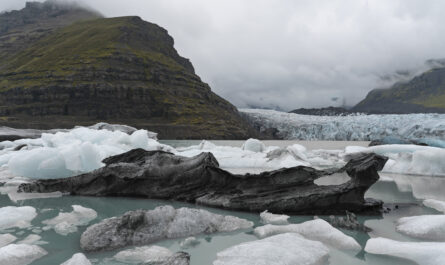
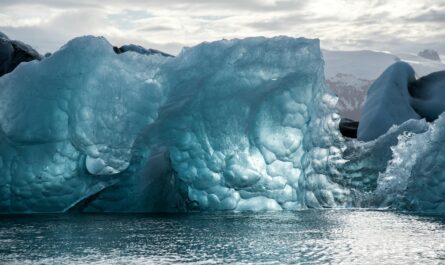
Upsala is an outlet glacier, meaning it carries ice away from a larger icefield through a defined valley. Its lower end meets lake water, where pieces of ice can break away and form floating icebergs. This process, known as calving, is an important part of the glacier’s behavior.
The glacier’s position at the edge of a lake makes it especially interesting to researchers. Unlike a glacier that ends entirely on dry land, a lake-terminating glacier is influenced by both atmospheric conditions and the physical characteristics of the water and lakebed near its front.
2. What Does Glacier Retreat Mean?
Glacier retreat occurs when the front, or terminus, of a glacier moves farther up its valley over time. This usually happens when the glacier loses more ice through melting and calving than it replaces through snowfall and the transformation of snow into ice.
It is important to understand that retreat does not necessarily mean the entire glacier is flowing backward. Glacier ice generally continues moving downhill under gravity. However, if the front loses ice faster than new ice arrives, the terminus moves toward higher ground.
Scientists study several indicators to understand whether a glacier is losing ice:
- Terminus position: How far the glacier’s front has moved over a specific period.
- Surface elevation: Whether the ice is becoming thinner.
- Ice velocity: How quickly ice travels through the glacier.
- Mass balance: The difference between ice gained through snowfall and ice lost through melting, runoff, and calving.
- Calving activity: How frequently and extensively pieces of ice break away from the glacier front.
Upsala Glacier is particularly instructive because research has documented changes in several of these indicators together. Its retreat has been accompanied by faster ice movement and substantial thinning, revealing a dynamic system rather than a simple reduction in the glacier’s length.
3. A History of Significant Retreat
Upsala Glacier has not remained at a fixed position throughout its history. Geological evidence, including landforms left behind by earlier ice advances, indicates that the glacier has repeatedly expanded and contracted in response to changing environmental conditions.
Research published in the 1990s described pronounced retreat during the twentieth century. Studies of its historical behavior also highlighted the importance of the glacier’s transition from a front influenced mainly by melting to one experiencing substantial calving.
The pace of retreat has varied over time. During some periods, the glacier’s front changed relatively slowly. During others, the terminus withdrew much more rapidly. These fluctuations show why scientists must examine long records instead of relying on a single photograph or measurement.
A particularly important period began in 2008. A study using satellite images to investigate changes between 2000 and 2011 found that Upsala shifted from a comparatively stable phase into a period of rapid retreat, faster ice flow, and pronounced thinning.
Between 2008 and 2011, the glacier front receded by approximately 2.9 kilometres. Researchers also recorded an increase of around 20–50% in ice velocity across the studied region, while surface lowering reached as much as 39 metres per year near the terminus during part of the observation period.
These figures describe a specific historical interval rather than a constant rate that should be assumed for every subsequent year. Nevertheless, they illustrate the scale and speed of the changes that can occur when glacier dynamics become unstable.
4. Why Did Upsala Glacier Retreat So Rapidly?
The retreat of Upsala Glacier cannot be explained by one factor alone. Regional climate conditions help determine the glacier’s long-term health, while local geography and ice dynamics influence how quickly its front changes.
Rising temperatures and increased melting
A glacier survives when snowfall and other sources of ice replenish the material lost through melting, runoff, and calving. Warmer conditions can increase surface melting and extend the period during which temperatures are high enough to remove ice.
When this imbalance persists, the glacier loses mass and may become thinner. A thinner glacier can respond differently to the underlying landscape and the forces driving its movement.
However, air temperature alone does not explain every episode of rapid retreat at Upsala. Earlier research found that the exceptional thinning observed during the 1990s could not be accounted for simply by estimated surface melting. This helped direct attention toward changes in the glacier’s physical behavior.
Calving at the glacier front
Calving occurs when sections of ice break off the glacier and fall into the lake. Small calving events may happen frequently, while larger events can release substantial blocks of ice.
At a lake-terminating glacier, the water supports part of the ice front. The depth and shape of the lakebed, the thickness of the ice, and the degree to which the glacier is supported by underlying terrain can all influence how the front behaves.
If calving removes ice faster than the glacier can replace it, the terminus retreats. The resulting change in the front can also affect stresses within the glacier, potentially altering its speed and thickness.
Changes in ice flow
Glacier ice moves under gravity, deforming internally and sometimes sliding over the ground beneath it. The speed of this movement depends on factors such as ice thickness, surface slope, basal conditions, and stresses within the ice.
The research covering 2008–2011 found that acceleration accompanied Upsala’s rapid retreat. Faster movement can deliver ice toward the terminus more quickly, but it can also increase stretching and fracturing near the front. Where crevasses deepen and ice becomes more vulnerable to breakage, calving can intensify.
This creates a possible reinforcing process: retreat changes the stress pattern, altered stresses influence ice flow, and faster or more strongly stretched ice can encourage additional calving. The precise contribution of each process depends on local conditions.
The shape of the valley and lakebed
The landscape beneath a glacier is another important part of the explanation. Bedrock ridges, depressions, and changes in water depth can influence the position of a glacier’s front.
A glacier may remain relatively stable where its terminus is supported by a shallow section of the bed. If it retreats into deeper water or loses contact with a stabilizing feature, it may become more vulnerable to further retreat.
For this reason, two glaciers experiencing similar regional weather can behave very differently. Their responses depend partly on the shape of the terrain beneath and in front of their ice.
5. What Satellite Research Reveals
Monitoring a large glacier directly is difficult. Field teams can measure ice thickness, surface elevation, and movement, but their observations usually cover limited areas and periods. Satellite remote sensing makes it possible to study much larger regions repeatedly.
Researchers use satellite images to map the glacier’s terminus at different dates. By comparing these outlines, they can estimate how far the front has advanced or retreated. Images taken at different times can also help measure the movement of visible surface features, providing estimates of ice velocity.
Elevation data offer another important source of evidence. When researchers compare measurements collected at different times, they can identify areas where the glacier surface has lowered. This helps distinguish a glacier that is merely changing shape from one experiencing widespread thinning.
In the Upsala case study, satellite observations revealed that three important changes occurred together: the terminus retreated rapidly, ice velocity increased, and the glacier surface lowered substantially.
This combination matters because each measurement provides different information. Terminus retreat shows the movement of the front; velocity indicates how the ice is flowing; and surface lowering provides evidence of thinning. Together, these observations give scientists a more complete picture of glacier change.
Satellite monitoring is not without limitations. Cloud cover, image resolution, seasonal differences, and uncertainty in elevation measurements can affect the results. Researchers therefore compare multiple observations and use field measurements or other datasets where possible.
6. Environmental Consequences of Retreat
The retreat of Upsala Glacier affects more than the appearance of the landscape. Changes in glacier size and behavior can influence lake environments, freshwater systems, ecosystems, and the movement of sediment.
Changes to the lake environment
As the glacier retreats, it can expose areas of the lake that were previously occupied by ice. The shape and extent of the shoreline may change, while calving introduces icebergs of different sizes into the water.
Glacial meltwater also carries fine particles of rock known as glacial flour. These sediments can influence water clarity and the way sunlight penetrates the lake. Changes in meltwater delivery may alter sediment transport and local aquatic conditions.
Newly exposed land
When ice withdraws, it reveals bare rock, sediment, and recently uncovered terrain. Plants and other organisms may gradually colonize these surfaces, beginning a process known as ecological succession.
The pace of this process depends on temperature, moisture, soil development, wind exposure, and the availability of seeds or other sources of life. Newly exposed land does not immediately become a mature ecosystem; recovery can take many years or longer.
Freshwater and sediment movement
Glaciers store water in frozen form and release it through melting. Their changing size can influence the timing and quantity of water entering nearby rivers and lakes.
The effect is not identical everywhere. During some phases of glacier loss, increased melting can temporarily raise runoff. Over the longer term, continued ice loss can reduce the amount of water stored in the glacier and change seasonal patterns of supply.
For Upsala, understanding these changes requires monitoring the wider watershed, not simply measuring the distance between the glacier’s front and an older position.
7. Does Upsala Glacier Contribute to Global Sea-Level Rise?
Yes. The loss of land-based glacier ice contributes to global sea-level rise when that ice melts and ultimately adds water to the ocean. Ice loss from the Patagonian icefields is an important part of the wider global glacier-loss picture.
Although Upsala Glacier terminates in freshwater rather than directly in the sea, its ice loss is still relevant to sea level. Water released from melting land ice can eventually reach the ocean through connected drainage systems.
Scientists distinguish between ice loss and terminus retreat because the two are related but not identical. A glacier may retreat substantially while also changing its thickness and speed. To estimate its contribution to sea-level rise, researchers need to calculate changes in ice volume or mass rather than simply measuring how far its front has moved.
Research on the Southern Patagonian Icefield has identified Upsala as a significant contributor to regional ice loss. A study covering 2000–2012 estimated that the glacier’s volume loss had increased substantially compared with an earlier period. These estimates underline why individual glaciers can matter when scientists calculate the contribution of mountain ice to rising seas.
However, no single glacier explains global sea-level rise on its own. The overall trend reflects the combined effects of melting glaciers, ice sheets, and the expansion of seawater as it warms.
8. Why Upsala Is an Important Climate Case Study
Upsala Glacier demonstrates that glacier retreat is influenced by both climate and physical processes within the glacier system. A warming climate can encourage sustained mass loss, but the speed of retreat may depend on the interaction of ice flow, calving, lake depth, and bedrock topography.
Its history also shows why scientists should be careful when interpreting short-term measurements. A glacier may pause, advance slightly, or retreat rapidly over different intervals. Such fluctuations do not necessarily mean that the long-term trend has reversed.
Another lesson is the value of combining different types of evidence. Satellite imagery identifies changes in the glacier’s outline, elevation measurements reveal thinning, and velocity observations show how ice movement responds. Historical records and geological evidence provide a longer perspective.
Comparisons with other glaciers are equally important. Even glaciers within the same region can behave differently because their shapes, elevations, and contact with water vary. Understanding these differences helps scientists improve predictions about future ice loss.
9. What Can Be Learned from Upsala Glacier?
The Upsala case offers several important lessons for glacier research and climate science.
First, long-term monitoring is essential. A single image cannot establish whether a glacier is stable or retreating, and a short period of advance does not automatically cancel out decades of ice loss.
Second, glacier change should be measured using several indicators. Front position, thickness, velocity, and mass balance each reveal a different part of the process.
Third, local geography matters. The underlying bed and the water in front of a glacier can influence how its retreat develops, sometimes producing rapid changes over a relatively short period.
Finally, climate change should be understood as a force that interacts with natural systems rather than as a simple, uniform process. Regional warming and changing precipitation influence the balance of ice, while the glacier’s own structure helps determine its response.
These lessons are useful beyond Patagonia. Similar methods can be applied to glaciers in Alaska, the Himalayas, Greenland, and other regions where ice loss is changing landscapes and contributing to sea-level rise.
Conclusion
Upsala Glacier is a powerful example of how rapidly a glacier can change when climate conditions and ice dynamics interact. Its retreat, particularly the dramatic changes documented between 2008 and 2011, shows that glacier loss can involve much more than a shrinking ice front. Faster ice movement, substantial thinning, and calving can occur together, revealing a complex and evolving system.
The case also demonstrates why scientists use satellite observations, elevation measurements, historical records, and field studies to understand glacier behavior. No single factor explains every change, and the rate of retreat observed during one period should not be assumed to continue unchanged forever.
As the climate warms, studying glaciers such as Upsala becomes increasingly important. Their changing ice volumes help researchers understand regional environmental transformation and the contribution of mountain glaciers to global sea-level rise. By following these changes carefully, scientists can improve predictions, inform conservation efforts, and build a clearer picture of how Earth’s frozen landscapes are responding to a changing climate.