 by
by Ice is one of Earth’s most powerful climate regulators. It reflects sunlight, cools oceans, stabilizes weather patterns, and preserves freshwater resources for billions of people. From the vast ice sheets of Antarctica to the frozen expanses of Greenland, and from Arctic sea ice floating atop the Arctic Ocean to glaciers winding through mountain valleys, global ice plays a central role in maintaining planetary balance.
But as global temperatures rise, Earth’s ice is undergoing dramatic change. Scientists are closely monitoring what happens next because the fate of global ice will shape coastlines, ecosystems, economies, and geopolitics for generations. The future is not fixed. It depends heavily on emissions choices, technological innovation, policy decisions, and collective global action.
This article explores both ends of the spectrum: the best-case and worst-case scenarios for global ice — and what each could mean for our planet.
Understanding Global Ice: A Quick Overview
Before diving into possible futures, it helps to understand what we mean by “global ice.” The term includes:
- Polar ice sheets (Antarctica and Greenland)
- Mountain glaciers
- Arctic sea ice
- Permafrost (permanently frozen ground)
- Seasonal snow cover
Each type of ice behaves differently and responds to warming at varying speeds. Some forms of ice, like seasonal snow, fluctuate annually. Others, like the Antarctic ice sheet, evolve over centuries.
The stakes are high. Ice sheets alone contain enough frozen water to raise global sea levels by many meters if fully melted. While complete melting would take centuries, significant losses within this century are possible.
The Best-Case Scenario: Stabilization and Managed Change
In the best-case future, humanity rapidly reduces greenhouse gas emissions, limits warming to well below 2°C above pre-industrial levels, and stabilizes the climate system. This scenario does not eliminate ice loss entirely — some changes are already locked in — but it slows and moderates the most dangerous outcomes.
1. Slower Ice Sheet Melt
Under strong climate mitigation, Greenland’s ice sheet continues to lose mass, but at a reduced and more predictable pace. Instead of triggering rapid, irreversible melting, the ice sheet stabilizes over time.
In Antarctica, especially parts of West Antarctica that are currently vulnerable, warming slows enough to prevent widespread collapse of marine-based ice sectors. Ice shelves — the floating extensions of glaciers — remain largely intact, helping to hold back inland ice.
The result? Sea-level rise continues but remains within manageable limits. Coastal cities have time to adapt through infrastructure improvements and strategic planning.
2. Partial Recovery of Arctic Sea Ice
One of the most obvious signs of climate change is the amount of sea ice in the Arctic. In recent decades, summer sea ice extent has declined sharply. In the best-case scenario, warming stabilizes, and while ice does not return to historical 20th-century levels, it avoids complete summer disappearance.
Seasonal Arctic ice persists, protecting marine ecosystems and maintaining the reflective “albedo effect” that helps cool the planet. A stable ice cover reduces the acceleration of warming caused by dark ocean waters absorbing heat.
This moderation prevents the Arctic from becoming an amplifying engine of climate instability.
3. Glacier Retreat Slows
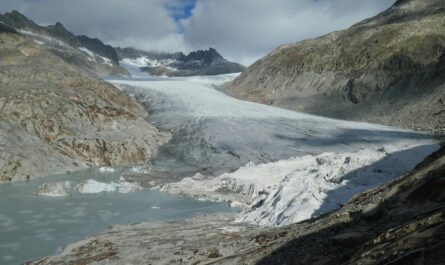
Mountain glaciers worldwide are retreating, impacting water supplies for hundreds of millions of people. In the best-case future, glacier loss continues for several decades but slows considerably as temperatures stabilize.
Communities dependent on glacier-fed rivers adapt through improved water management systems, storage infrastructure, and conservation practices. While many small glaciers disappear, larger glacier systems endure long enough for societies to transition responsibly.
4. Controlled Sea-Level Rise
In a strong mitigation pathway, global sea levels rise perhaps around half a meter to one meter by 2100 — significant but manageable. Coastal cities implement defenses, restore wetlands, and redesign infrastructure with foresight rather than crisis response.
Island nations face challenges but receive international support for adaptation and, where necessary, managed relocation. The economic costs are high but not catastrophic.
5. Reduced Permafrost Feedback
Permafrost contains vast stores of carbon. If thawed rapidly, it releases methane and carbon dioxide, amplifying warming. In the best-case scenario, warming slows enough to prevent widespread abrupt thaw.
Some permafrost degradation occurs, but runaway feedback loops are avoided. This prevents an additional surge of greenhouse gases that would otherwise intensify global warming.
The Worst-Case Scenario: Accelerated Collapse
In the worst-case trajectory, global emissions remain high, warming exceeds 3–4°C by 2100, and tipping points in the ice system are crossed.
This scenario involves cascading effects that reshape the planet.
1. Greenland Ice Sheet Irreversibility
At sustained high temperatures, Greenland may reach a threshold beyond which ice loss becomes self-sustaining. Surface melting accelerates, and darkened ice absorbs more sunlight. Meltwater seeps to the base, lubricating glaciers and speeding their flow into the ocean.
Once a critical tipping point is crossed, the process may continue even if temperatures later decline. Over centuries, Greenland alone could contribute up to seven meters of sea-level rise.
Even partial realization of this potential within a few centuries would permanently redraw global coastlines.
2. West Antarctic Ice Sheet Collapse
Parts of West Antarctica rest on bedrock below sea level. Warmer ocean waters can destabilize the ice from underneath. In the worst-case scenario, warming oceans erode critical ice shelves, triggering rapid retreat of inland glaciers.
This phenomenon, known as marine ice sheet instability, could cause multi-meter sea-level rise over centuries — possibly faster than many adaptation systems can handle.
Cities like New York, Mumbai, Shanghai, and Lagos would face chronic flooding. Entire regions could become uninhabitable without massive engineering interventions.
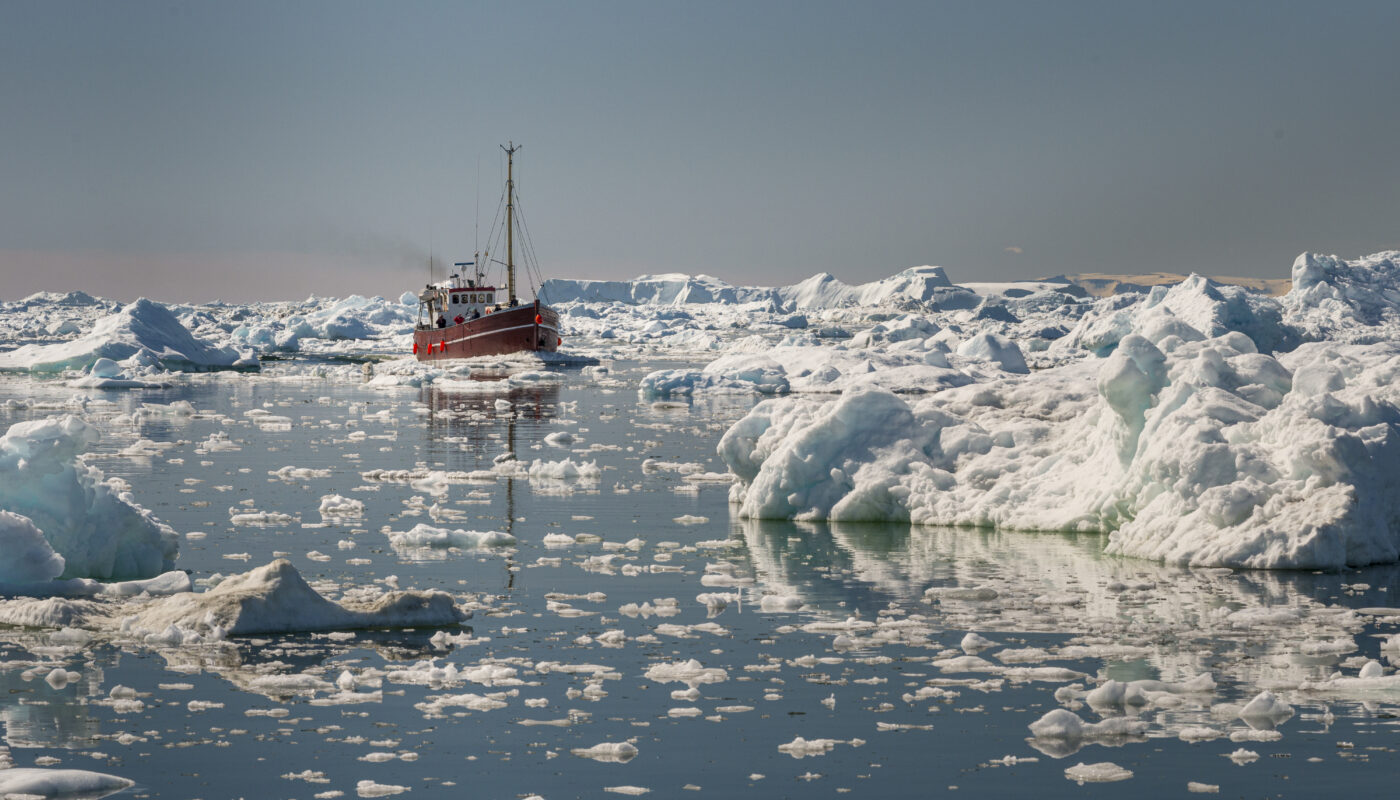
3. Ice-Free Arctic Summers
In a high-warming world, the Arctic experiences regular ice-free summers within decades. This drastically reduces the planet’s reflectivity. Dark ocean waters absorb heat, accelerating warming in a feedback loop.
The disappearance of sea ice also disrupts ecosystems. Species such as polar bears, seals, and walruses lose critical habitat. Indigenous communities that rely on sea ice for travel and hunting face cultural and economic upheaval.
Geopolitically, newly accessible Arctic shipping routes may intensify competition among nations, raising tensions.
4. Rapid Glacier Disappearance
Many mid-latitude glaciers vanish entirely under sustained high warming. Regions in South Asia, South America, and parts of Europe lose critical freshwater sources.
Initially, accelerated melting increases river flows, raising flood risks. Eventually, diminished glacier mass leads to water scarcity, affecting agriculture, hydropower, and drinking water supplies for millions.
This combination of floods followed by drought destabilizes vulnerable regions.
5. Massive Permafrost Emissions
In the worst-case scenario, permafrost thaws rapidly across Siberia, Alaska, and northern Canada. Large quantities of methane — a potent greenhouse gas — enter the atmosphere.
These emissions amplify warming beyond human emissions alone, potentially pushing the climate into an even hotter state. This feedback loop could reduce the effectiveness of mitigation efforts and make climate stabilization far more difficult.
Tipping Points: The Critical Unknown
One of the greatest uncertainties in predicting global ice futures is tipping points. These are thresholds beyond which change accelerates and becomes difficult or impossible to reverse.
Examples include:
- Irreversible ice sheet retreat
- Loss of Arctic summer sea ice
- Rapid permafrost methane release
Scientists continue to refine models, but tipping behavior is inherently complex. The worst-case scenario is not guaranteed — but it becomes more likely with higher warming.
The Economic Divide Between Scenarios
The financial difference between best-case and worst-case futures is staggering.
In a moderated warming scenario, adaptation costs are high but distributed and manageable. Governments invest in sea walls, relocation planning, and resilient infrastructure.
In the worst-case trajectory, damages escalate into trillions of dollars annually. Insurance systems collapse in vulnerable regions. Forced migration intensifies. Global food systems face severe stress due to disrupted water cycles and coastal flooding.
The economic argument for limiting warming is not abstract — it directly connects to global stability.
Human Agency: The Deciding Factor
Unlike many natural processes, the fate of global ice is strongly influenced by human choices.
Key factors shaping outcomes include:
- Speed of decarbonization
- Renewable energy expansion
- Forest protection
- Technological innovation
- International climate agreements
Even partial success in emission reductions significantly alters long-term ice behavior. Every fraction of a degree matters.
Is There a Middle Ground?
The future will likely fall between the extremes. Some ice loss is unavoidable due to past emissions. However, catastrophic collapse is not inevitable.
Limiting warming to near 1.5–2°C dramatically reduces the probability of triggering irreversible tipping points. It buys time — and time is one of the most valuable resources in climate adaptation.
What the Future of Ice Means for Humanity
Global ice is not just frozen water. It is a stabilizing system that regulates temperature, sea levels, weather, and ecosystems.
In the best-case scenario:
- Sea-level rise remains manageable
- Ecosystems partially adapt
- Economic disruption is significant but contained
In the worst-case scenario:
- Coastal megacities face chronic flooding
- Ecosystems collapse in polar regions
- Water security becomes fragile in many regions
- Climate feedback loops intensify warming
The difference between these futures hinges on choices being made today.
Conclusion: A Narrowing Window
The story of global ice is still being written. The best-case scenario envisions a world that acts decisively, stabilizes warming, and prevents catastrophic tipping points. The worst-case scenario reflects continued inaction and escalating consequences.
What makes this moment unique in human history is that the trajectory is not predetermined. Ice sheets respond to physics — but physics responds to greenhouse gas concentrations. And those concentrations respond to human behavior.
The future of global ice is ultimately a reflection of global resolve.
Whether we see controlled adaptation or irreversible transformation depends not on distant centuries, but on actions taken within the next few decades.