 by
by Glaciers are some of the most powerful, mysterious, and important features on our planet. They shape mountains, carve valleys, feed rivers, influence climate, and store most of the Earth’s fresh water. Yet despite their importance, many people are not entirely sure what a glacier actually is.
Is a glacier just a big block of ice?
Is it the same thing as an iceberg?
Does it move or is it frozen in place?
Why are glaciers melting?
And why should people who live far away from any glacier care at all?
This guide is written for complete beginners. By the end of this article, you will understand:
- What a glacier really is
- How glaciers form and grow
- How and why glaciers move
- The different types of glaciers
- Where glaciers exist in the world
- Why glaciers matter to humanity
- What is happening to them today
- And what their future might look like
You do not need any background in geography or science to understand this. Everything is explained clearly and step by step.
What Is a Glacier? (A Simple Definition)
A glacier is a large, long-lasting mass of ice that forms on land from compressed snow and moves slowly under its own weight.
That last part is extremely important.
A glacier is not just frozen ice sitting in one place. A glacier is always moving, even if that movement is very slow.
In simple terms:
A glacier is a river of ice.
It flows downhill, spreads outward, and changes the landscape as it moves.
What Makes a Glacier Different from Normal Ice?
Not all ice is a glacier.
For ice to be considered a glacier, it must:
- Be made from snow that has accumulated over many years
- Be thick and heavy enough to deform and move
- Flow or creep under its own weight
This means:
- A frozen lake is not a glacier
- An iceberg is not a glacier
- A seasonal snowfield is not a glacier
A glacier is a living system of ice that slowly moves and reshapes the land.
How Do Glaciers Form?
Glaciers form over very long periods of time, usually hundreds or thousands of years.
Step 1: Snow Accumulates Year After Year
In cold regions or high mountains, more snow falls in winter than melts in summer. Over time:
- Each year adds a new layer of snow
- The lower layers get buried and compressed
- Air is slowly squeezed out
Step 2: Snow Turns into Ice
As pressure increases:
- Snow becomes compacted into a dense material called firn
- Firn slowly turns into solid glacier ice
This process can take:
- Decades in some places
- Hundreds of years in others
Step 3: The Ice Becomes Thick Enough to Move
Once the ice becomes thick and heavy enough:
- Gravity starts pulling it downhill
- The ice begins to flow
At this point, it is officially a glacier.
How Do Glaciers Move?
This surprises many people.
Even though ice looks solid and rigid, glacier ice:
- Deforms slowly under pressure
- Slides over the ground beneath it
- Cracks and reforms as it moves
Glaciers move in three main ways:
- Internal deformation (the ice slowly bends and flows)
- Basal sliding (the glacier slides over wet ground or rock)
- Sediment deformation (the ground beneath the glacier shifts)
Some glaciers move:
- A few centimeters per day
Others can move: - Several meters per day
The fastest glaciers in the world can move tens of meters per day.
Do Glaciers Always Move Downhill?
Yes.
Glaciers move because of gravity. They always flow from:
Higher elevations to lower elevations.
However, they do not always move in a straight line. They can:
- Curve
- Spread out
- Split into branches
- Or merge together
Are Glaciers Alive?
Glaciers are not alive in the biological sense, but they behave like dynamic systems.
They:
- Grow
- Shrink
- Flow
- Crack
- Respond to temperature and snowfall
In many ways, glaciers behave more like slow-moving organisms than frozen objects.
How Big Can a Glacier Be?
Glaciers come in all sizes.
Some are:
- Only a few hundred meters long
Others are:
- Hundreds or even thousands of kilometers long
The largest glaciers on Earth are:
- The ice sheets of Antarctica and Greenland
Together, they contain:
Almost 70 percent of all the fresh water on Earth.
The Main Types of Glaciers
Not all glaciers look the same. Scientists classify glaciers based on their size, shape, and location.
1. Valley Glaciers
These are the most common glaciers.
- They form in mountains
- They flow down valleys
- They often look like frozen rivers
2. Mountain or Alpine Glaciers
A general term for glaciers found in mountain ranges.
They include:
- Valley glaciers
- Cirque glaciers
- Hanging glaciers
3. Ice Caps
- Large dome-shaped masses of ice
- Cover high plateaus or mountains
- Smaller than ice sheets
4. Ice Sheets
- The largest type of glacier
- Cover entire continents
- Found in Antarctica and Greenland
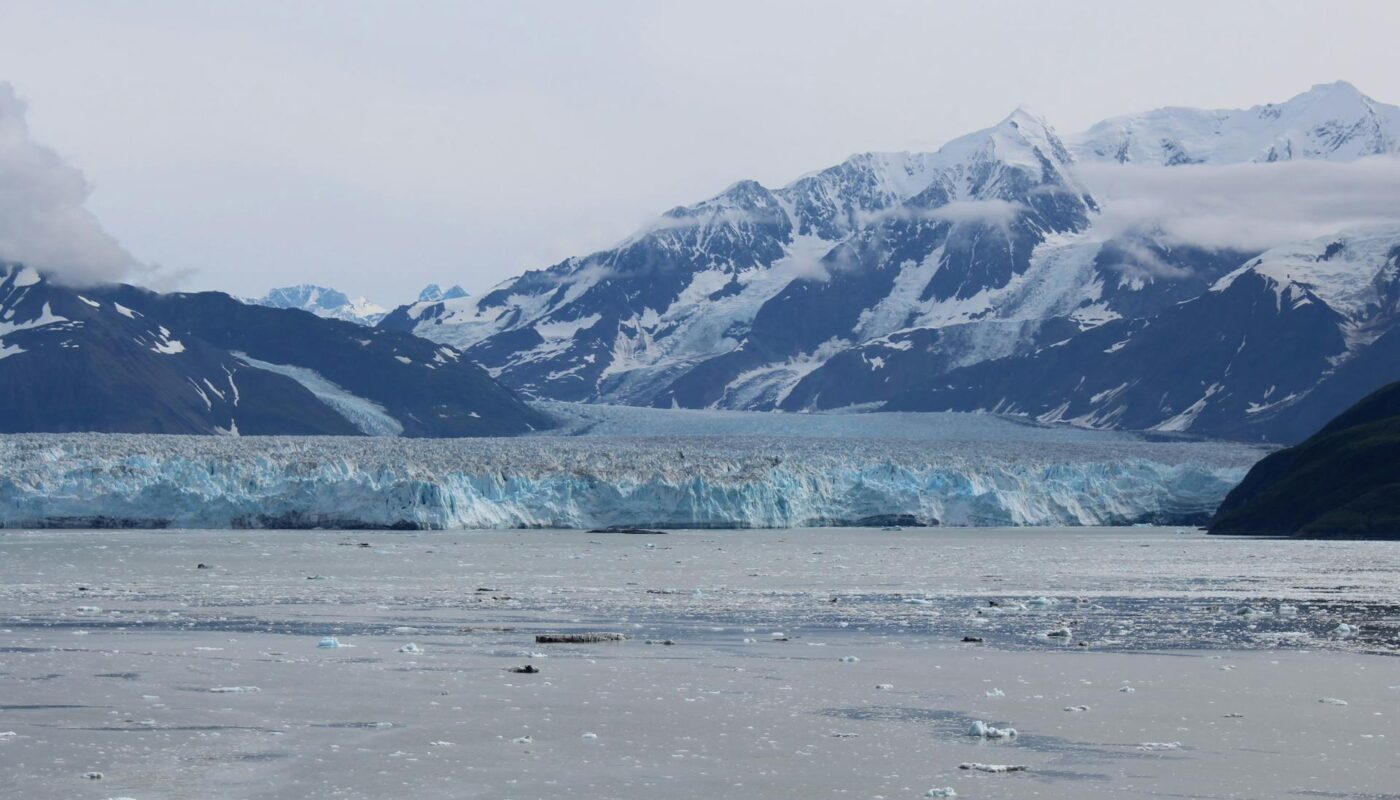
5. Tidewater Glaciers
- Glaciers that flow directly into the ocean
- They break off chunks of ice called icebergs
Glaciers vs Icebergs: What Is the Difference?
This is a very common confusion.
- A glacier forms on land and moves across land
- An iceberg is a piece of glacier ice that has broken off and is floating in the ocean
So:
All icebergs come from glaciers, but not all glaciers produce icebergs.
Where Are Glaciers Found?
Glaciers exist in two main types of places:
- Near the poles (Antarctica, Greenland, Arctic regions)
- In high mountains (even near the equator)
You can find glaciers in:
- Antarctica
- Greenland
- Alaska
- Canada
- The Andes
- The Alps
- The Himalayas
- New Zealand
- Iceland
- Scandinavia
- Parts of Africa
Yes, there are even glaciers near the equator, although most of them are disappearing.
Why Are Glaciers Important?
Glaciers are not just beautiful. They are critical to life on Earth.
1. They Store Fresh Water
Glaciers and ice sheets store:
More fresh water than all rivers, lakes, and groundwater combined.
2. They Feed Rivers
In many regions, especially in Asia and South America:
- Meltwater from glaciers provides water for
- Drinking
- Farming
- Industry
- Hydropower
Hundreds of millions of people depend on glacier-fed rivers.
3. They Shape the Landscape
Glaciers have created:
- Fjords
- U-shaped valleys
- Many of the world’s most famous mountains and lakes
Without glaciers, much of today’s landscape would look completely different.
4. They Regulate Climate
Glaciers and ice sheets:
- Reflect sunlight
- Help keep the planet cooler
- Influence ocean circulation and weather patterns
How Do Glaciers Change the Land?
Glaciers are among the most powerful erosion forces on Earth.
They:
- Grind down mountains
- Carve deep valleys
- Transport enormous amounts of rock and sediment
They leave behind:
- Moraines
- Drumlins
- Erratic boulders
- Polished and scratched rock surfaces
Many of the most dramatic landscapes on Earth exist because glaciers shaped them.
Are Glaciers Permanent?
No.
Glaciers are always in balance between:
- Accumulation (snowfall)
- Ablation (melting, evaporation, calving)
If a glacier gains more snow than it loses:
- It grows
If it loses more than it gains:
- It shrinks and retreats
Why Are Glaciers Melting?
Glaciers are melting mainly because:
- The global climate is warming
- Summers are getting longer and warmer
- More rain is falling instead of snow
- Oceans are warming near tidewater glaciers
This causes:
- Faster surface melting
- Faster ice flow
- More ice breaking into the sea
Are All Glaciers Melting?
Almost all glaciers in the world are shrinking.
A few glaciers in specific regions are:
- Stable
- Or even growing slightly
But globally, the trend is clear:
The planet is losing ice very rapidly.
What Happens When a Glacier Disappears?
When a glacier disappears:
- Rivers lose a long-term water source
- Landscapes become unstable
- Landslides and floods become more likely
- Ecosystems change
- Local climates change
In many regions, glacier loss threatens:
- Water security
- Food production
- Energy generation
Are Glaciers Dangerous?
Glaciers are not dangerous to observe from safe viewpoints, but they are serious environments.
Real dangers include:
- Crevasses
- Icefalls
- Collapsing ice
- Sudden floods
- Extremely cold water
- Rapid weather changes
This is why glacier travel usually requires:
- Guides
- Equipment
- Experience
Why Should People Who Live Far Away Care?
Even if you live thousands of kilometers from the nearest glacier, glaciers affect you because:
- They influence sea level
- They affect global climate systems
- They impact food and water security worldwide
- Their loss contributes to coastal flooding
Glaciers are part of the global system, not local curiosities.
The Emotional Side of Glaciers
Many people who visit glaciers describe something unexpected:
- They feel small
- They feel humbled
- They feel a deep sense of time and scale
Glaciers are reminders of:
- How old the Earth is
- How powerful nature is
- How quickly things can change
So, What Is a Glacier, Really?
A glacier is:
- A massive, slow-moving river of ice
- A sculptor of landscapes
- A reservoir of fresh water
- A regulator of climate
- A record of Earth’s history
And today, it is also:
One of the clearest warning signs that our planet is changing.
Final Thoughts: Why Understanding Glaciers Matters
You do not need to be a scientist to understand glaciers.
But in the coming decades:
Understanding glaciers will become increasingly important for everyone.
They are not just frozen mountains. They are part of the system that keeps our world stable, livable, and balanced.