 by
by Glaciers are disappearing at a rate that has alarmed scientists, environmentalists, and governments around the world. From the Alps and the Andes to Greenland and the Himalayas, enormous masses of ancient ice are shrinking due to rising global temperatures. For many people, glaciers symbolize the visible reality of climate change. Their retreat has become one of the clearest indicators of a warming planet.
Yet as concern over glacier loss grows, another discussion has emerged alongside the scientific one: should humanity actively attempt to save glaciers, and if so, how far should those efforts go?
This question has created a fascinating moral and ethical debate involving climate responsibility, environmental intervention, economics, indigenous rights, technological solutions, and the limits of human control over nature. Some argue that protecting glaciers is a moral obligation because glaciers support ecosystems, freshwater supplies, and future generations. Others question whether expensive glacier-saving projects are realistic, ethical, or even effective in the face of global climate change.
The debate becomes even more complicated when considering artificial interventions such as glacier covers, geoengineering proposals, artificial snow production, and technological climate solutions. These methods bring up challenging issues regarding how humans might modify natural systems that have already undergone significant alteration due to industrial activities.
Saving glaciers is therefore no longer only an environmental issue. It is also a philosophical and ethical challenge that forces humanity to confront how it relates to nature, responsibility, inequality, and the future of the planet itself.
Why Glaciers Matter Beyond Their Beauty
To understand the ethical debate, it is important first to understand why glaciers matter so deeply.
Glaciers are far more than frozen tourist attractions or scenic mountain features. They play critical roles in both natural ecosystems and human societies.
Glaciers influence:
- Freshwater supplies
- River systems
- Agriculture
- Hydropower
- Sea-level regulation
- Biodiversity
- Climate systems
Millions of people depend directly or indirectly on glacier-fed water sources. In many mountainous regions, glaciers provide crucial river flow during dry seasons when rainfall is limited.
Glaciers also support fragile ecosystems adapted to cold environments. Fish populations, alpine plants, wildlife, and downstream wetlands often depend on stable glacier-fed water systems.
For many communities, glaciers have cultural, spiritual, and historical significance in addition to their utilitarian value. Indigenous populations in regions such as the Andes, Himalayas, and Arctic often view glaciers as sacred parts of the landscape connected to identity and tradition.
Their disappearance therefore represents not only environmental loss but also cultural and emotional loss.
The Argument That Humanity Has a Moral Responsibility
One of the strongest ethical arguments for saving glaciers is based on responsibility.
Many scientists agree that modern glacier retreat is primarily caused by human-driven climate change. Industrial emissions, fossil fuel consumption, deforestation, and large-scale economic activity have significantly increased global temperatures.
From this perspective, humanity is not simply observing glacier loss passively. Humanity is contributing directly to the problem.
Therefore, supporters argue:
- If humans caused the damage, humans have a moral obligation to respond.
- Future generations deserve a stable environment.
- Wealthier nations that contributed most to emissions carry greater responsibility.
- Ignoring glacier loss would represent environmental negligence.
This argument is rooted in environmental ethics and intergenerational justice.
The concept of intergenerational justice suggests that current generations should not destroy environmental systems that future generations depend upon. Glaciers formed over thousands of years, yet human activity is causing many to disappear within only decades.
For many ethicists, allowing irreversible environmental destruction without attempting intervention is morally unacceptable.
Climate Inequality and Glacier Loss
The ethical debate becomes even more complicated when considering global inequality.
Many communities most affected by glacier retreat contributed very little to global emissions.
For example:
- Himalayan villages
- Andean farming communities
- Indigenous Arctic populations
often depend heavily on glacier-fed water while historically producing minimal greenhouse gas emissions.
Meanwhile, industrialized nations responsible for much of the world’s historical carbon emissions often face fewer immediate consequences from glacier retreat.
This imbalance raises important ethical questions:
- Who should pay for glacier protection?
- Should wealthy countries compensate vulnerable regions?
- Is climate responsibility shared equally?
- Do industrialized nations owe environmental reparations?
Some environmental advocates argue that glacier preservation should be viewed partly as an issue of climate justice rather than only environmental conservation.
The Emotional and Cultural Importance of Glaciers
Glaciers also hold emotional significance that goes beyond scientific measurements.
For many communities, glaciers are:
- Sacred landscapes
- Sources of spiritual identity
- Historical symbols
- Cultural landmarks
- Part of traditional storytelling
In Iceland, Peru, Nepal, and other glacier regions, the retreat of ice is sometimes experienced almost as a form of mourning.
People describe feelings of:
- Grief
- Anxiety
- Loss of identity
- Fear for future generations
Environmental philosophers increasingly discuss the concept of “ecological grief,” the emotional pain caused by witnessing environmental destruction.
The disappearance of glaciers often represents more than physical change. It symbolizes the fragility of the natural world and humanity’s growing impact on Earth’s systems.
Should Humans Intervene Directly?
One of the most controversial aspects of the glacier debate involves direct intervention.
Some scientists and governments have experimented with projects aimed at slowing glacier melt through artificial means.
Examples include:
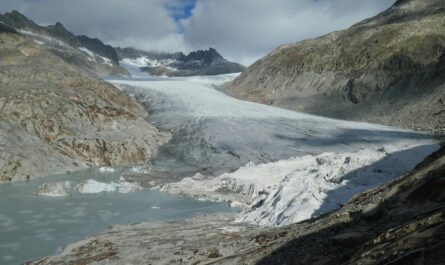
- Covering glaciers with reflective blankets
- Producing artificial snow
- Building underwater barriers near ice sheets
- Geoengineering proposals
- Reflective particle technologies
These projects aim to reduce ice loss locally or temporarily.
However, critics raise serious ethical concerns.
The Argument Against Artificial Intervention
Some environmental thinkers argue that technological glacier-saving projects risk creating a dangerous illusion that humanity can engineer its way out of climate change.
Critics worry such efforts may:
- Distract from reducing emissions
- Encourage political inaction
- Create false optimism
- Treat symptoms instead of causes
There is also concern about unintended consequences.
Large-scale environmental engineering could potentially:
- Disrupt ecosystems
- Alter weather patterns
- Create geopolitical conflict
- Produce unforeseen environmental risks
Opponents argue that trying to manipulate natural systems on massive scales may reflect excessive human arrogance rather than genuine environmental responsibility.
The Ethics of Geoengineering
Geoengineering remains one of the most debated topics connected to glacier preservation.
Geoengineering refers to large-scale technological attempts to alter Earth’s climate systems intentionally.
Some proposed glacier-related geoengineering ideas include:
- Increasing atmospheric reflectivity
- Artificially cooling polar regions
- Ocean interventions
- Solar radiation management
Supporters argue that climate change has become so severe that technological intervention may eventually become necessary.
Critics respond that geoengineering raises profound ethical questions:
- Who decides which technologies are used?
- Who controls global climate interventions?
- What if unintended harm occurs?
- Can humanity ethically manipulate planetary systems?
Some ethicists fear that geoengineering could shift power toward wealthy nations and corporations capable of controlling climate technologies.
Others argue that refusing to explore technological solutions may itself become unethical if climate impacts worsen dramatically.
Is Saving Every Glacier Realistic?
Another difficult ethical question involves practicality.
Many scientists acknowledge that some glacier loss is now unavoidable due to existing global warming.
Even if emissions stopped immediately, certain glaciers would likely continue shrinking for decades because of long-term climate processes already underway.
This creates challenging decisions:
- Which glaciers should be prioritized?
- Should resources focus on water-critical glaciers?
- Is symbolic preservation worthwhile?
- Are some glacier-saving projects mostly political gestures?
Protecting every glacier on Earth may simply be impossible.
As a result, policymakers and scientists sometimes face uncomfortable choices about allocating limited resources.
Economic Perspectives on Glacier Preservation
Economic considerations also influence the ethical debate.
Glacier preservation projects can be extremely expensive. Governments must balance environmental goals against competing priorities such as:
- Healthcare
- Education
- Housing
- Infrastructure
- Poverty reduction
Critics argue that local glacier interventions may consume large amounts of money while producing limited long-term impact.
Supporters counter that glacier loss itself creates enormous economic costs through:
- Water shortages
- Agricultural disruption
- Flood risk
- Tourism decline
- Ecosystem damage
The economic debate therefore reflects broader ethical disagreements about how societies value nature.
Should glaciers be protected only when economically useful, or do they possess intrinsic value beyond financial calculations?
The Concept of Intrinsic Environmental Value
One major philosophical issue centers on whether glaciers have value simply because they exist.
Some environmental ethicists argue that nature should not be valued only according to human usefulness.
From this perspective:
- Glaciers possess intrinsic worth
- Ecosystems deserve protection independently of economics
- Species and landscapes should not exist only for human benefit
This worldview contrasts with purely utilitarian approaches that focus primarily on human-centered outcomes.
The debate reflects deeper philosophical differences about humanity’s relationship with the natural world.
Indigenous Perspectives on Glacier Protection
Indigenous communities often bring unique perspectives to the glacier debate.
Many indigenous worldviews emphasize:
- Interconnectedness with nature
- Stewardship rather than ownership
- Spiritual relationships with landscapes
- Long-term environmental thinking
In some regions, glaciers are viewed as living entities rather than resources.
For example:
- Certain Andean communities consider glaciers sacred beings.
- Arctic indigenous groups often connect ice landscapes to cultural survival.
- Himalayan traditions may associate glaciers with spiritual balance.
These perspectives challenge purely scientific or economic discussions by introducing moral relationships between humans and the environment.
Some indigenous activists argue that glacier protection should involve respecting traditional ecological knowledge rather than relying solely on technological solutions.
Tourism and Ethical Contradictions
Ironically, tourism creates another ethical contradiction.
Glaciers attract millions of visitors annually, generating:
- Economic benefits
- Environmental awareness
- Conservation funding
At the same time, tourism also contributes to:
- Carbon emissions
- Infrastructure development
- Environmental stress
Many travelers visit glaciers specifically because they fear they may disappear within their lifetime. This phenomenon, sometimes called “last-chance tourism,” creates ethical tension because travel itself may contribute indirectly to the climate problem.
The question becomes:
Can tourism simultaneously help and harm glacier conservation?
Media, Fear, and Environmental Messaging
The way glacier loss is communicated also raises ethical concerns.
Some environmental campaigns use highly emotional imagery and catastrophic language to encourage climate action.
Critics argue that excessive fear-based messaging may:
- Create hopelessness
- Cause climate anxiety
- Oversimplify complex issues
Others believe strong emotional communication is necessary because glacier loss represents a genuine global emergency.
Balancing urgency with constructive engagement remains a difficult ethical challenge for environmental communication.
What Future Generations May Inherit
Perhaps the most powerful ethical issue surrounding glaciers involves the future.
Glaciers formed over immense periods of geological time. Many existing glaciers are thousands of years old, preserving environmental history within their ice layers.
Future generations may inherit:
- Reduced freshwater systems
- Altered ecosystems
- Rising seas
- Lost landscapes
- Disappearing cultural heritage
The debate over saving glaciers ultimately becomes a debate about what kind of world humanity chooses to leave behind.
Some ethicists argue that knowingly allowing preventable environmental destruction violates moral duties toward future life on Earth.
Others caution that simplistic solutions may create new risks if driven by panic rather than careful long-term thinking.
Finding Ethical Balance
Most experts agree that no single solution exists.
Meaningful glacier protection likely requires a combination of:
- Emissions reduction
- International cooperation
- Scientific research
- Sustainable policy
- Local adaptation strategies
- Environmental education
The ethical challenge lies in balancing:
- Human needs
- Environmental responsibility
- Technological intervention
- Economic realities
- Cultural preservation
This balance will likely remain one of the defining environmental debates of the twenty-first century.
Final Thoughts
The moral and ethical debate around saving glaciers extends far beyond ice itself. It forces humanity to confront difficult questions about responsibility, justice, technological intervention, environmental values, and the relationship between people and the natural world.
Glaciers are not simply frozen landscapes disappearing quietly in distant mountains. They are symbols of climate change, environmental interconnectedness, and the consequences of human activity on planetary systems.
Some believe humanity has a moral obligation to protect glaciers because human behavior helped create the crisis. Others warn that technological attempts to control nature may introduce new ethical and environmental risks.
Ultimately, the debate reflects a larger question facing modern civilization: how should humanity respond when its own actions threaten the stability of the natural systems it depends upon?
The future of glaciers may depend not only on science and policy, but also on the ethical choices societies make about responsibility, sustainability, and the kind of world future generations deserve to inherit.