by
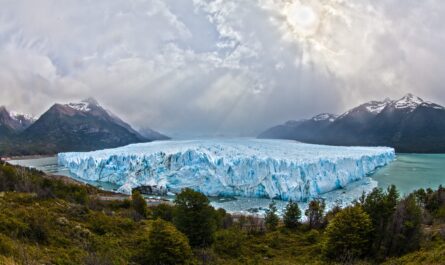
by When people think about glaciers in South America, their minds almost instantly travel to the spectacular ice fields of Patagonia. The massive glaciers of southern Argentina and Chile, such as the famous Perito Moreno Glacier, have become global icons of wilderness and adventure. However, Patagonia does not hold a monopoly on South America’s frozen landscapes.
Scattered across the continent are numerous glaciers hidden among towering mountain ranges, remote volcanoes, and high-altitude plateaus. From the tropical Andes near the equator to the isolated snowfields of central Chile and the glacier-capped peaks of Peru and Bolivia, these lesser-known ice masses are equally fascinating. Many of them are scientifically significant, culturally important, and increasingly vulnerable to climate change.
Exploring the glaciers of South America outside Patagonia reveals an entirely different side of the continent’s icy geography—one where glaciers exist in unexpected places and where their future hangs in a delicate balance.
The Surprising Diversity of South American Glaciers
South America stretches from near the Equator to the icy waters of the Southern Ocean. This immense north-to-south span creates a remarkable range of climates and ecosystems. Consequently, glaciers are found in regions that differ dramatically in temperature, precipitation, and altitude.
Outside Patagonia, most glaciers occur in the mighty Andes, the world’s longest continental mountain range. Here, glaciers are generally smaller than those in Patagonia but often sit at much higher elevations. Some are classified as tropical glaciers because they exist within the tropics despite their freezing conditions.
These glaciers serve as:
- Natural freshwater reservoirs
- Sources of river systems
- Indicators of climate change
- Sacred landscapes for local communities
- Important scientific research sites
Although many are shrinking rapidly, they remain among the most extraordinary natural features of South America.
Tropical Glaciers of Peru
Peru possesses the largest concentration of tropical glaciers on Earth. These glaciers exist close to the Equator, a fact that often surprises people who associate glaciers solely with polar regions.
The Cordillera Blanca
Cordillera Blanca is perhaps the most famous glacier region outside Patagonia. Stretching through northern Peru, it contains hundreds of glaciers and numerous snow-covered peaks.


6
The region includes:
- More than 700 glaciers
- Hundreds of glacial lakes
- Some of Peru’s highest mountains
- Exceptional biodiversity
At the center of the range rises Huascarán, Peru’s tallest mountain at over 6,700 meters above sea level. Its glaciated slopes feed rivers that support agriculture and communities in the valleys below.
Pastoruri Glacier
Among Peru’s best-known glaciers is Pastoruri Glacier. Once a major skiing destination, the glacier has retreated dramatically in recent decades.
The shrinking of Pastoruri has become a symbol of climate change in tropical regions. Educational programs now use the site to teach visitors about the consequences of rising temperatures and disappearing ice.
The Importance of Peru’s Tropical Glaciers
Peru’s glaciers are vital because they act as natural water towers. During dry seasons, meltwater provides water for:
- Drinking supplies
- Agriculture
- Hydroelectric power generation
- Livestock
- Ecosystems
As glaciers shrink, concerns about future water shortages continue to grow.
Ecuador’s Glacier-Capped Volcanoes
Despite its small size, Ecuador hosts several spectacular glaciers.
The country’s glaciers are unique because many sit atop active or dormant volcanoes.
Cotopaxi
Cotopaxi is one of the world’s highest active volcanoes and features an impressive ice cap near its summit.


6
The glacier contributes to local water supplies and creates striking scenery that attracts climbers from around the world.
However, volcanic activity presents additional challenges. Eruptions can melt glacier ice rapidly, producing dangerous mudflows known as lahars.
Chimborazo
Another famous glaciated volcano is Chimborazo.
Because of the Earth’s equatorial bulge, the summit of Chimborazo is actually the point on Earth’s surface farthest from the planet’s center. Its glaciers have long provided water and ice to nearby communities.
Historically, local residents harvested ice from the mountain and transported it to cities for commercial use.
The Future of Ecuador’s Glaciers
Ecuador’s glaciers are shrinking quickly due to rising temperatures. Scientists predict that some lower-elevation glaciers may disappear entirely within this century if warming trends continue.
Bolivia’s Vanishing Ice
Bolivia also contains tropical glaciers, many of which are disappearing at alarming rates.
The Cordillera Real
Cordillera Real contains numerous glaciers that provide water to major cities, including the metropolitan region surrounding La Paz.
The glaciers here are essential because they help sustain populations during the dry season.
Chacaltaya Glacier
One of the most famous examples of glacial retreat is Chacaltaya Glacier.
The glacier once hosted the world’s highest ski resort. However, the ice retreated so dramatically that the glacier essentially disappeared in the early twenty-first century.
The loss of Chacaltaya became a global symbol of the vulnerability of tropical glaciers.
Water Security Challenges
The retreat of Bolivian glaciers poses serious concerns:
- Reduced freshwater supplies
- Greater pressure on reservoirs
- Increased vulnerability during droughts
- Potential impacts on agriculture
For millions of people, these glaciers are not simply scenic attractions—they are critical components of everyday life.
Colombia’s Snowy Peaks
Even closer to the Equator, Colombia still maintains a few small glaciers.
These glaciers survive only at very high elevations and are among the most endangered in South America.
Sierra Nevada de Santa Marta
Sierra Nevada de Santa Marta is one of the world’s highest coastal mountain ranges.
Its isolated peaks support small glaciers that rise dramatically above tropical landscapes.
Los Nevados National Natural Park
Los Nevados National Natural Park contains several glacier-covered volcanoes, including:
- Nevado del Ruiz
- Nevado del Tolima
- Nevado de Santa Isabel
Scientists estimate that Colombia has lost much of its glacial area over the last century.
Some researchers believe that several Colombian glaciers could disappear entirely within the coming decades.
Venezuela’s Lost Glaciers
The story of glaciers in Venezuela is especially dramatic.
The country once possessed several glaciers in the Andes, but warming temperatures caused most of them to vanish.
The final remnants of ice on Pico Humboldt have become a symbol of environmental change.
Venezuela serves as a reminder that entire glacier systems can disappear within a human lifetime.
Central Chile’s Overlooked Glaciers
Although southern Chile’s Patagonian glaciers receive global attention, central Chile also hosts numerous glaciers.
These glaciers are particularly important because they supply water to densely populated regions.
The Andes Near Santiago
Santiago depends significantly on water originating from glaciers and snowfields in the surrounding Andes.
Many glaciers in this region are relatively small but play an outsized role in supporting:
- Drinking water systems
- Agriculture
- Industry
- Hydroelectric production
Climate Pressures
Central Chile has experienced prolonged droughts and increasing temperatures.
As glaciers retreat, concerns over water scarcity continue to intensify.
Scientists closely monitor these glaciers because they are crucial for the future sustainability of one of South America’s largest urban regions.
Argentina Beyond Patagonia
While Patagonia dominates discussions of Argentine glaciers, smaller glaciers exist farther north.
The Andes of Mendoza Province
Mendoza Province contains numerous high-altitude glaciers that feed river systems supporting vineyards and agriculture.
These glaciers are especially important in the dry climate of western Argentina.
Aconcagua Region
Aconcagua, the tallest peak outside Asia, contains glaciers that contribute to regional water supplies.
Although smaller than Patagonia’s famous glaciers, these ice fields remain essential for local ecosystems and economies.
Why These Glaciers Matter
The glaciers outside Patagonia often receive less publicity, but their significance cannot be overstated.
Freshwater Storage
Millions of people rely on glacier-fed water systems.
Climate Indicators
Glaciers respond quickly to changing temperatures, making them valuable indicators of global climate trends.
Biodiversity Support
Glacial meltwater sustains wetlands, rivers, and unique ecosystems.
Cultural Importance
Many Indigenous communities regard mountain glaciers as sacred places connected to spiritual traditions and local identity.
Scientific Research
Studying tropical glaciers provides insight into:
- Climate history
- Atmospheric processes
- Water resource management
- Future environmental changes
The Threat of Climate Change
Nearly every glacier system outside Patagonia faces significant challenges.
The major drivers of glacial retreat include:
- Rising temperatures
- Changing precipitation patterns
- Increased frequency of drought
- Black carbon deposits on snow and ice
The consequences extend beyond the mountains.
Potential impacts include:
- Water shortages
- Agricultural disruptions
- Ecosystem changes
- Increased natural hazards
- Economic difficulties for local communities
For some countries, glacier retreat has become one of the most pressing environmental issues of the century.
A Hidden World of Ice
Patagonia may be South America’s most famous glacial region, but it is far from the continent’s only frozen landscape.
From the tropical glaciers of Peru and Bolivia to Ecuador’s icy volcanoes and Colombia’s endangered snowfields, South America contains a remarkable diversity of glaciers that many travelers never discover.
These lesser-known glaciers are more than scenic wonders. They are water reservoirs, climate archives, cultural treasures, and essential parts of mountain ecosystems.
As climate change accelerates, these icy landscapes are undergoing rapid transformation. Some may disappear within the lifetimes of today’s younger generations.
Understanding and appreciating the glaciers of South America outside Patagonia is therefore more than an exercise in geography. It is an opportunity to recognize the extraordinary diversity of the continent and the urgent need to protect some of its most fragile natural wonders before they become memories preserved only in photographs and scientific records.
write 3 popular keywords for above article
Here are three popular SEO keywords for the article “Glaciers of South America Outside Patagonia”:
- South America Glaciers
- Tropical Glaciers in the Andes
- Glaciers Outside Patagonia