 by
Glaciers may look permanent, but they are constantly moving, deforming, melting, cracking, and responding to changes in their surroundings. Some advance slowly, some retreat gradually, and others can experience sudden and dramatic events such as icefalls, large calving episodes, or partial collapses.
This raises an important scientific question: Can you predict when a glacier will collapse?
The short answer is complicated. Scientists can identify warning signs, monitor unstable glaciers, measure changes in ice movement, and sometimes forecast an increased probability of collapse. In certain situations, researchers can even provide relatively short-term warnings when a glacier is approaching a dangerous state.
However, predicting the exact date, hour, or size of a glacier collapse is often extremely difficult. Glaciers are influenced by dozens of interacting factors, including temperature, snowfall, rainfall, meltwater, bedrock, ice thickness, cracks, internal stress, ocean conditions, and the geometry of the surrounding terrain.
A glacier collapse is therefore not like a scheduled event that can be predicted with complete certainty. Instead, scientists generally work with risk levels, probabilities, trends, and warning signals.
Understanding these limitations is essential because glacier collapse is not merely a scientific curiosity. A sudden release of ice can create avalanches, floods, waves, debris flows, and other hazards capable of threatening mountain communities, roads, hydropower facilities, tourists, and downstream ecosystems.
What Does “Glacier Collapse” Actually Mean?
The phrase “glacier collapse” can describe several different phenomena.
A glacier may experience:
- A large icefall
- A sudden breakaway of ice
- A major calving event
- Collapse of an unstable glacier tongue
- Rapid disintegration of part of an ice shelf
- A glacier-related avalanche
- Sudden drainage of water stored beneath or beside the ice
These events do not all happen for the same reasons.
A glacier flowing into the ocean may lose enormous pieces of ice through calving. A steep mountain glacier may shed ice because gravity overcomes the strength of the ice. A glacier damming a lake may contribute to a sudden flood if the ice barrier fails.
Therefore, before scientists can estimate when a glacier might collapse, they must determine what type of instability they are dealing with.
Why Glacier Collapse Is Difficult to Predict
One of the biggest challenges is that glaciers are complex systems.
Ice is neither a conventional solid nor a liquid. Over long periods, it behaves like a very slow-moving fluid, but under stress it can also fracture suddenly.
A glacier can therefore experience both gradual and rapid changes.
For example, a glacier might slowly accelerate for months or years before experiencing a major break. Alternatively, a crack could expand rapidly after conditions change.
Several processes can interact at the same time.
These include:
- Surface melting
- Basal melting
- Increased water pressure
- Ice deformation
- Crevasse formation
- Loss of supporting ice
- Bedrock changes
- Ocean interaction
- Rainfall
- Temperature fluctuations
Because these processes influence one another, identifying one warning sign does not always mean a collapse is imminent.
The Importance of Glacier Movement
One of the most useful warning signals is a change in glacier velocity.
Stable glaciers can move at relatively predictable rates. When an unstable section begins accelerating, scientists may recognize that something significant is happening.
Researchers can measure:
- Daily movement
- Seasonal movement
- Long-term acceleration
- Changes in flow direction
- Differences between sections of the glacier
Satellite imagery is especially valuable because it allows scientists to measure movement across remote areas without physically visiting the glacier.
If an unstable glacier begins moving faster and faster, researchers may increase monitoring and assess whether the acceleration could lead to a dangerous event.
However, acceleration alone does not guarantee collapse.
Some glaciers naturally speed up and slow down as part of their normal seasonal cycle.
Cracks Can Provide Important Clues
Crevasses are another important feature scientists watch.
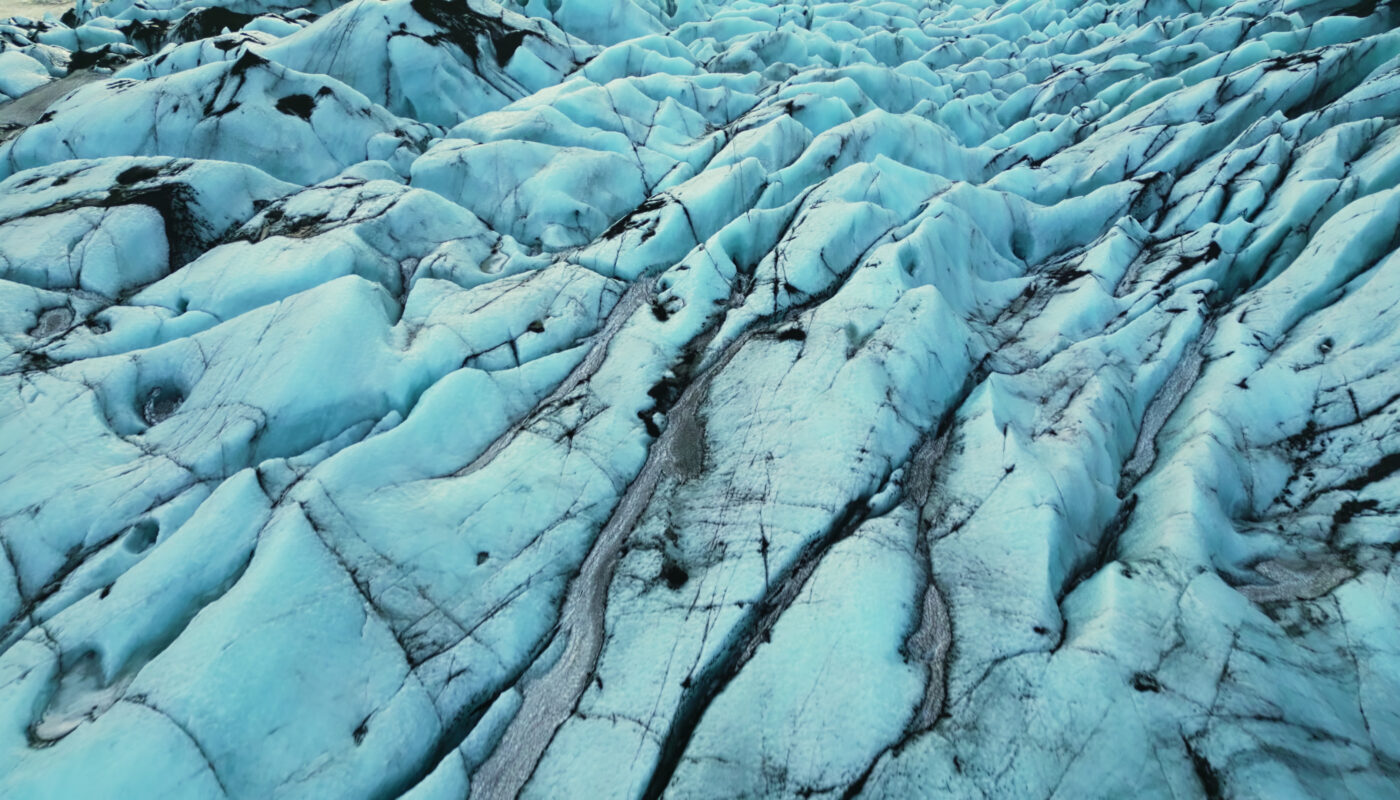
A crevasse is a crack in glacier ice caused by stress and deformation.
Large numbers of widening cracks may indicate that the ice is undergoing increasing stress.
Scientists may monitor:
- Crack length
- Crack width
- Crack orientation
- Rate of crack growth
- Connections between cracks
Modern cameras, drones, satellites, and field instruments can reveal changes that would be difficult to detect through occasional visual observations.
If cracks suddenly expand or connect with one another, the glacier may become more unstable.
Still, cracks are not automatically evidence that a collapse will occur soon. Many glaciers contain extensive crevasse networks without experiencing catastrophic failure.
Ice Thickness Matters
The thickness of glacier ice can strongly influence its stability.
Scientists use technologies such as radar to investigate how much ice lies beneath the surface.
Thick ice contains enormous gravitational energy. The way that ice is distributed across slopes, valleys, and bedrock affects how it flows.
Researchers may combine thickness measurements with:
- Surface elevation
- Glacier velocity
- Bedrock maps
- Ice temperature
- Stress calculations
This helps them determine where a glacier may be vulnerable.
What Lies Beneath the Glacier?
One of the greatest uncertainties in glacier science is what happens beneath the ice.
A glacier’s surface may appear relatively stable while the conditions underneath are changing.
The bed beneath a glacier can contain:
- Solid bedrock
- Sediment
- Water
- Channels
- Basins
- Irregular ridges
Water beneath a glacier can reduce friction between ice and the ground, potentially allowing faster movement.
The shape of the bed also matters. A glacier moving over a downward-sloping bed may behave differently from one resting on a ridge or uphill section.
Because the bed is hidden beneath hundreds or thousands of meters of ice in some places, scientists often have to reconstruct its shape using radar surveys and mathematical models.
Meltwater Can Affect Glacier Stability
Water is another important factor.
When snow and ice melt at the surface, water can travel through cracks and channels toward the glacier’s base.
This water may:
- Increase pressure
- Lubricate the bed
- Alter glacier speed
- Change drainage pathways
- Contribute to sudden water releases
The relationship is complicated, however.
Not all meltwater makes a glacier move faster. Some glaciers develop efficient drainage systems that remove water effectively, while others can experience temporary increases in pressure.
Scientists therefore examine both the amount of water entering the glacier and how efficiently the water is transported away.
Temperature Is Important, But It Is Not Everything
It is tempting to assume that a glacier will collapse whenever temperatures become unusually high.
Reality is more complicated.
Temperature can influence:
- Surface melting
- Rainfall
- Snow accumulation
- Ice temperature
- Meltwater production
- Permafrost stability
But glacier collapse is usually caused by a combination of processes rather than a single warm day.
A glacier can remain stable during short periods of intense warmth, while another glacier may become unstable under relatively modest warming because of its particular geometry or structural condition.
This is why scientists examine long-term trends alongside short-term weather.
Rain Can Sometimes Be More Important Than Snow
Rainfall can have unusual effects on glaciers.
Heavy rain can:
- Add water to the glacier surface
- Accelerate melting
- Increase runoff
- Enter crevasses
- Raise water pressure
- Contribute to slope instability
In mountainous regions, rain falling on snow or ice can also influence avalanche conditions.
This is one reason why extreme rainfall events are closely monitored in glacier hazard assessments.
Ocean Water Can Destabilize Some Glaciers
For glaciers that flow into the ocean, conditions beneath floating ice can be particularly important.
Relatively warm seawater can enter beneath floating ice shelves and increase melting from below.
If an ice shelf becomes thinner or loses contact with important points that help slow its flow, inland ice can potentially accelerate toward the ocean.
This is especially important in Antarctica and Greenland, where marine-terminating glaciers can respond to changes in ocean conditions.
Scientists therefore monitor both the atmosphere and the ocean.
Can Satellites Predict a Collapse?
Satellites have revolutionized glacier monitoring.
They can repeatedly observe remote glaciers and identify changes in:
- Surface elevation
- Ice velocity
- Crevasse patterns
- Glacier area
- Ice thickness
- Snow cover
- Terminus position
Radar satellites are particularly valuable because they can collect information through clouds and during periods of darkness.
By comparing observations over time, researchers can identify trends that would otherwise remain invisible.
But satellites generally do not provide a magical countdown clock.
They provide evidence that scientists interpret alongside physical measurements and computer models.
GPS Sensors Can Detect Tiny Movements
In some high-risk areas, researchers install GPS instruments directly on or near glaciers.
These instruments can measure extremely small changes in position.
If the ice begins accelerating, shifting, or changing direction, researchers can detect the movement.
In particularly unstable situations, instruments can transmit data continuously, allowing scientists to monitor changes almost in real time.
This type of monitoring can be crucial when communities or infrastructure are located downstream.
Seismic Signals Can Reveal Changes
Glaciers can also produce seismic signals.
When large pieces of ice fracture or move suddenly, they generate vibrations that can be detected by sensitive instruments.
Scientists can analyze these signals to understand:
- Icequakes
- Fracturing
- Sudden sliding
- Large calving events
- Changes in glacier dynamics
In some cases, an increase in seismic activity may indicate growing instability.
Again, however, seismic signals are clues rather than guaranteed predictions.
Drones Are Changing Glacier Monitoring
Drones provide scientists with detailed views of glacier surfaces.
They can map:
- Crevasses
- Ice cliffs
- Meltwater channels
- Surface cracks
- Rock and debris
- Changes in glacier geometry
Repeated drone surveys can reveal how quickly specific features are changing.
Drones are particularly useful in areas that are difficult or dangerous for researchers to reach on foot.
Computer Models Help Scientists Estimate Risk
Scientists combine observations with computer simulations to explore possible glacier behavior.
A model may incorporate:
- Ice thickness
- Temperature
- Snowfall
- Melt rates
- Ice velocity
- Bedrock geometry
- Ocean temperatures
- Water pressure
Researchers can then test different scenarios.
For example:
What happens if temperatures rise?
What happens if meltwater increases?
What happens if the glacier loses an important stabilizing section?
Models cannot predict the future perfectly, but they can help scientists understand which outcomes are physically plausible.
Probability Is More Realistic Than an Exact Prediction
One of the most important concepts in glacier hazard science is probability.
Instead of saying:
“This glacier will collapse on Friday.”
Scientists may say:
“The glacier is showing signs of increasing instability, and the probability of a major event has risen.”
This distinction matters.
Natural systems contain uncertainty.
Even when scientists understand the major processes involved, they may not know exactly when a critical threshold will be crossed.
Risk assessments therefore often involve:
- Low-risk periods
- Elevated-risk periods
- Warning thresholds
- Possible scenarios
- Confidence levels
This approach is much more scientifically responsible than pretending that exact prediction is always possible.
Some Collapses Can Be Forecast Better Than Others
Not all glacier collapses are equally predictable.
A glacier showing months of accelerating movement and increasingly large fractures may provide numerous warning signals.
In contrast, sudden structural failure may happen with little visible warning.
Predictability depends on:
- Glacier type
- Size
- Geometry
- Monitoring quality
- Availability of historical data
- Environmental conditions
- Speed of the instability
A glacier located near a research station may be monitored constantly, while a remote glacier may be observed only periodically by satellite.
That difference dramatically affects the ability to detect changes.
What Is a Glacier Surge?
Another phenomenon that can complicate predictions is a glacier surge.
A surge occurs when a glacier suddenly moves much faster than normal.
During a surge, ice may advance rapidly over a relatively short period.
Scientists have identified several mechanisms associated with glacier surges, including changes in subglacial water pressure and basal conditions.
A surge does not necessarily mean that a glacier will collapse.
It is better understood as a major change in glacier flow behavior.
However, rapid movement can increase crevassing and alter the glacier’s stability.
Ice Avalanches Are Particularly Difficult to Predict
Some of the most dangerous glacier-related events involve ice breaking away from steep mountain glaciers.
Ice avalanches can happen when unstable ice masses detach from steep slopes.
Warning signs may include:
- Increasing cracks
- Bulging ice
- Changes in movement
- Structural deformation
- Repeated small collapses
But ice can fail suddenly.
This is why authorities may establish exclusion zones around particularly unstable glacier faces.
The safest approach is not to rely on the ability to predict the exact moment of failure.
Glacier Lakes Present Another Hazard
Glaciers can also create lakes that pose downstream risks.
Meltwater may collect behind:
- Ice dams
- Moraines
- Rock barriers
If a natural dam fails, a glacial lake outburst flood, often called a GLOF, can send a large volume of water downstream.
Potential triggers include:
- Ice or rock avalanches
- Heavy rainfall
- Rapid melting
- Earthquakes
- Weakening of the dam
Scientists can monitor lake size, water levels, dam conditions, and surrounding slopes to assess risk.
This is an example where forecasting a dangerous event can sometimes be more practical than predicting a glacier’s collapse itself.
Early Warning Systems Can Save Lives
Although scientists cannot always predict collapse precisely, monitoring can still save lives.
Early warning systems may combine:
- Cameras
- GPS sensors
- Radar
- Seismic instruments
- Weather stations
- Satellite imagery
- Automated alarms
If measurements cross predefined thresholds, authorities can issue warnings or temporarily close dangerous areas.
In communities near glacier hazards, warning systems may also involve:
- Evacuation plans
- Sirens
- Emergency communication
- Hazard maps
- Restricted zones
The goal is not perfect prediction.
The goal is reducing exposure before a dangerous event occurs.
Why Climate Change Makes Prediction More Complicated
Climate change is altering glacier environments worldwide.
Warming can contribute to:
- Glacier retreat
- Increased surface melting
- Changes in snowfall
- Permafrost thaw
- Changing rainfall patterns
- Ocean warming
- Altered glacier hydrology
However, climate change does not mean every glacier will suddenly collapse.
Different glaciers respond differently.
A glacier’s response depends on its:
- Elevation
- Latitude
- Size
- Geometry
- Climate
- Bedrock
- Connection to the ocean
- Local precipitation
Therefore, scientists study individual glaciers rather than assuming that one pattern applies everywhere.
Can Artificial Intelligence Predict Glacier Collapse?
Artificial intelligence and machine-learning techniques are increasingly being explored in Earth science.
AI can analyze enormous amounts of information from:
- Satellite images
- Radar measurements
- Weather records
- GPS sensors
- Historical glacier observations
Machine-learning systems may identify patterns that humans could overlook.
However, AI does not eliminate uncertainty.
A model is only as reliable as the data and physical understanding behind it.
The most promising approach is likely to combine AI with:
- Glacier physics
- Remote sensing
- Field measurements
- Climate models
- Expert interpretation
AI can become another powerful tool, but it is not a crystal ball.
Why Scientists Avoid Exact Collapse Dates
Suppose researchers observe increasing glacier movement and expanding cracks.
They might determine that instability is increasing.
But the exact moment of failure could depend on a small trigger that is difficult to measure.
For example:
- A sudden temperature change
- Heavy rainfall
- Meltwater entering a crack
- A small ice fracture
- Rockfall
- A change in basal water pressure
A tiny event can sometimes trigger a much larger response.
This makes exact timing difficult.
What Travelers Should Know
People visiting glacier regions should never assume that a glacier is safe simply because it looks calm.
Travelers should:
- Follow local warnings.
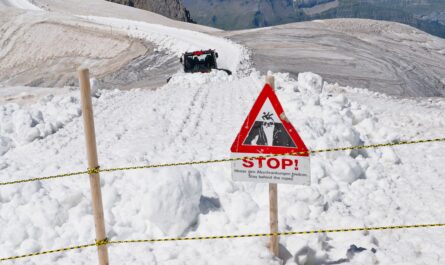
- Stay behind barriers.
- Use designated trails.
- Follow guide instructions.
- Avoid approaching unstable ice.
- Respect closure notices.
- Check weather conditions.
- Never climb onto a glacier without appropriate expertise and supervision.
A glacier can look motionless while moving continuously.
Its surface can also hide crevasses, unstable ice, and meltwater channels.
The Difference Between Prediction and Preparedness
This distinction is essential.
Prediction asks:
“When exactly will the event happen?”
Preparedness asks:
“What can we do if the event happens?”
Scientists may not always be able to answer the first question precisely.
But they can often improve answers to the second.
Hazard mapping, monitoring, evacuation planning, controlled access, and public education can significantly reduce risk even when exact prediction remains impossible.
What the Future of Glacier Forecasting May Look Like
Technology is improving rapidly.
Future monitoring systems may combine:
- Higher-resolution satellite imagery
- Continuous GPS measurements
- Autonomous sensors
- Artificial intelligence
- Advanced radar
- Improved climate models
- Real-time communication systems
Researchers may eventually become much better at identifying when a glacier is approaching a critical threshold.
But greater precision should not be confused with certainty.
The ultimate goal is likely to be increasingly accurate early warning, not perfect prediction.
Final Thoughts
So, can you predict when a glacier will collapse?
Sometimes scientists can recognize that a glacier is becoming unstable and estimate an elevated risk of collapse. But predicting the exact moment of failure remains extremely difficult for many glaciers.
Modern glaciology has an impressive collection of tools for understanding glacier behavior. Satellites track movement from space. Radar reveals hidden ice and bedrock. GPS sensors measure subtle shifts. Seismic instruments detect fractures. Drones map cracks and surface changes. Computer models simulate possible futures, while artificial intelligence is opening new possibilities for analyzing enormous datasets.
Together, these technologies can provide valuable warning signs.
Yet glaciers remain complex natural systems. A glacier may accelerate without collapsing. Cracks may expand without producing a catastrophic event. A seemingly stable glacier may experience sudden failure after an unexpected trigger.
This uncertainty is why responsible glacier science focuses on risk assessment rather than guaranteed predictions.
For communities living below unstable glaciers, that distinction is critically important. The objective is not necessarily to know the exact minute an ice mass will fail. It is to recognize dangerous changes early enough to warn people, restrict access, improve infrastructure, and evacuate vulnerable areas when necessary.
The same principle applies to travelers. You do not need to know exactly when a glacier will collapse to appreciate that glaciers deserve respect. Staying on designated routes, following local guidance, and avoiding unstable areas are simple measures that can dramatically reduce danger.
Glaciers may move slowly, but they are never truly still. Their ice is constantly responding to gravity, water, temperature, terrain, and climate. Scientists are becoming increasingly capable of observing these changes, but nature still retains an element of unpredictability.
That may be the most important lesson of glacier research: we cannot always predict exactly when a glacier will collapse, but better monitoring can help us recognize danger sooner and prepare more effectively.