 by
1. What Exactly Is Firn?
Firn is a compacted form of old snow that has survived at least one summer or melting season but has not yet become fully formed glacier ice. It is generally denser and more firmly bonded than fresh snow, although it still contains spaces between its ice grains.
The word is pronounced approximately feern. It is also known by the term névé, particularly in some Alpine and glaciological contexts.
When snow first falls, its crystals have delicate shapes and are separated by relatively large spaces. As time passes, the crystals gradually change. Their sharp branches break down, grains become rounder, and the spaces between them shrink.
The result is a stronger, heavier material that can support additional layers of snowfall.
Unlike ordinary seasonal snow that disappears during warmer months, firn remains on the glacier and becomes part of its long-term structure.
Scientists commonly distinguish firn from fresh snow by its age, density, and physical characteristics. The exact boundary can depend on the scientific definition being used. In many glacier studies, snow becomes firn after surviving a summer season. Structurally, firn remains porous, allowing some air and water to move through it. <Cite refs={[“turn808983search4″,”turn808983search2″,”turn808983search21”]}/>
2. How Does Snow Turn Into Firn?
The formation of firn is a gradual natural process. It happens when snowfall accumulates in places where enough snow survives from one season to the next.
Imagine a mountain environment where winter brings heavy snowfall. During summer, the lower parts of the mountain become warmer, and much of the seasonal snow melts. At higher elevations, however, temperatures remain low enough for some snow to survive.
When the next winter arrives, fresh snowfall covers the older layer. Year after year, additional snow builds up above the material that survived the previous summer.
Several processes contribute to the transformation.
Snowflake settling
Fresh snow contains delicate crystals with complicated shapes. These crystals gradually settle under their own weight.
Their branches may break, and individual grains move closer together. This reduces the amount of empty space within the snowpack.
Pressure from additional snowfall
As new snow accumulates, the lower layers experience increasing pressure.
The weight of the overlying material pushes older snow grains closer together, increasing the density of the buried layers.
Changes in snow crystals
Snow crystals do not remain physically unchanged after falling. Temperature differences and the movement of water vapour can cause them to change shape and size.
This process, known as snow metamorphism, helps transform loose snowfall into rounded, interconnected grains.
Repeated seasonal changes
In areas where some melting occurs, water may move into the snowpack and refreeze when temperatures fall.
This can create ice layers or strengthen existing connections between grains. The precise effect depends on local temperature, snowfall, and meltwater conditions.
Eventually, the material becomes recognizable as firn: old, compacted snow that has not yet completed its transformation into glacier ice. <Cite refs={[“turn808983search13″,”turn808983search11″,”turn808983search10”]}/>
3. What Makes Firn Different From Fresh Snow?
Although fresh snow and firn are both made primarily of ice crystals, their physical properties are quite different.
Fresh snowfall is generally lightweight, loosely packed, and full of air. Firn has experienced considerable settling and compression, making it heavier and more closely connected.
Here are some important differences:
| Feature | Fresh snow | Firn |
|---|---|---|
| Age | Recently fallen | Has survived at least one melt season in common definitions |
| Structure | Loose crystals | Rounded, bonded grains |
| Density | Relatively low | Considerably higher |
| Air spaces | Large and numerous | Smaller but often interconnected |
| Stability | Easily disturbed | More compact and firm |
| Role | Initial glacier accumulation | Intermediate stage in glacier formation |
Fresh snow can be easily moved by wind, while firn forms a more consolidated layer beneath newer snowfall.
However, firn should not be confused with solid glacier ice. Its internal spaces remain important, and the material can still allow air and, under suitable conditions, liquid water to pass through it.
The National Snow and Ice Data Center describes firn as rounded, well-bonded snow that is older than one year and has a density greater than 550 kilograms per cubic metre. Other scientific definitions use additional structural criteria, reflecting differences between glacier environments. <Cite refs={[“turn808983search4″,”turn808983search6”]}/>
4. How Does Firn Eventually Become Glacier Ice?
The next stage in glacier development occurs when firn becomes increasingly compressed and its remaining air spaces gradually close.
This transformation is sometimes described as firn densification.
The process does not happen overnight. In some mountain glaciers, it can take many years. In extremely cold regions of Greenland and Antarctica, the transformation can take much longer because the material may accumulate and compress without extensive summer melting.
The process generally follows several stages.
First: Continued burial. New snowfall covers the firn, adding weight to the layers underneath.
Second: Greater compression. The increasing pressure reduces the volume of the spaces between ice grains.
Third: Crystal growth and bonding. Ice grains change and become more closely connected, creating a denser structure.
Fourth: Air-space closure. The remaining connected spaces become isolated pockets. Air can no longer circulate freely through the material.
Finally: Formation of glacier ice. The compacted material develops into dense glacial ice, with air trapped in bubbles.
The boundary between firn and glacier ice is not always a perfectly sharp line. It is a transition that develops as pore spaces become disconnected and the material continues to densify.
The exact depth and speed of this process depend on the local climate, snowfall accumulation, temperature, and melting conditions. <Cite refs={[“turn808983search9″,”turn808983search12″,”turn808983search15”]}/>
5. How Dense Is Firn?
Density is one of the most useful characteristics scientists measure when studying firn.
Fresh snow can have a very low density because much of its volume consists of air. As it becomes firn, its density increases substantially.
Scientific references commonly place firn density within a broad range of approximately 400 to 830 kilograms per cubic metre, although the precise range depends on the definition and environmental setting.
For comparison, pure ice near its melting point has a density of approximately 917 kilograms per cubic metre.
These figures help explain why firn is an intermediate material. It is much more compact than ordinary snow but has not yet reached the density of glacier ice.
Density also helps researchers understand how much air remains within a glacier’s upper layers and how much additional compression may occur.
Measurements taken from different depths can reveal the history of snow accumulation and the gradual development of the glacier. <Cite refs={[“turn808983search21″,”turn808983search6″,”turn808983search9”]}/>
6. Where Can Firn Be Found?
Firn develops in places where snowfall survives long enough to become part of a glacier or permanent snowfield.
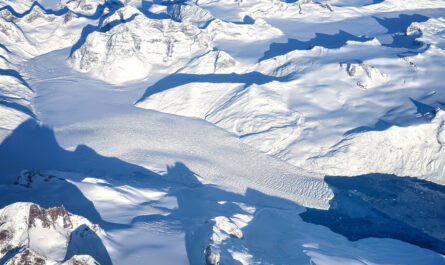
It is particularly important in high mountain environments and the enormous ice sheets covering Greenland and Antarctica.
The Alps
The European Alps contain glaciers where repeated snowfall creates layers of firn above older ice.
The material forms part of the upper glacier environment and changes according to seasonal temperatures, snowfall, and melting.
The Himalayas
The Himalayas contain some of the world’s most important mountain glaciers.
High elevations provide conditions where snow can survive beyond the warmer months. In suitable locations, older snow gradually develops into firn.
These glaciers contribute to river systems that support communities, agriculture, and ecosystems across South Asia.
Greenland
Much of Greenland’s ice sheet is covered by snow and firn above deeper glacial ice.
The firn layer is important because it can receive, store, and refreeze meltwater before that water reaches the ocean.
Scientists examine changes in Greenland’s firn to understand how warming affects ice-sheet behaviour.
Antarctica
Antarctica contains enormous areas of firn because much of the continent remains extremely cold.
Snow accumulates over long periods, gradually becoming denser beneath newer layers. In some areas, the firn column extends many tens of metres or more before reaching fully developed glacier ice.
Its characteristics vary considerably between coastal regions and the colder interior. <Cite refs={[“turn808983search3″,”turn808983search11″,”turn808983search13”]}/>
7. Why Is Firn Important for Glacier Growth?
Firn plays a central role in turning repeated snowfall into long-lasting glacier ice.
Without this intermediate stage, scientists could not properly explain how loose snow develops into the dense material that makes up glaciers.
Every year, new snowfall may add material to the glacier’s upper surface. If enough snow survives melting, it can become firn and eventually contribute to the glacier’s deeper ice layers.
This process helps glaciers maintain their mass over long periods.
However, glacier growth depends on more than snowfall alone. A glacier gains mass through accumulation and loses mass through melting, evaporation, sublimation, and the movement of ice away from the glacier.
When accumulation exceeds losses, a glacier may gain mass. When losses become greater, it may shrink.
Firn helps researchers understand how much of the snowfall remains available to become glacier ice rather than disappearing during warmer periods.
8. Firn’s Hidden Role in Storing Meltwater
One of the most important functions of firn is its ability to store water.
Although firn looks like solid snow, its internal structure contains spaces that can hold air and, in some circumstances, liquid water.
When surface melting occurs, some meltwater can move downward through these spaces.
If it encounters colder layers, it may freeze again, becoming part of the firn structure.
This process is particularly important in Greenland.
Research published in Nature Reviews Earth & Environment in 2024 describes how refreezing within firn currently prevents a substantial proportion of Greenland’s surface meltwater from running off into the ocean. The review estimates that this process prevents approximately 50% of Greenland’s meltwater from reaching the ocean as runoff under the conditions assessed. <Cite refs={[“turn808983search3”]}/>
Why does water storage matter?
When meltwater refreezes inside firn, it remains within the ice sheet rather than immediately flowing away.
This can influence the amount of water that eventually reaches the ocean.
The ability of firn to store meltwater is not unlimited, however. Its available pore space can become reduced as the material densifies or as refrozen ice fills the spaces.
Understanding this storage capacity is essential when scientists estimate how Greenland’s ice sheet may respond to continued warming.
9. How Climate Change Is Affecting Firn
Rising temperatures are changing the conditions under which firn develops.
Warmer air can increase surface melting, alter the movement of water through the snowpack, and affect how quickly firn becomes denser.
These changes are particularly important in Greenland, where surface melting has increased in many areas.
More frequent melting
When temperatures rise, more surface snow may melt during warmer periods.
Some of the resulting water can enter the firn and refreeze. However, repeated melting and refreezing can create ice layers that alter the movement of later meltwater.
Reduced storage space
As water freezes inside the firn, it can occupy spaces that previously contained air.
This reduces the material’s ability to accept additional meltwater in those locations.
Increased surface runoff
If firn becomes less able to absorb and retain meltwater, a greater amount may travel across the ice surface and eventually reach the ocean.
The exact response depends on local conditions, and not all regions experience the same changes.
A 2024 scientific review reported that warming in Greenland had contributed to an estimated 5% reduction in firn pore space since 1980. This illustrates how climate change can alter the internal structure of an ice sheet, not just its visible surface. <Cite refs={[“turn808983search3”]}/>
10. What Is the Firn Line?
The firn line is an important feature used by glaciologists to understand the seasonal condition of a glacier.
It generally marks the boundary between the area where older snow or firn remains and the lower area where exposed glacier ice is visible after the melting season.
During summer, the snowline may move higher up the glacier as surface snow melts.
At the end of the melting season, scientists can examine where the remaining firn begins and where bare glacier ice becomes visible.
The position of this boundary provides useful information about the glacier’s annual accumulation and melting patterns.
If the firn line moves higher over several years, it may indicate that more of the glacier’s surface has lost its seasonal snow cover.
However, the firn line and the equilibrium line are not always identical. The equilibrium line is defined by the balance between accumulation and loss, while the firn line describes a surface boundary based on the remaining material.
Researchers use these observations alongside other measurements to understand glacier health. <Cite refs={[“turn808983search0″,”turn808983search8″,”turn808983search7”]}/>
11. How Scientists Study Firn
Firn is difficult to understand through photographs alone. Its most important characteristics exist beneath the surface, so researchers use fieldwork, instruments, and computer models to investigate it.
Snow pits
Scientists dig carefully measured pits into snow and firn layers.
By examining the exposed walls, they can identify differences in grain size, density, ice layers, and seasonal deposits.
Firn cores
A firn core is a cylindrical sample extracted from the material using specialized drilling equipment.
These samples allow researchers to study the internal structure of firn at different depths.
They can examine density, ice layers, chemical properties, and trapped air.
Density measurements
Researchers collect samples and measure their mass and volume to determine density.
Comparing measurements at different depths reveals how compression changes throughout the firn column.
Satellite observations
Satellites help scientists monitor changes in glacier surfaces over large areas.
Although satellites do not reveal every detail of the firn structure, measurements of surface elevation and other physical properties can help researchers investigate changes in ice sheets.
Computer modelling
Scientific models simulate how snowfall, temperature, melting, refreezing, and compression influence firn over time.
These models are especially useful for predicting how firn might respond to different climate conditions. <Cite refs={[“turn808983search3″,”turn808983search10″,”turn808983search14”]}/>
12. Why Firn Matters for Ice-Core Research
Ice cores are valuable scientific records because they preserve information about Earth’s past atmosphere and climate.
Scientists drill deep into glaciers and ice sheets to collect long cylinders of ice containing layers accumulated over many years.
These samples can preserve tiny air bubbles that contain ancient atmospheric gases.
By studying the composition of these gases and other substances within the ice, researchers can investigate how atmospheric conditions changed over time.
Firn is an important part of this process because it forms the material through which snow gradually becomes solid ice.
Before air becomes trapped in isolated bubbles, it can move through the connected spaces within the firn. This means the age of the air may differ from the age of the surrounding ice.
Researchers must account for this difference when interpreting ice-core records.
Understanding firn structure therefore helps scientists produce more accurate reconstructions of ancient atmospheric conditions. <Cite refs={[“turn808983search11″,”turn808983search12″,”turn808983search15”]}/>
13. Firn and the Future of Global Sea Levels
Firn does not directly determine sea-level change on its own, but it influences how meltwater is stored and released by major ice sheets.
Greenland and Antarctica contain enormous quantities of land-based ice. When this ice melts and reaches the ocean, it contributes to rising sea levels.
Firn can temporarily retain some meltwater through refreezing, slowing the movement of that water toward the sea.
If warming reduces the ability of firn to store additional meltwater, more water may be able to escape from the ice sheet.
This is one reason why climate scientists pay close attention to firn conditions.
It is important to distinguish this process from the melting of floating sea ice. Melting floating sea ice has a different direct effect on sea level because it already displaces seawater. The loss of land-based ice from glaciers and ice sheets adds water to the ocean.
Firn research helps improve estimates of how much meltwater is retained within an ice sheet and how much may eventually contribute to sea-level rise.
14. Common Misconceptions About Firn
Firn is often misunderstood because it looks similar to snow and ice. A few common misconceptions are worth correcting.
Myth 1: Firn is simply old snow.
Firn is older snow that has undergone substantial physical changes. Its grains are more rounded and bonded, and its density is greater than that of fresh snowfall.
Myth 2: Firn is already solid glacier ice.
Firn is an intermediate stage. Its pore spaces have not all closed, so air and sometimes liquid water can still move through parts of its structure.
Myth 3: Firn forms only in Antarctica.
Firn occurs in many glacier environments, including high mountain regions and the Greenland and Antarctic ice sheets.
Myth 4: Firn is unimportant once a glacier forms.
Firn continues to influence glacier accumulation, meltwater storage, and the transition into deeper glacier ice.
Myth 5: All firn has the same density and thickness.
Firn properties vary according to temperature, snowfall, melting, and local environmental conditions.
Conclusion
Firn is one of the most important yet least visible components of a glacier. It occupies the transition between freshly fallen snow and dense glacier ice, developing gradually as snow grains change, become bonded, and are compressed beneath newer layers.
Although it may appear to be nothing more than compacted snow, firn has a much greater scientific importance. It contributes to glacier growth, stores meltwater, influences ice-sheet behaviour, and helps preserve information about Earth’s ancient atmosphere.
Its role is especially significant in Greenland and Antarctica, where changes in temperature and melting can affect how much water remains trapped within the ice sheets.
As global temperatures continue to rise, scientists are increasingly interested in understanding how firn responds to warmer conditions. Its changing structure may influence future meltwater runoff and improve our understanding of sea-level rise.
The next time you see a glacier, remember that its solid-looking surface hides a complex history. Beneath fresh snow lies firn, the remarkable middle stage that helps transform seasonal snowfall into some of the largest ice formations on Earth.