 by
Introduction
Glaciers are among the most remarkable natural features on Earth. These enormous bodies of ice form over many years when snowfall accumulates, becomes compressed, and gradually transforms into dense ice. Unlike ordinary snowfields, glaciers are capable of moving slowly under their own weight, shaping mountains, carving valleys, and influencing rivers, ecosystems, and global sea levels.
Although glaciers are often associated with Antarctica and the Arctic, they exist in many different parts of the world. From the towering peaks of the Himalayas and the Andes to the remote landscapes of Alaska, Greenland, and the European Alps, glaciers occupy a wide range of environments. Some stretch across enormous polar regions, while others survive in small, isolated mountain valleys.
Today, glaciers are found on every continent except Australia, although their distribution, size, and condition vary considerably. Some regions contain extensive ice sheets covering vast areas, whereas others have thousands of relatively small mountain glaciers. Their survival depends largely on elevation, temperature, snowfall, and local climate conditions.
Understanding where glaciers exist today is important because these frozen landscapes provide freshwater, support ecosystems, influence regional weather patterns, and help scientists understand climate change. This global overview explores the world’s major glacier regions, explains why glaciers form in particular locations, and examines the challenges they face in a warming climate.
1. Antarctica: Home to the World’s Largest Ice Sheet
Antarctica contains the largest concentration of glacial ice on Earth. Its enormous ice sheet covers almost the entire continent and holds approximately 90% of the world’s ice by volume. In some locations, the ice reaches several kilometres in thickness.
The East Antarctic Ice Sheet and the West Antarctic Ice Sheet are the two main divisions of the Antarctic Ice Sheet. East Antarctica contains the largest portion of the continent’s ice, while West Antarctica is generally more vulnerable to changes in ocean temperatures because much of its ice rests on bedrock below sea level.
Antarctica also contains numerous outlet glaciers and ice streams. These channels transport ice from the interior toward coastal regions, where it may enter the ocean and contribute to floating ice shelves. Famous examples include the Thwaites Glacier, Pine Island Glacier, and Lambert Glacier.
Why glaciers exist in Antarctica
Antarctica experiences extremely low temperatures throughout the year. Although many areas receive relatively little snowfall, the snow that does accumulate can remain frozen for thousands of years. Over time, additional snowfall compresses older layers, gradually producing thick glacial ice.
Why this region matters
Antarctica plays a major role in regulating global sea levels. Its enormous ice reserves make it one of the most important regions for climate research. Changes in its glaciers and ice shelves can influence ocean circulation and contribute to rising sea levels worldwide.
2. Greenland: The World’s Second-Largest Ice Sheet
Greenland is another major centre of glacial activity. Located between the Arctic and North Atlantic oceans, it contains the Greenland Ice Sheet, which covers approximately 80% of the island.
The ice sheet is the second-largest body of land-based ice on Earth after Antarctica. It contains enough frozen water to raise global sea levels substantially if it were to melt completely.
Greenland also has numerous outlet glaciers that transport ice from the interior toward the coast. Some of these glaciers terminate directly in the ocean, where large pieces of ice break away through a process known as calving.
Jakobshavn Glacier, also called Sermeq Kujalleq, is among Greenland’s best-known glaciers. It has attracted scientific attention because of its rapid ice movement and changes in its terminus.
Why glaciers exist in Greenland
Greenland’s Arctic climate allows snow to accumulate and survive throughout the year in much of its interior. Extremely cold winters and relatively low summer temperatures help maintain the enormous ice sheet.
However, coastal regions experience warmer conditions, and many glaciers have been affected by rising air and ocean temperatures.
Why Greenland matters
Greenland’s glaciers are important indicators of Arctic climate change. Their melting contributes directly to global sea-level rise and can influence freshwater circulation in the North Atlantic.
3. North America: Alaska, Canada, and the Rocky Mountains
North America contains some of the most extensive mountain glacier systems outside the polar ice sheets. Glaciers are particularly common in Alaska, western Canada, and selected high-altitude areas of the United States.
Alaska
Alaska is one of the world’s most glacier-rich regions. Its combination of high mountains, cold temperatures, and heavy snowfall creates favourable conditions for glacier formation.
Major glacier areas include the Alaska Range, Saint Elias Mountains, Chugach Mountains, and Coast Mountains.
Notable examples include:
- Hubbard Glacier
- Mendenhall Glacier
- Matanuska Glacier
- Exit Glacier
- Bering Glacier
Hubbard Glacier is particularly impressive because of its enormous size and active calving front. Mendenhall Glacier, located near Juneau, is another well-known glacier that attracts visitors and researchers.
Alaska’s glaciers are important sources of freshwater and contribute to regional landscapes, rivers, and coastal environments.
Canadian Rockies
The Canadian Rockies contain numerous mountain glaciers, particularly within British Columbia and Alberta.
One of the most well-known glaciated regions in the area is the Columbia Icefield. It feeds several major glaciers, including the Athabasca, Saskatchewan, and Dome glaciers.
Athabasca Glacier, located in Jasper National Park, is among Canada’s most accessible glaciers. It has become an important destination for visitors interested in experiencing glacial landscapes.
United States Outside Alaska
Smaller glaciers and permanent ice bodies remain in parts of the western United States, particularly in Washington’s Cascade Range and Montana’s northern Rocky Mountains.
Examples include glaciers around Mount Rainier and Mount Baker. However, many glaciers in the contiguous United States have experienced substantial retreat over recent decades.
4. South America: The Andes Mountains and Patagonia
South America contains an impressive variety of glaciers, particularly along the Andes Mountains. This extensive mountain chain stretches along the continent’s western side, providing high elevations and suitable climatic conditions for glacier formation.
Glaciers are distributed across several countries, including Venezuela, Colombia, Ecuador, Peru, Bolivia, Chile, and Argentina.
Tropical Andes
The tropical Andes contain some of the world’s highest-altitude tropical glaciers. These glaciers are especially interesting because they exist in regions relatively close to the equator.
Countries such as Peru, Bolivia, Ecuador, and Colombia contain important glaciated mountain ranges.
The Cordillera Blanca in Peru is particularly well known for its concentration of glaciers. It includes Huascarán, the country’s highest mountain, and numerous other snow-covered peaks.
These glaciers provide freshwater to surrounding communities, especially during dry periods when rainfall becomes limited.
Patagonia
Patagonia, shared by Chile and Argentina, contains some of South America’s most spectacular glacial landscapes.
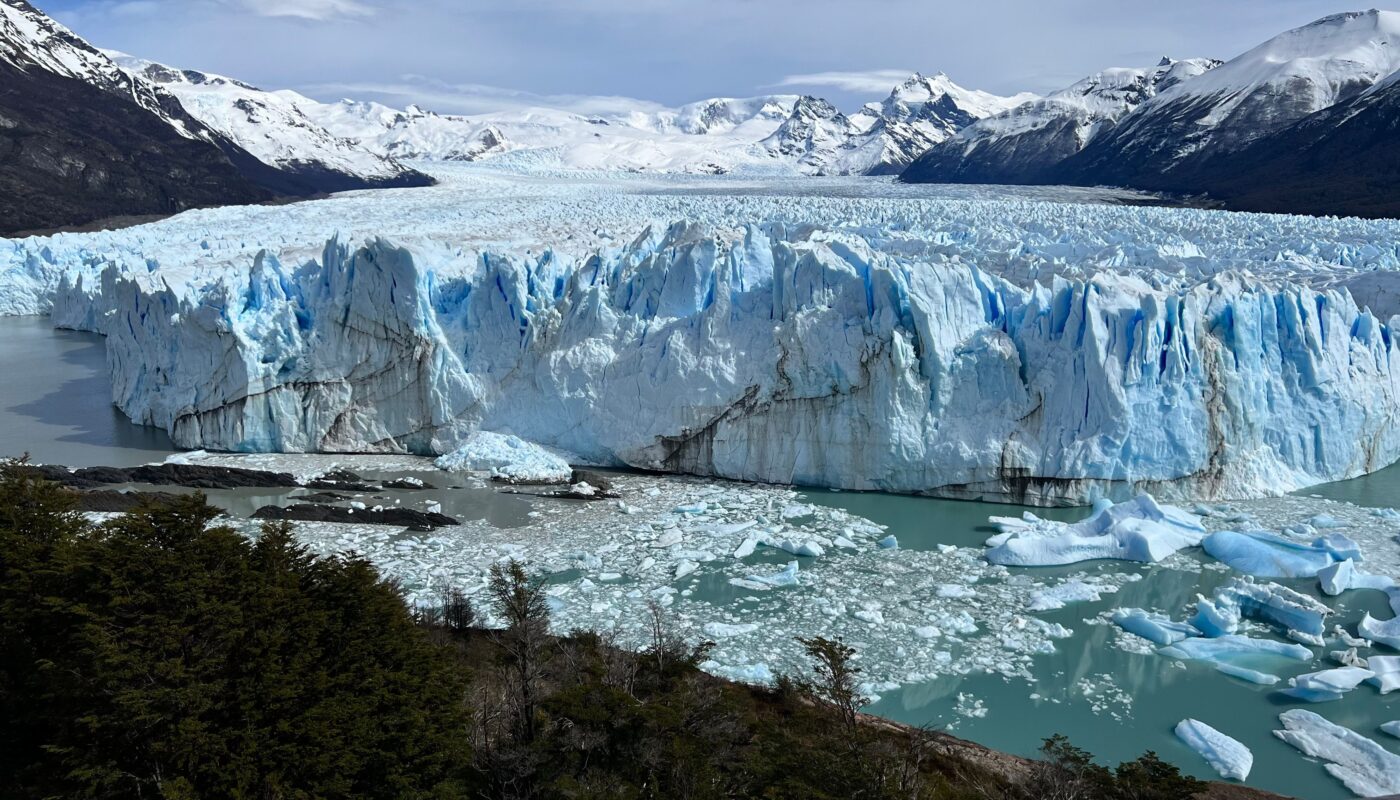
The Southern Patagonian Icefield is one of the largest non-polar icefields in the world. It feeds many glaciers that descend toward lakes and fjords.
Important examples include:
- Perito Moreno Glacier
- Grey Glacier
- Upsala Glacier
- Viedma Glacier
Perito Moreno Glacier is particularly famous for its dramatic ice formations and periodic ice-dam collapses. Unlike many rapidly retreating glaciers, it has historically displayed periods of relative stability and advance, although its behaviour has varied over time.
Patagonia’s glaciers attract tourists, support freshwater systems, and provide valuable information about changing climate conditions.
5. Europe: The Alps, Scandinavia, and Iceland
Europe has several important glacier regions, particularly in high mountain ranges and northern latitudes. Although European glaciers are generally smaller than the major polar ice sheets, they remain significant for tourism, freshwater resources, and scientific research.
The European Alps
The Alps extend across countries including Switzerland, France, Italy, Austria, Germany, and Slovenia.
This mountain range contains hundreds of glaciers, although their total area has declined considerably over recent decades.
Some well-known Alpine glaciers include:
- Aletsch Glacier in Switzerland
- Mer de Glace in France
- Gorner Glacier in Switzerland
- Morteratsch Glacier in Switzerland
- Pasterze Glacier in Austria
The Great Aletsch Glacier is the largest glacier in the Alps. It extends for approximately 20 kilometres and forms part of the Jungfrau-Aletsch UNESCO World Heritage region.
These glaciers are important sources of meltwater for rivers that support agriculture, settlements, and hydropower production.
Scandinavia
Norway and Sweden contain several significant glacier systems.
Norway is particularly well known for its extensive glaciers, including Jostedalsbreen, Folgefonna, and Svartisen.
Jostedalsbreen is the largest glacier on mainland Europe by area. Its ice feeds numerous smaller valley glaciers and contributes to the region’s dramatic mountain and fjord landscapes.
Sweden also has glaciers in its northern mountain regions, especially around Kebnekaise.
Iceland
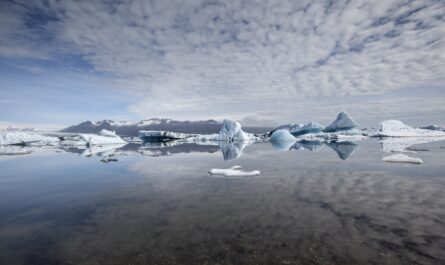
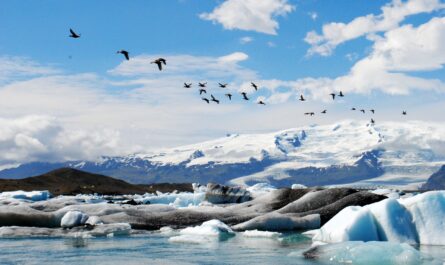
Iceland is one of Europe’s most important glaciated countries. Its location in the North Atlantic and relatively cool climate allow large ice caps to survive.
Major glaciers include:
- Vatnajökull
- Langjökull
- Hofsjökull
- Mýrdalsjökull
- Drangajökull
Vatnajökull is the largest ice cap in Europe by area. It covers a substantial portion of southeastern Iceland and contains several outlet glaciers.
Iceland’s glaciers are especially interesting because they interact with volcanic systems. Subglacial volcanic activity can produce sudden floods known as jökulhlaups, making glacier monitoring essential for public safety.
6. Asia: The Himalayas, Karakoram, and Tibetan Plateau
Asia contains some of the world’s most important mountain glacier systems. These glaciers are concentrated in the Himalayas, Karakoram, Hindu Kush, Pamir, Tien Shan, and other high mountain ranges.
The region is often described as the Third Pole because its extensive mountain glaciers store enormous quantities of freshwater outside the Arctic and Antarctic regions.
The Himalayas
The Himalayan mountain system stretches across countries including Pakistan, India, Nepal, Bhutan, and China.
It contains thousands of glaciers, many of which feed major river systems.
Important examples include:
- Gangotri Glacier in India
- Zemu Glacier in India
- Khumbu Glacier in Nepal
- Ngozumpa Glacier in Nepal
- Siachen Glacier in the Karakoram region
These glaciers contribute to rivers such as the Indus, Ganges, and Brahmaputra. Their meltwater supports agriculture, drinking-water supplies, and hydropower across densely populated areas.
The Karakoram
The Karakoram range lies mainly in northern Pakistan, with parts extending into India and China.
It contains some of the world’s largest mountain glaciers outside the polar regions. The Baltoro, Biafo, Hispar, and Siachen glaciers are among its most notable examples.
The Baltoro Glacier is famous for its dramatic mountain scenery and proximity to some of the world’s highest peaks, including K2.
The Karakoram has also attracted scientific attention because some glaciers historically showed unusual stability or periods of advance, a phenomenon commonly called the Karakoram anomaly. However, this behaviour is not uniform across the region, and recent research shows considerable variation between individual glaciers.
The Tibetan Plateau
The Tibetan Plateau and its surrounding mountain ranges contain extensive glacier systems.
These glaciers are particularly important because they supply water to several major Asian river basins. Their long-term changes can influence water availability for communities far beyond the mountains themselves.
Central Asia
Glaciers are also widespread in the Pamir and Tien Shan mountain ranges, particularly in Tajikistan, Kyrgyzstan, and neighbouring countries.
The Fedchenko Glacier in Tajikistan is one of the world’s longest mountain glaciers outside the polar regions.
These glaciers provide important freshwater resources for Central Asian communities and agricultural systems.
Conclusion
Glaciers exist in far more places than many people realize. Although Antarctica and Greenland contain most of the world’s glacial ice, mountain glaciers and ice caps are distributed across North America, South America, Europe, Asia, Africa, and Oceania.
From the towering Himalayas and Karakoram to the dramatic landscapes of Patagonia, the European Alps, Alaska, and New Zealand, glaciers remain important features of the global environment.
Their distribution is controlled by temperature, elevation, snowfall, latitude, and geographical conditions. These factors allow permanent ice to survive in both polar landscapes and tropical mountain environments.
However, many glaciers are shrinking as the planet becomes warmer. Their retreat threatens freshwater supplies, changes mountain ecosystems, contributes to rising sea levels, and increases certain natural hazards.
Understanding where glaciers exist today provides a clearer picture of Earth’s changing climate. Protecting these frozen environments requires continued scientific monitoring, international cooperation, and meaningful efforts to reduce greenhouse gas emissions.