 by
Introduction
Glaciers are among the most remarkable features of Earth’s natural environment. These enormous bodies of ice develop over long periods as accumulated snow gradually becomes dense and transforms into solid ice. Although glaciers may appear motionless from a distance, they constantly move under the influence of gravity, slowly reshaping the landscapes around them.
Glaciers exist in different parts of the world, from the towering peaks of the Himalayas to the frozen expanses of Antarctica. Two important categories are mountain glaciers and polar glaciers. Both contain ancient ice and respond to changes in temperature and snowfall, but their geographical settings, physical characteristics, and environmental effects can be quite different.
Mountain glaciers are generally associated with high-altitude landscapes, while polar glaciers occur in extremely cold regions near the North and South Poles. However, the distinction is not always straightforward. Some glaciers are located in polar mountain ranges, meaning that geographical and climatic classifications can overlap.
Understanding these two glacier environments helps explain how frozen landscapes function and why their changing conditions matter to communities, wildlife, freshwater supplies, and global sea levels.
1. Understanding Mountain Glaciers
Mountain glaciers are large masses of ice that develop in elevated areas where snowfall accumulates faster than it disappears through melting. Over many years, the weight of new snow compresses older layers, gradually producing dense glacial ice.
Once enough ice has formed, gravity causes it to move downhill. Depending on the surrounding landscape, a mountain glacier may flow through a narrow valley, occupy a high mountain basin, or spread across several connected peaks.
These glaciers are found in many mountain systems around the world, including:
- The Himalayas in Asia
- The Karakoram range between Pakistan, India, and China
- The European Alps
- The Andes in South America
- The Rocky Mountains in North America
- The Southern Alps of New Zealand
Mountain glaciers vary considerably in size and shape. Some occupy small hollows near mountain summits, while others extend for many kilometres through deep valleys.
Their development depends on several environmental conditions, particularly elevation, snowfall, summer temperatures, and the shape of the surrounding terrain.
2. Understanding Polar Glaciers
Polar glaciers are bodies of glacial ice found in extremely cold environments, particularly in the Arctic and Antarctic regions. Unlike many mountain glaciers, they can occupy enormous areas of relatively low-relief terrain and remain frozen throughout much of the year.
The world’s largest concentrations of ice are found in Antarctica and Greenland. These regions contain continental ice sheets, which are immense masses of land-based ice extending across vast geographical areas.
Polar glacial environments include several different formations:
- Continental ice sheets
- Smaller ice caps
- Icefields
- Valley glaciers
- Outlet glaciers
- Glaciers extending towards the ocean
Due to their massive volume, the Antarctic and Greenland ice sheets are particularly significant. Their gradual loss of ice can contribute significantly to rising global sea levels.
Polar glaciers are not necessarily flat or completely stationary. Ice flows from higher interior regions towards lower elevations and, in some locations, eventually reaches the sea. Where glaciers terminate in ocean water, large sections of ice may break away through a process known as calving.
3. Geographical Distribution: Where Are They Located?
The most noticeable difference between mountain and polar glaciers is their geographical distribution.
Mountain glaciers are generally concentrated in elevated regions. Their presence depends heavily on altitude because temperatures usually decrease as elevation increases. This allows snow and ice to survive in places where surrounding lowlands experience much warmer conditions.
For example, the Himalayan and Karakoram glaciers occupy high mountain valleys and slopes. They are important parts of the wider river systems that supply water to millions of people across South and Central Asia.
Polar glaciers are concentrated in high-latitude environments. Antarctica contains the largest ice mass on Earth, while Greenland holds the second-largest continental ice sheet. Smaller polar and subpolar glaciers also occur across Arctic islands, including parts of Canada, Norway, and Russia.
There is an important geographical overlap between these categories. Mountain glaciers can exist in polar regions, and some polar glaciers flow through mountainous landscapes. Therefore, the terms describe different characteristics rather than two completely separate types of ice.
4. Climate Conditions and Glacier Formation
Temperature and snowfall play essential roles in glacier development. However, the environmental conditions experienced by mountain and polar glaciers are not identical.
Climate Conditions in Mountain Regions
Mountain glaciers depend on a combination of high elevation and favourable precipitation patterns. Even in relatively warm countries, temperatures near mountain summits may remain low enough for snow to accumulate.
Winter snowfall provides fresh material for glacier growth. During warmer months, some of the accumulated snow and ice melts. A glacier can maintain its size when long-term accumulation is sufficient to balance its losses.
Mountain climates can change dramatically over short distances. One side of a mountain range may receive heavy snowfall, while another remains comparatively dry. This variation helps explain why neighbouring valleys sometimes contain glaciers of very different sizes.
Climate Conditions in Polar Regions
Polar environments are generally colder, with long periods of freezing temperatures. In some locations, ice can survive throughout the year because summer warmth is insufficient to remove the accumulated snow.
However, cold temperatures do not automatically guarantee rapid glacier growth. Some Arctic regions receive very little precipitation, meaning that glaciers may accumulate ice slowly despite the persistent cold.
Polar glaciers are influenced by atmospheric temperatures, snowfall, ocean conditions, and changes in the surrounding ice system. In coastal Antarctica and Greenland, warmer ocean water can contribute to the melting of glacier ice near the sea.
5. Physical Structure and Movement
Mountain and polar glaciers share the same basic physical principle: ice gradually deforms and moves under its own weight. Nevertheless, their shapes and movement patterns often reflect their different surroundings.
Mountain glaciers usually follow the natural contours of the land. Valley glaciers move through channels created by mountains, while cirque glaciers occupy bowl-shaped hollows high on mountain slopes.
Their movement may be affected by steep gradients, the roughness of the underlying rock, ice thickness, and water flowing beneath the glacier.
Polar ice sheets behave differently because they cover such extensive areas. Ice in their interiors generally moves outward towards lower elevations and coastal regions. Some sections flow through relatively narrow corridors known as ice streams.
At the edges of polar ice sheets, outlet glaciers transport ice towards the ocean. When these glaciers reach the coastline, they may release icebergs through calving.
Although their shapes differ, both mountain and polar glaciers continuously respond to gravity and environmental conditions.
6. Famous Examples of Mountain Glaciers
Several mountain glaciers are internationally recognised because of their size, scientific importance, and surrounding landscapes.
Baltoro Glacier, Pakistan
Located in the Karakoram range, the Baltoro Glacier is one of the most impressive mountain glaciers in the world. It lies among some of the highest peaks on Earth and provides a dramatic example of how glaciers shape rugged mountain terrain.
The glacier is surrounded by towering mountains, including the region near K2. Its ice and meltwater contribute to the wider Indus River system.
Gangotri Glacier, India
The Gangotri Glacier is situated in the Indian Himalayas and is an important source region for the Bhagirathi River, one of the main headstreams of the Ganges.
Its changing length and surface conditions have attracted scientific attention because Himalayan glaciers are closely connected to regional water resources.
Aletsch Glacier, Switzerland
The Great Aletsch Glacier is the largest glacier in the Alps. Its long ice-covered route through the Swiss mountains makes it an important example of European alpine glaciation.
It is also a valuable location for observing the effects of changing temperatures on mountain ice.
Perito Moreno Glacier, Argentina
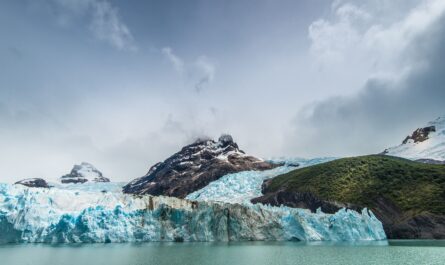
Situated in Los Glaciares National Park in Patagonia, Perito Moreno is widely known for its dramatic ice formations and calving activity.
Unlike many glaciers experiencing significant retreat, its terminus has shown periods of relative stability and advance, although its behaviour has varied over time.
7. Famous Examples of Polar Glaciers
Polar regions contain some of the largest and most scientifically significant ice formations on the planet.
Antarctic Ice Sheet
The Antarctic Ice Sheet covers almost the entire Antarctic continent. It contains an enormous quantity of freshwater frozen in the form of glacial ice.
Ice moves gradually from the interior towards coastal areas, where some glaciers feed floating ice shelves. Changes in these ice shelves can influence the movement of the glaciers behind them.
Greenland Ice Sheet
The Greenland Ice Sheet occupies most of Greenland’s land surface. During summer, melting occurs at the surface, creating streams and lakes that can carry water through cracks and channels in the ice.
The ice sheet also loses mass when glaciers discharge icebergs into surrounding waters.
Its future development is particularly important for global sea-level projections.
Vatnajökull, Iceland
Vatnajökull is a major ice cap in Iceland. Although Iceland is not located at either geographical pole, its cold climate and high elevations support extensive glacial coverage.
This example demonstrates why glacier classifications can overlap. An ice cap may occur in a high-latitude environment without being part of a continental polar ice sheet.
8. Freshwater Resources and Environmental Importance
Glaciers act as natural freshwater reservoirs. They store water in frozen form and release it gradually through melting.
Mountain glaciers are particularly important for rivers that flow through densely populated regions. In parts of Asia, glacier melt contributes to river systems that support farming, drinking-water supplies, hydropower, and other economic activities.
The contribution of glacial melt is not identical throughout the year. During warmer periods, melting can increase river flows, helping maintain water supplies when rainfall is limited. However, the importance of glacier melt varies between river basins and seasons.
Polar ice also represents an enormous store of freshwater. However, much of the ice in Greenland and Antarctica is not directly used as a seasonal water supply by nearby communities.
Its greatest global significance comes from its influence on ocean levels and the wider climate system.
The loss of land-based glacial ice adds water to the oceans. Consequently, extensive melting of polar ice sheets has the potential to contribute substantially to long-term sea-level rise.
9. How Climate Change Is Affecting Mountain Glaciers
Rising temperatures are creating major challenges for mountain glaciers across the world. In many regions, glaciers are losing more ice through melting than they gain through snowfall.
As a result, glacier surfaces become thinner, ice margins move uphill, and some smaller glaciers gradually disappear.
The consequences extend beyond the ice itself.
In the short term, increased melting may temporarily raise water levels in glacier-fed rivers. Over longer periods, however, shrinking glaciers can reduce the amount of stored ice available to support river flows during dry seasons.
Mountain glacier retreat can also create or enlarge unstable glacial lakes. If natural barriers fail, sudden floods may travel downstream and damage roads, settlements, agricultural land, and infrastructure.
Communities that depend on glacier-fed water systems may face growing uncertainty as the timing and volume of water supplies change.
Tourism is another affected sector. Glaciers attract visitors for sightseeing, hiking, mountaineering, and winter sports. Their retreat can alter landscapes and make certain recreational activities more difficult.
10. How Climate Change Is Affecting Polar Glaciers
Polar glaciers are also experiencing significant changes as global temperatures rise. However, the effects differ between the Arctic and Antarctic environments.
Greenland has experienced substantial ice loss through surface melting and increased ice discharge into the ocean. Warmer air contributes to melting at the surface, while ocean conditions can affect glaciers that extend into coastal waters.
Antarctica presents a more complex picture. Different parts of the continent experience different climate and ocean conditions. Some glaciers and ice shelves are particularly vulnerable to warming ocean water beneath floating ice shelves.
Ice shelves do not directly raise sea levels by the same amount as an equivalent volume of land-based ice because they already float in seawater. However, they can act as barriers that slow the movement of grounded glaciers towards the ocean. When an ice shelf weakens or disappears, the glaciers behind it may accelerate, increasing the discharge of land-based ice into the sea.
The long-term stability of polar ice sheets is therefore a major concern for climate scientists and coastal communities around the world.
11. Wildlife and Ecosystem Differences
Mountain and polar glaciers support different ecological environments because of their surrounding landscapes and climatic conditions.
Mountain glacier regions contain specialised plants and animals adapted to cold temperatures, steep slopes, and seasonal changes. Meltwater streams provide habitats for aquatic organisms, while nearby valleys may support forests, grasslands, and alpine vegetation.
As glaciers retreat, the newly exposed ground creates opportunities for some plants and organisms to establish themselves. However, changing water availability and unstable terrain can also disturb existing ecosystems.
Polar environments support wildlife adapted to extreme cold. In Antarctica, animals such as penguins, seals, and seabirds depend on surrounding marine ecosystems. Arctic environments support species including polar bears, seals, and Arctic foxes.
It is important to understand that polar wildlife does not generally live directly on glacier ice. Many species depend on sea ice, coastal habitats, and surrounding ocean food webs.
Changes in sea ice and ocean conditions can therefore affect wildlife even when the animals are not directly connected to glaciers.
12. Scientific Research and Glacier Monitoring
Scientists monitor mountain and polar glaciers to understand how they respond to environmental changes.
In mountain regions, researchers may visit glaciers to measure ice thickness, record surface movement, examine snow accumulation, and observe changes in glacier boundaries.
Satellite images are particularly useful for studying remote glaciers in the Himalayas, Andes, and other difficult-to-access mountain ranges.
Polar research often requires a combination of satellite observations, aircraft surveys, ocean measurements, and field investigations. Scientists use these methods to monitor ice-sheet thickness, surface melting, glacier movement, and the condition of ice shelves.
Computer models help researchers estimate how glaciers may change under different future climate conditions.
International scientific organisations also maintain glacier inventories and observation programmes. These resources make it possible to compare changes across regions and improve estimates of future sea-level rise.
13. Which Glaciers Are More Vulnerable?
It is difficult to declare that all mountain glaciers are more vulnerable than all polar glaciers, or the opposite. Their sensitivity depends on local conditions.
Small mountain glaciers may respond relatively quickly to rising temperatures because their ice reserves are limited. Glaciers located at lower elevations or in warmer climates can be especially exposed to melting.
Polar ice sheets are much larger and can respond over longer periods. However, their enormous size does not make them immune to climate change. Their potential contribution to sea-level rise is especially significant because of the volume of ice they contain.
Ocean temperatures, atmospheric warming, snowfall patterns, ice-sheet structure, and the condition of surrounding ice shelves all influence polar glacier stability.
The speed and scale of future changes will depend partly on how much the global climate warms and how quickly societies reduce greenhouse gas emissions.
14. Mountain Glaciers vs Polar Glaciers: Key Differences
| Feature | Mountain Glaciers | Polar Glaciers |
|---|---|---|
| Main location | High mountain regions | Arctic and Antarctic environments |
| Main climate influence | Elevation, snowfall, and seasonal temperatures | High-latitude temperatures, snowfall, and ocean conditions |
| Typical shape | Valley, cirque, and hanging glaciers | Ice sheets, ice caps, outlet and valley glaciers |
| Movement | Usually follows mountain slopes and valleys | Often flows outward from large ice-covered regions |
| Freshwater importance | Can support river systems and seasonal water supplies | Stores enormous quantities of freshwater |
| Main climate risks | Surface melting, thinning, retreat, and glacier-related hazards | Ice-sheet loss, ice-shelf weakening, and increased sea-level rise |
| Research methods | Field surveys, satellite images, and ice measurements | Satellite monitoring, aircraft surveys, ocean studies, and field research |
The comparison shows that the two categories differ mainly in their geographical and climatic settings. Their physical behaviour, however, is governed by many of the same glaciological processes.
Conclusion
Mountain glaciers and polar glaciers are essential parts of Earth’s frozen environment. Although they occupy different geographical settings, both influence natural landscapes, freshwater systems, ecosystems, and global climate processes.
Mountain glaciers are particularly important for high-altitude river systems and the communities that depend on them. Polar glaciers, especially the Greenland and Antarctic ice sheets, play a major role in controlling the amount of freshwater stored on land and influencing global sea levels.
Climate change is affecting both environments, but the consequences vary according to local temperatures, snowfall, ocean conditions, and glacier structure.
Studying these differences helps scientists understand the future of glaciers and improve predictions about water availability, natural hazards, and coastal change. Protecting the climate is essential not only for preserving frozen landscapes but also for reducing the risks that glacier loss creates for people and ecosystems worldwide.