 by
by The glaciers of Scandinavia are among Europe’s most extraordinary natural wonders. Stretching across rugged mountains, remote valleys, and Arctic wilderness, these vast rivers of ice have shaped the landscapes of Northern Europe for thousands of years. From Norway’s dramatic coastal glaciers to Sweden’s remote icy peaks and the Arctic ice fields of neighboring regions, Scandinavia offers a fascinating world where geology, climate, wildlife, and history intersect.
Although many travelers associate glaciers with Antarctica, Greenland, or Alaska, Scandinavia possesses some of the most accessible and visually striking glaciers in the world. Here, visitors can walk beside ancient ice formations, kayak beneath towering cliffs, explore glacial valleys, and witness landscapes sculpted by ice over countless centuries.
At the same time, Scandinavia’s glaciers are becoming increasingly important symbols of climate change. Rising temperatures are accelerating glacial retreat across Northern Europe, transforming ecosystems and reminding humanity of the fragile balance between nature and the global climate system.
This article explores the glaciers of Scandinavia, focusing on Norway, Sweden, and neighboring Arctic regions while examining their geological origins, ecological significance, tourism appeal, and uncertain future.
Understanding Glaciers
Before exploring Scandinavia’s glaciers specifically, it is important to understand what glaciers actually are.
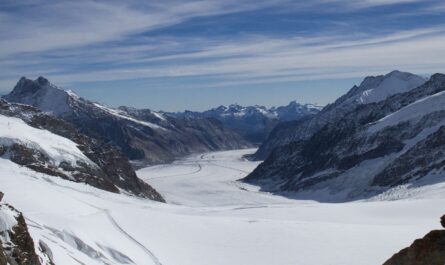
A glacier is a large, slow-moving mass of ice formed from compacted snow accumulated over many years. When snowfall exceeds melting over long periods, layers of snow compress into dense ice. Gravity then gradually causes this ice to move downhill or spread outward.
Although glaciers may appear frozen and motionless, they are constantly moving. This movement carves valleys, shapes mountains, transports rocks, and creates dramatic landscapes.
Glaciers are powerful natural forces that have shaped much of Northern Europe’s geography.
Why Scandinavia Has Glaciers
Scandinavia’s glaciers exist primarily because of its mountainous terrain, high latitudes, and cold climate conditions.
Several factors contribute to glacier formation in the region:
- Heavy winter snowfall
- High mountain elevations
- Cool summer temperatures
- Moist ocean air
- Arctic climatic influences
The Scandinavian Mountains, which stretch through Norway and Sweden, create ideal conditions for ice accumulation. Moist air from the Atlantic Ocean rises over the mountains, producing heavy snowfall that feeds glaciers year after year.
Even though Scandinavia is not as cold as polar regions, the combination of elevation and precipitation allows glaciers to survive.
Norway: The Heart of Scandinavian Glaciers
Norway contains the largest and most famous glaciers in mainland Europe. The country’s dramatic combination of mountains, fjords, and coastal weather systems creates perfect conditions for glacial development.
Jostedalsbreen: Mainland Europe’s Largest Glacier
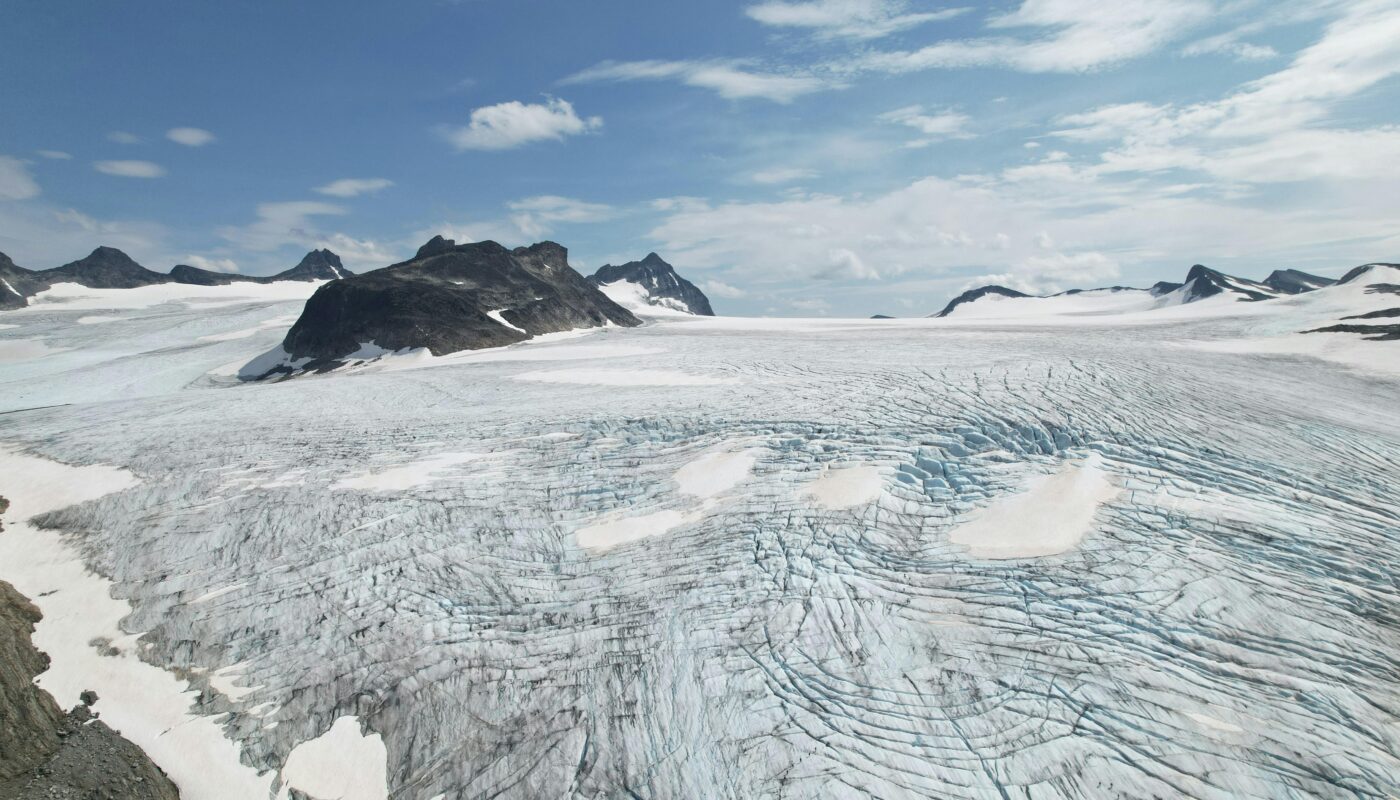
Jostedalsbreen is Norway’s most famous glacier and the largest glacier on the European mainland.
Covering hundreds of square kilometers, this enormous ice cap dominates the landscape of western Norway. Numerous glacier arms extend down into valleys surrounded by waterfalls, forests, and fjords.
A Living Ice Giant
Jostedalsbreen is not a single narrow glacier but a vast ice system feeding multiple outlet glaciers.
Popular glacier arms include:
- Briksdalsbreen
- Nigardsbreen
- Bøyabreen
- Tunsbergdalsbreen
Each offers different viewing experiences and landscapes.
Accessibility
One reason Jostedalsbreen attracts so many visitors is its accessibility. Travelers can reach glacier viewpoints through relatively short walks, scenic roads, or guided tours.
Nigardsbreen is especially popular for glacier hiking experiences, where visitors equipped with crampons can walk directly on ancient ice.
Briksdalsbreen: Norway’s Iconic Glacier
Briksdalsbreen, an arm of Jostedalsbreen, is one of Norway’s most photographed glaciers.
Its dramatic blue ice descends steeply between towering mountain walls, creating a breathtaking alpine scene.
The Journey to the Glacier
The walk toward Briksdalsbreen is famous for its beauty as much as the glacier itself.
Visitors pass:
- Waterfalls
- Glacial rivers
- Green valleys
- Snow-covered peaks
One of Scandinavia’s most visitor-friendly glacier experiences, the route is still reachable by casual travelers.
Folgefonna Glacier
Folgefonna is another important Norwegian glacier located above the Hardangerfjord region.
Unlike some remote Arctic glaciers, Folgefonna combines icy landscapes with nearby orchards, fjords, and villages.
Glacier Adventures
Folgefonna is well known for:
- Summer skiing
- Glacier hiking
- Ice climbing
- Scenic kayaking nearby
The glacier’s proximity to fjord landscapes creates remarkable visual contrasts between ice and water.
The Svartisen Glaciers
Northern Norway is home to Svartisen, one of the country’s largest glacier systems.
Svartisen consists of two separate glaciers:
- Vestisen
- Østisen
These glaciers lie partially within the Arctic Circle, creating particularly dramatic conditions.
Arctic Beauty
The landscapes around Svartisen feature:
- Sharp mountain peaks
- Deep fjords
- Ice-blue glacial tongues
- Remote wilderness
The glacier’s icy waters often appear almost turquoise under sunlight.
Sweden’s Glaciers: Remote and Wild
Although Sweden has fewer glaciers than Norway, the country’s glaciers possess a rugged wilderness character that appeals strongly to adventure travelers and nature enthusiasts.
Most Swedish glaciers are located in the Scandinavian Mountains near the Norwegian border.
Kebnekaise Glacier Region
Sweden’s highest mountain, Kebnekaise, contains several glaciers and snowfields.
Historically, the mountain’s southern glacier-covered peak was Sweden’s highest point. However, climate change has caused significant melting, occasionally shifting the highest elevation to the northern rocky peak.
Alpine Wilderness
The Kebnekaise region offers:
- Remote hiking trails
- Arctic landscapes
- Glacier valleys
- Sami cultural heritage
- Midnight sun experiences
Compared to Norway’s more developed glacier tourism infrastructure, Sweden’s glacier areas often feel quieter and wilder.
Storglaciären: One of the World’s Most Studied Glaciers
Storglaciären in northern Sweden is internationally important for scientific research.
Scientists have monitored the glacier for more than 75 years, making it one of the longest continuously studied glaciers in the world.
Climate Research Importance
Researchers use Storglaciären to study:
- Glacier retreat
- Ice mass balance
- Climate trends
- Hydrological systems
Its long-term data provides valuable insights into global warming and environmental change.
Iceland and the Greater Scandinavian Sphere
Although technically not part of mainland Scandinavia, Iceland is often culturally connected to the Nordic world and deserves mention in any discussion of northern glaciers.
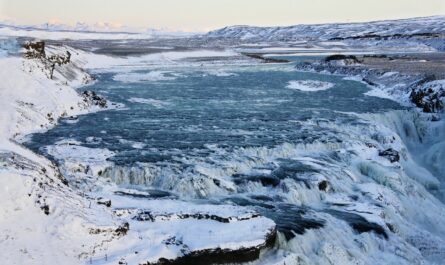
Iceland contains some of Europe’s largest glaciers, including Vatnajökull, which covers roughly ten percent of the country.
Fire and Ice
Iceland’s glaciers are particularly fascinating because they coexist with volcanic systems.
This creates unique features such as:
- Ice caves
- Volcanic ash layers
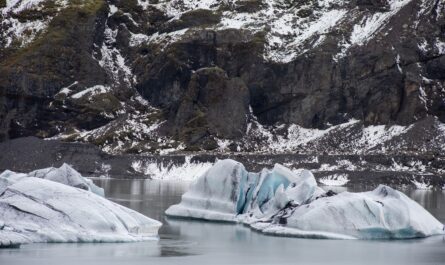
- Glacial lagoons
- Subglacial eruptions
The interaction between glaciers and volcanoes produces landscapes unlike anywhere else on Earth.
Svalbard: Arctic Glacier Wilderness
Far north of mainland Norway lies the Svalbard archipelago, one of the most glacier-covered regions in Europe.
Much of Svalbard remains buried beneath ice caps and glaciers.
Polar Environment
Svalbard’s glaciers are part of a true Arctic ecosystem featuring:
- Polar bears
- Arctic foxes
- Seabird colonies
- Frozen fjords
- Permafrost landscapes
The region offers some of the world’s most dramatic glacier scenery.
How Glaciers Shaped Scandinavia
The glaciers visible today are only remnants of much larger ice sheets that once covered Northern Europe during the Ice Ages.
Thousands of years ago, enormous glaciers carved the fjords, valleys, lakes, and mountains that define Scandinavia today.
Creation of the Fjords
Norway’s famous fjords were formed when glaciers carved deep valleys through mountains before later filling with seawater.
This glacial erosion created:
- Steep cliffs
- Deep waterways
- U-shaped valleys
- Hanging waterfalls
Without glaciers, Scandinavia’s iconic landscapes would look completely different.
Wildlife Around Scandinavian Glaciers
Despite harsh conditions, glacier environments support surprising biodiversity.
Alpine Wildlife
Animals found near Scandinavian glaciers include:
- Reindeer
- Arctic foxes
- Mountain hares
- Ptarmigans
- Golden eagles
Marine Life
Glacial meltwater also influences nearby marine ecosystems, especially in fjord regions where nutrient-rich waters support fish and seabird populations.
Glacier Tourism in Scandinavia
Glaciers attract millions of visitors to Scandinavia every year.
Popular activities include:
- Glacier hiking
- Ice climbing
- Kayaking
- Scenic photography
- Helicopter tours
- Boat cruises
- Educational tours
Tourism provides important economic support for many rural communities.
However, growing visitor numbers also create environmental pressures requiring careful management.
Climate Change and Glacier Retreat
One of the most urgent issues facing Scandinavian glaciers is climate change.
Across Norway, Sweden, Iceland, and the Arctic, glaciers are shrinking rapidly due to rising global temperatures.
Visible Changes
Many glaciers that once extended far into valleys have retreated significantly within just decades.
Consequences include:
- Loss of ice mass
- Formation of new lakes
- Ecosystem changes
- Increased landslide risks
- Altered water systems
Emotional Impact
For many visitors, seeing glacier retreat firsthand creates a powerful emotional experience.
Glaciers often serve as visible indicators of global climate change in ways that statistics alone cannot communicate.
The Scientific Importance of Glaciers
Glaciers are not only scenic attractions. They also play critical roles in scientific research.
Scientists study glaciers to understand:
- Past climates
- Future warming trends
- Water resources
- Sea-level rise
- Atmospheric conditions
Ice layers preserve ancient climate records, allowing researchers to study environmental conditions from thousands of years ago.
Visiting Scandinavian Glaciers Responsibly
Responsible tourism is increasingly important in fragile glacier environments.
Visitors can help protect these regions by:
- Following marked trails
- Using certified guides
- Avoiding littering
- Respecting wildlife
- Reducing carbon emissions when possible
Sustainable tourism helps preserve glacier landscapes for future generations.
Why Scandinavian Glaciers Fascinate Travelers
The glaciers of Scandinavia captivate travelers because they combine beauty, power, history, and fragility.
Unlike isolated polar glaciers, Scandinavian glaciers are often accessible within landscapes filled with villages, forests, fjords, and cultural traditions.
This accessibility allows visitors to experience ancient ice up close while also connecting with Nordic history and nature.
The contrast between icy wilderness and welcoming Scandinavian culture creates a travel experience unlike anywhere else.
Final Thoughts
The glaciers of Scandinavia represent some of Europe’s greatest natural treasures. From Norway’s immense ice fields and dramatic glacier arms to Sweden’s remote alpine glaciers and the Arctic ice worlds beyond, these frozen landscapes reveal the immense power of nature over time.
They have carved mountains, shaped fjords, influenced ecosystems, inspired legends, and supported scientific discovery for generations.
Yet they are also changing rapidly.
As climate change accelerates glacier retreat across Northern Europe, the glaciers of Scandinavia have become symbols of both natural beauty and environmental vulnerability. Their future remains uncertain, making their preservation more important than ever.
For travelers, scientists, photographers, and nature lovers alike, Scandinavia’s glaciers continue to offer unforgettable experiences—places where ice, mountains, water, and sky come together in extraordinary harmony.