by
Far in the south of Chile, where rugged mountains rise above vast lakes and powerful winds sweep across open landscapes, nature reveals one of its most extraordinary creations: Grey Glacier. Located inside Torres del Paine National Park, this enormous body of ice is a remarkable destination for travelers who want to experience Patagonia’s wild beauty.
Gray Glacier is more than just a body of frozen water. It is a constantly changing landscape shaped by snowfall, temperature, gravity, and time. Its towering ice formations, scattered icebergs, and striking shades of blue create a scene that feels almost unreal. Visitors can admire it from nearby viewpoints, approach it by boat, or join specialized guided excursions that explore the surrounding glacial environment.
For photographers, adventure enthusiasts, and nature lovers, Grey Glacier offers an opportunity to witness the power of the natural world. Its remote setting also reminds visitors that some of Earth’s most impressive landscapes remain vulnerable to environmental change.
Where Is Grey Glacier Located?
Grey Glacier lies in Torres del Paine National Park in Chilean Patagonia, a region known for its dramatic mountains, turquoise lakes, forests, and extensive wilderness. The glacier forms part of the Southern Patagonian Ice Field, one of the largest areas of ice outside Antarctica and Greenland.
The surrounding national park is famous for its distinctive mountain formations, including the Paine Massif. Visitors exploring the area encounter a mixture of rocky peaks, open grasslands, glacial lakes, and valleys shaped by ancient ice.
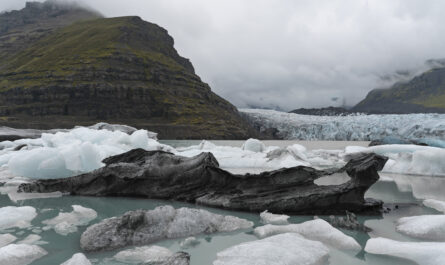
Grey Glacier extends into Grey Lake, where pieces of ice sometimes break away from the glacier’s front and drift across the water. These floating fragments range from small chunks to enormous icebergs, creating a constantly changing foreground against the distant mountains.
Most visitors organize their trip through Puerto Natales, a popular gateway to Torres del Paine National Park. From there, travelers can arrange transportation, accommodation, guided tours, and excursions to the lake. Journey times depend on the starting point, road conditions, and the particular activity selected.
Because Patagonia is a large and relatively remote region, planning ahead makes the experience more comfortable. Visitors should check park access requirements, transport schedules, and tour availability before beginning their journey.
How Was Grey Glacier Formed?
The history of Grey Glacier stretches far beyond human memory. Its formation depends on a simple but powerful process: snow accumulates over time, becomes compressed, and gradually transforms into glacial ice.
Layers of snow accumulate year after year in regions where winter precipitation surpasses summer melting. The weight of newer snow compresses the older layers underneath, squeezing out air and changing the snow into denser ice. Over many years, this process creates a substantial ice mass.
When enough ice accumulates, gravity causes it to move slowly downhill. Although glaciers can appear motionless from a distance, they are dynamic systems. Their ice deforms internally and may slide over the ground beneath them, depending on local conditions.
Grey Glacier is part of a larger glacial landscape influenced by the Southern Patagonian Ice Field. Its movement reflects the combined effects of snowfall, ice thickness, terrain, temperature, and meltwater.
The glacier’s front is particularly fascinating because it marks the meeting point between moving ice and the lake. Cracks can develop as the ice moves, and sections may eventually detach and fall into the water. This process, known as calving, helps shape the glacier’s changing appearance.
The landscape visible today is therefore not permanent. It represents one stage in a continuing natural process that has been unfolding for thousands of years.
The Extraordinary Blue Color of Grey Glacier
One of the most captivating features of Grey Glacier is the intense blue color visible in parts of its ice. The effect can be especially striking when sunlight reaches deep crevices or illuminates freshly exposed ice.
Snow and ice do not always appear white because their color depends partly on how they interact with light. Snow contains many tiny air pockets that scatter sunlight in different directions, making it look white. Dense glacial ice contains fewer air bubbles in some areas, allowing light to travel farther through it.
As light moves through the ice, certain wavelengths are absorbed more strongly than others. Blue light is more likely to emerge from the ice and reach the observer, producing the vivid blue tones associated with many glaciers.
The color is not uniform throughout Grey Glacier. Some sections appear pale blue, while others look white, gray, or almost turquoise. Surface snow, shadows, impurities, the angle of sunlight, and the thickness of the ice all influence the appearance.
Weather also makes a difference. Under a bright sky, blue ice may appear especially vibrant. During cloudy conditions, the glacier can take on a softer gray or muted blue tone.
For photographers, these changing colors provide an excellent reason to spend time observing the glacier rather than taking a quick picture and leaving. Even a short change in light can transform the scene.
What Makes Grey Glacier So Impressive?
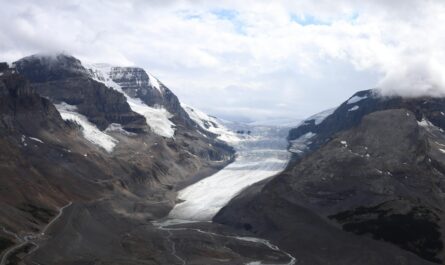
Grey Glacier stands out because of the way its immense ice formations interact with the surrounding landscape. Instead of appearing as an isolated natural feature, it forms part of a much larger scene that includes water, mountains, forests, and open skies.
A Vast Wall of Ice
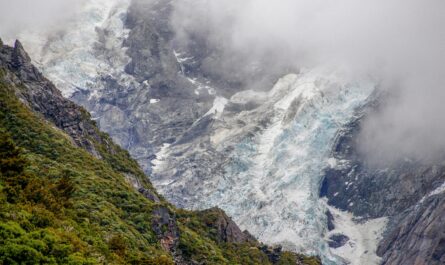
The glacier’s front creates an imposing view, with irregular ice formations rising above the lake. Its surface is not smooth like a frozen pond. It contains fractures, ridges, steep faces, and areas where different layers of ice create complex patterns.
These details reveal the forces acting within the glacier. As the ice moves over uneven ground, different sections experience different stresses, causing cracks and changes in shape.
The glacier’s appearance also changes as ice breaks away and weather alters exposed surfaces. There is no guaranty that two visits will yield precisely the same view.
Icebergs Drifting Across the Lake
Grey Lake adds another dimension to the experience. Icebergs that have separated from the glacier can float away from its front, carried by currents and wind.
Their shapes are unpredictable. Some are low and rounded, while others rise into pointed towers or uneven blocks. The visible portion represents only part of each iceberg because much of its mass remains underwater.
These floating pieces of ice can create a powerful visual contrast against the darker lake. They also offer a closer look at the textures and colors that make glacial ice so distinctive.
Mountains and Wilderness
The surrounding mountains make the glacier even more dramatic. Rocky slopes, snow-covered summits, and distant ridgelines provide scale, helping visitors appreciate the size of the ice.
Patagonian forests and open areas near the lake add variety to the landscape. Depending on the viewpoint, a single photograph may include water, floating ice, mountain peaks, and the glacier’s immense front.
This combination is one reason Grey Glacier appeals to travelers who enjoy natural landscapes rather than attractions built specifically for tourism.
The Best Ways to Experience Grey Glacier
There are several ways to appreciate Grey Glacier, and each offers a different perspective. The right choice depends on a visitor’s fitness, budget, available time, and interest in adventure.
1. Take a Boat Excursion on Grey Lake
A boat excursion is one of the most accessible ways to approach the glacier. Visitors travel across Grey Lake and enjoy views of floating icebergs, surrounding mountains, and the glacier’s front.
The journey typically takes around three hours, although the exact duration and route depend on the operator and conditions. Tours may provide opportunities to observe the ice from a different angle than is possible from shore. <a href=”https://turismolagogrey.cl/en/navigation/“>Hotel Lago Grey’s official navigation information</a> provides details about its excursion.
A boat trip is particularly useful for travelers who want to see the glacier without undertaking a demanding trek across the surrounding terrain.
However, reaching the departure point may involve a walk along Grey Beach. The operator currently describes this walk as approximately 30 to 45 minutes, so visitors should check accessibility information before booking.
2. Explore Nearby Trails and Viewpoints
Walking routes around the Grey Lake area offer opportunities to appreciate the landscape at a slower pace. From suitable viewpoints, visitors can observe the glacier, lake, mountains, and icebergs without boarding a boat.
Hiking also allows travelers to notice smaller details, such as the texture of rocks, the changing colors of the water, and the way clouds move across the mountain peaks.
Trail difficulty varies, so it is important to choose a route that matches your experience and available time. Carry water, wear suitable footwear, and follow park guidance. Patagonia’s weather can change quickly, making preparation essential even for relatively short walks.
3. Consider a Guided Glacier Trek
For travelers seeking a more adventurous experience, guided glacier excursions may offer the chance to walk on glacial ice. These activities require specialist knowledge, suitable equipment, and careful attention to safety.
A glacier is not a stable, level surface. It can contain hidden cracks, deep crevasses, slippery areas, and sections that change over time. Visitors should never attempt to explore the ice independently.
Choose an established operator that provides qualified guides, appropriate safety equipment, and clear information about fitness requirements and age restrictions. Availability is seasonal and can depend on weather and operational conditions.
4. Enjoy Kayaking Where Permitted
Kayaking can provide a low-level perspective of the surrounding landscape, bringing the water and mountains into the foreground. However, paddling near a glacier requires careful planning and experienced supervision.
Cold water, strong winds, changing weather, and floating ice create risks that should not be underestimated. Kayaking routes and access rules may also vary.
Only participate through an authorized operator familiar with local conditions. Never go near floating icebergs or unstable ice faces just to have a closer look.
Grey Glacier for Photography Enthusiasts
Grey Glacier offers excellent opportunities for landscape photography because it combines dramatic scale with intricate natural details.
Choose the Right Light
Early and late daylight can create softer shadows and reveal texture in the glacier’s surface. Midday light may also be useful when the sky is clear and blue ice becomes more noticeable.
There isn’t a single ideal moment for every picture. Cloud cover and changing weather can produce interesting results throughout the day.
Use the Landscape to Show Scale
A photograph of ice alone may not communicate the glacier’s enormous size. Including distant mountains, a boat, or a wide section of the lake can help viewers understand the proportions of the scene.
Wide-angle compositions work well for capturing the broader environment, while longer focal lengths can isolate patterns in the ice or compress distant mountain layers.
Look for Smaller Details
The glacier is not only about sweeping panoramas. Reflections, floating pieces, blue cracks, curved ice forms, and cracks can all make interesting subjects.
Photographers should watch for changes in light and avoid spending the entire visit looking through a camera. Taking time to observe the landscape often helps reveal compositions that might otherwise be missed.
Protect Your Equipment
Wind, rain, cold temperatures, and moisture can create problems for cameras and phones. Bring a protective cover, keep spare batteries warm, and use a secure strap near the water.
A microfiber cloth is useful for removing moisture from lenses. If using a tripod, ensure it is stable and does not obstruct other visitors.
Above all, remain in designated areas. No photograph is worth approaching an unstable glacier face or ignoring safety instructions.
Wildlife and the Natural Environment
The area surrounding Grey Glacier forms part of a diverse Patagonian ecosystem. The park’s habitats include forests, grasslands, wetlands, rocky slopes, and mountain environments that support a variety of wildlife.
Visitors exploring Torres del Paine may encounter birds and other animals adapted to the region’s changing conditions. Wildlife sightings are never guaranteed, however, and animals should be observed from a respectful distance.
The glacial environment also supports important ecological processes. Ice stores freshwater, while meltwater contributes to rivers and lakes. Changes in glacial conditions can affect downstream water systems and the habitats that depend on them.
Travelers can help protect the environment by staying on designated trails, taking rubbish away, avoiding unnecessary noise, and following park rules. Feeding wild animals or approaching them for photographs can disrupt their natural behavior.
Responsible tourism helps preserve the qualities that make Grey Glacier special: its relative wildness, its dramatic scenery, and its place within a wider natural system.
Grey Glacier and Climate Change
Glaciers respond to changes in temperature and snowfall, which makes them valuable indicators of environmental conditions. When melting and ice loss exceed the amount of new ice being added, a glacier may shrink over time.
Grey Glacier, like many glaciers around the world, exists within a climate that is changing. Understanding its long-term condition requires scientific measurements and observations rather than relying on a single visit or photograph.
Glacier retreat is not always a simple process. Individual glaciers respond differently because of variations in snowfall, terrain, ice thickness, water depth, and local weather. A glacier’s front may also advance or retreat temporarily even while its overall mass is declining.
The broader concern is that sustained ice loss can affect freshwater storage, local landscapes, and ecosystems. Meltwater patterns may change, and the release of land-based ice contributes to global sea-level rise.
Visitors do not need to be scientists to appreciate the significance of these changes. Observing a glacier can encourage a deeper understanding of how interconnected the Earth’s climate, water, and landscapes are.
Travelers can support conservation by following park regulations, choosing responsible tour providers, minimizing waste, and learning from credible scientific and educational resources.
When Is the Best Time to Visit Grey Glacier?
The best time to visit depends on the experience you want and the conditions available during your travel dates.
Warmer months in Patagonia generally offer more opportunities for hiking and boat excursions, although wind, rain, and sudden temperature changes remain possible. These months can also be busier, so advance planning is helpful.
The colder season offers a different atmosphere, with shorter daylight hours and potentially challenging weather. Some activities may operate on reduced schedules or become unavailable. Winter travel should be planned with particular attention to road conditions, park access, and tour arrangements.
Rather than relying entirely on seasonal averages, check the current forecast and confirm the operation of any excursion shortly before departure. The weather around the glacier can change rapidly, and tours may be delayed or cancelled for safety reasons.
Pack layers, waterproof outer clothing, gloves, sturdy footwear, sunglasses, and sun protection. Even when the air feels cold, sunlight reflected from snow and ice can be intense.
Practical Travel Tips for Visiting Grey Glacier
A successful trip begins with realistic planning. The glacier lies in a remote natural area, so visitors should allow sufficient time for transport, park entry, walking, and unexpected weather changes.
Book important activities in advance. Boat trips and guided glacier excursions may have limited capacity, particularly during popular travel periods.
Check park entry requirements. A boat reservation does not automatically include admission to Torres del Paine National Park. Review the current entry rules and purchase tickets through the appropriate official channel.
Allow extra time. Do not schedule a glacier excursion so tightly that a transport delay could disrupt the rest of your trip.
Prepare for wind and rain. Weather-resistant clothing is more useful than relying on a single heavy layer.
Carry food and water. Services can be limited in remote areas, and a longer visit may require more supplies than expected.
Respect safety barriers and signs. Ice, shorelines, and steep terrain can be dangerous even when conditions appear calm.
Check accessibility before booking. The walk to the boat departure area may not be suitable for visitors with reduced mobility. Contact the tour provider to discuss specific requirements.
Leave the landscape as you found it. Take rubbish with you, avoid disturbing wildlife, and remain on permitted routes.
These simple precautions can make the experience more enjoyable while reducing risks for visitors and pressure on the environment.
Why Grey Glacier Deserves a Place on Your Patagonia Itinerary
Patagonia offers many remarkable natural attractions, but Grey Glacier provides a particularly memorable combination of immense ice, open water, and mountainous scenery. Its scale can be difficult to appreciate in photographs alone, especially when viewed alongside icebergs drifting across Grey Lake.
The experience can be peaceful or adventurous depending on how visitors choose to explore. A boat trip offers a close view from the water, while hiking reveals different perspectives of the surrounding landscape. Guided glacier activities provide a more specialized experience for people who meet the relevant requirements.
Grey Glacier also offers something beyond spectacular scenery. It encourages visitors to think about the slow processes that shape the planet and the environmental changes affecting frozen landscapes worldwide.
Whether you are planning a photography trip, a hiking holiday, or a broader exploration of Chilean Patagonia, Grey Glacier can be a rewarding addition to your itinerary.
Conclusion
Grey Glacier is one of Patagonia’s most striking natural landmarks, bringing together powerful ice formations, floating icebergs, dramatic mountain views, and the ever-changing atmosphere of Grey Lake. Its beauty comes not only from its size but also from the details revealed by light, weather, and the movement of ice.
A visit can include a scenic boat excursion, walks to nearby viewpoints, landscape photography, or a professionally guided glacier experience. Each option provides a different way to understand this remarkable environment.
Good preparation is essential. Weather can change quickly, excursions may be affected by local conditions, and the glacier itself should always be treated with caution. By planning responsibly and respecting the protected landscape, travelers can enjoy Grey Glacier while helping preserve the natural character of Torres del Paine.
For anyone drawn to remote wilderness and the extraordinary forms created by ice, Grey Glacier is a destination that offers both visual wonder and a powerful reminder of nature’s constant evolution.