 by
by Glaciers are often viewed as timeless giants—vast rivers of ice that have existed for thousands or even millions of years. These frozen landscapes seem permanent and unchanging, but in reality, glaciers are highly sensitive to fluctuations in temperature. Among the many consequences of climate change, one phenomenon has become particularly concerning for glaciologists: the increasing frequency and intensity of heat waves.
Heat waves are prolonged periods of unusually high temperatures that can last for days or even weeks. While they are often associated with impacts on human health, agriculture, and ecosystems, they also have profound effects on glaciers around the world. From the towering ice fields of Greenland to the mountain glaciers of the Alps and Himalayas, extreme heat events are accelerating glacier melt at an unprecedented pace.
Understanding how heat waves affect glaciers is essential because these frozen reservoirs influence global sea levels, freshwater supplies, weather patterns, and ecosystems. The consequences of rapid glacier melting extend far beyond the icy landscapes themselves and affect millions of people worldwide.
What Is a Heat Wave?
A heat wave occurs when temperatures remain significantly above average for a region over an extended period.
Heat waves can develop because of:
- Persistent high-pressure weather systems
- Changes in atmospheric circulation
- Reduced cloud cover
- Dry soil conditions
- Long-term climate warming
As global temperatures rise, heat waves are becoming:
- More frequent
- More intense
- Longer-lasting
- More widespread
These changes are particularly significant for glaciers, which depend on cold temperatures to maintain their mass.
Why Glaciers Are Sensitive to Temperature
Glaciers exist because the amount of snow they gain each year exceeds the amount of ice they lose through melting and evaporation.
This balance depends on two key processes:
Accumulation
Snowfall adds new ice to the glacier.
Ablation
Ice is lost through:
- Surface melting
- Sublimation
- Ice calving
- Wind erosion
When a heat wave occurs, the rate of melting increases dramatically, disrupting this delicate balance.
Even a short period of extreme warmth can cause glaciers to lose significant amounts of ice.
Rapid Surface Melting During Heat Waves
One of the most immediate effects of a heat wave is accelerated surface melting.
Increased Energy Absorption
Higher air temperatures transfer more heat to glacier surfaces.
As a result:
- Snow melts more quickly.
- Ice surfaces soften.
- Meltwater production increases.
A glacier that would normally lose a small amount of ice over several weeks may experience substantial melting in just a few days during an extreme heat event.
Breaking Temperature Records
Recent heat waves have caused unprecedented melting in many glacier regions.
Scientists have observed:
- Record ice loss in Greenland
- Rapid retreat of Alpine glaciers
- Accelerated melting in Arctic regions
- Extreme ice loss in mountain glaciers worldwide
These events demonstrate how sensitive glaciers are to short-term temperature extremes.
Snow Cover Disappears More Quickly
Snow plays an important role in protecting glaciers.
Fresh snow is highly reflective and bounces much of the sun’s energy back into space.
This property is known as albedo.
The Albedo Effect
White snow reflects a large percentage of incoming sunlight.
When a heat wave melts the snow cover:
- Darker ice becomes exposed.
- More solar energy is absorbed.
- Surface temperatures rise further.
- Melting accelerates.
This produces a positive feedback loop, which is a self-reinforcing cycle.
The loss of reflective snow significantly increases glacier vulnerability during heat waves.
Formation of Meltwater Ponds
During periods of extreme heat, large quantities of meltwater accumulate on glacier surfaces.
These pools, called melt ponds, can have important consequences.
Dark Water Absorbs Heat
Unlike bright snow, meltwater absorbs sunlight efficiently.
As ponds grow:
- More heat is absorbed.
- Nearby ice melts faster.
- Additional meltwater forms.
Melt ponds therefore contribute to further glacier loss.
In regions like Greenland, extensive networks of melt ponds can develop during exceptionally warm summers.
Meltwater Reaching the Glacier Bed
One of the most fascinating effects of heat waves occurs beneath the glacier.
Surface Water Penetration
Meltwater often flows through cracks and crevasses deep into the ice.
Eventually, this water may reach the glacier bed.
Lubrication Effect
Water beneath the glacier acts as a lubricant.
This can:
- Reduce friction
- Increase glacier speed
- Accelerate ice movement toward the ocean
Scientists have observed that some glaciers temporarily speed up following intense heat waves due to increased basal lubrication.
Increased Ice Calving
Heat waves can also promote ice calving.
What Is Calving?
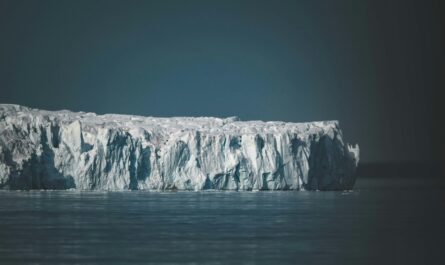
Calving occurs when chunks of ice break away from a glacier and fall into the sea or a lake.
Heat waves contribute to calving by:
- Weakening ice structures
- Increasing meltwater penetration
- Destabilizing glacier fronts
Large calving events can remove enormous amounts of ice in a short time.
Glacier Thinning
Repeated heat waves gradually reduce glacier thickness.
Why Thinning Matters
Thinner glaciers are:
- More vulnerable to future melting
- Less stable
- More likely to retreat
As glaciers thin, they often move into lower elevations where temperatures are warmer, increasing their exposure to future heat waves.
This creates another feedback mechanism that accelerates ice loss.
Heat Waves and Glacier Retreat
A glacier retreats when it loses more ice than it gains.
Heat waves significantly contribute to this imbalance.
Retreat Rates Are Increasing
Many glaciers are now retreating faster than they did in previous centuries.
Researchers have documented:
- Rapid retreat in the European Alps
- Shrinking glaciers in the Andes
- Ice loss in the Himalayas
- Accelerated melting in North America
Repeated extreme heat events are a major factor behind these changes.
Effects on Greenland’s Ice Sheet


7
The Greenland Ice Sheet has become one of the most closely monitored regions in the world.
Exceptional Heat Events
During some recent summers, Greenland experienced temperatures far above average.
The consequences included:
- Extensive surface melting
- Record meltwater production
- Massive ice loss
- Increased contribution to sea-level rise
In some years, melting affected areas that rarely experienced surface melt in the past.
Effects on Mountain Glaciers
Mountain glaciers are particularly vulnerable to heat waves because they are generally smaller and thinner than major ice sheets.
Alpine Glaciers
The glaciers of the European Alps have suffered severe losses during recent heat waves.
Some glaciers lost several meters of ice thickness in a single season.
Himalayan Glaciers
Heat waves are also affecting glaciers in the Himalayas.
Since these glaciers provide water to millions of people, accelerated melting raises concerns about future water security.
Formation of Glacial Lakes
Rapid melting often leads to the formation of glacial lakes.
New Hazards
These lakes can become dangerous because they may:
- Expand rapidly
- Destabilize surrounding slopes
- Trigger catastrophic floods
Such floods are known as Glacial Lake Outburst Floods (GLOFs).
Heat waves can accelerate the formation and growth of these lakes.
Impacts on Water Resources
At first, increased melting can temporarily boost river flows.
However, this benefit is short-lived.
The Long-Term Problem
As glaciers shrink:
- Less ice remains available for melting.
- Dry-season river flows decline.
- Water shortages become more likely.
Communities that depend on glacier-fed rivers may face increasing challenges in the future.
Effects on Ecosystems
Glacier melt affects ecosystems both near and far.
Changing River Conditions
Increased meltwater can alter:
- Water temperature
- Sediment levels
- River chemistry
- Aquatic habitats
Some species struggle to adapt to these rapidly changing conditions.
Wildlife Impacts
Species that depend on cold environments may experience habitat loss as glaciers retreat.
Contribution to Sea-Level Rise
Perhaps the most significant global consequence of heat-wave-driven glacier melting is rising sea levels.
How Glaciers Influence Oceans
When land-based ice melts, water eventually reaches the oceans.
This contributes directly to:
- Higher sea levels
- Increased coastal flooding
- Greater erosion
- Saltwater intrusion into freshwater supplies
Although a single heat wave may not dramatically raise sea levels, repeated extreme events add up over time.
Heat Waves and Polar Amplification
The Arctic is warming faster than most other parts of the planet.
This phenomenon is known as polar amplification.
As temperatures rise:
- Heat waves become more likely.
- Glacier melt accelerates.
- Sea ice declines.
- Additional warming occurs.
The interactions between these processes are complex and interconnected.
Studying Glacier Responses to Heat Waves
Scientists use various methods to understand how glaciers respond to extreme heat.
Satellite Observations
Satellites track:
- Ice extent
- Surface melting
- Glacier movement
- Elevation changes
Weather Stations
Researchers install instruments directly on glaciers to measure:
- Temperature
- Wind
- Snow accumulation
- Melt rates
Computer Models
Climate models help scientists predict:
- Future heat wave frequency
- Glacier responses
- Long-term ice loss
These tools improve our understanding of future risks.
Can Glaciers Recover After Heat Waves?
In some cases, glaciers can partially recover if cooler conditions return and snowfall increases.
However, recovery becomes increasingly difficult when:
- Heat waves occur repeatedly.
- Average temperatures continue rising.
- Snowfall decreases.
Many glaciers are now losing ice faster than they can replace it.
As a result, some may disappear entirely within this century.
The Future of Glaciers in a Warming World
Climate projections suggest that heat waves will continue becoming more common and more intense.
This means:
- Increased glacier melt
- Greater glacier retreat
- More frequent hazards
- Rising sea levels
- Changes to freshwater availability
The future of many glaciers will depend largely on global efforts to reduce greenhouse gas emissions and limit additional warming.
Conclusion
Heat waves have become one of the most powerful drivers of glacier change in the modern world. These periods of extreme warmth accelerate surface melting, remove protective snow cover, create meltwater ponds, increase glacier movement, and contribute to long-term glacier retreat.
The consequences extend far beyond the glaciers themselves. Increased melting influences water supplies, ecosystems, natural hazards, and global sea levels. Mountain communities, coastal cities, and entire ecosystems are increasingly affected by changes that begin in distant ice-covered regions.
Glaciers have always responded to natural climate fluctuations, but today’s heat waves are occurring in a rapidly warming world where extreme temperatures are becoming more common. Understanding how heat waves affect glaciers helps scientists predict future changes and highlights the importance of addressing climate change before more of the planet’s frozen landscapes disappear.
The story of glaciers is not merely about ice. It is a story about the interconnected systems that sustain life on Earth and the profound consequences that can arise when those systems begin to change.