 by
by Glaciers are some of the most awe-inspiring and powerful forces on Earth. They carve valleys, shape mountains, and influence global ecosystems. At first glance, it might seem intuitive to assume that glaciers, being essentially rivers of ice, only flow downhill. After all, gravity pulls everything toward the Earth’s center. But the story of glacier movement is far more complex and fascinating than this simple assumption suggests.
In this article, we explore how glaciers move, what factors influence their flow, and whether they can ever move sideways or even uphill.
Understanding Glaciers: Rivers of Ice
Before diving into glacier movement, it’s important to understand what glaciers are. A glacier is a large, enduring mass of solid ice that develops over many years as a result of snow accumulation and compaction. Unlike sea ice or seasonal snowpacks, glaciers are permanent and slowly deform under their own weight.
Glaciers can range from a few hundred meters to tens of kilometers long. They exist in polar regions like Antarctica and Greenland, as well as high mountain ranges such as the Alps, Himalayas, and Andes. Their immense weight allows them to flow, albeit slowly, reshaping the landscapes they traverse.
Gravity: The Primary Driver of Glacier Movement
The most obvious reason glaciers move is gravity. Because glaciers are massive, the ice behaves like a very viscous fluid. Gravity pulls the ice downhill, causing it to deform and slowly slide over the bedrock or sediment beneath it.
The rate of glacier movement can vary widely. Some glaciers, like the slow-moving ice in Antarctica, may only advance a few meters per year, while others, like the Jakobshavn Glacier in Greenland, can move several kilometers annually. Factors like slope, ice thickness, temperature, and the presence of meltwater at the glacier’s base all influence speed.
Glacier Flow Isn’t Uniform
Contrary to a common misconception, glaciers do not move as a single rigid block. Instead, their motion is internal and layered:
- Internal Deformation: Ice behaves plastically under pressure. The immense weight of overlying ice causes ice crystals to slowly deform and slide past each other. This internal flow allows the glacier to move even when the surface is frozen to the bedrock.
- Basal Sliding: The bottom of a glacier may melt due to pressure and friction, forming a thin layer of water that acts like a lubricant. This allows the glacier to slide more easily over its bed.
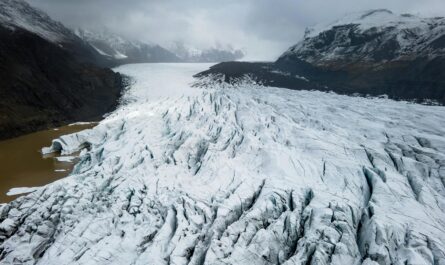
- Crevasses and Fractures: The upper layers of glaciers can crack and form crevasses, particularly when moving over uneven terrain. These fractures are a visual indicator that the ice is flowing.
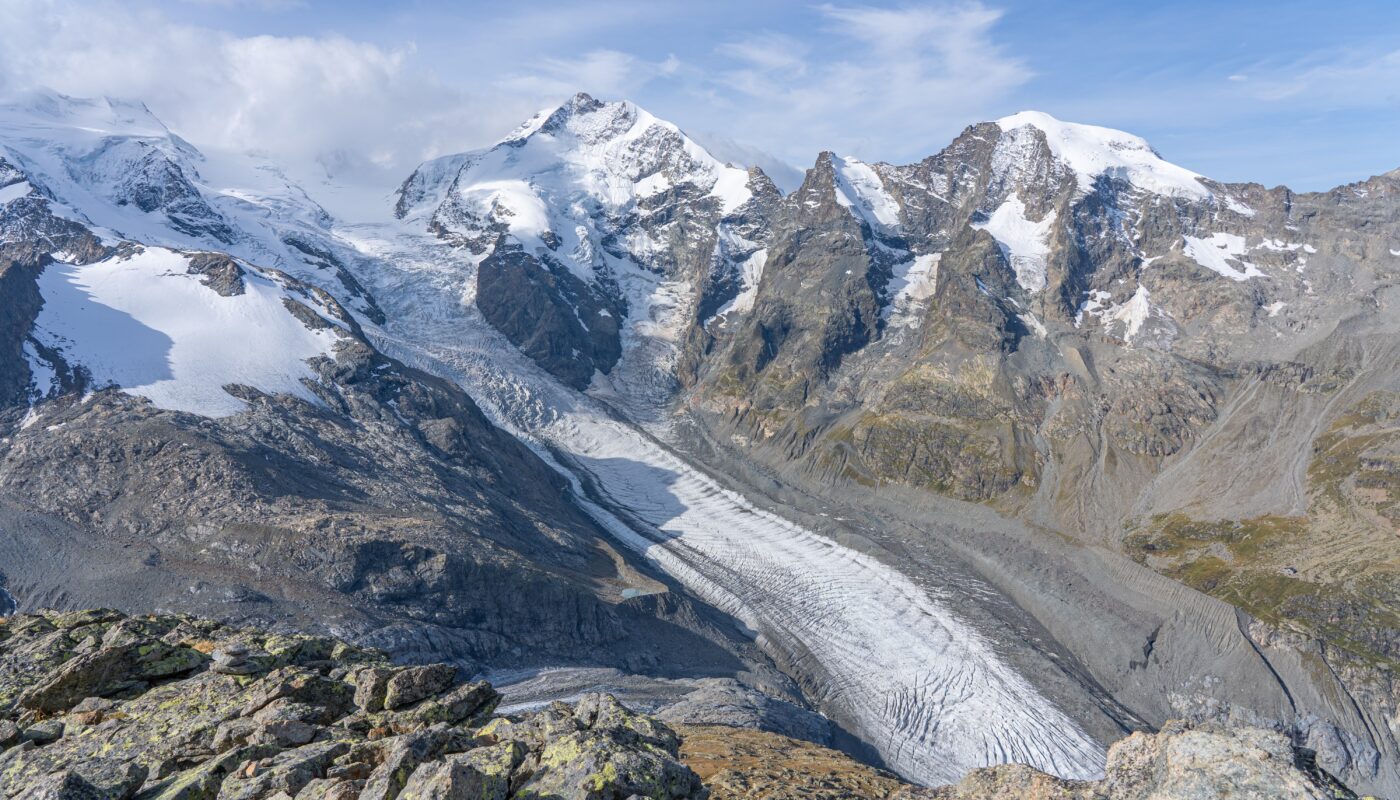
In short, glacier movement is not uniform. The center often moves faster than the edges, and the top usually moves faster than the bottom. This differential movement allows glaciers to behave in ways that are more complex than simply “flowing downhill.”
Can Glaciers Move Sideways or Uphill?
While gravity is the main driver, glaciers are not strictly limited to downhill movement in the narrow sense. Several phenomena can cause ice to move in directions that might seem counterintuitive:
1. Lateral Spreading
Glaciers in valleys or confined areas sometimes spread sideways. When ice accumulates in the center of a glacier, the pressure can push ice outward along the sides. This lateral movement is especially noticeable in ice caps and ice sheets, where the ice spreads radially from a central dome.
For example, the Greenland Ice Sheet spreads outward toward the coasts, creating outlet glaciers that flow into the sea. Here, ice does not flow straight downhill from a single valley—it spreads in multiple directions depending on the underlying topography.
2. Ice Rises and Upward Flow
Some glaciers experience minor upward movement over small obstacles due to internal deformation. Ice is a plastic material and under enough pressure can creep over bumps or ridges. In this sense, local upward flow can occur, though the net motion of the glacier remains toward lower elevations.
Think of it as water slowly climbing over a shallow obstruction in a very viscous river—the overall flow continues downhill, but small upward movements can happen locally.
3. Glacial Surges
Certain glaciers exhibit sudden increases in flow known as surges. During a surge, the ice may move faster than normal, sometimes changing direction slightly due to interactions with tributary glaciers, bedrock topography, or changes in meltwater lubrication. While these surges do not send glaciers permanently uphill, they show that glacier movement is dynamic and influenced by multiple forces beyond simple gravity.
Factors Influencing Glacier Movement
Several environmental and physical factors affect how and where glaciers move:
Slope and Topography
The underlying terrain largely dictates the direction and speed of flow. Steep slopes accelerate glaciers, while flat areas can slow or even temporarily halt motion. Valleys and ridges channel ice in complex ways, sometimes causing ice to bend, split, or spread.
Ice Thickness and Weight
Thicker glaciers exert greater pressure at their base, promoting basal sliding. This can allow ice to move more easily over small irregularities in the bedrock, creating the illusion of “uphill” movement over short distances.
Temperature and Meltwater
Meltwater at the base of glaciers acts as a lubricant, increasing flow speed. Warmer glaciers tend to flow faster because basal sliding becomes more efficient. Seasonal variations in temperature can create fluctuations in flow patterns.
Bedrock and Sediment
The type of surface beneath the glacier matters. Hard bedrock provides more friction, slowing movement, while soft sediments allow ice to slide more readily. Subglacial sediments can also deform under pressure, enabling ice to move more flexibly in response to topography.
Surprising Glacier Phenomena
Beyond sideways or upward flow, glaciers exhibit other fascinating behaviors:
1. Tidewater Glaciers
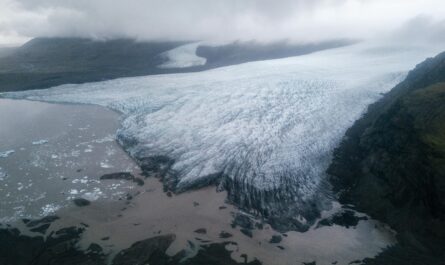
Glaciers that terminate in the sea, known as tidewater glaciers, can behave differently from land-based glaciers. Calving events, where ice chunks break off, can affect local flow dynamics and temporarily alter flow directions along the ice front.
2. Ice Streams
Within ice sheets, narrow corridors of fast-flowing ice called ice streams transport ice toward the ocean much more quickly than surrounding ice. These streams carve deep channels and influence the ice sheet’s overall movement patterns, which are not always strictly downhill.
3. Glacial Folding
Under immense pressure, ice can fold and deform. These folds allow ice to adjust to obstacles, causing unusual patterns in flow. Such folding does not defy gravity but demonstrates the complexity of ice dynamics.
Misconceptions About Glacier Movement
It is a common misconception that glaciers only move straightforwardly downhill like water in a river. The reality is nuanced:
- Glaciers are plastic, not rigid: Ice can deform internally, allowing it to flow in complex ways.
- Net flow is generally downhill: While small local deviations are possible, gravity dictates the overall direction.
- Topography matters: Valleys, ridges, and obstacles can temporarily redirect ice.
- Ice sheets spread radially: Large ice masses often move in multiple directions simultaneously.
Understanding these nuances helps scientists interpret glacial features, estimate ice mass loss, and predict sea level rise.
Why Glacier Movement Matters
Studying glacier movement is crucial for several reasons:
- Sea Level Predictions: Melting glaciers contribute to rising sea levels. Understanding their flow helps model future impacts.
- Landscape Evolution: Glaciers carve valleys, fjords, and basins over millennia. Mapping movement explains how landscapes develop.
- Climate Indicators: Changes in glacier speed can signal shifts in climate and local temperature.
- Hazard Assessment: Rapid glacier surges or ice avalanches pose risks to communities near mountains or fjords.
By understanding how glaciers move—not just downhill—scientists gain valuable insight into Earth’s changing climate and topography.
Conclusion
So, do glaciers move only downhill? The simple answer is mostly yes, because gravity drives the net movement of ice toward lower elevations. However, this statement does not capture the full complexity of glacier dynamics.
Glaciers can spread sideways, deform internally, and even temporarily move over obstacles, giving the impression of upward or lateral flow. Ice behavior is influenced by slope, temperature, meltwater, ice thickness, and the underlying terrain. Glacial surges, ice streams, and calving events add further complexity, demonstrating that glaciers are dynamic, ever-changing systems rather than simple frozen rivers.
In short, glaciers primarily move downhill, but their motion is far from uniform or straightforward. Understanding these nuances is essential for photographers, hikers, scientists, and anyone captivated by these massive, flowing ice giants.
Glaciers remind us that nature rarely adheres to simplistic rules—what seems obvious at first glance often hides a wealth of intricate processes beneath the surface.