 by
by One of the most obvious signs of climate change is glaciers. These massive rivers of ice, which once dominated vast portions of Earth’s landscape, have been steadily retreating for more than a century. Since the early 1900s, scientists have documented significant glacier shrinkage across nearly every region where glaciers exist—from the European Alps to the Himalayas, from Alaska to the polar ice sheets.
But how much have glaciers actually shrunk since 1900? The answer is complex, varying by region, climate, and glacier type. However, one conclusion is clear: glacier retreat is widespread, measurable, and accelerating. This article explores the extent of glacier loss over the past century, how scientists measure it, and what it means for the future.
Understanding Glacier Shrinkage
Before examining the numbers, it’s important to understand what “glacier shrinkage” means. Glaciers change in response to two main processes:
- Accumulation: Snowfall adds new ice
- Ablation: Melting, evaporation, and ice loss remove mass
When a glacier loses more ice than it gains over time, it retreats. This can be observed in several ways:
- Reduction in length (terminus retreat)
- Decrease in thickness
- Loss of total ice volume
All three indicators show that glaciers worldwide have been shrinking since around 1900, with the rate increasing in recent decades.
A Global Overview of Glacier Loss
Globally, glaciers (excluding the large ice sheets of Antarctica and Greenland) have lost a significant portion of their mass over the past century.
Key estimates:
- Since 1900, glaciers worldwide have lost hundreds of gigatons of ice annually in recent decades
- Total glacier mass has declined by roughly 20–30% in many regions
- The rate of loss has accelerated dramatically since the late 20th century
Modern satellite observations confirm that glacier retreat is occurring on nearly every continent.
The European Alps: A Dramatic Example
Glaciers in the Alps provide some of the clearest long-term records of ice loss.
Changes since 1900:
- Alpine glaciers have lost over 50% of their volume
- Many smaller glaciers have disappeared entirely
- Remaining glaciers have thinned significantly
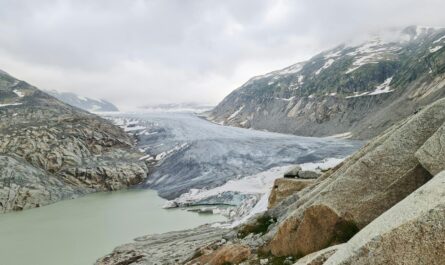
Photographic comparisons from the early 20th century to today show striking differences. Areas once covered in thick ice are now exposed rock or vegetation.
The Alps are particularly sensitive to temperature changes, making them one of the fastest-warming glacier regions in the world.
Alaska: Massive Ice Loss
Alaska contains some of the largest glaciers outside the polar regions, and it has experienced substantial ice loss.
Observations:
- Glaciers in Alaska have lost hundreds of gigatons of ice per year in recent decades
- Many glaciers have retreated kilometers from their historical positions
- Ice thinning has been widespread
Because of their size, Alaskan glaciers contribute significantly to global sea-level rise.
The Himalayas: High-Altitude Changes
The Himalayan region, often called the “Third Pole,” contains vast reserves of ice that feed major rivers.
Since 1900:
- Many glaciers have retreated by hundreds of meters to several kilometers
- Ice thickness has decreased noticeably
- Some smaller glaciers have vanished
The rate of retreat varies depending on altitude and local climate, but overall trends point to consistent loss.
The Andes: Tropical Glacier Decline
Tropical glaciers in the Andes are particularly vulnerable to temperature changes.
Key findings:
- Some glaciers have lost 30–50% of their area since the early 20th century
- Several low-altitude glaciers have disappeared
- Water supplies for nearby communities are increasingly affected
Because these glaciers exist in warmer climates, even small temperature increases can have a large impact.
Greenland and Antarctica: A Different Scale
While this article focuses mainly on mountain glaciers, it’s important to mention the polar ice sheets.
Greenland:
- Significant ice loss has occurred, especially since the late 20th century
- Surface melting and iceberg calving both contribute
Antarctica:
- Ice loss is more variable but increasing in certain regions
Although these ice sheets behave differently from mountain glaciers, they reinforce the global pattern of ice decline.
How Scientists Measure Glacier Shrinkage
Understanding glacier change requires a combination of historical records and modern technology.
1. Historical Photographs and Maps
Old photographs, paintings, and maps provide visual evidence of glacier extent in the early 1900s. Comparing these with modern images reveals dramatic retreat.
2. Field Measurements
Scientists visit glaciers to measure:
- Ice thickness
- Movement speed
- Terminus position
These direct observations provide detailed local data.
3. Satellite Observations
Satellites have revolutionized glacier monitoring by allowing scientists to:
- Measure changes in area and volume
- Track movement over time
- Observe remote regions
4. Ice Core and Climate Data
Ice cores and climate records help scientists understand long-term trends and the relationship between temperature and glacier behavior.
Why Have Glaciers Shrunk So Much?
The primary driver of glacier shrinkage since 1900 is rising global temperatures.
Key factors:
- Increased air temperatures: Accelerate melting
- Changes in precipitation: Affect snowfall and accumulation
- Ocean warming: Impacts glaciers that terminate in water
Human-driven climate change has intensified these factors, especially since the mid-20th century.
Acceleration Since the 1980s
While glacier retreat began around the end of the Little Ice Age (roughly mid-1800s), the rate of shrinkage has increased significantly since the 1980s.
Evidence of acceleration:
- Faster retreat rates
- Increased annual ice loss
- More frequent glacier collapse events
This acceleration aligns with rising global temperatures and increased greenhouse gas concentrations.
Consequences of Glacier Shrinkage
The loss of glaciers has far-reaching impacts beyond the mountains.
1. Sea-Level Rise
Sea levels are rising as a result of glacier melting, which can:
- Flood coastal areas
- Increase erosion
- Affect ecosystems
2. Water Resources
Many rivers depend on glacier meltwater, especially during dry seasons.
Impacts include:
- Reduced water availability
- Changes in seasonal flow patterns
- Increased risk of drought
3. Natural Hazards
Glacier retreat can create unstable conditions, leading to:
- Glacial lake outburst floods (GLOFs)
- Landslides
- Ice collapses
4. Ecosystem Changes
As glaciers disappear, ecosystems must adapt:
- New plant and animal species may move in
- Existing species may lose habitat
Are All Glaciers Shrinking?
While the vast majority of glaciers are retreating, there are a few exceptions.
Some glaciers may:
- Remain stable due to local climate conditions
- Advance temporarily due to increased snowfall
However, these cases are rare and do not reflect the global trend.
What the Future Holds
If current warming trends continue, glacier shrinkage is expected to accelerate further.
Projections suggest:
- Many smaller glaciers could disappear within decades
- Significant ice loss will continue throughout the 21st century
- Some regions may lose most of their glaciers entirely
The exact outcome depends on future climate conditions and efforts to reduce greenhouse gas emissions.
A Century of Change in Perspective
Looking back to 1900, glaciers were far more extensive than they are today. In many regions, they shaped landscapes, supported ecosystems, and influenced local climates.
Today, their retreat is not just a scientific observation—it is a visible transformation of the planet.
Comparing past and present images reveals:
- Retreating ice fronts
- Newly exposed valleys
- Expanding vegetation
These changes serve as a powerful reminder of how quickly natural systems can respond to environmental shifts.
Conclusion
Since 1900, glaciers around the world have undergone significant shrinkage, losing large portions of their mass, area, and volume. In regions like the Alps, losses exceed 50%, while globally, glacier retreat has become one of the clearest indicators of climate change.
Advances in science have allowed us to measure these changes with increasing precision, confirming that glacier loss is widespread and accelerating. While the causes are largely linked to rising temperatures, the consequences extend far beyond the ice itself—affecting sea levels, water supplies, ecosystems, and human communities.
Understanding how much glaciers have shrunk is not just about quantifying loss. It’s about recognizing the scale of change and considering what it means for the future of our planet.