 by
by Few places on Earth embody contrast as dramatically as Iceland. Often described as the land of “fire and ice,” it is a place where volcanic energy and glacial power coexist in constant tension. On one hand, molten lava shapes the land through eruptions and geothermal activity. On the other, vast glaciers carve, compress, and reshape the terrain over centuries.
This collision of extremes creates some of the most visually striking landscapes in the world—black sand plains next to blue-white ice caps, steaming geothermal vents rising beside frozen rivers, and massive glaciers slowly grinding their way over volcanic rock. Iceland’s glaciers are not just scenic wonders; they are living systems that reveal the country’s geological past, present, and uncertain future.
This article explores Iceland’s major glaciers, how they formed, what makes them unique, and how travelers can experience these frozen giants responsibly in a rapidly changing climate.
The Concept of “Fire and Ice”
The phrase “fire and ice” is not just poetic—it is a geological reality in Iceland.
The island sits atop the Mid-Atlantic Ridge, where tectonic plates are pulling apart. This creates frequent volcanic activity, geothermal hotspots, and lava fields. At the same time, Iceland’s northern latitude ensures long, cold winters and conditions suitable for glacier formation.
Over thousands of years, repeated cycles of snowfall, compression, and freezing have created massive ice caps. These glaciers cover about 11% of Iceland’s land area, storing vast amounts of freshwater and shaping valleys, fjords, and plains.
The result is a constantly evolving landscape where:
- Volcanoes erupt beneath glaciers
- Ice melts and reshapes river systems
- Floods known as “jökulhlaups” occur when subglacial eruptions release water suddenly
This dynamic environment makes Iceland one of the most geologically active countries on Earth.
Major Glaciers of Iceland
Iceland is home to several major glaciers, each with its own character, accessibility, and geological significance.
1. Vatnajökull
Vatnajökull is the largest glacier in Europe by volume, making up over 8% of Iceland’s landmass. It dominates the southeast region and is part of the protected Vatnajökull National Park.
Why It’s Unique
Vatnajökull is not a single uniform ice sheet. Instead, it is a vast system of interconnected glaciers covering volcanoes, mountains, and valleys. Beneath its icy surface lie some of Iceland’s most active volcanoes.
Key Features
- Subglacial volcanoes such as Bárðarbunga and Grímsvötn
- Deep ice caves formed by meltwater tunnels
- Constant interaction between geothermal heat and ice
Experience for Visitors
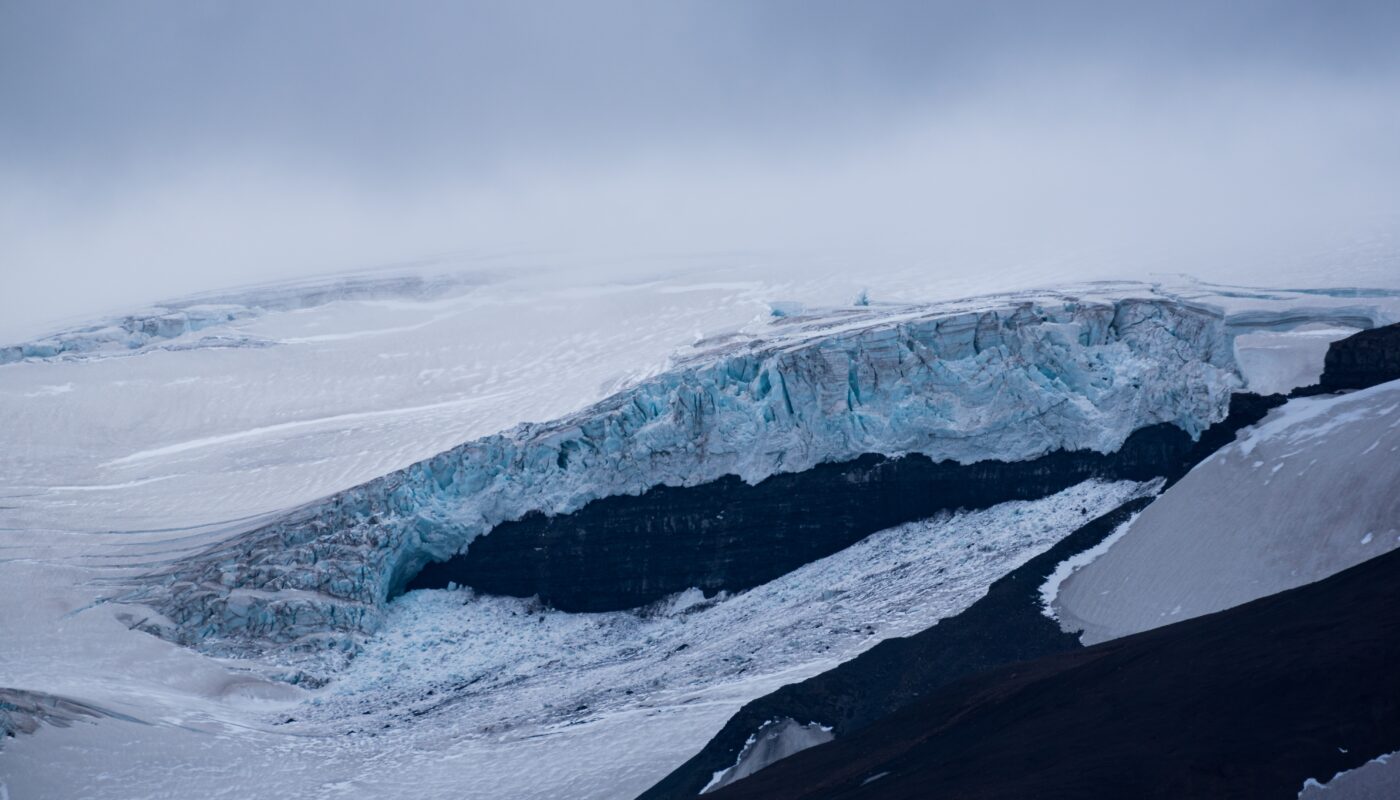
In the winter, visitors can see ice caves, glacier tongues, and striking ice structures. The contrast between black volcanic ash and brilliant blue ice creates surreal visuals that feel almost otherworldly.
2. Sólheimajökull
Sólheimajökull is one of Iceland’s most accessible glacier tongues, located between volcanoes in the south.
Why It’s Unique
It is a rapidly retreating glacier, making it a striking example of climate change in action. Its surface is marked by ash layers from past volcanic eruptions, creating dark streaks across the ice.
Key Features
- Easily reachable from the Ring Road
- Popular for guided glacier walks
- Constantly changing surface due to melting and movement
Experience for Visitors
Visitors can walk directly on the glacier with certified guides. Crevasses, ice ridges, and moulins (vertical ice shafts) create an immersive environment that feels both beautiful and fragile.
3. Snæfellsjökull
Located on the Snæfellsnes Peninsula, Snæfellsjökull is a glacier-capped stratovolcano steeped in mythology and literature.
Why It’s Unique
This glacier gained global fame as the setting for Jules Verne’s Journey to the Center of the Earth. Its symmetrical shape and coastal position make it one of Iceland’s most iconic landmarks.
Key Features
- Glacier sits atop a dormant volcano
- Visible from Reykjavík on clear days
- Surrounded by lava fields and coastal cliffs
Experience for Visitors
The national park’s hiking trails provide sweeping views of the surrounding coastline and glacier. In summer, it becomes a popular hiking and sightseeing destination.
4. Jökulsárlón Glacier Lagoon
Jökulsárlón is not a glacier itself, but it is one of the most famous glacial environments in Iceland.
Why It’s Unique
It forms where icebergs break off from Vatnajökull and drift into a deep glacial lagoon. These icebergs slowly melt and eventually flow into the Atlantic Ocean.
Key Features
- Floating icebergs in shades of white and blue
- Frequent seal sightings
- Constant movement of ice formations
Experience for Visitors
Boat tours allow visitors to glide between icebergs, offering close-up views of ancient ice structures. The nearby Diamond Beach, where ice chunks wash ashore, adds to the surreal landscape.
How Icelandic Glaciers Form
Glaciers in Iceland form through a long process of snow accumulation and compression. Over time:
- Snowfall exceeds melting during cold seasons
- Layers of snow compact into dense ice
- Gravity causes the ice to flow slowly downhill
- The glacier carves valleys and reshapes terrain
Because Iceland sits in a relatively mild but unstable climate zone, glaciers here are especially sensitive to temperature changes. This makes them both dynamic and vulnerable.
The Role of Volcanoes Beneath the Ice
One of the most fascinating aspects of Iceland’s glaciers is what lies beneath them.
Volcanoes hidden under ice create unique interactions:
- Eruptions melt ice rapidly
- Meltwater can trigger massive floods
- Ash layers become embedded in glacier surfaces
These interactions shape landscapes in unpredictable ways. A single volcanic eruption can dramatically alter glacier size, river paths, and surrounding geography.
Climate Change and Glacier Retreat
One of the most visible environmental changes in Iceland today is glacier retreat. Many glaciers, including Sólheimajökull, are shrinking at a noticeable rate.
What’s Happening
- Rising temperatures reduce snowfall accumulation
- Increased melting during summer months
- Glacier tongues are retreating inland
Scientists monitor these changes closely because Iceland’s glaciers act as indicators of global climate trends.
What It Means for Visitors
Some glaciers may look different from year to year. Ice caves may shift or disappear, and hiking routes may change. This makes each visit a snapshot in time—never exactly the same twice.
Best Time to Visit Iceland’s Glaciers
The experience of Iceland’s glaciers varies greatly depending on the season.
Summer (June–August)
- Easier access to glacier areas
- Hiking and photography conditions are excellent
- Longer daylight hours
Winter (November–March)
- Best time for ice cave exploration in Vatnajökull
- Snow-covered landscapes create dramatic contrast
- Short daylight hours but magical lighting conditions
Shoulder Seasons (Spring and Autumn)
- Fewer crowds
- Changing weather conditions
- Unpredictable access to some glacier routes
For most travelers, summer offers accessibility, while winter provides the most dramatic glacier experiences.
Activities on Iceland’s Glaciers
Visitors can experience glaciers in several ways depending on location and season:
Glacier Hiking
Guided walks on ice allow visitors to explore crevasses, ridges, and frozen formations safely.
Ice Caving
Natural ice caves, especially in Vatnajökull, form in winter and offer surreal blue interiors.
Photography Tours
Glaciers are highly photogenic, especially during sunrise or sunset when light enhances ice textures.
Boat Tours
At Jökulsárlón, boat tours bring visitors close to floating icebergs.
Safety and Responsible Travel
Glaciers are beautiful but potentially dangerous environments.
Key safety considerations include:
- Always travel with certified guides
- Never explore glaciers alone
- Be aware of changing weather conditions
- Respect restricted areas
Additionally, responsible tourism is essential. Glaciers are fragile ecosystems, and human activity can accelerate erosion and melting if not managed carefully.
Final Thoughts
The glaciers of Iceland represent one of the most extraordinary natural environments on Earth. From the immense scale of Vatnajökull to the accessible beauty of Sólheimajökull and the iconic scenery of Jökulsárlón Glacier Lagoon, each location tells a story of ice, fire, and constant transformation.
These landscapes are not static—they are alive, shifting, and responding to both natural forces and human-driven climate change. Visiting them is more than sightseeing; it is witnessing Earth’s geological forces in motion.
In a world where few landscapes remain truly wild, Iceland’s glaciers stand as reminders of nature’s raw power and delicate balance.