 by
by At the farthest reaches of Earth, where oceans freeze into shifting fields of white and wind carves across endless ice, life persists in some of the harshest conditions imaginable. In these polar environments, species such as penguins, seals, and other ice-dependent animals have evolved highly specialized ways of surviving.
These creatures are not casual visitors to frozen landscapes—they are deeply tied to them. Their feeding, breeding, migration, and even survival depend on the presence of stable sea ice and cold-water ecosystems. As the planet warms and ice conditions change, these species are among the most directly affected.
Understanding their lives provides more than insight into wildlife. It reveals how fragile polar ecosystems are and how closely animal survival is linked to environmental stability.
What Does “Ice-Dependent” Really Mean?
Ice-dependent species are animals whose life cycles are closely connected to frozen environments, particularly sea ice. Unlike animals that simply tolerate cold, these species rely on ice for essential functions such as reproduction, feeding, and protection.
Sea ice is not just a solid surface; it is a dynamic habitat. It shifts, cracks, expands, and melts with the seasons. Despite its instability, it supports entire ecosystems beneath and upon it.
For ice-dependent animals, sea ice provides:
- Secure breeding platforms away from predators
- Resting areas between long foraging trips
- Access to nutrient-rich waters at ice edges
- Shelter for young and vulnerable offspring
Without reliable ice conditions, these ecological systems begin to break down.
Penguins: Specialists of the Southern Ice World
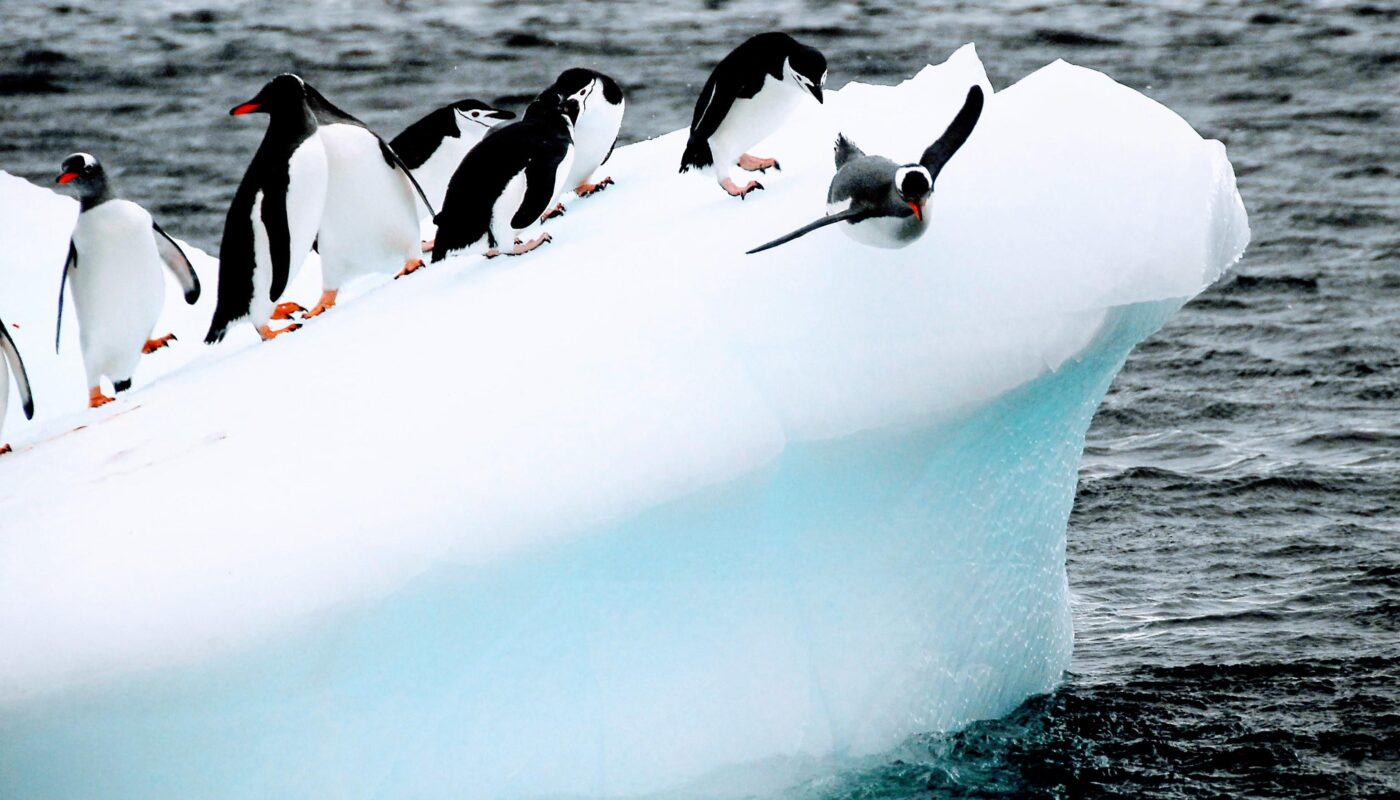
Penguins are among the most recognizable animals associated with icy environments. Found exclusively in the Southern Hemisphere, many species inhabit regions surrounding Antarctica, where sea ice plays a critical role in their life cycles.
One of the most well-known species is the emperor penguin, which relies heavily on stable sea ice for reproduction. These birds breed during the coldest months of the year, using frozen surfaces as platforms to raise their young.
How Penguins Depend on Ice
For emperor penguins and similar species, sea ice is essential because it:
- Provides a stable surface for egg incubation
- Keeps colonies safe from many marine predators
- Allows chicks to develop before entering the ocean
- Supports social grouping and colony structure
However, this dependence also creates vulnerability. When sea ice breaks up earlier than expected, chicks may be forced into the ocean before they are fully developed, leading to high mortality rates.
Other penguin species show different levels of dependency. Some, like gentoo penguins, are more adaptable and can live in ice-free regions, while highly specialized species struggle when conditions shift.
This variation highlights an important ecological pattern: specialization increases vulnerability in changing environments.
Seals: Masters of Ice-Based Survival
Seals are another group of animals deeply connected to icy habitats. Unlike penguins, seals are mammals, and many species rely on sea ice in multiple stages of life.
Across polar regions, seals use ice in complex ways that go beyond simple shelter.
The Role of Ice in Seal Life Cycles
For many seal species, sea ice is essential for:
- Giving birth and raising pups
- Resting between feeding dives
- Molting and maintaining body condition
- Avoiding predators during vulnerable periods
Species such as ringed seals and harp seals depend on stable ice formations to create safe breeding environments. Mothers often give birth on ice platforms, where pups remain protected while they grow and develop swimming abilities.
However, environmental changes are disrupting these systems. Earlier ice melt and thinner ice sheets can cause:
- Separation of mothers and pups
- Increased exposure to predators
- Reduced survival rates for young seals
- Loss of traditional breeding grounds
These challenges are especially severe in Arctic regions, where seasonal ice changes are becoming more unpredictable.
Arctic and Antarctic: Two Different Ice Worlds
Although penguins and seals are often discussed together, they do not inhabit identical environments.
- Penguins are native to the Southern Hemisphere, especially Antarctica and surrounding islands
- Seals are found in both the Arctic and Antarctic, depending on species
These two polar regions differ significantly.
The Arctic is an ocean surrounded by land, meaning sea ice forms over water. In contrast, Antarctica is a landmass surrounded by ocean, where ice sheets and coastal sea ice interact differently with the environment.
Because of this, species in each region face unique survival pressures, even though both depend on ice.
Sea Ice: More Than Frozen Water
Sea ice is often thought of as a static, frozen surface, but in reality, it is a dynamic and living habitat. It supports microscopic organisms such as algae, which form the base of polar food chains.
This ecosystem structure works as follows:
- Ice algae grow beneath and within sea ice
- Small marine organisms feed on algae
- Fish and krill populations expand
- Larger predators such as seals and penguins feed on these organisms
When ice conditions change, this entire food web is affected. The loss of stable ice reduces the availability of food and disrupts breeding cycles.
Climate Change and the Fragility of Ice Ecosystems
One of the most significant threats facing ice-dependent species today is climate change. Rising global temperatures are altering the structure and stability of polar ice systems.
Key changes include:
- Reduced sea ice coverage
- Shorter seasonal ice duration
- Thinner and less stable ice layers
- Increased fragmentation of ice platforms
For species that rely on predictable ice cycles, these changes create serious survival challenges.
For example, emperor penguins depend on stable sea ice long enough for chicks to mature. If the ice breaks apart too early, entire breeding colonies may fail in a single season.
Similarly, seal populations may experience reduced pup survival when ice conditions deteriorate.
Ripple Effects Across Ecosystems
The decline of ice-dependent species does not affect them alone. Polar ecosystems are interconnected, meaning changes in one species can impact many others.
When penguin or seal populations decline:
- Predator-prey relationships shift
- Food availability for other species changes
- Marine nutrient cycles are disrupted
- Larger predators, such as orcas, may alter hunting behavior
These cascading effects demonstrate how important ice-dependent species are in maintaining ecological balance.
Adaptation: Survival in a Changing Environment
Some species are beginning to adjust to changing conditions, though adaptation varies widely.
Shifting Habitats
Certain penguin species are moving into regions with less ice as traditional breeding areas become unstable. Similarly, some seal populations are relocating breeding sites in response to changing ice patterns.
Behavioral Adjustments
Animals are also modifying behaviors such as:
- Timing of breeding cycles
- Migration routes
- Feeding strategies
However, adaptation has limits. Rapid environmental change may exceed the ability of many specialized species to adjust in time.
Scientific Research and Monitoring
Researchers use a variety of tools to study ice-dependent species, including:
- Satellite tracking of ice movement
- Population surveys in remote regions
- GPS tagging of animals
- Long-term ecological observation
These studies help scientists understand how animals respond to environmental shifts and predict future population trends.
Such research is essential for conservation planning and global climate policy.
Why Ice-Dependent Species Matter
Penguins, seals, and other ice-dependent animals are more than just iconic wildlife—they are indicators of environmental health. Because they depend so closely on stable conditions, changes in their populations often signal broader ecological transformations.
Their decline reflects not only regional environmental change but also global climate trends.
In this way, they serve as early warning systems for the planet.
Conclusion
Penguins, seals, and other ice-dependent species represent some of the most specialized life forms on Earth. Their survival is tightly bound to the presence of stable sea ice, making them highly sensitive to environmental change.
As polar regions continue to warm, these animals face increasing challenges. Some may adapt, others may shift their ranges, but many will struggle to keep pace with rapid environmental transformation.
Their story is ultimately a reminder of the delicate balance that sustains life in extreme environments—and how changes in climate can ripple through entire ecosystems.
Understanding these species is not just about studying wildlife. It is about recognizing the fragile connections that hold polar ecosystems together and the urgent need to protect them.