 by
by Glaciers often give the impression of complete silence. They look still, massive, and unmoving—like frozen landscapes paused in time. Because of this, many people assume that glaciers are quiet natural formations.
However, this assumption is misleading.
Glaciers are actually active, dynamic systems that generate a wide range of sounds. From deep rumbling vibrations to sharp cracking noises and even underwater bursts, glaciers are far from silent. They are constantly shifting, melting, and responding to environmental forces, and all of that activity produces sound.
So the real answer to the question “Do glaciers make noise?” is a clear yes—but the reasons behind those sounds are far more complex and fascinating than most people realize.
Glaciers Are Always Moving, Even When They Look Still
A glacier is not a frozen block sitting motionless on a mountain. It is more accurate to think of it as a slow-moving river of ice.
Under its own immense weight, a glacier gradually flows downhill. This movement is extremely slow—often only a few centimeters or meters per day—but it is continuous.
As the ice moves:
- Internal pressure builds up
- Layers of ice shift against each other
- The glacier scrapes against the ground beneath it
These constant forces mean that glaciers are never truly still. And where there is movement and stress, there is also sound.
The Loudest Glacier Sound: Ice Breaking Apart
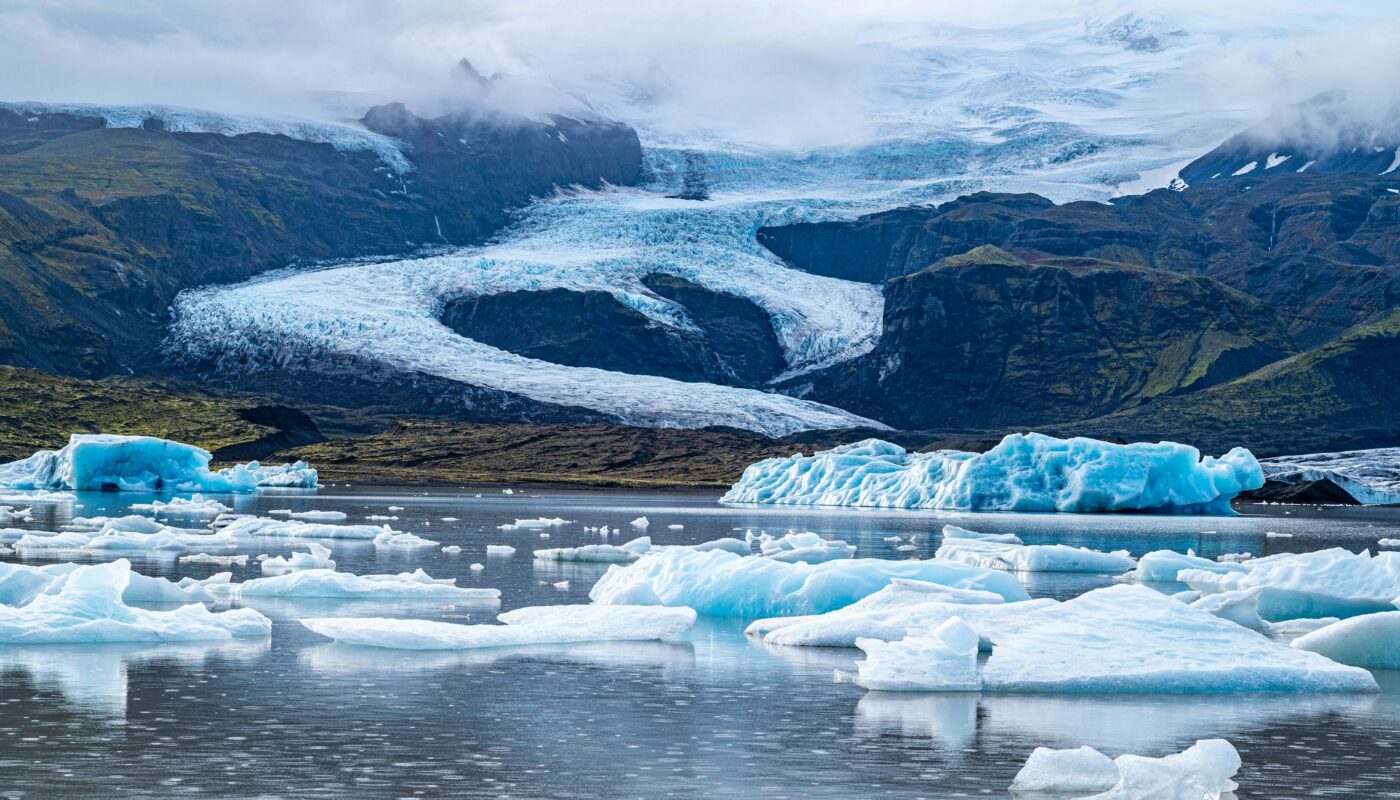
One of the most dramatic sources of glacier noise is when large sections of ice break away from the main body. This process is known as calving.
Before a chunk of ice falls, cracks form deep within the glacier. These fractures can create loud snapping or booming sounds that echo through nearby valleys or across water.
When the ice finally detaches and crashes into a lake or ocean, it can produce:
- A loud explosion-like noise
- Deep rolling thunder sounds
- Waves that spread outward from the impact
In fjord environments, these events are often powerful enough to be heard from a distance, especially in calm conditions.
The Quiet Crackling Beneath the Ice
Not all glacier sounds are loud or dramatic. Many are subtle and continuous, occurring inside the ice or beneath its surface.
One of the most interesting discoveries scientists have made is the presence of constant crackling and popping noises within glaciers.
These sounds come from tiny air bubbles trapped in the ice. Snow falls and compresses over thousands of years, gradually turning into dense ice while trapping small pockets of ancient air.
When the ice shifts or melts:
- These bubbles collapse
- Pressure is released suddenly
- Tiny bursts of energy are produced
The result is a soft but continuous soundscape often compared to:
- Rice crackling in heat
- Gentle static noise
- Soft popping sounds in the background
While faint, these sounds are happening constantly inside many glaciers.
Underwater Glacier Noise: Melting and Bursting Ice
Glaciers that extend into oceans or lakes produce another category of sound beneath the water.
As ice melts underwater, trapped air is released in small bursts. These bursts can create sharp, rapid popping noises that occur continuously around the glacier front.
Scientists have recorded underwater glacier environments filled with:
- High-frequency pops
- Hissing sounds
- Rapid bursts of bubbles
These sounds are created as pressure changes cause air pockets in the ice to expand and collapse. Even though they are small individually, millions of these events happening together create a complex underwater sound environment.
Deep Rumbles and Hidden Vibrations
Some glacier sounds are not heard through the air or water at all—they are transmitted through the ground.
As glaciers move, they grind against rock beneath them and deform under their own weight. This creates low-frequency vibrations that travel through the Earth.
These vibrations can sound like:
- Deep, distant rumbles
- Low humming tones
- Slow, shifting waves of sound
If recorded and sped up, these vibrations sometimes resemble a natural rhythm or pulse, giving scientists insight into how glaciers move internally.
Why Glaciers Produce So Many Different Sounds
Glacier noise is not caused by a single process. Instead, it comes from several overlapping natural mechanisms working together.
1. Ice Movement
The glacier slowly flows downhill, creating friction and stress within the ice.
2. Internal Fracturing
Pressure builds until the ice cracks suddenly, producing sharp sounds.
3. Melting Processes
Water flowing through or under the glacier adds continuous noise.
4. Air Bubble Release
Trapped gases inside the ice escape when pressure changes occur.
5. Ocean Interaction
Where glaciers meet water, waves and turbulence add additional sound layers.
Each of these processes contributes a different acoustic “layer,” creating a complex natural sound environment.
Why Glacier Sounds Can Be Surprisingly Loud
It may seem strange that ice can create loud noises, but there are clear physical reasons for this.
- Glaciers contain enormous amounts of stored energy
- When ice fractures, that energy is released suddenly
- Water is very efficient at carrying sound waves
- Large ice masses amplify vibrations across distance
Because of these factors, certain glacier events—especially calving—can sound as powerful as thunder or explosions.
Can Humans Actually Hear Glacier Sounds?
Yes—but only in certain conditions.
You are most likely to hear glacier sounds when:
- You are close to a calving front
- You are on a boat or kayak near glacial water
- You are standing near melting or cracking ice
However, many glacier sounds are:
- Too low in frequency for human hearing
- Hidden underwater
- Masked by wind, waves, or environmental noise
This means glaciers are often more active acoustically than we realize—we just don’t always perceive it directly.
How Scientists Use Glacier Sounds
Researchers now study glacier noise as a way to understand ice behavior.
By analyzing sound recordings, scientists can:
- Track how quickly glaciers are melting
- Monitor calving activity without physical presence
- Study underwater ice processes
- Observe changes in glacial movement over time
This field of study helps scientists observe remote glaciers that are difficult or dangerous to access directly.
In this way, glaciers are not just silent landscapes—they are natural systems that communicate through sound.
Are Glaciers Becoming More Noisy?
As global temperatures rise, glaciers are changing in structure and behavior. This also affects their sound production.
In many regions:
- Melting rates are increasing
- Ice breaking events are becoming more frequent
- Water flow beneath glaciers is intensifying
As a result, glacier environments are often becoming more acoustically active. Scientists are even using these changes in sound patterns as indirect indicators of environmental transformation.
Final Thoughts: Listening to Frozen Landscapes
Glaciers are often thought of as silent, frozen giants. But in reality, they are dynamic, shifting systems filled with hidden sound.
They crack as they move, pop as trapped air escapes, rumble as they grind against rock, and explode into sound when large pieces break away. Much of this activity happens outside human perception—but it is constantly occurring.
So, do glaciers make noise?
Yes—and not just one kind. They produce a layered, ever-changing soundscape shaped by physics, temperature, pressure, and time.
What appears silent on the surface is, in truth, a continuously active natural orchestra—one that reflects the living, moving nature of ice itself.