 by
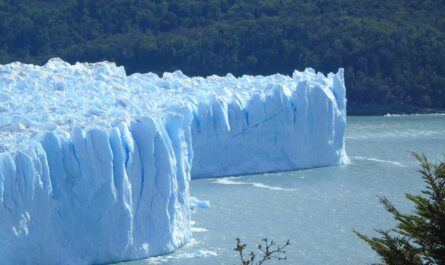
by Glaciers are among the most powerful and visually overwhelming landscapes on Earth. Towering ice walls, endless frozen valleys, massive crevasses, and ancient blue ice fields create scenes that are almost impossible to fully comprehend in person. Yet many photographers quickly discover a frustrating reality when reviewing their images afterward: glaciers often appear much smaller in photographs than they felt in real life.
This happens because cameras flatten depth and remove the natural human sense of proportion. A glacier that stretches for kilometers may look surprisingly ordinary without visual references that communicate its immense size. Capturing the true scale of glacier landscapes therefore becomes one of the most important skills in glacier photography.
Whether photographing Icelandic ice caves, Alaskan ice fields, Patagonian glaciers, or Alpine glacial valleys, understanding how to show scale can transform an image from visually attractive into emotionally powerful. Scale gives viewers perspective, drama, and connection. It helps audiences understand not only what they are seeing, but also how enormous and ancient these frozen landscapes truly are.
Learning to photograph scale effectively requires more than technical camera settings. It involves composition, storytelling, lighting, perspective, human elements, and environmental awareness. The best glacier photographs do not simply document ice; they communicate the overwhelming magnitude of nature itself.
Why Scale Matters in Glacier Photography
Glaciers are difficult to photograph accurately because human eyes naturally perceive depth and distance better than cameras do.
When standing beside a glacier, people instinctively understand its size because they compare it to:
- Their own body
- Trees
- Mountains
- Rivers
- Shadows
- Sound
- Distance traveled
A camera removes many of those natural references.
Without context, a glacier wall that rises hundreds of feet can appear flat or unimpressive in a photograph. The viewer may struggle to understand how large the ice formation actually is.
Scale creates emotional impact because it emphasizes:
- The power of nature
- Human vulnerability
- Geological age
- Isolation
- Immensity
- Environmental significance
In glacier photography, scale often becomes the difference between a simple landscape image and a memorable visual story.
Including People for Perspective
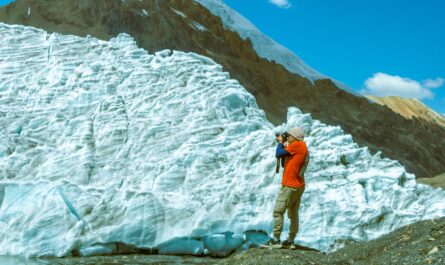
One of the most effective ways to show scale in glacier photography is by including a human subject within the composition.
A single person standing near an ice wall or walking across a glacier immediately provides recognizable proportion. Viewers instinctively compare the size of the human figure to the surrounding landscape.
This technique works especially well because humans are universally familiar reference points.
How to Use Human Subjects Effectively
The placement of the person matters significantly.
A tiny figure positioned carefully within the frame can emphasize:
- Vast ice fields
- Massive glacier faces
- Endless frozen valleys
- Large crevasses
- Towering mountains
Bright clothing often helps the subject stand out against snowy or icy environments.
However, the person should usually remain small within the composition rather than dominating the frame. The goal is to highlight the landscape’s enormity, not create a portrait.
Photographers frequently use:
- Hikers
- Climbers
- Kayakers
- Skiers
- Expedition teams
to create scale in glacier scenes.
Using Foreground Elements to Create Depth
Foreground composition plays a major role in communicating scale.
Flat glacier photos often fail because they lack visual layers. By adding foreground elements, photographers create depth that helps viewers understand distance and dimension.
Effective foreground elements may include:
- Rocks
- Ice textures
- Cracks in the glacier
- Meltwater streams
- Snow formations
- Moss or vegetation
- Equipment or footprints
A close foreground object combined with distant glacier features creates a stronger sense of perspective.
Wide-angle lenses are particularly useful because they exaggerate depth between foreground and background elements, making landscapes feel larger and more immersive.
Showing the Relationship Between Ice and Mountains
One reason glacier landscapes feel so dramatic is the contrast between ice and surrounding mountains.
Including nearby peaks helps viewers understand the glacier’s scale within the broader environment.
For example:
- A glacier flowing through a valley appears larger when framed by mountain walls
- Tiny climbers beneath cliffs enhance vertical scale
- Ice rivers descending from enormous peaks emphasize geological power
Mountains act as natural measuring tools within the composition.
In some cases, glaciers may appear even larger when photographed from elevated viewpoints where their full flow through the landscape becomes visible.
Aerial Photography and Drone Perspectives
Drone photography has transformed glacier imaging in recent years.
Aerial perspectives reveal patterns, textures, and scale relationships that are impossible to see from ground level.
From above, photographers can capture:
- Massive glacier movement
- Endless ice fields
- Deep crevasses
- Meltwater rivers
- Iceberg formations
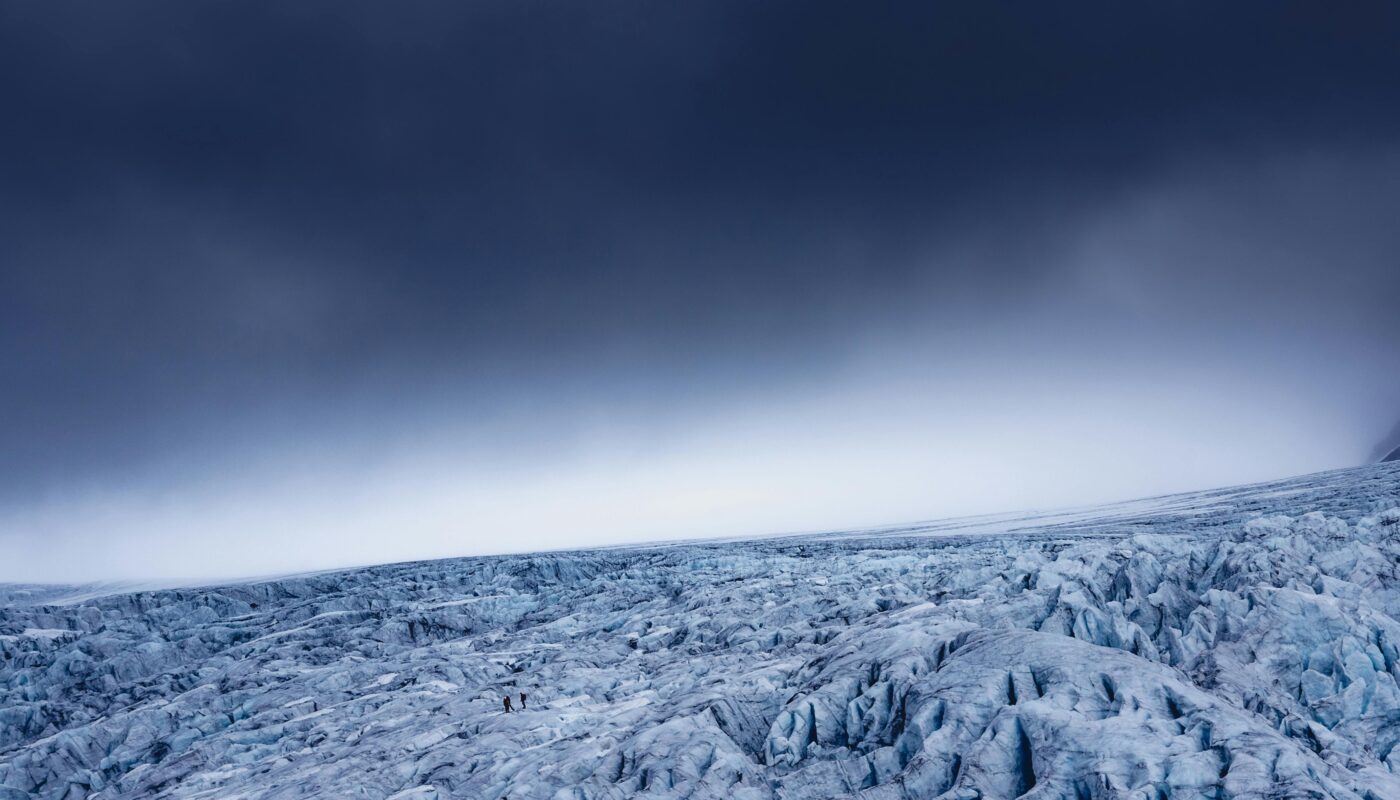
- Human scale within enormous terrain
Drone images are especially effective when they include:
- Tiny hikers
- Small boats
- Roads
- Campsites
These small visual references make the surrounding ice landscape appear dramatically larger.
However, drone photography also requires responsibility. Many glacier regions have strict regulations to protect wildlife, preserve wilderness experiences, and ensure safety.
Always research local drone laws before flying in protected environments.
Using Leading Lines to Guide the Viewer
Leading lines help direct attention through glacier landscapes while reinforcing depth and scale.
Natural lines in glacial environments may include:
- Cracks in the ice
- Moraine ridges
- Meltwater rivers
- Mountain valleys
- Footpaths
- Ice formations
These lines guide the viewer’s eye deeper into the image, helping communicate the immense distances involved.
For example, a winding meltwater stream leading toward distant mountains can make a glacier valley feel vast and expansive.
Strong composition often encourages viewers to visually travel through the scene rather than viewing it as a flat image.
Capturing Tiny Details Within Massive Landscapes
Interestingly, scale can also be communicated through contrast between small details and enormous surroundings.
A close-up foreground detail such as:
- Ice crystals
- Footprints
- A climbing rope
- A small tent
- A single person
can become much more powerful when surrounded by an immense frozen landscape.
This contrast between small and large creates emotional tension and visual storytelling.
The viewer begins to understand how tiny humans appear within these ancient environments.
Weather and Atmosphere Enhance Scale
Atmospheric conditions often improve glacier photography dramatically.
Scale can be improved by adding layers and depth to the surroundings through fog, precipitation, clouds, and shifting light.
Fog and Mist
Fog partially obscures distant features, making landscapes feel larger and more mysterious.
Storm Clouds
Dark clouds above glaciers create dramatic contrast and emphasize the harshness of the environment.
Sunlight and Shadows
Low-angle sunlight produces long shadows that reveal texture and depth across ice surfaces.
Shadows also help define:
- Crevasse depth
- Ice ridges
- Surface patterns
- Glacier contours
Flat midday lighting often reduces scale because it removes dimensional texture.
Wide-Angle Lenses and Their Advantages
Wide-angle lenses are commonly used in glacier photography because they help exaggerate perspective and emphasize environmental scale.
These lenses allow photographers to:
- Include large portions of the landscape
- Create strong foreground-background separation
- Enhance visual depth
- Show environmental relationships
However, wide-angle compositions require careful balance.
If foreground elements are weak or empty, wide shots may make glaciers feel smaller rather than larger.
Strong compositions often place interesting foreground textures close to the camera while allowing the glacier to dominate the background.
Telephoto Lenses for Compression
While wide-angle lenses create depth, telephoto lenses create a different kind of scale effect.
Telephoto compression visually squeezes distance between subjects, making glacier walls, mountains, and ice formations appear denser and more massive.
This approach works particularly well for:
- Ice cliffs
- Seracs
- Glacier faces
- Mountain layers
- Icefall textures
Compression can create dramatic visual weight that emphasizes the glacier’s physical power.
Using both wide and telephoto perspectives during a glacier shoot often produces the strongest overall portfolio.
Showing Movement and Flow
Glaciers are not static objects. They slowly move, crack, melt, and reshape landscapes over time.
Photographs that capture this movement often communicate scale more effectively because they reveal glaciers as living geological systems.
Examples include:
- Meltwater rivers flowing from ice
- Icebergs drifting through fjords
- Falling ice fragments
- Glacial waterfalls
- Curving glacier paths
These dynamic elements help viewers understand glaciers as massive forces shaping entire ecosystems.
Timing Matters in Glacier Photography
Lighting conditions dramatically affect how scale appears in photographs.
Sunrise and Sunset
Golden-hour lighting creates long shadows and warm contrast against cool ice tones.
This low-angle light emphasizes texture and depth across glacier surfaces.
Blue Hour
Soft twilight tones create atmospheric scenes with subtle color contrast.
Overcast Conditions
Cloudy conditions often reduce harsh reflections on ice and allow more balanced exposure.
Bright midday sunlight can flatten glacier textures and reduce visual depth.
Professional landscape photographers often wait patiently for atmospheric conditions that reveal dimensionality and scale naturally.
Including Water for Context
Water often provides excellent scale references in glacier landscapes.
Examples include:
- Tiny kayaks near icebergs
- Boats beside glacier walls
- Meltwater rivers crossing ice fields
- Fjords surrounding glaciers
Water reflections also add depth and symmetry to compositions.
In places like Patagonia, Greenland, and Iceland, boats moving near glaciers create striking visual comparisons that emphasize the enormous size of the ice.
Storytelling Creates Emotional Scale
Technical composition alone is not enough. The most memorable glacier images usually contain storytelling elements.
Viewers connect emotionally when photographs suggest:
- Exploration
- Isolation
- Adventure
- Survival
- Environmental change
- Human curiosity
A lone explorer crossing a glacier often communicates more emotional scale than a purely empty landscape.
Storytelling helps audiences imagine themselves within the environment, strengthening the perception of size and distance.
Climate Change and the Importance of Glacier Photography
Modern glacier photography carries growing environmental significance.
Many glaciers worldwide are shrinking rapidly because of climate change. Photographers increasingly document these landscapes not only for artistic purposes but also for historical and scientific value.
Capturing scale becomes especially important in environmental storytelling because it communicates:
- The enormity of glacier systems
- The scale of environmental loss
- Human relationships with nature
- The fragility of frozen ecosystems
Powerful glacier images can inspire greater public awareness about climate change and conservation.
Common Mistakes When Photographing Glacier Scale
Many photographers unintentionally reduce scale through poor composition choices.
No Reference Point
Without recognizable objects, viewers cannot judge size accurately.
Empty Foregrounds
Flat compositions lacking depth often feel visually smaller.
Poor Lighting
Harsh midday sunlight removes texture and dimension.
Overcrowded Frames
Too many visual elements may confuse scale relationships.
Incorrect Subject Placement
Human subjects that dominate the frame reduce the glacier’s visual power.
Avoiding these mistakes can significantly improve glacier photography.
Patience and Observation Matter Most
Capturing scale successfully often requires patience more than expensive equipment.
Photographers who spend time observing:
- Light movement
- Weather changes
- Human positioning
- Environmental patterns
usually create stronger images than those rushing through locations quickly.
Glacier environments constantly change depending on light, atmosphere, and perspective.
Sometimes the most powerful photographs happen unexpectedly when conditions align naturally.
Final Thoughts
Photographing glacier landscapes is about more than capturing beautiful ice formations. It is about communicating the immense power, age, and scale of some of Earth’s most extraordinary environments.
By using people for perspective, layering foreground elements, choosing thoughtful lighting, and creating strong visual depth, photographers can transform glacier images into emotionally compelling stories.
The best glacier photographs allow viewers to feel small in the presence of something ancient and immense. They reveal not only the physical size of glaciers but also the emotional experience of standing before landscapes shaped over thousands of years.
In a world where many glaciers are rapidly changing, learning to capture their true scale has become both an artistic challenge and an important act of environmental storytelling.