 by
by Deep within southeastern Iceland lies one of the most extraordinary frozen landscapes on Earth: Vatnajökull. Covering a massive portion of Iceland’s surface, this enormous ice cap dominates the country’s geography, climate, ecosystems, and even its volcanic activity. Vast, ancient, and constantly changing, Vatnajökull is far more than a giant sheet of ice. It is a living natural system where glaciers, volcanoes, rivers, mountains, caves, and extreme weather interact in dramatic ways.
As Europe’s largest ice cap by volume and surface area, Vatnajökull has become one of Iceland’s most iconic natural wonders. Travelers from around the world visit to experience its glacier lagoons, ice caves, frozen landscapes, volcanic scenery, and powerful rivers. Scientists study it closely because it provides valuable insight into climate change, glacier movement, volcanic interactions, and environmental transformation.
At first glance, Vatnajökull may appear like a silent and frozen wilderness, but beneath the surface lies one of the most geologically active regions on the planet. Hidden under the ice are volcanoes capable of producing eruptions powerful enough to reshape entire landscapes. Meltwater rivers constantly flow from the glacier into surrounding valleys and coastlines. Seasonal changes alter the glacier’s appearance every year, while climate change continues influencing its long-term future.
Understanding Vatnajökull means understanding how ice, fire, water, and geology combine to create one of Europe’s most remarkable natural systems.
What Is an Ice Cap?
Before exploring Vatnajökull itself, it helps to understand what an ice cap actually is.
An ice cap is a large mass of glacial ice covering less than 50,000 square kilometers. Unlike mountain glaciers that flow mainly through valleys, ice caps spread outward in multiple directions from a central high point.
Ice caps form through:
- Long-term snowfall accumulation
- Compression of snow into dense ice
- Cold temperatures preventing complete melting
Over thousands of years, snow layers become compressed into glacial ice thick enough to flow slowly under gravity.
Vatnajökull functions as a massive ice reservoir that feeds numerous outlet glaciers extending outward into Iceland’s surrounding landscapes.
The Size and Scale of Vatnajökull
Vatnajökull is enormous.
The ice cap covers approximately:
- 8,000 square kilometers
- Around 8% of Iceland’s total land area
Its ice thickness reaches:
- Up to nearly 1,000 meters in some regions
To truly appreciate its scale, imagine an ice-covered region larger than many entire countries or metropolitan areas.
From above, Vatnajökull resembles a frozen world stretching across mountains, volcanic systems, valleys, and highlands.
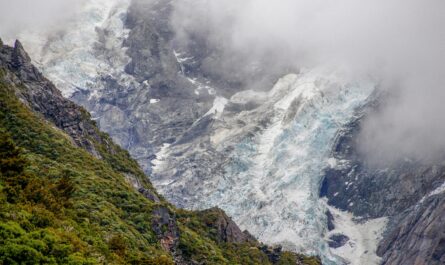
The glacier system includes dozens of outlet glaciers flowing outward like giant frozen rivers.
Some of the most famous outlet glaciers include:
- Breiðamerkurjökull
- Skaftafellsjökull
- Svínafellsjökull
- Fjallsjökull
These glaciers make Vatnajökull more accessible to travelers because they extend closer to roads and lower elevations.
How Vatnajökull Formed
Vatnajökull formed gradually over thousands of years during colder climatic periods.
Repeated snowfall accumulated faster than melting occurred. Over time:
- Snow layers thickened
- Pressure compressed lower layers
- Air pockets disappeared
- Dense glacial ice developed
The glacier expanded across Iceland’s southeastern highlands as ice flow increased.
Iceland’s location near the Arctic Circle combined with high elevation and frequent storms creates ideal conditions for glacier formation.
However, Vatnajökull’s history has never been stable or static. The glacier has expanded and retreated multiple times throughout Earth’s climatic history.
The Powerful Relationship Between Ice and Volcanoes
One of the most fascinating aspects of Vatnajökull is its relationship with volcanic activity.
Unlike many glaciers worldwide, Vatnajökull sits directly above several active volcanoes.
This creates one of Earth’s most unusual geological environments where:
- Ice and magma interact
- Volcanoes erupt beneath glaciers
- Sudden floods reshape landscapes
Several major volcanoes lie beneath Vatnajökull, including:
- Grímsvötn
- Bárðarbunga
- Öræfajökull
These volcanic systems remain active and capable of producing powerful eruptions.
Subglacial Eruptions
When volcanoes erupt beneath Vatnajökull, the heat melts enormous amounts of ice rapidly.
This can create:
- Massive meltwater floods
- Steam explosions
- Ash clouds
- Ice fractures
These sudden glacier floods are known in Icelandic as “jökulhlaups.”
Jökulhlaups can become extremely destructive because trapped meltwater eventually bursts outward from beneath the glacier with tremendous force.
Such events have historically reshaped roads, bridges, river systems, and landscapes across Iceland.
Grímsvötn: Iceland’s Most Active Volcano
Among the volcanoes beneath Vatnajökull, Grímsvötn is considered Iceland’s most active.
It erupts relatively frequently due to Iceland’s position along the Mid-Atlantic Ridge, where tectonic plates pull apart.
The interaction between volcanic heat and glacier ice creates:
- Meltwater lakes beneath the ice
- Complex geothermal systems
- Periodic flooding events
Scientists closely monitor this region because eruptions beneath ice can develop rapidly and unpredictably.
Vatnajökull and Iceland’s River Systems
Vatnajökull plays a crucial role in Iceland’s freshwater systems.
Meltwater rivers flowing from the glacier supply:
- Rivers
- Wetlands
- Hydropower systems
- Ecosystems
Some of Iceland’s largest rivers originate from Vatnajökull’s meltwater.
These rivers transport:
- Sediment
- Volcanic material
- Nutrients
across vast regions of the country.
During warmer months, glacier melt increases river flow significantly.
Glacier Lagoons: One of Iceland’s Most Famous Landscapes
One of Vatnajökull’s most famous features is the glacier lagoon system formed by retreating outlet glaciers.
Jökulsárlón Glacier Lagoon
Jökulsárlón is perhaps Iceland’s most iconic glacier lagoon.
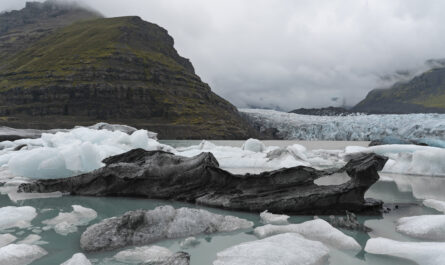
The lagoon formed as Breiðamerkurjökull glacier retreated and meltwater filled the expanding basin.
Today, the lagoon contains:
- Floating icebergs
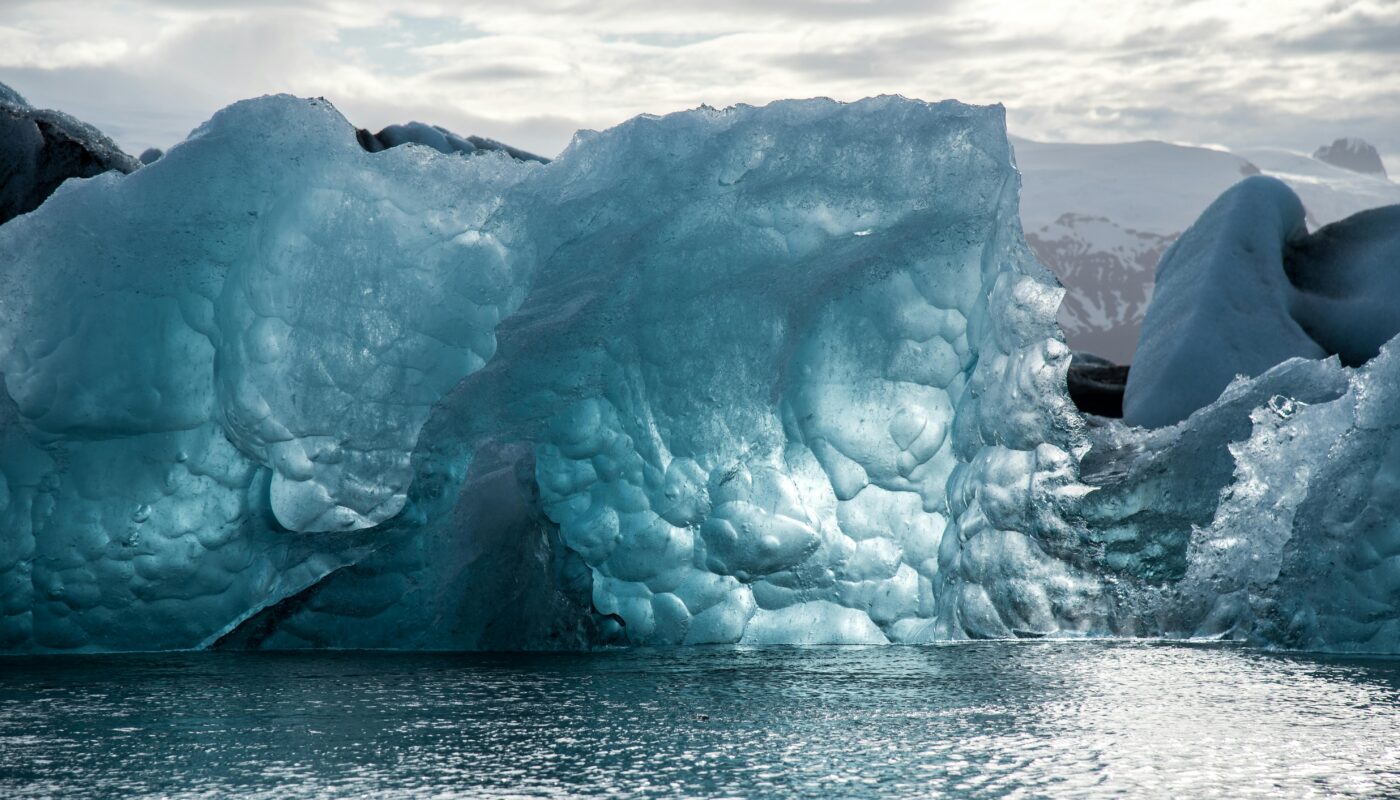
- Deep blue ice formations
- Seals
- Calm reflective water
Icebergs break away from the glacier and drift slowly toward the Atlantic Ocean.
The constantly changing lagoon landscape has made Jökulsárlón one of Iceland’s most photographed destinations.
Diamond Beach
Nearby, icebergs wash onto black volcanic sand beaches, creating the famous “Diamond Beach” effect where sparkling ice contrasts against dark sand.
This striking combination perfectly represents Iceland’s dramatic meeting of fire and ice.
Ice Caves Inside Vatnajökull
During winter, meltwater channels inside the glacier freeze into spectacular ice caves.
These caves often display:
- Bright blue ice
- Crystal formations
- Layered glacier textures
- Natural tunnels
Ice caves form because:
- Summer meltwater carves channels through the glacier
- Winter freezing stabilizes the structures temporarily
Each year, new cave systems appear while older caves collapse or change shape.
This constant transformation makes every ice cave season unique.
Because glacier caves can be dangerous and unstable, guided tours are strongly recommended.
Wildlife Around Vatnajökull
Although the glacier itself appears harsh and frozen, surrounding ecosystems support surprising biodiversity.
Wildlife in the region may include:
- Arctic foxes
- Reindeer
- Seabirds
- Seals near glacier lagoons
Birdlife becomes especially active during summer months when migratory species return to Iceland.
Marine ecosystems near glacier-fed rivers and coastal lagoons also support fish and seal populations.
Vatnajökull National Park
Much of the glacier lies within Vatnajökull National Park, one of Europe’s largest national parks.
The park protects:
- Glaciers
- Volcanoes
- Waterfalls
- Highlands
- Geological formations
The park combines several previously separate protected regions into one vast conservation area.
Visitors can explore:
- Hiking trails
- Glacier viewpoints
- Waterfalls
- Volcanic landscapes
- Ice caves
The diversity of scenery within the park is extraordinary because volcanic deserts, glaciers, forests, rivers, and mountains all exist within relatively short distances.
Climate Change and Glacier Retreat
Like glaciers worldwide, Vatnajökull is being affected by climate change.
Rising global temperatures are contributing to:
- Increased melting
- Glacier retreat
- Thinning ice
- Expanding glacier lagoons
Scientists closely study Vatnajökull because it provides valuable evidence about how glaciers respond to warming climates.
Several outlet glaciers connected to Vatnajökull have retreated noticeably over recent decades.
As glaciers shrink:
- Landscapes change
- River systems evolve
- New lagoons form
- Ecosystems adapt
Climate change is therefore reshaping Iceland’s geography in visible ways.
Why Vatnajökull Matters Scientifically
Vatnajökull serves as a major research site for:
- Glaciology
- Volcanology
- Climate science
- Hydrology
- Geology
Scientists study the glacier to better understand:
- Ice movement
- Volcanic interactions
- Sea-level contributions
- Climate patterns
The glacier’s unusual combination of active volcanism and massive ice systems makes it especially important for international research.
Tourism and Adventure Activities
Vatnajökull has become one of Iceland’s premier adventure tourism destinations.
Popular activities include:
- Glacier hiking
- Ice climbing
- Snowmobiling
- Ice cave tours
- Photography
- Scenic flights
Tourism provides major economic benefits to local communities.
However, increasing visitor numbers also require careful environmental management to protect fragile glacier ecosystems.
The Importance of Responsible Travel
Because glacier environments are sensitive, responsible tourism is essential.
Visitors should:
- Stay on marked trails
- Use certified guides
- Respect safety rules
- Avoid damaging fragile environments
Glaciers contain hidden dangers including:
- Crevasses
- Ice collapses
- Rapid weather changes
Proper preparation and guidance help ensure safe and sustainable experiences.
Vatnajökull in Icelandic Culture
Glaciers hold important places in Icelandic culture, storytelling, and national identity.
Vatnajökull represents:
- Iceland’s wilderness
- Geological power
- Natural beauty
- Environmental change
The glacier has also appeared in:
- Films
- Photography
- Literature
- Scientific documentaries
Its dramatic landscapes continue attracting artists, filmmakers, and adventurers from around the world.
The Future of Vatnajökull
The future of Vatnajökull depends heavily on global climate trends.
While the glacier remains enormous, scientists expect continued changes as temperatures rise.
Potential future impacts include:
- Further glacier retreat
- Expanded glacier lagoons
- Altered river systems
- Increased volcanic exposure
Despite these concerns, Vatnajökull will likely remain one of Europe’s most important glacier systems for generations.
Its ongoing transformation also offers important lessons about Earth’s changing climate and the dynamic relationship between geology and ice.
Final Thoughts
Vatnajökull is far more than Europe’s largest ice cap. It is one of the planet’s most extraordinary natural systems — a place where glaciers, volcanoes, rivers, ice caves, waterfalls, and extreme geological forces interact continuously.
Its immense scale shapes Iceland’s landscapes, ecosystems, and culture while providing scientists with critical insight into climate change and volcanic activity.
For travelers, Vatnajökull offers unforgettable experiences ranging from glacier hikes and iceberg lagoons to frozen caves and dramatic wilderness scenery. For researchers, it remains one of Earth’s most valuable natural laboratories.
Above all, Vatnajökull reminds us that glaciers are not static frozen objects. They are living, dynamic systems constantly responding to the forces of climate, geology, and time itself.