 by
by Although New Zealand is frequently praised for its verdant valleys, striking fjords, volcanic vistas, and rocky beaches, one of its most amazing natural treasures is buried deep within the South Island’s mountains. Stretching along the spine of the island, the Southern Alps contain some of the most fascinating glaciers in the Southern Hemisphere — enormous rivers of ice that have shaped landscapes, ecosystems, and local culture for thousands of years.
Unlike many glaciers hidden deep within remote polar regions, New Zealand’s glaciers are unusually accessible. In some places, travelers can stand in lush rainforest valleys while looking directly toward descending glacier ice only a short distance away. This rare combination of temperate climate, coastal moisture, and alpine elevation creates glacier scenery unlike almost anywhere else on Earth.
The glaciers of New Zealand are more than frozen tourist attractions. They are dynamic geological systems constantly moving, melting, cracking, and reshaping the mountains around them. Fed by heavy snowfall and influenced by rapidly changing weather conditions, these glaciers reveal the powerful interaction between climate, geography, and time.
The Southern Alps’ glaciers also provide important scientific insight into climate change. Over recent decades, many of these glaciers have retreated dramatically, becoming visible symbols of a warming planet.
Understanding New Zealand’s glaciers means exploring not only their beauty, but also the geological forces that created them, the ecosystems they support, and the environmental challenges threatening their future.
The Southern Alps: New Zealand’s Glacier Backbone
The Southern Alps form the mountainous spine of New Zealand’s South Island.
This vast mountain chain stretches for approximately:
- 500 kilometers
- Along much of the island’s western side
The Southern Alps contain:
- High peaks
- Deep valleys
- Snowfields
- Ice fields
- Glaciers
- Alpine lakes
The region’s tallest mountain, Aoraki / Mount Cook, rises to over 3,700 meters and dominates the surrounding alpine landscape.
The Southern Alps create ideal glacier conditions because they intercept moist air arriving from the Tasman Sea. As this air rises over the mountains, it cools and releases enormous amounts of precipitation, much of it falling as snow at higher elevations.
Over thousands of years, accumulated snow compressed into dense glacial ice, forming the massive glaciers visible today.
Why New Zealand’s Glaciers Are Unique
Many glaciers worldwide exist in extremely cold or remote regions, but New Zealand’s glaciers are unusual because they descend into relatively mild temperate environments.
In some areas:
- Rainforests grow close to glacier valleys
- Temperatures remain moderate at lower elevations
- Coastal climates influence glacier behavior
This creates dramatic visual contrasts between:
- Ice
- Green vegetation
- Rocky mountains
- Waterfalls
Few places on Earth allow visitors to experience glaciers surrounded by lush forests and ocean-influenced weather systems.
Another unique feature is how rapidly New Zealand glaciers respond to climate changes because of the region’s high precipitation and relatively warm temperatures.
What Makes a Glacier an “Ice River”?
Glaciers are often called “rivers of ice” because they move slowly under their own weight.
Although glaciers appear frozen and solid, the immense pressure within thick ice masses causes them to deform and flow gradually downhill.
This movement occurs through:
- Internal ice deformation
- Gravity-driven flow
- Basal sliding over rock surfaces
The glaciers of the Southern Alps continuously reshape valleys by:
- Grinding rock
- Transporting sediment
- Carving landscapes
- Feeding rivers
This movement is one of the defining features that separates glaciers from ordinary snowfields.
Franz Josef Glacier: New Zealand’s Most Famous Glacier
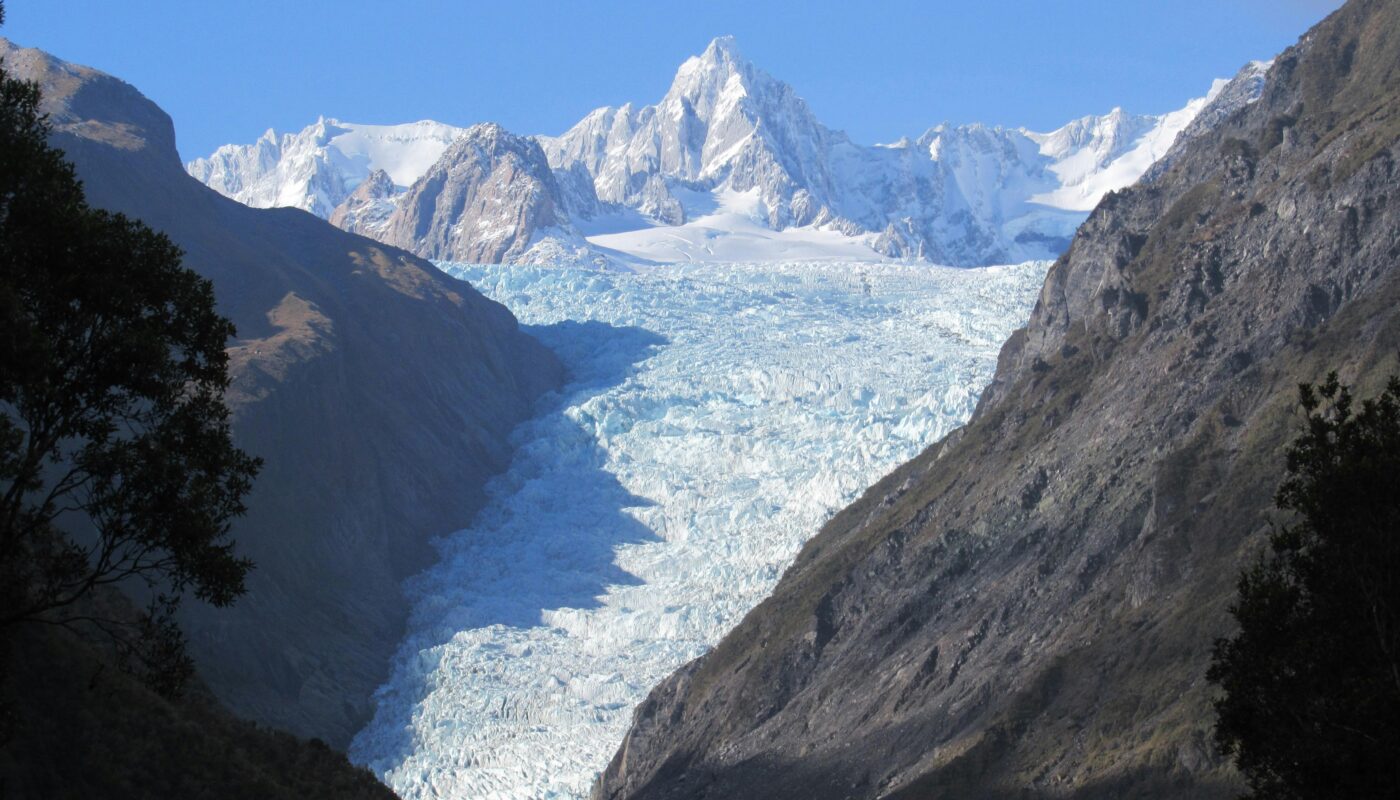
Franz Josef Glacier is perhaps the country’s best-known glacier.
Franz Josef Glacier, which is situated on the South Island’s west coast, sharply drops from the Southern Alps into temperate rainforests.
Historically, the glacier extended much farther down the valley, making it exceptionally accessible to visitors.
Why Franz Josef Glacier Is So Special
The glacier is famous for:
- Steep ice formations
- Blue glacier ice
- Rapid movement
- Rainforest surroundings
Few glaciers worldwide descend so close to sea level in relatively mild climates.
The region also receives extremely heavy rainfall, helping maintain glacier accumulation at higher elevations despite warmer lower-altitude conditions.
Glacier Movement
Franz Josef Glacier has historically been one of the fastest-moving glaciers on Earth.
In certain periods, parts of the glacier moved:
- Several meters per day
This rapid movement constantly reshaped ice features including:
- Crevasses
- Ice caves
- Seracs
The glacier landscape therefore changes continuously.
Fox Glacier: Franz Josef’s Neighbor
Nearby Fox Glacier shares many similarities with Franz Josef Glacier.
Flowing from high snowfields near Aoraki / Mount Cook, Fox Glacier extends through steep valleys surrounded by rainforest-covered mountains.
The glacier is known for:
- Scenic hiking access
- Reflective alpine lakes
- Ice formations
- Helicopter glacier tours
Like Franz Josef, Fox Glacier has also experienced significant retreat in recent decades.
Tasman Glacier: New Zealand’s Largest Glacier
While Franz Josef and Fox Glacier are more famous among tourists, Tasman Glacier is actually New Zealand’s largest glacier by length and volume.
Located within Aoraki / Mount Cook National Park, Tasman Glacier stretches approximately:
- 23 kilometers
Unlike the steep west coast glaciers, Tasman Glacier occupies a broader alpine valley.
Tasman Lake
One of the glacier’s most visible changes has been the rapid growth of Tasman Lake, a large glacier-fed lake formed by melting ice.
Icebergs regularly float within the lake as pieces break away from the glacier terminus.
The expansion of Tasman Lake provides clear evidence of glacier retreat linked to climate warming.
How the Southern Alps’ Glaciers Formed
The glaciers of New Zealand developed during colder climatic periods over thousands of years.
Heavy snowfall accumulated in high mountain regions where:
- Temperatures remained low
- Snow survived year-round
- Ice layers gradually thickened
As snow compressed into glacial ice, gravity caused the ice to flow downhill through mountain valleys.
During past ice ages, glaciers in New Zealand were much larger than today.
Ancient glaciers carved:
- U-shaped valleys
- Fjords
- Alpine basins
- River systems
Many modern South Island landscapes still reflect this glacial history.
Glacier-Carved Fjords of New Zealand
The glaciers of the Southern Alps helped create some of New Zealand’s most famous fjord landscapes.
Milford Sound and other Fiordland waterways were originally carved by enormous glaciers during past ice ages.
As glaciers moved through the mountains, they:
- Deepened valleys
- Smoothed rock walls
- Carved steep cliffs
Later, rising sea levels flooded these valleys, forming the dramatic fjords visible today.
Thus, even where glaciers no longer exist directly, their geological influence remains visible throughout the South Island.
The Role of Weather in Glacier Formation
New Zealand’s glaciers depend heavily on weather patterns.
The Southern Alps intercept moist air from the Tasman Sea, producing:
- Heavy snowfall
- Frequent storms
- High alpine precipitation
Some glacier regions receive:
- Several meters of annual precipitation
Despite comparatively warm weather at lower elevations, glaciers are maintained by this continuous snow accumulation.
However, glacier stability depends on balance:
- Snow accumulation must exceed or equal melting over long periods.
Climate shifts that increase melting or reduce snowfall can quickly alter glacier size.
Climate Change and Glacier Retreat
Like glaciers worldwide, New Zealand’s glaciers are shrinking.
Over recent decades, many glaciers have:
- Retreated rapidly
- Lost thickness
- Developed expanding glacier lakes
- Become less accessible
Photographic comparisons clearly show dramatic changes.
Some glacier valleys once filled with thick ice now contain:
- Bare rock
- Meltwater lakes
- Exposed sediment
Scientists attribute most of this retreat to rising global temperatures associated with climate change.
Why New Zealand’s Glaciers Respond Quickly
New Zealand glaciers are especially sensitive because they exist near melting thresholds already.
Small temperature increases can significantly alter:
- Snowfall levels
- Ice melt rates
- Glacier movement
As a result, these glaciers provide important indicators of climate trends.
Wildlife Around Glacier Regions
Although glacier environments appear harsh, surrounding ecosystems support rich biodiversity.
Wildlife near Southern Alps glaciers may include:
- Kea parrots
- Alpine birds
- New Zealand falcons
- Mountain insects
- Freshwater fish
The Kea
The kea, a highly intelligent alpine parrot, is especially famous in glacier regions.
Known for curiosity and playful behavior, kea often interact with hikers and visitors near mountain trails.
Tourism and Glacier Adventure Activities
The glaciers of New Zealand attract travelers from around the world.
Popular activities include:
- Glacier hiking
- Helicopter tours
- Ice climbing
- Scenic flights
- Kayaking near glacier lakes
- Photography
Helicopter access has become increasingly important because glacier retreat has made some lower glacier areas more difficult to reach safely on foot.
Scenic Flights
Aerial tours offer dramatic views of:
- Ice rivers
- Snow-covered peaks
- Glacier valleys
- Alpine lakes
From above, travelers can better appreciate the immense scale and complexity of the Southern Alps glacier systems.
The Importance of Glacier Safety
Glaciers are beautiful but potentially dangerous environments.
Hazards include:
- Crevasses
- Falling ice
- Sudden weather changes
- Rockfalls
- Glacier collapses
Guided tours and safety precautions are therefore extremely important.
Rapid weather changes are especially common in New Zealand’s alpine environments.
Conditions can shift from sunshine to heavy rain or snow very quickly.
Cultural Importance of the Glaciers
The glaciers of the Southern Alps also hold cultural significance for Māori communities.
Many landscapes within the Southern Alps are connected to:
- Traditional stories
- Spiritual beliefs
- Ancestral history
Aoraki / Mount Cook itself is deeply important in Māori tradition and identity.
Respect for the land and natural systems remains central to many cultural perspectives surrounding these alpine regions.
Scientific Research in the Southern Alps
Scientists study New Zealand’s glaciers to better understand:
- Climate change
- Glacier dynamics
- Hydrology
- Mountain ecosystems
Research includes:
- Ice thickness monitoring
- Glacier movement tracking
- Temperature analysis
- Meltwater studies
Because these glaciers respond relatively quickly to climate conditions, they provide valuable data about environmental change.
The Future of New Zealand’s Glaciers
The future of the Southern Alps’ glaciers remains uncertain.
Climate models suggest many glaciers will continue shrinking unless global warming slows significantly.
Potential future impacts include:
- Loss of glacier volume
- Expansion of glacier lakes
- Altered river systems
- Ecosystem changes
- Tourism challenges
Smaller glaciers may disappear entirely over time.
Larger glaciers like Tasman Glacier will likely persist longer but continue changing substantially.
Why These Glaciers Matter Globally
The glaciers of New Zealand may seem geographically isolated, but they are part of a global environmental story.
Their retreat reflects broader planetary trends affecting glaciers worldwide.
Studying and protecting these glaciers helps scientists better understand:
- Climate systems
- Water resources
- Sea-level contributions
- Environmental adaptation
These glaciers also remind humanity how quickly natural systems can change when climate conditions shift.
Final Thoughts
The glaciers of New Zealand’s Southern Alps are among the most remarkable ice landscapes on Earth. These vast rivers of ice descend through dramatic mountain valleys, shape fjords and lakes, feed river systems, and create breathtaking scenery unlike anywhere else in the Southern Hemisphere.
From the famous Franz Josef Glacier and Fox Glacier to the immense Tasman Glacier, these glaciers reveal the extraordinary power of ice to shape landscapes over thousands of years.
At the same time, their retreat serves as a visible reminder of climate change and the fragile balance sustaining glacier systems worldwide.
Whether viewed from mountain trails, glacier lakes, helicopters, or distant alpine valleys, New Zealand’s glaciers continue inspiring awe — frozen rivers carrying stories of geology, climate, time, and the ever-changing relationship between Earth and ice.