 by
by Canada is a country defined by scale. Its landscapes stretch across mountains, forests, lakes, and tundra—but among its most powerful natural features are its glaciers. These immense bodies of ice are not static remnants of the past; they are active, shifting systems that continue to shape the land today.
From the dramatic peaks of the Canadian Rockies to the vast frozen expanses of the Canadian Arctic, glaciers exist in different forms, climates, and scales. Together, they form one of the largest collections of ice outside the polar ice sheets of Greenland and Antarctica.
This journey across Canada’s glacier regions reveals not only breathtaking landscapes but also deeper insights into geology, climate, and environmental change.
What Makes a Glacier More Than Just Ice?
At first glance, a glacier might seem like nothing more than a frozen mass. In reality, it is a slow-moving river of ice formed over centuries.
Glaciers develop when snowfall accumulates year after year. As layers build up, the lower layers compress under pressure, transforming into dense ice. Eventually, gravity causes this ice to move—sometimes only a few centimeters per day, but always in motion.
This movement is what gives glaciers their power. They carve valleys, transport rock, and leave behind distinctive landforms such as:
- U-shaped valleys
- Moraines (ridges of debris)
- Glacial lakes
Understanding this process is key to appreciating how deeply glaciers have influenced Canada’s landscape.
Canada’s Ice Distribution: A Country Divided by Geography
Canada’s glaciers are not evenly spread across the country. Instead, they are concentrated in two major regions:
- Western mountain ranges, particularly the Rockies and coastal mountains
- Northern Arctic islands, where vast ice caps dominate
These two zones offer dramatically different glacier experiences—one defined by rugged terrain, the other by expansive, open ice fields.
The Mountain Glaciers of the Canadian Rockies
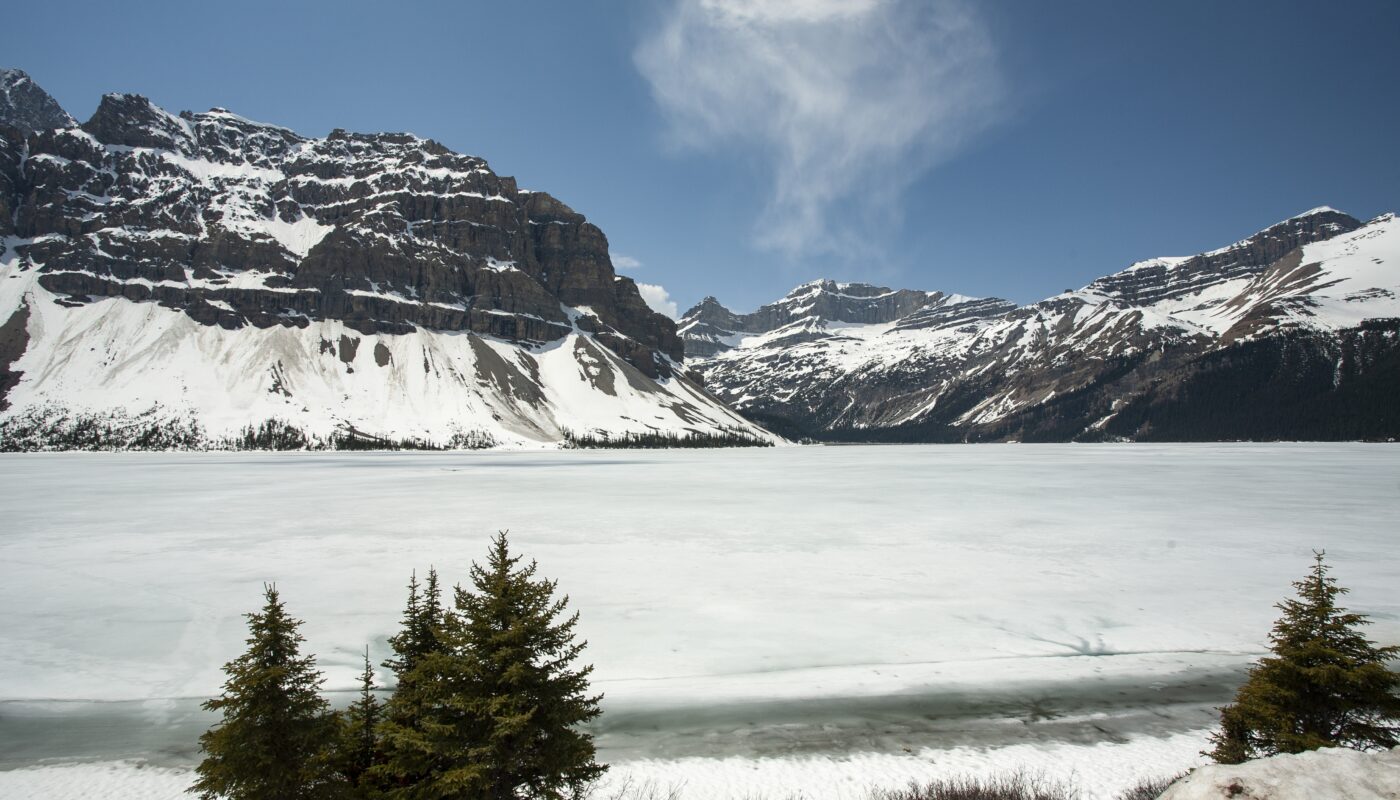
The Canadian Rockies are perhaps the most visually striking glacier region in the country. Here, glaciers cling to steep mountain slopes, spilling into valleys below.
Icefields: Networks of Connected Ice
Many Rocky Mountain glaciers are part of larger icefields—broad areas of interconnected ice that feed multiple glacier tongues.
One of the most significant is the Columbia Icefield. This massive icefield acts as a central hub, supplying water to rivers that flow toward three different ocean basins.
Icefields are important because they represent concentrated reserves of freshwater and serve as indicators of environmental change.
Notable Glaciers of the Rockies
Several glaciers in the Rockies stand out for their accessibility and scientific importance:
- Athabasca Glacier – One of the most visited glaciers in North America
- Peyto Glacier – Widely studied for long-term climate trends
- Saskatchewan Glacier – A major outlet of the Columbia Icefield
These glaciers are not just scenic—they are essential components of regional water systems.
The Role of Rocky Mountain Glaciers
Glaciers in the Rockies play a critical role in maintaining water balance.
During warmer months, when rainfall is limited, melting glacier ice feeds rivers and streams. This supports:
- Agriculture
- Hydropower generation
- Ecosystems across western Canada
However, these glaciers are shrinking. Rising temperatures have accelerated melting, reducing their size and altering water flow patterns.
Coastal and Northern Mountain Ice
Beyond the Rockies, Canada’s western edge includes other glacier-rich regions.
The Coast Mountains and the Saint Elias Mountains contain some of the largest non-polar icefields in the world.
These regions receive heavy snowfall due to moist air from the Pacific Ocean. As a result, glaciers here are often thicker and more expansive than those in the Rockies.
Unlike the well-visited glaciers of Alberta, many of these icefields remain remote and rarely seen.
Entering the Arctic: Canada’s Greatest Ice Realm
While mountain glaciers are impressive, Canada’s Arctic holds the majority of its ice.
The Canadian Arctic is home to vast ice caps spread across islands such as Devon Island and Ellesmere Island.
These ice caps differ significantly from mountain glaciers.
Ice Caps vs. Valley Glaciers
Arctic ice caps:
- Spread outward in all directions
- Cover large, relatively flat areas
- Are less influenced by steep terrain
In contrast, mountain glaciers flow down valleys and are shaped by surrounding peaks.
One notable example is the Barnes Ice Cap, which is considered a remnant of the ancient ice sheet that once covered much of North America.
Why Arctic Glaciers Matter Globally
Arctic glaciers play a significant role in Earth’s climate system.
They contribute to:
- Global sea-level rise
- Ocean circulation patterns
- Reflection of sunlight (albedo effect)
Because of their size, even small changes in Arctic glaciers can have widespread impacts.
The Ice Age Legacy: How Glaciers Shaped Canada
To fully understand Canada’s glaciers, it is important to look back in time.
During the last Ice Age, a massive ice sheet known as the Laurentide Ice Sheet covered much of the country.
As this ice sheet advanced and retreated, it:
- Carved out valleys and fjords
- Created thousands of lakes
- Deposited sediments across vast areas
This is why Canada has one of the highest numbers of freshwater lakes in the world.
Modern Changes: Glaciers in Transition
Today, Canada’s glaciers are undergoing rapid transformation.
Retreat and Thinning
Many glaciers, especially in the Rockies, are shrinking. Their edges are retreating, and their thickness is decreasing.
Regional Differences
- Mountain glaciers are changing quickly due to warmer temperatures
- Arctic glaciers are also shrinking, though often at a slower pace
Consequences of Glacier Loss
The loss of glacier ice affects more than just landscapes.
It impacts:
- Water availability
- Wildlife habitats
- Coastal regions through sea-level rise
Glaciers act as natural reservoirs, releasing water gradually. As they shrink, this balance becomes disrupted.
Scientific Research and Monitoring
Canada is a key location for glacier research.
Scientists study glaciers to understand:
- Climate change patterns
- Ice dynamics
- Long-term environmental trends
Sites like Peyto Glacier provide decades of data, helping researchers track how conditions are changing over time.
Experiencing Glaciers in Canada
For travelers, Canada offers a range of glacier experiences.
In the Rockies:
- Walk along glacier viewpoints
- Join guided ice tours
- Drive scenic routes like the Icefields Parkway
In the Arctic:
- Explore remote ice landscapes via expedition cruises
- Witness vast ice caps rarely seen by visitors
Each region offers a different perspective—one accessible and dramatic, the other remote and expansive.
Two Worlds of Ice
Canada’s glaciers can be understood as two interconnected yet distinct systems:
The Rockies:
- Steep, dynamic, and visually dramatic
- Closely tied to human activity and tourism
The Arctic:
- Vast, remote, and globally significant
- Less accessible but far larger in scale
Together, they highlight the diversity of Canada’s glacial environments.
Final Thoughts
The glaciers of Canada are more than frozen landscapes—they are powerful forces that continue to shape the country.
From the rugged beauty of the Canadian Rockies to the immense ice caps of the Canadian Arctic, these glaciers reveal the dynamic nature of Earth’s systems.
They tell a story of formation, movement, and change—a story that is still unfolding.
As these glaciers evolve in response to shifting climates, they remind us of both the resilience and vulnerability of the natural world.
To explore them is to witness something both ancient and immediate: a landscape shaped over thousands of years, yet changing within our own lifetime.