 by
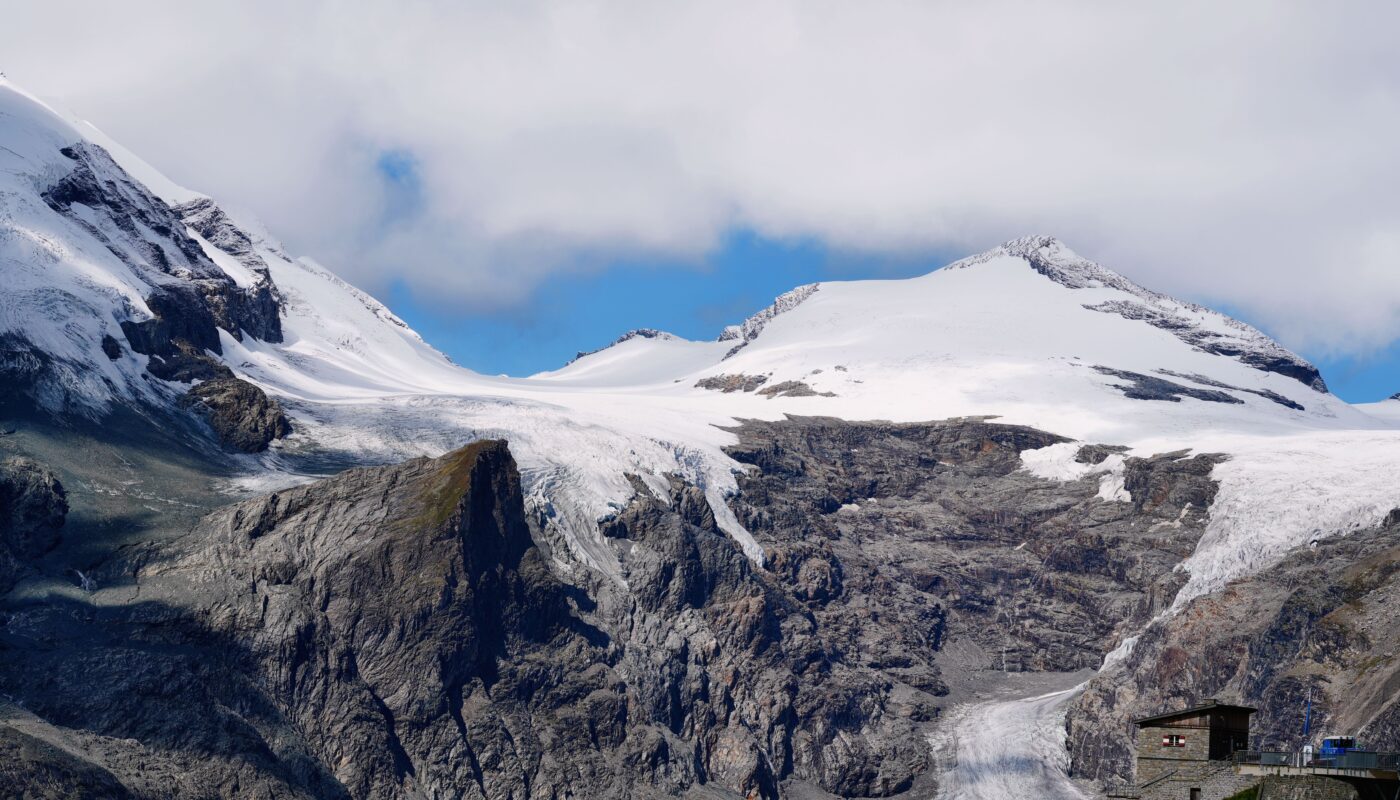
by Nestled beneath Austria’s highest mountain, the majestic Pasterze Glacier has long been one of the country’s most spectacular natural landmarks. Stretching through the heart of the Austrian Alps, this immense river of ice has captivated scientists, mountaineers, and travelers for centuries. However, despite its impressive size and historical importance, the glacier is undergoing a dramatic transformation.
Today, Pasterze Glacier has become a powerful symbol of climate change in Europe. Once an enormous mass of ice that dominated the landscape, it is now retreating at an alarming rate, losing both length and thickness year after year. Scientists describe it as one of the fastest-shrinking glaciers in the Alps, and its decline offers a glimpse into the future of many mountain glaciers around the world.
Understanding the story of Pasterze Glacier means understanding not only the beauty of alpine environments but also the challenges posed by a warming planet.
Where Is Pasterze Glacier?
Pasterze Glacier lies in eastern Austria within the stunning Hohe Tauern National Park, at the base of Grossglockner, which rises to 3,798 meters (12,461 feet).
The glacier is accessible via the famous Grossglockner High Alpine Road, one of Europe’s most scenic driving routes. Every year, thousands of visitors travel to the region to witness the glacier and the dramatic mountain scenery that surrounds it.
The glacier occupies a broad valley carved over thousands of years by moving ice and remains one of Austria’s most important natural attractions.
Why Is Pasterze Glacier So Famous?
Pasterze Glacier holds a special place in Austria’s natural heritage for several reasons:
- It is the largest glacier in Austria.
- It is among the best-studied glaciers in the Alps.
- It serves as an important indicator of climate change.
- It attracts scientists, hikers, and photographers from around the world.
- It provides valuable insights into the future of alpine environments.
Its visible retreat has made it one of Europe’s most recognizable examples of glacier loss.
How Big Is Pasterze Glacier?
Historically, Pasterze Glacier covered an enormous area.
At its maximum extent during the Little Ice Age, the glacier stretched much farther down the valley than it does today.
Even in recent decades, it remained one of the largest glaciers in the Eastern Alps. However, its dimensions have changed dramatically.
The glacier has:
- Lost a significant portion of its length.
- Become considerably thinner.
- Experienced substantial reductions in total ice volume.
- Developed large areas of exposed rock and debris.
The pace of these changes has accelerated considerably during the past several decades.
How Did Pasterze Glacier Form?
Like most valley glaciers, Pasterze formed over thousands of years.
Step 1: Snow Accumulation
Heavy snowfall accumulated in the high alpine regions surrounding Grossglockner.
Step 2: Compression
The snow gradually compressed into dense ice.
Step 3: Ice Flow
Under its own weight, the ice slowly began moving downhill through the valley.
Over countless centuries, the glacier carved and shaped the surrounding landscape, creating the spectacular scenery visible today.
A Glacier That Shaped the Landscape
Pasterze Glacier is not merely a collection of ice. It is also a powerful geological force.
As it advanced and retreated throughout history, it:
- Deepened valleys.
- Transported massive rocks.
- Created moraines.
- Shaped mountain slopes.
- Influenced local river systems.
The landscape around the glacier bears clear evidence of its long and dynamic history.
The Alarming Retreat of Pasterze Glacier
The most remarkable aspect of Pasterze Glacier today is not its size but its rapid disappearance.
Scientists have monitored the glacier for more than a century and have documented a dramatic retreat.
A Century of Change
Over the past century, the glacier has:
- Retreated by several kilometers.
- Lost enormous amounts of ice thickness.
- Experienced increasingly rapid melting during recent decades.
The retreat is so pronounced that historical photographs often look almost unrecognizable when compared with present-day images.
In many locations, bare rock has replaced areas that were once covered by thick glacial ice.
Why Is Pasterze Shrinking So Quickly?
Several factors contribute to the glacier’s rapid decline.
Rising Temperatures
The most important factor is increasing air temperature.
The Alps have warmed significantly over recent decades, and higher temperatures result in:
- Longer melting seasons.
- Reduced snow accumulation.
- Increased ice loss.
More Frequent Heat Waves
Europe has experienced several major heat waves in recent years.
Extreme summer temperatures can cause substantial melting within short periods.
Heat waves accelerate:
- Surface melting.
- Ice thinning.
- Glacier retreat.
Reduced Snowfall
In some years, snowfall has not been sufficient to replace the ice lost during summer.
Without enough new snow, the glacier cannot maintain its mass.
Positive Feedback Effects
As the glacier shrinks:
- Darker rock becomes exposed.
- More sunlight is absorbed.
- Local temperatures increase.
- Melting accelerates further.
This process creates a self-reinforcing cycle of ice loss.
The Formation of Glacial Lakes


6
As Pasterze retreats, new lakes have formed in front of the glacier.
These glacial lakes are among the most visible signs of environmental change.
Although they create beautiful scenery, they also present potential challenges:
- Changes in local ecosystems.
- Increased sediment transport.
- New flood hazards.
- Altered drainage patterns.
Scientists closely monitor these developments.
The Role of Pasterze as a Climate Indicator
Glaciers are often called natural thermometers because they respond quickly to changes in climate.
Pasterze Glacier is especially important because:
- It has been extensively studied.
- Historical records are available.
- Changes can be observed easily.
- It represents broader trends affecting alpine glaciers.
The glacier provides scientists with valuable information about how mountain environments respond to warming temperatures.
Impacts on Water Resources
Although Austria is not entirely dependent on glacier meltwater, glaciers still play an important role in regional hydrology.
Glacier melt contributes to:
- Rivers.
- Streams.
- Local ecosystems.
- Freshwater availability during dry periods.
As glaciers shrink, seasonal water patterns may change.
The long-term consequences could include:
- Reduced summer river flows.
- Changes in aquatic habitats.
- Increased vulnerability to drought.
Effects on Alpine Ecosystems
The retreat of Pasterze Glacier affects more than ice alone.
Newly exposed landscapes create opportunities for:
- Pioneer plants.
- Mosses and lichens.
- Insect colonization.
- Changing wildlife habitats.
At the same time, species adapted to cold environments may lose suitable habitat.
The ecosystem surrounding the glacier is undergoing a continuous transformation.
Tourism and the Changing Landscape
Pasterze Glacier has long been one of Austria’s most visited natural attractions.
Visitors come to:
- Hike.
- Photograph the glacier.
- Explore alpine scenery.
- Learn about climate change.
- Experience mountain environments.
However, the glacier’s retreat has altered the visitor experience.
Areas that were once easily accessible by ice are now separated by exposed terrain and unstable slopes.
Tourism infrastructure has had to adapt to these changes.
Scientific Research at Pasterze Glacier
Pasterze serves as an outdoor laboratory for scientists studying climate and glaciers.
Researchers investigate:
- Ice thickness.
- Glacier movement.
- Surface melting.
- Weather patterns.
- Water flow.
- Ecosystem changes.
Modern techniques include:
- Satellite observations.
- Drone surveys.
- GPS measurements.
- Aerial photography.
- Climate modeling.
These studies help scientists understand not only Pasterze but also glacier changes occurring worldwide.
The Human Connection to the Glacier
For generations, local communities have lived alongside Pasterze Glacier.
The glacier is deeply connected to:
- Regional identity.
- Tourism economies.
- Cultural heritage.
- Scientific education.
Its retreat is often described as an emotional experience because people can visibly observe the landscape changing within a single lifetime.
Few environmental changes are as immediately apparent as the disappearance of a glacier.
Comparing Past and Present
Historical photographs provide powerful evidence of the glacier’s transformation.
Images from the late nineteenth and early twentieth centuries reveal:
- Vast expanses of ice.
- Thick glacier tongues extending down the valley.
- Ice covering areas that are now rocky terrain.
Modern photographs show a dramatically reduced glacier.
These visual comparisons have become important educational tools for illustrating the impacts of climate change.
Could Pasterze Glacier Disappear?
Although the glacier is still large by Austrian standards, its future remains uncertain.
Climate projections suggest that many Alpine glaciers may lose much of their remaining ice during this century if warming continues.
Smaller glaciers may disappear entirely.
Pasterze is expected to continue shrinking for decades, even under more optimistic climate scenarios.
Its future depends largely on:
- Global temperature trends.
- Future greenhouse gas emissions.
- Regional snowfall patterns.
- The frequency of heat waves.
Why the Loss of Pasterze Matters
The retreat of Pasterze Glacier is significant for several reasons.
Environmental Importance
The glacier influences local water systems and ecosystems.
Scientific Importance
It provides valuable evidence of ongoing climate change.
Cultural Importance
The glacier forms part of Austria’s natural heritage.
Educational Importance
Its visible decline helps people understand the realities of global warming.
The story of Pasterze is not isolated. Similar changes are occurring in mountain regions across the world.
Lessons from Pasterze Glacier
Pasterze teaches several important lessons:
- Glaciers are highly sensitive to climate change.
- Environmental transformations can occur rapidly.
- Mountain ecosystems are interconnected.
- Climate change has visible, measurable impacts.
- Long-term monitoring is essential for understanding environmental change.
The glacier serves as both a scientific resource and a reminder of how dynamic Earth’s landscapes can be.
A Symbol of a Changing Planet
Today, Pasterze Glacier stands as one of Europe’s clearest examples of a warming world.
Visitors who return after several years often notice significant differences in the landscape. The glacier’s retreat is no longer a slow geological process unfolding over millennia—it is occurring within human timescales.
This makes Pasterze one of the most compelling natural laboratories for understanding the consequences of climate change.
Conclusion
Pasterze Glacier, Austria’s largest glacier, is also one of its fastest-shrinking natural wonders. Situated beneath the towering peak of Grossglockner, this magnificent river of ice has shaped landscapes, supported ecosystems, and inspired generations of visitors and scientists.
Yet today, the glacier is undergoing a dramatic transformation. Rising temperatures, changing snowfall patterns, and increasingly frequent heat waves have accelerated its retreat, turning Pasterze into a powerful symbol of environmental change.
Its shrinking ice offers both a warning and an opportunity. It reminds us of the sensitivity of mountain environments and highlights the importance of understanding and addressing climate change. As the glacier continues to evolve, it remains an extraordinary place where science, history, and natural beauty come together.
Whether viewed as a geological marvel, a scientific treasure, or a symbol of our changing planet, Pasterze Glacier tells a story that extends far beyond Austria’s mountains—a story