 by
Introduction
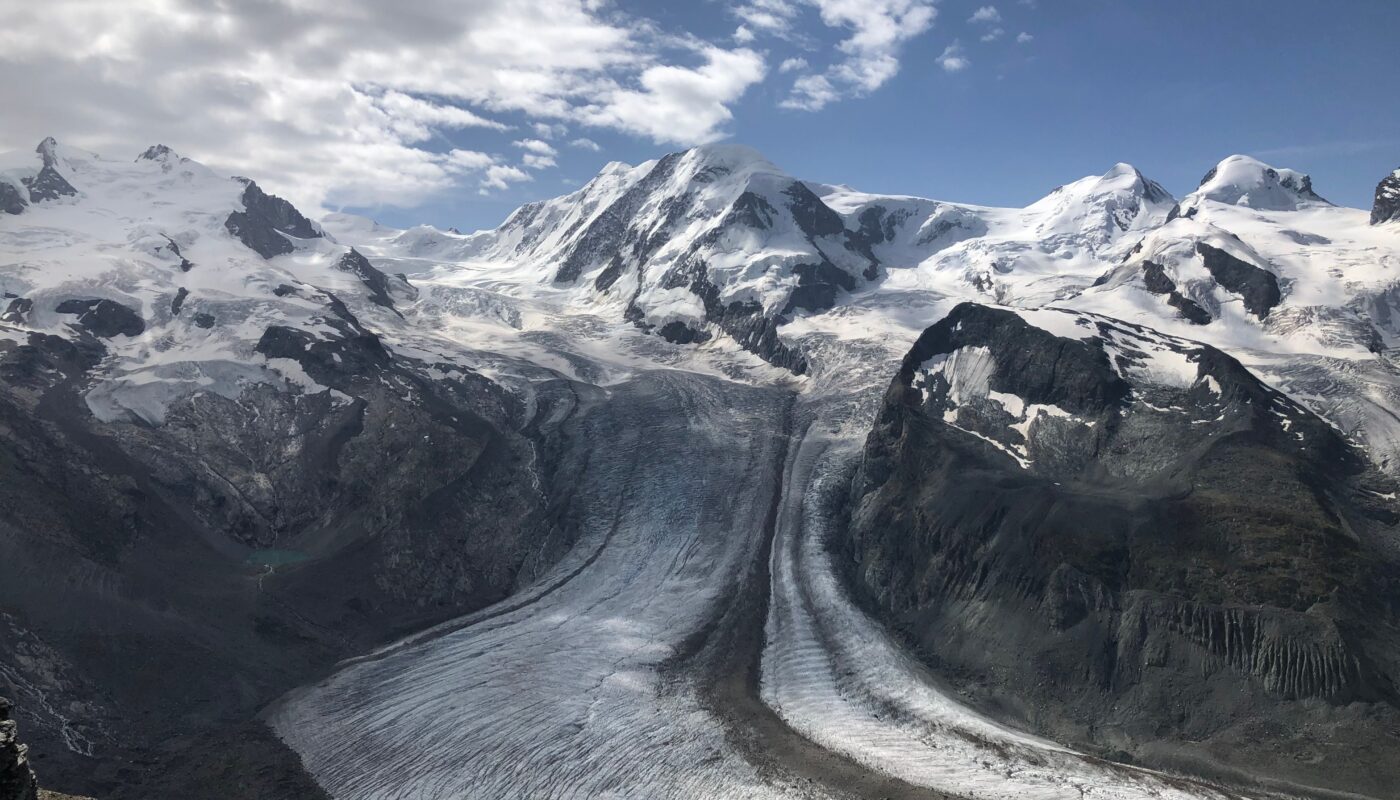
The European Alps are famous for their spectacular mountain landscapes, snow-covered peaks and enormous glaciers. Stretching across countries such as Switzerland, France, Italy, Austria, Germany and Slovenia, this mountain range has attracted travellers, scientists and nature enthusiasts for generations. Alpine glaciers are among its most recognisable natural features. They shape valleys, feed rivers, support mountain ecosystems and provide important freshwater resources.
However, these frozen landscapes are undergoing a dramatic transformation. Rising global temperatures are causing glaciers to lose ice at an increasingly rapid rate. Some smaller glaciers have already disappeared, while larger ones are retreating and becoming thinner. The changes are visible in photographs, scientific measurements and landscapes where bare rock has replaced ice that once covered the mountains.
The future of Alpine glaciers will depend heavily on how quickly the world reduces greenhouse gas emissions. Although some ice loss is already unavoidable, limiting global warming could protect parts of the remaining glaciers and reduce the scale of environmental damage. Understanding what lies ahead is essential for protecting mountain communities, managing water resources and preparing for a different Alpine landscape.
1. The Current Condition of Europe’s Alpine Glaciers
Glaciers are formed when snowfall accumulates over many years, gradually compresses into ice and begins moving under its own weight. Their size depends on the balance between snow accumulation and ice loss. When snowfall replaces the ice lost through melting, a glacier may remain relatively stable. When melting exceeds accumulation over an extended period, the glacier begins to shrink.
Unfortunately, this balance has become increasingly negative across the European Alps.
A 2025 scientific reconstruction published in The Cryosphere examined glacier changes since the end of the Little Ice Age, around 1850. Researchers estimated that Alpine glacier area declined from approximately 4,244 square kilometres to 1,806 square kilometres by 2015. This represented a reduction of about 57%. Their estimated glacier volume fell by approximately 64%, from around 280 cubic kilometres to 100 cubic kilometres. The study also identified at least 1,938 glaciers that had completely disappeared during the period examined.
These figures demonstrate that glacier retreat is not a recent or isolated development. It is part of a long-term transformation that has accelerated during recent decades. The remaining glaciers are also becoming smaller and, on average, are moving towards higher elevations as their lower sections melt away.
The situation is particularly concerning for small glaciers because they have less ice to withstand prolonged warm conditions. Some may disappear within decades, while larger glaciers could survive longer in high-altitude locations.
2. Why Are Alpine Glaciers Melting So Quickly?
The main reason behind glacier retreat is rising air temperature. The concentration of greenhouse gasses in the atmosphere is increased by human activity, especially the burning of coal, oil, and natural gas. These gases trap additional heat, contributing to global warming.
The Alps are especially vulnerable because mountain environments respond strongly to changes in temperature.
Several factors contribute to the rapid loss of Alpine ice.
Higher summer temperatures: Warmer summers increase the amount of snow and ice that melts from glacier surfaces. Longer warm periods also extend the melting season.
Reduced snowfall: When winter precipitation falls as rain instead of snow, glaciers receive less fresh material to replace lost ice. Lower snow accumulation leaves older glacier ice exposed earlier in the year.
Earlier snowmelt: Snow cover often disappears sooner during spring. Darker ice and exposed rock absorb more solar energy than fresh snow, increasing local warming and melting.
Changes in rainfall patterns: Rain falling on glacier surfaces can contribute to melting, while changing precipitation patterns affect the amount of snow available at high elevations.
Dust and dark particles: Dust, soot and other impurities can reduce the reflectivity of snow and ice. Darker surfaces absorb more sunlight, which can accelerate melting.
These factors often work together. A winter with limited snowfall followed by an unusually hot summer can produce especially severe glacier losses.
3. What Could Happen to Alpine Glaciers by 2050?
The middle of the twenty-first century is expected to bring significant changes to the European Alps, even if global emissions are reduced substantially.
A 2024 study highlighted by the University of Lausanne and the University of Zurich estimated that Alpine glaciers could lose at least 34% of their ice volume by 2050, even under a scenario in which global warming stopped immediately at the beginning of the modelling period. If the melting trend observed during the preceding two decades continued, the projected loss could approach half of the region’s glacier volume.
This does not mean that every glacier will disappear by 2050. Instead, the region is likely to experience a combination of disappearing small glaciers, shrinking valley glaciers and substantial thinning of larger ice bodies.
The appearance of many famous Alpine destinations may change considerably. Glacier tongues that currently extend into valleys could retreat towards higher mountain areas. Areas previously covered by ice may become exposed rock, loose sediment or newly formed lakes.
The effects will not be identical everywhere. Glaciers at higher elevations and in locations that receive more snowfall may retain ice for longer. Lower-altitude glaciers and those with relatively small accumulation areas are generally more vulnerable.
By 2050, the Alps may therefore look noticeably different, even though glaciers will continue to exist in some of their highest and coldest locations.
4. Will Alpine Glaciers Disappear Completely by 2100?
The end of the century presents a more uncertain but potentially severe picture.
Climate projections show that the future of Alpine glaciers depends on the amount of warming that occurs over the coming decades. Under lower-emission pathways, some larger glaciers may retain substantial portions of their ice. Under high-emission scenarios, many could lose nearly all their present-day volume.
A 2026 modelling study examined two major Alpine glaciers: Switzerland’s Great Aletsch Glacier and Austria’s Hintereisferner. Its projections showed substantial ice loss under every scenario considered. Hintereisferner was projected to disappear around the middle of the century, while the Great Aletsch Glacier could experience near-total disappearance by 2100 under high-emission scenarios.
For the Great Aletsch Glacier, the study estimated a median volume reduction of approximately 67.7% under one lower-emission pathway and 86.4% under another scenario by the end of the century. Under the highest-emission pathway examined, the projected reduction reached approximately 99.7%.
These results are specific to the glaciers and modelling scenarios studied; they should not be treated as exact predictions for every Alpine glacier. Nevertheless, they demonstrate how strongly future ice conditions depend on climate policy and global temperature changes.
It is also important to understand that glacier disappearance does not happen in a single moment. A glacier may gradually fragment into smaller ice bodies, lose its connection with neighbouring ice fields and eventually become isolated patches of ice.
Even if a glacier survives until 2100, it may look completely different from the impressive ice formation visible today.
5. The Impact on Rivers and Freshwater Supplies
Alpine glaciers play an important role in Europe’s water systems. Meltwater from glaciers contributes to rivers that flow through several countries and supports communities, agriculture, industry and electricity production.
During hot and dry periods, glacier melt can help maintain river flows. This additional water can become particularly valuable when rainfall is limited and seasonal snow has already melted.
However, glacier retreat creates a complicated water problem.
In the early stages of melting, increased ice loss can temporarily add more water to rivers. Scientists describe the point at which glacier runoff reaches its maximum as peak water. After this point, the glacier becomes too small to provide the same amount of meltwater, and its contribution gradually declines.
This could create difficulties for river systems that receive an important share of their summer water from glaciers.
The consequences may include:
- Greater pressure on freshwater supplies during dry summers.
- Changes in river flow throughout the year.
- Increased competition between agriculture, households and industry.
- Challenges for water management across national borders.
- Greater difficulty planning reservoirs and hydropower operations.
Not every Alpine river depends equally on glacier melt. Rainfall, seasonal snow and groundwater also contribute to river flow. Therefore, disappearing glaciers will not automatically cause rivers to dry up. However, their loss will change the timing and reliability of water supplies in some mountain-fed catchments.
6. How Glacier Retreat Could Affect Hydropower
Hydropower is an important source of electricity in several Alpine countries, particularly Switzerland, Austria, France and Italy. Mountain rivers and reservoirs provide opportunities to generate renewable electricity.
Glacier meltwater contributes to some hydropower systems, especially during periods when other water sources are limited. As glaciers shrink, the amount and timing of available water may change.
In the short term, increased melting can sometimes raise river flows and create additional opportunities for electricity production. However, this benefit is not necessarily permanent.
Once glaciers become significantly smaller, their contribution to summer river discharge may decline. Hydropower operators will need to adapt to changing seasonal patterns, more variable rainfall and potentially longer periods of low water availability.
Reservoir management could become increasingly important. Operators may need to store more water during suitable periods and manage competing demands for electricity, drinking water and irrigation.
The future of Alpine hydropower will therefore depend not only on glacier conditions but also on rainfall, snow accumulation, energy demand and infrastructure planning.
7. New Natural Hazards in a Changing Alpine Landscape
Glacier retreat does more than reduce the amount of ice covering mountain slopes. It can also make some high-altitude environments less stable.
For centuries, glaciers have filled valleys, supported steep slopes and covered loose rock and sediment. As ice disappears, previously hidden landscapes become exposed to weathering, erosion and gravitational movement.
Several hazards may become more important.
Rockfalls and landslides: Rising temperatures can thaw frozen ground and weaken ice that holds fractured rock together. Loose material may become unstable and fall towards lower slopes.
Glacial lake outburst floods: As glaciers retreat, water can collect in newly formed lakes. If a natural ice or sediment barrier fails, large amounts of water may suddenly rush downstream.
Debris flows: Heavy rainfall can move loose rock, mud and sediment through mountain valleys, threatening roads, buildings and hiking routes.
Ice avalanches: Unstable sections of glacier ice may collapse, creating dangerous flows of ice and debris.
A 2024 review of research on Alpine mass movements found that climate-change signals are detectable in observations of several processes, including rockfall, debris flows, ice avalanches and snow avalanches. However, the researchers also stressed that the relationship between climate change and individual hazards is complex.
For mountain communities, the challenge will be to improve monitoring, update hazard maps and prepare emergency plans for changing conditions.
8. Effects on Alpine Tourism and Local Economies
The Alps are among Europe’s most popular tourism destinations. Visitors travel to the region to enjoy skiing, hiking, mountain photography, glacier walks and breathtaking views of snow-covered landscapes.
Glaciers are an important part of this attraction.
As glaciers retreat, some traditional tourist experiences may become more difficult to offer. Glacier hiking routes can change, ice caves may become unstable, and access paths may require regular adjustments. Some glacier attractions may eventually lose the ice formations that made them famous.
Ski resorts could also face difficulties, particularly those operating at lower elevations. Warmer temperatures can shorten the natural snow season and increase the need for artificial snowmaking, which requires water and energy.
However, tourism in the Alps will not necessarily disappear. The region offers many other attractions, including lakes, forests, historic villages, cultural festivals and mountain trails.
Tourism businesses can respond by developing activities that are less dependent on permanent snow and ice. Examples include nature education, sustainable hiking, cultural tourism, cycling and guided experiences explaining the changing mountain environment.
The challenge is to protect local employment while adapting tourism to a warmer climate.
9. Changes to Alpine Wildlife and Mountain Ecosystems
Glaciers are part of a much larger mountain ecosystem. Their retreat influences nearby rivers, lakes, wetlands, soils and plant communities.
As ice disappears, new land becomes available for vegetation. Small plants and mosses may begin growing on exposed ground, followed gradually by grasses, shrubs and other species. This process is known as ecological succession.
Although new habitats can develop, the transition is not always simple. Newly exposed land may be unstable, poor in nutrients and difficult for plants to colonise.
Cold-adapted species may also face pressure as temperatures rise. Plants and animals that depend on cool, high-altitude environments may need to move towards higher elevations. However, suitable habitats become increasingly limited near mountain summits.
Changes in glacier-fed streams can affect aquatic organisms. Water temperature, sediment levels and seasonal flow patterns may shift, influencing species that have adapted to cold, relatively stable conditions.
Some species may benefit from newly exposed habitats, while others could lose the environmental conditions they need to survive. The overall outcome will depend on local geography, temperature changes and the ability of species to adapt.
10. Famous Alpine Glaciers Facing an Uncertain Future
Several well-known glaciers illustrate the scale of change taking place across Europe.
Great Aletsch Glacier, Switzerland: The largest glacier in the Alps is an important symbol of the region’s frozen landscape. It is expected to lose substantial ice during this century. Although some ice may remain under lower-emission scenarios, its appearance and dimensions could change dramatically.
Mer de Glace, France: Located near Chamonix, Mer de Glace is one of France’s best-known glaciers. Its retreat has already changed the surrounding landscape and access arrangements. Continued warming is expected to reduce its size further.
Hintereisferner, Austria: This glacier is an important site for scientific observation and research. Recent modelling suggests that it could disappear around the middle of the century, even under lower-emission scenarios.
Morteratsch Glacier, Switzerland: Located in the Engadine region, Morteratsch has experienced significant retreat. Its changing ice front provides a visible example of how warmer conditions are reshaping Alpine valleys.
These glaciers are valuable not only for tourism but also for scientific research. Long-term measurements help researchers understand how mountain ice responds to changing temperatures and precipitation.
11. Can Technology Help Protect Alpine Glaciers?
Technology cannot independently stop global warming, but it can help scientists understand glacier changes and improve decisions about mountain management.
Modern satellite imagery allows researchers to monitor glacier area, surface movement and changes in elevation across large regions. Remote sensing can also identify newly formed lakes and areas where glacier ice is disappearing.
Drones provide detailed images of difficult-to-reach locations. Scientists can use these images to examine cracks, ice structures and changes in glacier surfaces.
Ground-based monitoring systems also play an important role. GPS instruments, weather stations and automatic cameras provide information about glacier movement, temperature, snowfall and melting.
Computer models combine these observations with climate projections to estimate how glaciers may change in the future.
Technology is also being used to improve safety around glacier tourism sites. Updated maps, warning systems and hazard monitoring can help authorities identify dangerous conditions and inform visitors.
Some Alpine locations have experimented with protective coverings over small sections of glacier ice. These materials can reduce melting locally, particularly around ski infrastructure. However, covering entire glaciers is not a realistic solution because of the enormous scale involved.
The most effective long-term response remains reducing the greenhouse gas emissions responsible for rising temperatures.
12. What Can Governments and Communities Do?
Protecting Alpine glaciers requires cooperation between governments, scientists, businesses and local communities.
European countries can contribute by reducing emissions from transport, electricity production, buildings and industry. Expanding renewable energy, improving public transportation and increasing energy efficiency can help reduce the region’s contribution to global warming.
Mountain communities also need practical adaptation strategies.
Important measures include:
- Monitoring glaciers and newly formed mountain lakes.
- Improving early-warning systems for floods and landslides.
- Updating maps of high-risk mountain areas.
- Developing water-management plans for dry periods.
- Supporting tourism businesses as snow and ice conditions change.
- Protecting vulnerable mountain habitats.
- Educating visitors about glacier safety and climate change.
Local communities are particularly important because they experience the effects of glacier retreat directly. Their knowledge of mountain conditions can support scientific monitoring and help authorities make better decisions.
International cooperation is equally necessary. Rivers and mountain water systems cross national boundaries, meaning that changes in one part of the Alps can affect communities further downstream.
13. Why Limiting Global Warming Still Matters
One of the most important messages from glacier research is that the future is not completely fixed.
Some glacier loss will continue because glaciers respond slowly to changes in climate. Even if emissions were reduced immediately, many glaciers would continue shrinking for years or decades as they adjust to warmer conditions.
However, this does not mean that climate action is pointless.
Lower global temperatures would reduce the amount of future melting and improve the chances of preserving larger glacier remnants. Strong emission reductions could also limit the damage to mountain ecosystems, water supplies and tourism infrastructure.
The difference between moderate and severe warming may determine whether some Alpine valleys retain significant glacier ice or experience almost complete deglaciation.
Protecting glaciers is therefore part of a wider effort to protect the natural systems and communities that depend on a stable climate.
14. What Will the European Alps Look Like in the Future?
The Alps of the future may have fewer glaciers, smaller ice fields and more exposed mountain rock. Some valleys could contain new lakes, while other areas may develop vegetation where ice once dominated the landscape.
Summer landscapes may become increasingly green at certain elevations, but this change will not necessarily represent an improvement. The disappearance of glaciers will also mean the loss of unique cold environments and important natural water stores.
Mountain tourism may gradually become less focused on glacier attractions and more centred on year-round outdoor experiences. Communities will need to adjust infrastructure, water management and local economic plans to reflect changing conditions.
Scientists will continue observing the region to understand how quickly these transformations are taking place. Their findings will help governments prepare for environmental risks and make informed decisions about the future.
The Alps will remain a remarkable mountain range, but their appearance and natural processes are likely to change significantly during the coming decades.
Conclusion
The future of Alpine glaciers in Europe is uncertain in its exact details, but the overall direction is clear: continued warming will cause further ice loss throughout the twenty-first century. Small glaciers are particularly vulnerable, while larger ice bodies may survive longer but are expected to become much smaller.
The consequences will extend far beyond the mountains themselves. Changes in glacier meltwater could affect river systems, hydropower and freshwater management. Retreating ice may expose unstable slopes and create new natural hazards. Mountain wildlife, tourism businesses and local communities will also need to adapt.
Although some glacier retreat is unavoidable, the scale of future loss still depends on decisions made today. Reducing greenhouse gas emissions, strengthening environmental monitoring and preparing mountain communities can help limit the damage.
Alpine glaciers are more than beautiful frozen landscapes. They are important parts of Europe’s natural heritage and environmental systems. Protecting what remains of them is not simply about preserving scenery; it is about safeguarding the ecological and human future of the entire Alpine region.