 by
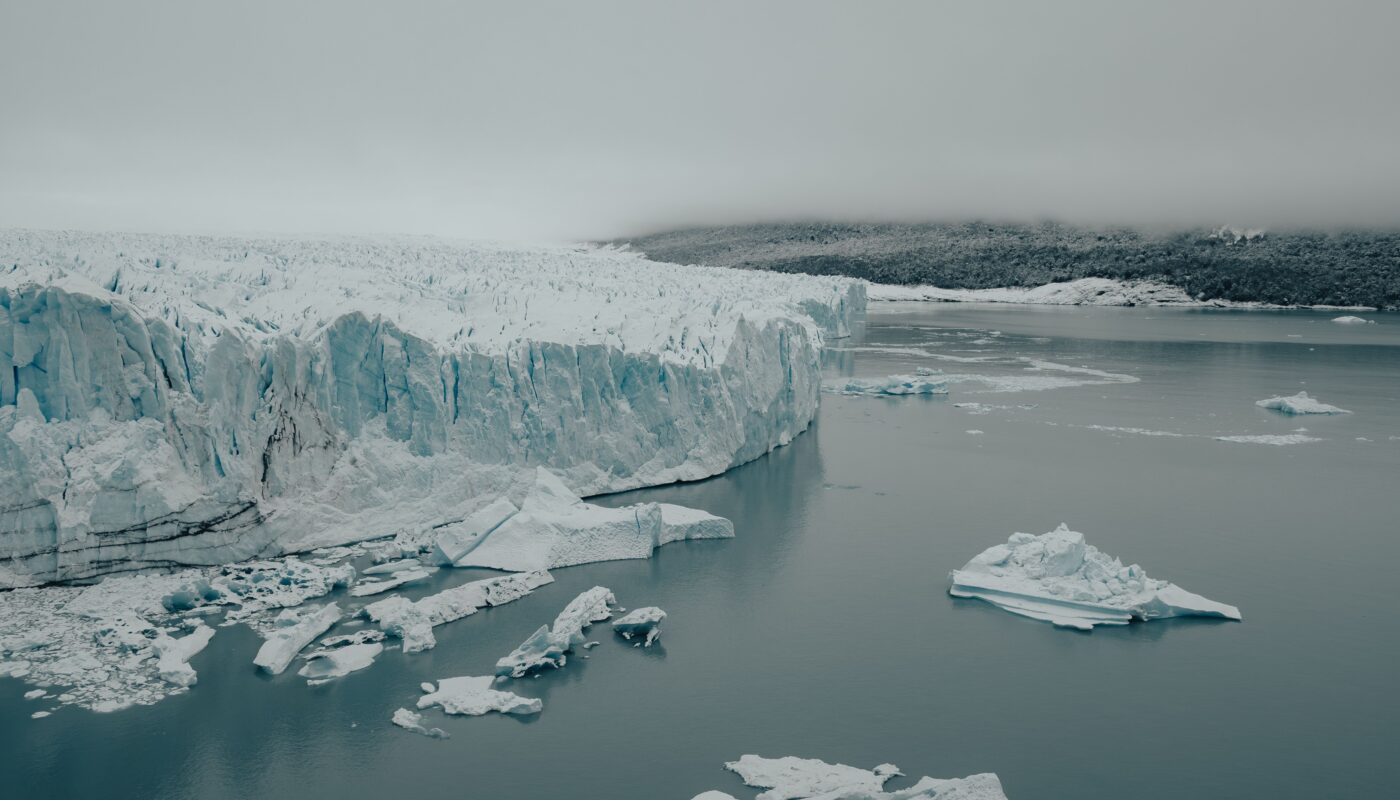
Glaciers are often presented as one of the clearest symbols of a warming planet. Images of retreating ice, newly exposed rock, collapsing glacier fronts, and shrinking mountain icefields have become increasingly familiar. This can create the impression that every glacier on Earth is shrinking in exactly the same way.
The reality is more complicated.
Most glaciers worldwide are losing ice mass, and the global trend is overwhelmingly negative. However, not every individual glacier behaves identically every year. Some glaciers can temporarily advance, thicken, or grow in particular areas because of increased snowfall, unusual weather patterns, changes in glacier flow, or dramatic events known as glacier surges.
That does not mean the global glacier crisis has disappeared. A glacier moving forward can still be losing mass overall. Likewise, a glacier may temporarily gain ice during a snowy period but continue to shrink over the long term.
Understanding this difference is essential. The movement of a glacier’s front and the total amount of ice contained within the glacier are not the same thing.
The Big Picture: Most of the World’s Glaciers Are Losing Ice
The global evidence is clear: glaciers as a whole are shrinking.
According to the World Meteorological Organization, 2024 marked the third consecutive year in which all 19 glacier regions reported net ice loss. The 2024 hydrological year alone saw an estimated loss of about 450 billion tonnes of glacier mass, while glaciers worldwide have lost more than 9,000 billion tonnes since records began in 1975.
The recent trend has been particularly severe. The WMO reports that the period from 2022 to 2024 produced the largest three-year glacier loss on record, and seven of the ten most negative annual glacier mass-balance years since 1950 have occurred since 2016.
This means that the broad global story is not one of balance.
It is one of accelerating ice loss.
Still, glaciers are complex natural systems. Their responses depend on altitude, latitude, snowfall, temperature, cloud cover, geography, debris cover, ocean conditions, and the internal dynamics of the ice itself. As a result, individual glaciers can behave differently from the global average.
That is why the answer to the question, “Are all glaciers shrinking?” is no at the individual level—but yes, glacier loss is the dominant global trend.
First, What Does It Mean for a Glacier to “Grow”?
The word grow can be misleading when discussing glaciers.
There are several different ways a glacier can appear to be growing:
- Its front may advance downhill or toward the sea.
- Its surface may become thicker in one area.
- It may gain more snow and ice than it loses during a particular year.
- Its total mass may increase over several years.
- A sudden glacier surge may push large amounts of ice forward.
These are not necessarily the same thing.
For example, imagine a glacier that loses ice through melting across most of its surface but experiences a rapid movement of ice toward its lower end. Its front may advance even though the glacier is losing total mass.
This is why scientists rely heavily on mass balance, rather than simply measuring whether a glacier’s front is moving forward or backward.
Glacier Mass Balance: The Most Important Measurement
A glacier gains mass when snowfall and other forms of accumulation add more ice than the glacier loses.
It loses mass when melting, evaporation, calving, and other processes remove more ice than is added.
The difference between these gains and losses is called the glacier’s mass balance.
A positive mass balance means the glacier gained more mass than it lost.
A negative mass balance means it lost more mass than it gained.
A glacier with a positive mass balance may thicken and eventually advance, although the visible response can take time.
Similarly, a glacier may have a negative mass balance while its front temporarily advances because of changes in ice flow.
This distinction explains why photographs alone can sometimes tell an incomplete story.
A glacier’s terminus—the visible lower edge of the glacier—is important, but it does not reveal everything about the health of the entire ice body.
Can a Glacier Advance While Losing Mass?
Yes.
This is one of the most surprising facts about glaciers.
Glacier movement is influenced by gravity and the flow of ice. Snow accumulates at higher elevations, gradually transforms into ice, and pushes the glacier downhill.
Changes in this flow can cause the glacier’s front to move forward.
However, an advancing front does not automatically mean that the glacier is becoming healthier.
NASA has highlighted this distinction through the example of Greenland’s Jakobshavn Glacier. The glacier temporarily slowed, thickened, and advanced, but NASA emphasized that this short-term change did not mean global warming had stopped or that the long-term problem of ice loss had disappeared.
In other words, a glacier can show a local or temporary recovery while the broader climate trend remains negative.
This is similar to watching the balance of a bank account. A person may deposit money during one month but still have less money overall than they had years earlier.
The same principle applies to glacier mass.
Why Some Glaciers Can Still Grow
Several factors can allow certain glaciers to gain ice temporarily or maintain relatively stable conditions.
1. Increased Snowfall
The simplest explanation is more accumulation.
A glacier depends on snowfall at higher elevations. If a region experiences unusually heavy snowfall and relatively cool summer temperatures, the glacier may gain more ice than it loses.
In some mountain environments, changes in atmospheric circulation can bring additional winter or summer snow.
More snow does two important things.
First, it adds mass directly to the glacier.
Second, a thick layer of fresh snow can reflect more sunlight than dark ice or exposed rock. This reduces the amount of solar energy absorbed by the glacier and can slow melting.
However, increased snowfall does not guarantee long-term glacier growth. If temperatures continue rising, eventually melting may overcome the additional accumulation.
2. High Elevation
Glaciers located at very high elevations can experience colder conditions than glaciers farther down the same mountain.
Even when lower regions warm significantly, the highest accumulation zones may remain cold enough for snow to persist.
This is one reason glacier responses can vary dramatically across relatively short distances.
A lower glacier may be retreating rapidly while a higher neighboring glacier remains relatively stable.
Altitude provides some protection—but it is not unlimited protection.
As temperatures rise, the altitude at which snow can survive also changes.
3. Regional Climate Patterns
Climate change does not produce identical weather conditions everywhere.
Some regions may temporarily receive more snowfall, while others experience drought.
Changes in wind patterns, monsoons, ocean circulation, and storm tracks can influence how much snow falls on particular mountain ranges.
The Karakoram region of High Mountain Asia became especially famous for this unusual behavior.
The Karakoram Anomaly: A Famous Exception
The Karakoram Mountains, extending across parts of Pakistan, India, and China, have attracted major scientific attention because some glaciers in the region behaved differently from many other glaciers worldwide.
For years, scientists observed that parts of the Karakoram experienced relatively stable conditions, and some glaciers showed positive or near-balanced mass conditions while glaciers in many surrounding regions were losing ice.
This became known as the Karakoram Anomaly.
Research covering 2000 to 2019 found that, while High Mountain Asia overall experienced ice loss, the Karakoram had a slightly negative average mass balance and the Kunlun Mountains showed a positive balance during that period.
However, the phrase “Karakoram Anomaly” should not be interpreted as meaning that all glaciers in Pakistan’s northern mountains are growing or that the region is immune to climate change.
More recent research indicates a more complicated picture. A 2025 study found a slightly negative average mass balance across the Karakoram between 2000 and 2022, with the anomaly concentrated mainly in western and central parts of the range rather than the eastern Karakoram.
A 2026 study examining several major Himalayan and Karakoram glaciers similarly found strong regional contrasts: glaciers such as Baltoro and Siachen were close to equilibrium over the long reconstruction period, while selected Himalayan glaciers experienced substantially greater losses. Yet the study also found accelerated mass loss after 2000 across the glaciers examined.
So, the Karakoram is not a simple story of “growing glaciers.”
It is a story of regional complexity.
Some glaciers have remained more stable than expected, some have surged or advanced, and some have lost mass.
Glacier Surges: When a Glacier Suddenly Moves Forward
Another reason a glacier may appear to be growing is a phenomenon called a glacier surge.
Most glaciers flow slowly and relatively steadily. A surge-type glacier, however, can suddenly accelerate and move much faster than usual.
During a surge, large amounts of ice may move from higher areas toward the glacier’s lower end.
The glacier’s front can advance dramatically.
From a distance, this may look like rapid glacier growth.
But a surge is mainly a change in glacier dynamics. It does not necessarily mean the glacier has gained new ice from snowfall.
Think of squeezing toothpaste from the middle of a tube toward the opening. The toothpaste moves forward, but no new toothpaste has been created.
A glacier surge works differently in detail, of course, but the basic idea is similar: ice is redistributed.
High Mountain Asia contains a significant number of surge-type glaciers. Research has shown that regions such as the Karakoram and Kunlun have notable concentrations of these glaciers, contributing to their unusual patterns of glacier movement and mass change.
This is another reason scientists must be careful when interpreting an advancing glacier front.
A Growing Glacier Does Not Cancel Global Warming
One of the most common misunderstandings about glaciers is the idea that a single advancing glacier somehow disproves global climate change.
It does not.
Climate describes long-term patterns across large areas. Individual glaciers respond to local conditions and can behave differently over short periods.
NASA has specifically warned against interpreting the temporary advance and thickening of Jakobshavn Glacier in Greenland as evidence that global warming was slowing or stopping. Short-term changes can result from regional ocean temperatures and other local influences.
A useful comparison is weather.
If one city experiences an unusually cold winter, that does not prove the entire planet is cooling.
Likewise, if one glacier advances for several years, it does not erase the global evidence showing widespread glacier mass loss.
Scientists look at long-term observations from many glaciers and regions before drawing conclusions.
Are There Any Glaciers With Positive Mass Balance Today?
Yes, individual glaciers can still have positive mass balance in particular years.
But such cases have become increasingly rare in global monitoring.
Preliminary observations summarized by the WMO for the 2023/2024 hydrological year found that only 2 of 141 reporting glaciers had a positive mass balance at that stage of the dataset. The broader global reference-glacier record indicated another year of exceptionally negative average mass balance.
This is an important point.
The existence of a few glaciers gaining mass does not contradict the global trend.
Instead, it demonstrates that glaciers respond differently to local conditions.
Science expects variation.
What matters is the overall pattern—and that pattern is overwhelmingly one of long-term ice loss.
Why Are Most Glaciers Shrinking?
The primary driver is a warming climate.
As air temperatures rise, glaciers experience longer melting seasons and more frequent warm conditions.
At the same time, precipitation that might previously have fallen as snow can increasingly fall as rain in some regions.
This creates a double challenge.
Less snow may accumulate during the cold season, while more ice melts during the warm season.
The result is a negative mass balance.
The WMO reported that 2023 produced more than 600 billion tonnes of glacier mass loss—the largest annual loss recorded in its modern observational record—and that widespread losses continued through 2024.
The effects can also create feedback loops.
When a glacier loses bright snow and ice, darker surfaces may become exposed. Dark rock and debris absorb more solar energy than fresh snow, contributing to additional warming and melt.
As glaciers become thinner, lower sections may also move into warmer environments, increasing their vulnerability.
Not All Regions Are Changing at the Same Speed
Glacier loss is global, but the rate varies greatly.
Some regions have experienced extremely rapid retreat.
Others have shown periods of relative stability.
The reasons include:
- Differences in temperature trends
- Changes in snowfall
- Elevation
- Latitude
- Ocean influence
- Cloud cover
- Monsoon behavior
- The amount of debris covering the glacier
- Glacier size and geometry
- Internal ice dynamics
For example, small glaciers at relatively low elevations are often highly vulnerable because they have limited high-altitude accumulation areas.
Large glaciers at high elevations may respond more slowly.
However, slow response should not be confused with permanent safety.
Even massive glaciers can lose significant amounts of ice when unfavorable conditions continue over decades.
What Does This Mean for Pakistan and High Mountain Asia?
The question is especially important in Pakistan because the mountains of the north contain one of the world’s largest concentrations of glacier ice outside the polar regions.
Glaciers in the Karakoram, Himalaya, Hindu Kush, and Pamir influence rivers, agriculture, hydropower, and water availability across a vast region.
The Karakoram’s unusual glacier behavior has sometimes been described in overly simple terms, such as “Pakistan’s glaciers are growing.”
That statement is misleading.
Some glaciers or areas have shown relative stability, unusual advances, or near-balanced conditions. But research also documents negative mass balances and increasing losses in parts of the region.
For example, a 2024 study of Shisper and Muchuhar glaciers in Pakistan’s Karakoram found negative mass balance for Shisper Glacier, demonstrating that even within the same broad mountain system, glacier behavior can vary considerably.
The most accurate conclusion is that Pakistan’s glacier systems are highly diverse, and individual glaciers should not be used to represent the entire region.
Will Some Glaciers Continue Growing in the Future?
Some individual glaciers may continue to advance or gain mass temporarily.
This could happen because of:
- Exceptionally snowy years
- Regional increases in precipitation
- Temporary cooling
- Changes in ocean temperatures
- Glacier surges
- Local geographic conditions
But temporary growth does not necessarily mean long-term stability.
The future of individual glaciers will depend heavily on how regional climate conditions evolve.
A glacier may gain mass for five years and then experience a decade of severe melting.
Scientists therefore focus on long-term records rather than isolated years.
The global evidence currently points toward continued widespread glacier loss as the climate warms. The WMO’s recent assessments show that glacier mass loss remains historically severe and geographically widespread.
The Difference Between “Some Are Growing” and “Everything Is Fine”
This distinction is perhaps the most important takeaway.
Yes, some glaciers can grow.
Yes, some glacier fronts can advance.
Yes, some regions have experienced periods of near-balanced or even positive mass conditions.
Yes, glacier surges can make a glacier appear to expand dramatically.
But none of these facts change the larger global picture.
A few local exceptions can exist within an overwhelming global trend.
The existence of healthy trees in one forest does not mean the entire forest is unaffected by drought. Similarly, an advancing glacier does not mean glaciers worldwide are safe.
Both local details and global patterns matter.
Good science does not ignore exceptions.
Instead, it studies them.
The Karakoram Anomaly, glacier surges, and temporary advances are scientifically valuable because they help researchers understand how snowfall, temperature, topography, and glacier dynamics interact.
Conclusion
So, are all glaciers shrinking?
No—not every glacier is shrinking at every moment, and some glaciers can temporarily grow, thicken, or advance.
However, this does not change the overall conclusion from global observations: the vast majority of glacier regions are experiencing significant long-term ice loss.
A glacier can advance while losing mass. It can gain ice during an unusually snowy year and lose much more during the following years. It can surge forward because of internal dynamics without actually gaining new ice. And some regions, particularly parts of the Karakoram and Kunlun, have historically behaved differently from the global average.
These exceptions make glacier science more fascinating, but they do not overturn the broader trend.
The best way to understand glacier change is to look beyond a single photograph or one advancing glacier. Scientists measure total ice mass, thickness, snowfall, melt, glacier movement, and long-term climate patterns.
When all of this evidence is considered together, the conclusion is clear: glaciers do not all respond in exactly the same way, but the planet’s glaciers as a whole are losing ice at an alarming rate.
The few glaciers that remain stable, advance temporarily, or gain mass are important reminders that nature is complex. They are not proof that global glacier loss has stopped.
Instead, they show why every glacier has its own story—and why understanding those individual stories is essential to understanding the future of Earth’s ice.