 by
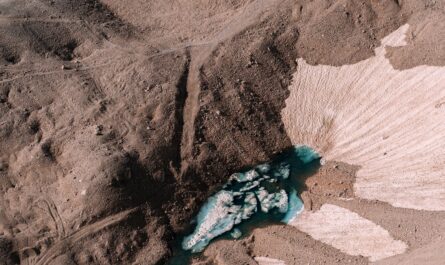
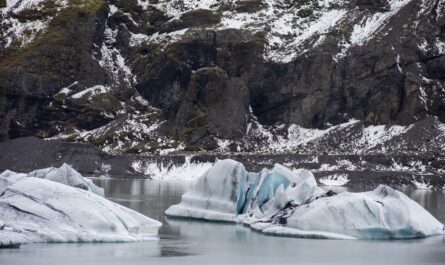
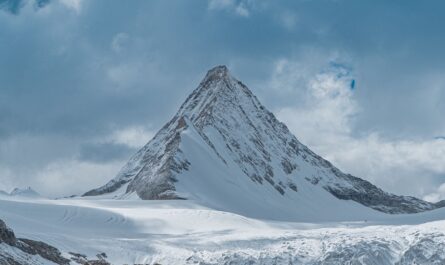
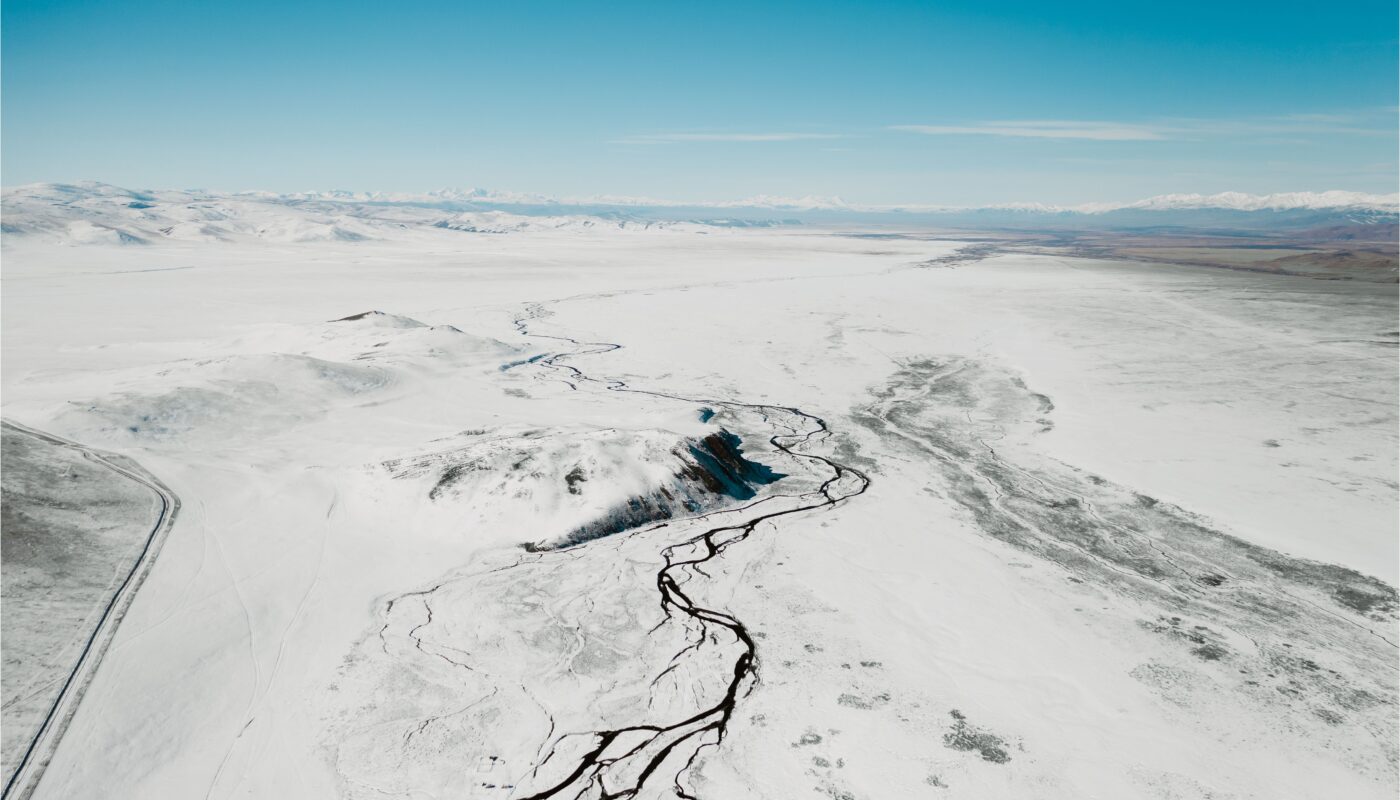
When people imagine Siberia, they often picture endless forests, frozen rivers, permafrost, and vast snow-covered plains. Yet hidden within this enormous region are mountain ranges containing glaciers—small, remote bodies of ice that have received far less scientific attention than the famous glaciers of the Alps, Himalayas, or Alaska.
Siberia’s glaciers are unusual because they exist in one of the world’s most strongly continental climates. Many are surrounded by enormous distances, severe winters, limited precipitation, and rugged terrain. Some are located in mountain ranges that are difficult to reach even for experienced researchers. Others are so small that they can be difficult to monitor consistently from the ground.
Despite their remoteness, these glaciers are scientifically important. They store water, influence mountain ecosystems, preserve atmospheric information in their ice, and provide evidence of how a changing climate is affecting cold continental environments.
Research has increasingly shown that many Siberian glaciers are shrinking. However, the rate and character of this change vary greatly between mountain ranges. The Altai, southeastern Siberia, northeastern Siberia, and Kamchatka each have different climates and glacier characteristics.
Understanding these differences is essential for understanding one of the world’s least familiar glacier regions.
Where Are Siberia’s Glaciers?
Siberia is enormous, extending across much of northern Asia, but its glaciers are concentrated mainly in mountainous areas.
Important glacier-bearing regions include:
- The Altai Mountains
- The Sayan Mountains
- The Baikal and Kodar ranges
- The Suntar-Khayata Range
- The Chersky Range
- The Verkhoyansk and Orulgan ranges
- The mountains of Kamchatka
These areas are separated by huge distances and have very different climates.
The Altai lies in southern Siberia near the borders of Kazakhstan, Mongolia, and China. It contains relatively high mountains and some of Siberia’s best-known glacier research sites.
Farther east, the Suntar-Khayata and Chersky ranges contain glaciers in an exceptionally cold continental environment.
Kamchatka is different again. Located close to the Pacific Ocean, it receives much more precipitation and contains numerous glaciers associated with volcanic mountains.
This geographic diversity means that there is no single “Siberian glacier.”
Instead, Siberia contains several distinct glacier environments.
Why Siberian Glaciers Are So Little Studied
Siberia’s glaciers have historically been less studied than glaciers in more accessible parts of the world.
One major reason is geography.
Many glacierized mountain ranges are hundreds or thousands of kilometres from major population centers. Roads are limited, and some areas require helicopters, long expeditions, river travel, or difficult mountain approaches.
The climate creates another challenge.
Winter temperatures can become extraordinarily low, while the short summer season provides only a narrow window for fieldwork.
Scientific monitoring therefore tends to concentrate on a limited number of accessible glaciers.
A major scientific assessment of Siberian glacier change noted that glaciers in the region remained under-represented in global inventories and that their climatic response was less well understood than that of glaciers in many better-studied regions.
This does not mean Siberian glaciers are completely unknown.
Russia has a long history of glacier research, including Soviet-era glacier inventories, aerial surveys, field observations, and more recent satellite studies.
The challenge is maintaining detailed observations across thousands of kilometres of extremely difficult terrain.
The Altai: Siberia’s Important Glacier Laboratory
The Altai Mountains contain some of the most extensively studied glaciers in Siberia.
Among the most important areas is the Aktru glacier basin, where researchers have conducted long-term observations.
The Altai is also home to Belukha, the highest mountain of the Russian Altai. Its glaciers provide valuable information about both modern climate change and past atmospheric conditions.
Satellite studies have shown substantial recent glacier loss across the Altai. A 2022 assessment using Landsat imagery estimated that the glacierized area of the Altai decreased from about 1,246 square kilometres around 2000 to approximately 1,096 square kilometres around 2020—about a 12% reduction. The study also identified significant mass loss during the same period and linked the overall retreat primarily to rising temperatures.
This makes the Altai an important example of how even continental glaciers far from the ocean are responding to warming.
Belukha and the Climate Archive Inside Ice
Glaciers are more than frozen water.
They can preserve information about the atmosphere in the form of chemical compounds, dust, isotopes, and other materials trapped within successive layers of ice.
The Belukha region has therefore attracted scientists interested in reconstructing past climate conditions.
An ice-core study from Belukha Glacier examined an 86-metre core covering approximately 1816 to 2001. The research identified evidence of substantial regional warming over the twentieth century and found particularly important changes in melt features beginning in the late 1980s.
This type of research is valuable because instrumental climate records do not extend equally far back in time across Siberia.
Ice can provide another source of information.
However, increasing melt can threaten the preservation of these records. If meltwater moves through older snow and ice, it can alter or erase some of the chemical information researchers hoped to preserve.
This makes rapidly changing high-altitude glaciers both scientific archives and vulnerable archives.
The Suntar-Khayata Range
Far to the northeast lies the Suntar-Khayata Range, one of Siberia’s most important glacier regions.
The range stretches through a remote part of eastern Siberia and contains numerous glaciers at elevations above 2,000 metres.
Its highest peak, Mus-Khaya, reaches approximately 2,959 metres.
The climate is strongly continental, with extreme winter conditions and relatively limited precipitation. Research on Glacier No. 31 in the range has been especially valuable because it has been monitored for decades. The glacier has been used in studies of mass balance, snow accumulation, surface melting, and the effects of impurities on glacier surfaces.
Historical comparisons show that the Suntar-Khayata glaciers have lost substantial area.
Research comparing the Soviet glacier inventory with later satellite observations found that the total glacier area decreased from approximately 199.4 square kilometres in 1945 to 162.2 square kilometres in 2003—a reduction of about 19%.
Although that rate differs from some other Siberian regions, it demonstrates that even glaciers in extremely cold environments are not immune to warming.
The Chersky Range
The Chersky Range is another important glacierized region in northeastern Siberia.
It contains numerous small mountain glaciers scattered across a vast and rugged landscape.
These glaciers are particularly interesting because they exist in an environment where extreme cold does not necessarily mean abundant snowfall.
Cold continental air can hold relatively little moisture. As a result, some Siberian glaciers survive not because they receive enormous quantities of snow but because their melt season is short.
This creates an unusual climate balance.
A glacier can remain small but persist for centuries if annual accumulation and summer melting remain relatively balanced.
When summer temperatures increase, however, that balance can be disrupted.
Research on southeastern Siberia has shown that regional summer warming has been strongly associated with glacier shrinkage, although local topography and snowfall patterns can cause substantial differences between individual glaciers.
Tiny Glaciers of Southeastern Siberia
Not all Siberian glaciers are enormous ice masses.
Some are surprisingly small.
Research on the glaciers of the East Sayan, Baikalsky, and Kodar ranges identified 51 glaciers with a combined area of only about 15 square kilometres. Individual glaciers ranged from approximately 0.06 to 1.33 square kilometres.
Their small size makes them particularly vulnerable to environmental changes.
The same research found that debris-free glacier area in the study region had declined dramatically since the nineteenth-century Little Ice Age maximum. The Kodar glaciers experienced especially strong recent shrinkage.
Small glaciers can respond quickly to changes in temperature because they have relatively little ice reserve.
A few decades of unfavorable mass balance can therefore transform a once-continuous glacier into several smaller remnants—or eliminate it entirely.
Kodar: A Particularly Sensitive Region
The Kodar Range provides an especially striking example of glacier sensitivity.
The mountains are isolated and relatively difficult to access, yet satellite imagery has allowed researchers to document substantial changes.
Studies have found that Kodar glaciers experienced some of the largest area losses among the southeastern Siberian glaciers examined.
This is important because it demonstrates that geographic isolation does not protect glaciers from climate change.
A glacier does not need to be close to a major city or heavily visited tourist destination to respond to global warming.
Atmospheric circulation connects remote mountain environments to changes occurring across the wider climate system.
Kamchatka: Where Pacific Climate Meets Siberian Ice
Kamchatka provides a very different glacier environment.
The peninsula extends into the northern Pacific and is famous for volcanoes, earthquakes, geothermal activity, and heavy snowfall.
Its glaciers occur around some of the world’s most spectacular volcanic landscapes.
The interaction between volcanoes and glaciers creates unusual environments.
Snow and ice accumulate around volcanic peaks, while geothermal heat and volcanic activity can influence individual glacier systems.
Kamchatka also receives far more moisture than the deep continental interior of Siberia.
This means that its glaciers can behave differently from those of the Altai or northeastern Siberia.
Research on northeastern Asian glaciers has traditionally distinguished between continental glacier systems in ranges such as Suntar-Khayata and Chersky and more maritime glacier systems in Kamchatka.
This distinction is crucial when interpreting glacier change.
A glacier exposed to abundant Pacific snowfall may respond differently to warming than a glacier surviving in a cold, dry continental environment.
Rock Glaciers: Another Form of Siberian Ice
Siberia also contains rock glaciers, which are different from conventional valley or cirque glaciers.
A rock glacier is a mass of rock debris containing substantial internal ice that can slowly deform and move downslope.
These formations can be difficult to recognize because their surfaces may appear more like piles of rocks than frozen landscapes.
The Suntar-Khayata Range contains a surprisingly large number of such formations.
A detailed investigation identified 540 rock-glacier formations in the range, including both tongue-shaped and lobe-shaped examples.
Rock glaciers are scientifically important because they can preserve ice in environments where conventional glaciers have become difficult to maintain.
They also provide information about permafrost, mountain hydrology, and long-term landscape change.
How Continental Climate Shapes Siberian Glaciers
The climate of Siberia creates unusual glacier conditions.
In many temperate mountain regions, glaciers accumulate most of their snow during winter and lose mass during summer.
Some continental Siberian glaciers have different seasonal relationships between snowfall and melting.
The Altai research literature highlights the importance of strong continentality, limited winter precipitation, and the fact that significant snow accumulation can occur during the warmer part of the year.
This means that summer temperature can have an especially important influence.
If summer becomes warmer, glaciers can experience increased melting at precisely the time when they may also be receiving precipitation.
Whether that precipitation arrives as snow or rain becomes increasingly important.
Warmer conditions can shift precipitation toward rainfall at lower elevations and during transitional seasons, reducing the amount of snow available to replenish glaciers.
Climate Change Is Accelerating Glacier Loss
The overall evidence from several Siberian mountain regions indicates widespread glacier shrinkage.
The scale differs considerably.
In the Russian Altai, research documented substantial area loss during the twentieth century and further accelerated shrinkage from 2000 to 2020.
In southeastern Siberia, glacier area has also declined substantially since the Little Ice Age.
The exact response depends on elevation, aspect, precipitation, debris cover, glacier geometry, and local atmospheric conditions.
This explains why one glacier may retreat rapidly while another nearby glacier changes much more slowly.
Climate change creates the broad pressure, but local geography determines how that pressure is expressed.
Why Remote-Sensing Technology Is So Important
Because many Siberian glaciers are extremely difficult to reach, satellites have become essential.
Researchers can use satellite imagery to measure:
- Glacier area
- Terminus position
- Snow cover
- Surface elevation
- Debris coverage
- Ice velocity
- Changes in glacier lakes
- Long-term landscape transformation
Modern satellite missions allow researchers to compare images from different years and decades.
This has transformed glacier research in remote regions.
For example, the Altai-wide 2000–2020 assessment relied heavily on Landsat imagery and digital elevation models to quantify glacier changes across a huge mountain region.
Satellite observations cannot replace fieldwork entirely.
Ground measurements provide information about snow depth, ice temperature, mass balance, chemistry, and other characteristics that cannot always be determined remotely.
But for inaccessible Siberian terrain, satellites make regional monitoring possible.
Glaciers and Siberian Water Resources
Glaciers are relatively small compared with Siberia’s enormous rivers, but they still contribute to mountain hydrology.
During warm periods, glacier melt supplies water to streams and rivers.
This can be particularly important in dry mountain environments where seasonal runoff is limited.
However, glacier retreat creates a complicated long-term water story.
Initially, increased melting can increase runoff.
As glacier volume declines, the amount of stored ice available for future melt decreases.
Eventually, a smaller glacier may contribute less water during warm, dry periods.
This transition is important for ecosystems and downstream communities.
The timing of runoff can also change, with more water potentially arriving earlier in the melt season.
New Landscapes Are Appearing
When a glacier retreats, it exposes terrain that may have been covered by ice for decades or centuries.
Plants begin colonizing the newly exposed ground.
Microorganisms establish themselves in developing soils.
Streams change their routes.
Lakes can form.
Sediments are redistributed.
Research around the Maliy Aktru glacier in the Altai used ecological succession to examine how landscapes change following glacier retreat. Scientists studied plants, microorganisms, and soil characteristics along areas exposed by retreating ice.
These young landscapes provide a natural laboratory for studying how life establishes itself after deglaciation.
Why Siberia’s Glaciers Matter Globally
It may be tempting to regard Siberian glaciers as isolated curiosities.
They are not.
Together with glaciers elsewhere, they are part of the global cryosphere.
Their ice contributes to sea-level change when lost from land.
Their meltwater affects mountain watersheds.
Their retreat provides evidence of changing climate conditions.
Their ice can preserve information about past atmospheric environments.
Their changing landscapes can influence ecosystems and natural hazards.
Most importantly, Siberian glaciers demonstrate that climate change reaches even the most remote corners of the planet.
The Challenge of Studying an Unreachable Landscape
Perhaps the most fascinating feature of Siberia’s glaciers is not their size but their isolation.
A glacier may be located in a mountain valley that has no road access, surrounded by thousands of square kilometres of wilderness.
This remoteness makes long-term monitoring expensive and logistically challenging.
It also means that some small glaciers may disappear or undergo major changes without receiving the same level of attention given to famous glaciers in tourist destinations.
The scientific community therefore increasingly depends on combining historical maps, old photographs, field observations, satellite imagery, digital elevation models, and climate records.
Each source fills a different gap.
Together, they reveal a much clearer history.
What the Future May Hold
The future of Siberia’s glaciers will vary from range to range.
Some high-elevation glaciers may persist for a long time because of favorable topography and snowfall.
Others, particularly small low-volume glaciers, may be much more vulnerable.
Continued warming is expected to place additional pressure on many mountain glaciers.
The Altai research has already demonstrated that observed warming has been associated with accelerated glacier retreat, while climate projections in earlier regional modeling indicated that increased precipitation would not necessarily compensate for strong temperature increases.
For very small glaciers, the critical question may not be whether they retreat but whether enough ice remains for them to continue functioning as glaciers.
Final Thoughts
The glaciers of Siberia are among Earth’s most remote and least familiar ice landscapes.
They hide in the Altai, Sayan, Baikal, Kodar, Chersky, Suntar-Khayata, Verkhoyansk, and Kamchatka mountains, far from the crowded tourist routes associated with better-known glaciers.
Their isolation has made them difficult to study, but modern satellite technology is revealing their changing story.
The evidence shows that many Siberian glaciers have lost substantial area over recent decades. The Altai has experienced accelerated shrinkage, southeastern Siberian glaciers have declined significantly since the Little Ice Age, and northeastern glacier systems have also undergone measurable losses.
Yet the story is more complex than simply “Siberia is losing its ice.”
These glaciers behave differently because their climates are different. Some are extremely continental and dry. Others receive heavy Pacific snowfall. Some are tiny cirque glaciers, while others occupy larger mountain valleys. Some conventional glaciers coexist with rock glaciers and permafrost.
That diversity makes Siberia an especially valuable natural laboratory.
Its glaciers reveal how ice responds to warming under some of the most extreme climatic conditions on Earth. They also show why remote landscapes deserve scientific attention even when they appear far removed from human activity.
As technology improves, satellites, field teams, ice cores, and climate models will continue uncovering the secrets stored within Siberia’s mountains.
For now, these remote glaciers remain quiet witnesses to a changing climate—isolated, difficult to reach, and increasingly important to understand.