 by
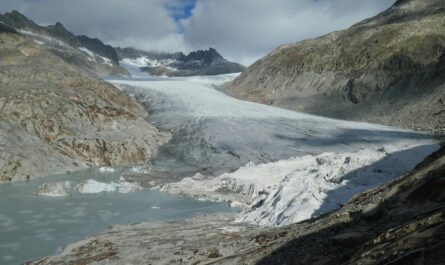
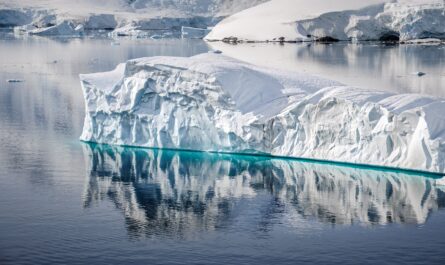
by The cryosphere—the frozen regions of Earth that include glaciers, ice sheets, sea ice, snow cover, and permafrost—is one of the most influential parts of the global climate system. It helps regulate temperature by reflecting sunlight, stores vast amounts of freshwater, and plays a key role in ocean circulation and sea-level balance.
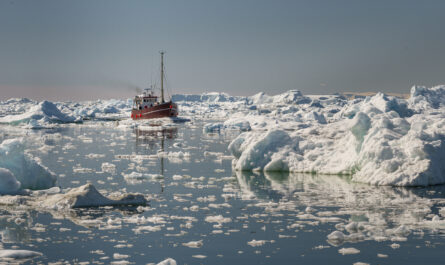
But as global temperatures rise, these frozen systems are shrinking at an alarming rate. Arctic sea ice is thinning, glaciers are retreating, and parts of the Greenland and Antarctic ice sheets are losing mass faster than previously expected. These changes are already contributing to rising sea levels and altering weather patterns around the world.
In response to this crisis, scientists and policymakers have begun exploring a controversial idea: geoengineering the cryosphere—deliberately intervening in frozen environments to slow, stabilize, or even reverse ice loss.
But should humanity actually attempt this? The question is complex, and the answers are deeply divided.
What Does Cryosphere Geoengineering Actually Mean?
Geoengineering refers to large-scale human interventions intended to influence Earth’s climate system. When applied specifically to the cryosphere, it involves efforts to directly manipulate ice, snow, or cold ocean systems.
Proposed methods include:
- Thickening Arctic sea ice by pumping seawater onto frozen surfaces
- Installing barriers to block warm ocean currents from reaching glaciers
- Reflecting sunlight away from ice using engineered surfaces or particles
- Artificially cooling regions of ice sheets
- Removing meltwater beneath glaciers to slow ice movement
Most of these ideas are still experimental or theoretical, with only small-scale trials or computer simulations conducted so far. They are not currently used in real-world climate management.
The motivation behind them is straightforward: the polar regions are warming faster than the global average, and ice loss is accelerating faster than many models once predicted.
Why Some Scientists Support Exploring It
Supporters of cryosphere geoengineering generally do not see it as a replacement for cutting emissions. Instead, they view it as a potential emergency tool that could reduce damage while long-term climate solutions take effect.
1. Slowing Down Rapid Ice Loss
One of the main arguments is that even partial slowing of ice melt could have significant global benefits. Ice sheets in Greenland and Antarctica contain enough water to raise sea levels dramatically if they collapse.
If geoengineering could slow this process, even temporarily, it might reduce near-term risks to coastal cities and low-lying regions.
2. Buying Time for Climate Action
Some researchers argue that humanity is not moving fast enough to reduce greenhouse gas emissions. In this context, geoengineering could serve as a temporary buffer, delaying the most severe impacts while decarbonization progresses.
3. Targeted Regional Interventions
Unlike global climate manipulation schemes, cryosphere-focused ideas aim at specific vulnerable areas. For example, protecting a single glacier or stabilizing a section of ice sheet may be more feasible than altering the entire planet’s climate.
4. Expanding Scientific Understanding
A smaller group of scientists supports limited experimentation purely to understand what is physically possible. They argue that ignoring these ideas entirely could leave humanity unprepared for extreme future scenarios.
Why Many Experts Are Deeply Concerned
Despite these arguments, many scientists remain skeptical—or strongly opposed—to cryosphere geoengineering. The concerns fall into several major categories.
1. The Sheer Scale of the Problem
The cryosphere is enormous. Arctic sea ice spans millions of square kilometers, and ice sheets are kilometers thick. Attempting to physically influence these systems would require infrastructure and energy on an unprecedented scale.
Maintaining such systems in remote, hostile environments would also be extremely difficult and expensive.
2. Risk of Unintended Consequences
Earth’s climate system is highly interconnected. Changing one part of it can lead to unexpected results elsewhere.
Possible risks include:
- Disruption of ocean currents
- Changes in global weather patterns
- Damage to marine ecosystems
- Accelerated melting in other regions due to feedback effects
Because of these interconnections, even well-intended interventions could create new problems that are difficult to predict or control.
3. The Moral Hazard Problem
One of the most serious concerns is behavioral rather than technical.
If governments believe geoengineering can “fix” climate change, they may reduce efforts to cut emissions. This creates a dangerous illusion that technology can replace fundamental climate action.
In reality, geoengineering—if it works at all—would not address the root cause of the problem: greenhouse gas accumulation.
4. Governance and Political Complexity
Who would decide whether to modify the cryosphere?
This question is not simple. The polar regions are globally significant and not owned by any single country. Any intervention could raise international disputes over:
- control
- responsibility
- environmental impact
- compensation for unintended damage
Without global agreement, deploying geoengineering could become politically unstable.
5. High Costs and Uncertain Effectiveness
Many proposed systems would require continuous operation in extreme environments. Ice moves, melts, breaks, and shifts constantly, meaning any infrastructure would need ongoing maintenance.
Recent scientific assessments suggest that most cryosphere geoengineering ideas face serious limitations in:
- scalability
- cost efficiency
- long-term effectiveness
- environmental safety
In short, even if technically possible, they may not deliver meaningful climate benefits.
Examples of Proposed Approaches
To better understand the debate, it helps to examine specific ideas that have been suggested.
Artificial Sea Ice Thickening
One proposal involves pumping seawater onto Arctic ice to increase its thickness during winter.
While this may temporarily strengthen ice, studies suggest that much of the added ice could melt during warmer seasons, limiting long-term impact.
Ocean Current Barriers
Some ideas propose building underwater structures to block warm water from reaching glaciers.
However, these would need to be extremely large and durable to withstand ocean forces, ice movement, and deep-sea conditions.
Reflective Surfaces and Solar Management
Another concept involves increasing the reflectivity of ice or nearby surfaces to reduce heat absorption.
This could theoretically slow melting but carries risks of altering local weather systems and ecosystems.
Subglacial Water Drainage
Removing water beneath glaciers could slow their movement toward the ocean.
While promising in theory, this approach is technically complex and may not scale effectively across large ice sheets.
Ethical Questions: Should We Intervene at All?
Beyond technical feasibility, cryosphere geoengineering raises deeper ethical concerns.
1. Responsibility vs. Interference
Some argue that since human activity caused climate change, humanity has a responsibility to explore all possible solutions—including intervention.
Others believe that attempting to manipulate natural systems on such a large scale could create more harm than benefit.
2. Confidence in Human Control
There is a broader philosophical concern about whether humans are capable of safely managing systems as complex as Earth’s climate.
History shows that environmental interventions often produce unintended outcomes, even when intentions are good.
3. Unequal Impacts Across the World
Even if geoengineering helped in one region, it could negatively affect another. Climate systems do not respect borders, so any intervention could create winners and losers globally.
This raises serious questions about fairness and environmental justice.
A Divided Scientific Landscape
There is no consensus on cryosphere geoengineering.
Some researchers believe it deserves cautious exploration as a potential emergency tool. Others argue that it distracts from the urgent priority of reducing emissions.
Most recent assessments conclude that while ideas are scientifically interesting, they currently face major barriers in feasibility, safety, and governance.
In other words, the concept is still far from practical deployment.
So, Should We Try to Geoengineer the Cryosphere?
The answer depends on how the question is framed.
Reasons some support continued research:
- Could provide temporary protection in extreme scenarios
- Might slow near-term ice loss
- Expands understanding of climate systems
Reasons for caution or rejection:
- High risk of unintended global consequences
- Technological and financial limitations
- Ethical and political challenges
- Risk of reducing urgency for emissions reduction
Final Thoughts
Geoengineering the cryosphere represents one of the most ambitious—and controversial—ideas in modern climate science. It reflects both the urgency of the climate crisis and the growing temptation to look for technological fixes to complex environmental problems.
However, the frozen regions of Earth are not isolated systems. They are deeply connected to oceans, weather patterns, and global climate stability. Intervening in them is not a localized action—it is a planetary experiment.
At present, most scientific evidence suggests that while cryosphere geoengineering is an interesting area for research, it is not a reliable or safe solution to climate change.
The most effective and widely supported strategy remains unchanged: reducing greenhouse gas emissions and limiting global warming at its source.
Still, as the cryosphere continues to change, the debate is likely to continue—forcing humanity to carefully weigh ambition against caution in shaping the planet’s frozen frontiers.