 by
by Ice is something most people associate with purity. Whether it’s a glass filled with cubes from a freezer or a chunk of frozen water in nature, ice is often assumed to be clean and safe. But when people compare ordinary ice with glacier ice, a common question arises: Are glaciers actually cleaner than regular ice?
There is more to the response than just a yes or no. To understand it properly, we need to look at how ice forms, what impurities it can contain, and how environmental conditions affect its composition over time.
Understanding What “Clean Ice” Really Means
Before comparing glaciers with regular ice, it’s important to define what “clean” actually refers to.
In scientific terms, clean ice usually means:
- Low levels of visible particles
- Minimal dissolved chemicals or pollutants
- Few trapped air contaminants or biological material
- High optical clarity (transparency)
However, “clean” does not always mean “pure” in a chemical sense. Even ice that looks crystal-clear can contain microscopic impurities.
So when we ask whether glacier ice is cleaner, we are really asking:
Does glacier ice contain fewer contaminants than artificially frozen ice or natural surface ice?
How Regular Ice Is Formed
Regular ice typically refers to ice made from domestic or treated water sources, such as:
- Tap water
- Bottled water
- Filtered or distilled water
This type of ice forms quickly when water is frozen in a controlled environment, such as a freezer or industrial ice machine.
What Affects Its Cleanliness?
Even though the water may look clear, regular ice can contain:
- Dissolved minerals (calcium, magnesium, etc.)
- Trapped air bubbles
- Residual chemicals from treatment processes (like chlorine in tap water)
- Tiny particles from storage containers or pipes
Because freezing happens relatively fast, impurities often get trapped in place rather than being removed.
The result is that regular ice may appear clear but still contain microscopic contaminants distributed throughout the structure.
How Glacier Ice Is Formed
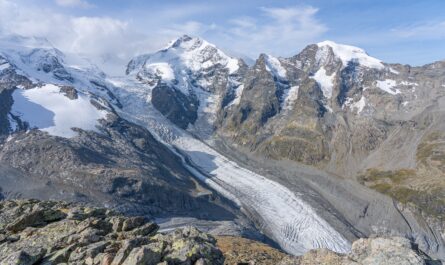
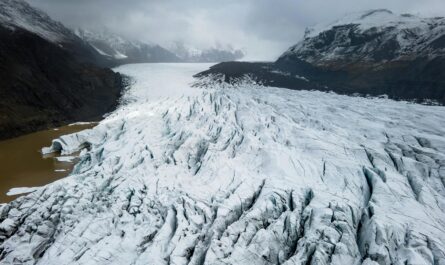
Glacier ice forms in a completely different way. Glaciers develop over hundreds or even thousands of years through the gradual accumulation and compression of snow.
As snow layers build up, they slowly transform into dense ice under pressure. During this long process, air is squeezed out, and water molecules reorganize into a tightly packed crystalline structure.
Over time, this creates what scientists call glacial ice.
glacier often contain ice that has been preserved for centuries or even millennia, depending on depth and location.
Why Glacier Ice Often Looks Cleaner
At first glance, glacier ice appears extremely pure and transparent. There are several reasons for this:
1. Slow Formation Process
Unlike quickly frozen ice, glacier ice forms gradually. This slow transformation allows gases and some impurities to be expelled or redistributed.
2. Compression and Refinement
As snow compresses into ice, air pockets are reduced. This leads to:
- Fewer visible bubbles
- Increased density
- Greater transparency in deeper layers
3. Natural Filtering Effect
As snow accumulates over time, some atmospheric particles settle unevenly. In deeper layers, many impurities become locked in small, dispersed pockets rather than concentrated clusters.
This makes glacier ice appear visually cleaner than typical frozen water.
But Are Glaciers Truly Pure?
Despite their appearance, glaciers are not free of impurities.
In fact, scientific studies show that glacier ice can contain a wide range of materials, including:
- Dust particles carried by wind
- Volcanic ash from distant eruptions
- Soot from wildfires or industrial activity
- Microscopic algae and microorganisms
- Chemical traces from atmospheric pollution
Some of these materials become trapped as layers form over time. Others are carried by wind and deposited on the surface before being buried deeper into the ice.
The Hidden Complexity Inside Glacier Ice
What makes glaciers scientifically fascinating is that they are not uniform blocks of ice. Instead, they are layered archives of environmental history.
Each layer can preserve:
- Past atmospheric conditions
- Climate changes over centuries
- Pollution levels from different eras
- Natural events such as volcanic eruptions
glacier ice is therefore not just frozen water—it is a natural time capsule.
This means that while glacier ice may look clean, it can contain a detailed record of Earth’s past atmosphere, including contaminants from long ago.
Micro-Impurities vs. Visible Cleanliness
One of the most important distinctions in this comparison is between what the eye sees and what science measures.
Visually
Glacier ice often appears:
- Clear
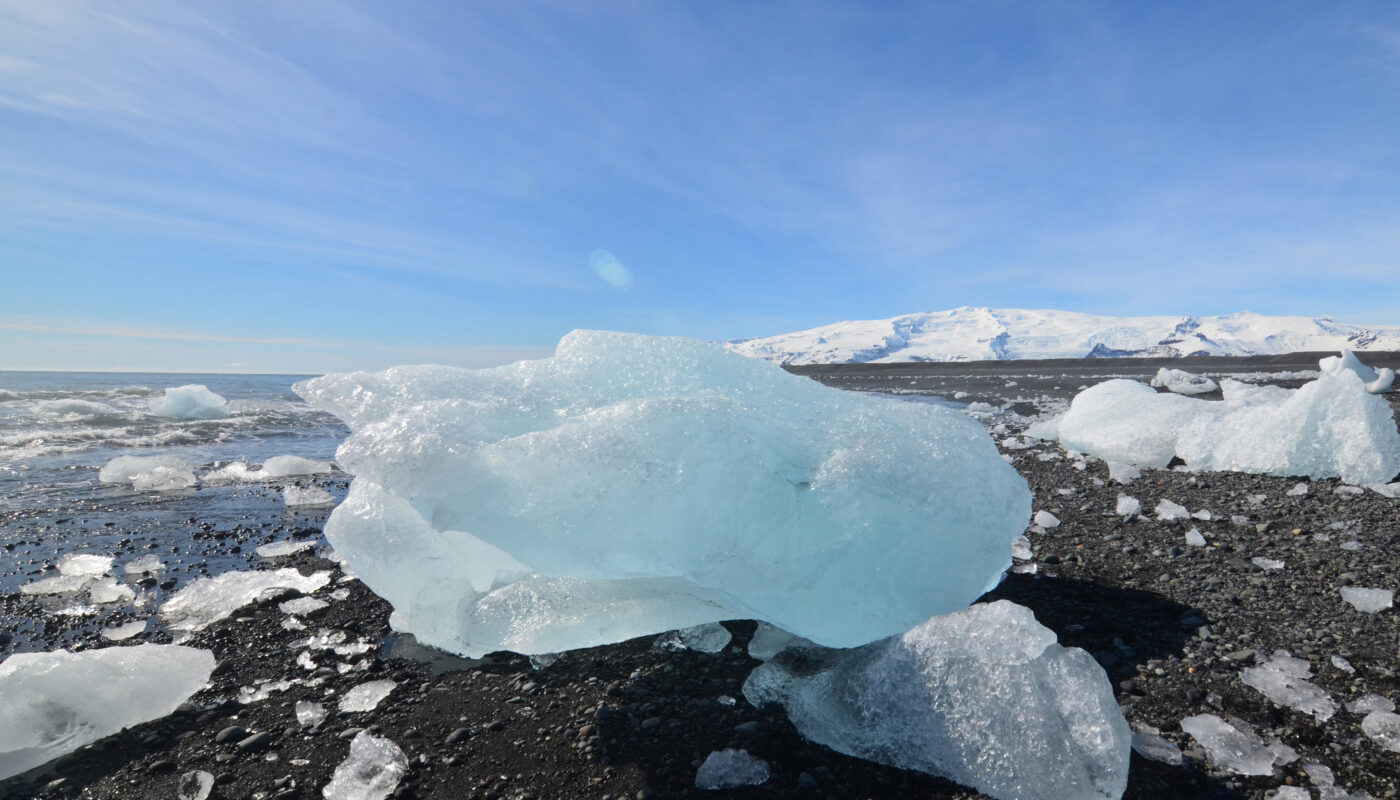
- Blue or translucent
- Free of visible debris
Scientifically
However, microscopic analysis reveals:
- Dust trapped within ice crystals
- Chemical ions dissolved in frozen layers
- Organic material embedded in the structure
- Black carbon particles from atmospheric pollution
So while glaciers may look cleaner, they are not necessarily chemically purer than modern filtered ice.
Why Glacier Ice Can Sometimes Be “Cleaner” Than Regular Ice
In certain contexts, glacier ice can actually be cleaner than regular ice, especially when comparing it to unfiltered or contaminated water sources.
Here’s why:
1. Isolation From Modern Pollution (in older layers)
Deep glacier ice formed centuries ago may have been created before industrial pollution existed, meaning it can be relatively free of modern contaminants.
2. Natural Filtration Over Time
As snow compresses into ice, some impurities are redistributed or trapped in isolated layers rather than remaining in circulating water systems.
3. Absence of Human Handling
Unlike regular ice, glacier ice is not:
- Stored in containers
- Processed in machinery
- Exposed to plumbing systems
This reduces certain types of contamination introduced by human contact.
Why Regular Ice Can Sometimes Be Cleaner
Despite its advantages, glacier ice is not always cleaner than modern ice. In many cases, the opposite is true.
1. Controlled Water Sources
Modern ice production often uses:
- Filtered water
- Reverse osmosis systems
- Sterilized environments
These systems can remove most impurities before freezing.
2. Hygiene Standards
Commercial ice is produced under strict regulations to prevent contamination.
3. Short Formation Time
Although fast freezing can trap air bubbles, it also limits long-term exposure to environmental pollutants.
In contrast, glaciers are exposed to atmospheric conditions for centuries.
The Role of Location and Environment
The cleanliness of glacier ice depends heavily on where it forms.
For example:
- Remote polar glaciers tend to have fewer pollutants
- Alpine glaciers may collect more dust and biological material
- Glaciers near industrial regions can accumulate airborne contaminants
This means there is no universal rule—some glacier ice is extremely clean, while others contain significant impurities.
Scientific Perspective: Purity Is Relative
Researchers studying ice cores have found that impurity levels vary widely depending on depth, age, and location.
ice core studies show that even deep, ancient ice can contain:
- Traces of volcanic eruptions
- Atmospheric dust layers
- Biological particles
These findings demonstrate that “clean” is not an absolute condition in natural ice systems.
Environmental Importance of Glacier Impurities
Interestingly, impurities in glaciers are not just contaminants—they are scientifically valuable.
They help researchers:
- Reconstruct past climate conditions
- Track pollution history
- Understand atmospheric changes over time
Without these impurities, scientists would lose key evidence about Earth’s environmental history.
So, Are Glaciers Cleaner Than Regular Ice?
The answer depends on how “clean” is defined.
In terms of appearance:
Yes—glacier ice often looks cleaner due to its clarity and density.
In terms of modern chemical purity:
Not always—regular filtered ice can be cleaner because it is produced in controlled environments.
In terms of natural contamination:
Glacier ice often contains more historical and environmental impurities.
Final Conclusion
Glaciers are not simply giant blocks of frozen water—they are complex, layered records of Earth’s atmosphere. While they may appear more pristine than regular ice, they often contain a mixture of natural and historical impurities that reflect centuries of environmental change.
Regular ice, on the other hand, is typically more controlled and hygienic in modern production settings, though it lacks the depth and natural history embedded in glacier ice.
Ultimately, glacier ice is “clean” in appearance but not necessarily purer in composition. Instead, it represents something far more interesting: a frozen archive of the planet’s past.