by
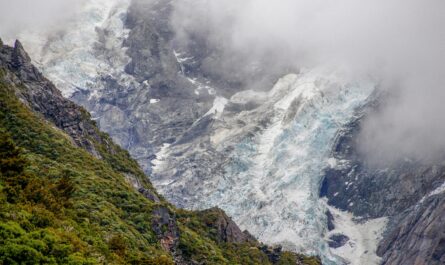
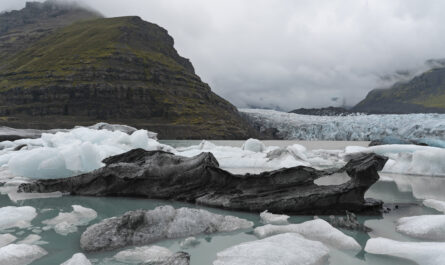
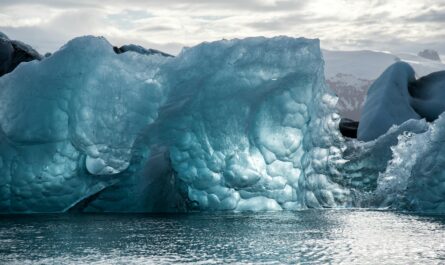
by Iceland is often called the land of fire and ice, and few places demonstrate that contrast as dramatically as Sólheimajökull. Located in southern Iceland, this striking outlet glacier extends from the vast Mýrdalsjökull ice cap toward the lowlands, creating a landscape of blue ice, dark volcanic sediment, meltwater channels, rugged moraines, and constantly changing ice formations.
Sólheimajökull is more than a spectacular destination for visitors. It has become an important natural laboratory for glaciologists, geologists, climatologists, archaeologists, and remote-sensing researchers. Its long record of observations makes it particularly valuable for understanding how glaciers respond to changes in temperature and precipitation.
The glacier’s terminus has been measured repeatedly since the early twentieth century, while modern researchers have combined field observations, GPS surveys, satellite imagery, ice-thickness measurements, climate records, and numerical models to investigate its behavior. Historical research has even used Sólheimajökull’s past fluctuations to reconstruct aspects of Icelandic climate extending far beyond the period of modern instrumental observations.
For this reason, Sólheimajökull is best described as one of Iceland’s most extensively studied glaciers.
Where Is Sólheimajökull?
Sólheimajökull is situated in southern Iceland and is an outlet glacier flowing from Mýrdalsjökull, one of the country’s major ice caps.
Unlike a massive continental ice sheet that spreads across a broad area, an outlet glacier flows outward from a larger ice-covered region through a defined valley.
Sólheimajökull occupies such a valley setting.
A major scientific study described it as a valley glacier approximately 15 kilometers long, extending from high elevations toward an elevation of roughly 100 meters near its lower end. Earlier measurements placed its area at around 44 square kilometers, although glacier dimensions naturally change over time.
Its relatively accessible location near Iceland’s south coast has also made it especially useful for scientific fieldwork.
Researchers can reach the glacier without undertaking the kind of extremely remote expedition required for many polar or high-mountain glaciers.
Why Is Sólheimajökull So Important to Scientists?
One of the biggest reasons for Sólheimajökull’s scientific importance is its long observational history.
The glacier’s terminus has been measured since approximately 1930, with only a small number of gaps in the historical record. Researchers have therefore been able to compare glacier position with changing climate conditions over many decades.
This is extremely valuable.
A single photograph showing a glacier in one year tells scientists relatively little about its long-term behavior.
A record extending across generations is very different.
Scientists can ask:
- When did the glacier advance?
- When did retreat begin?
- How rapidly did the terminus move?
- Did warming immediately produce retreat?
- How did snowfall influence glacier growth?
- How long did the glacier take to respond to climate changes?
- How did twentieth-century fluctuations compare with earlier periods?
Sólheimajökull provides unusually useful evidence for answering these questions.
A Glacier With a Long-Term Memory
Glaciers respond to climate, but they do not necessarily respond instantly.
A change in air temperature today may not produce an immediate equivalent change at the glacier terminus.
Ice needs time to adjust.
Accumulation at high elevations, ice flow, melting at lower elevations, glacier thickness, surface slope, and valley geometry all influence the timing of the response.
Research on Sólheimajökull has estimated a response time of roughly 25 years based on its physical characteristics.
This delayed response is one reason glacier records are so valuable.
The position of a glacier terminus is not simply a thermometer showing today’s temperature. Instead, it reflects the accumulated effects of climate and glacier dynamics over time.
The Glacier Did Not Always Retreat
Sólheimajökull’s history demonstrates why it is dangerous to interpret one period of advance or retreat as the entire story.
During the twentieth century, the glacier experienced both retreat and advance.
Historical research found that the glacier retreated strongly during the first part of the twentieth century. Its terminus reached a minimum around 1969 after retreating approximately one kilometer over 39 years. After that, the glacier advanced for several decades.
Another study examining glacier length fluctuations found that Sólheimajökull advanced after around 1970, partly in response to cooler conditions and increased precipitation.
This is an important lesson.
A glacier can advance temporarily even during a period of long-term global warming.
Local climate conditions, snowfall, and glacier response times can produce short- or medium-term variations.
The Advance After 1970
The glacier’s twentieth-century advance provides a fascinating example of the relationship between climate and ice.
Research indicates that after the warming and retreat associated with the early twentieth century, cooler conditions and increased precipitation contributed to an advance beginning around the 1970s.
Detailed ice-thickness research also documented substantial thickening and advance during the 1970–1995 period, including a measured advance of roughly 482 meters between the early 1970s and the mid-1990s.
This historical phase is important because it demonstrates that glacier change is not a perfectly straight line.
Climate variability can temporarily push a glacier in the opposite direction from a longer-term trend.
The Turn Toward Retreat
The more recent story is considerably different.
Research using satellite imagery and climate records found that Sólheimajökull advanced from the 1970s until approximately the late 1990s, after which persistent retreat became evident. One study comparing glacier terminus positions from 1973 to 2018 found that the glacier had retreated by approximately 685 meters relative to its 1973 position overall, with particularly strong retreat after the late 1990s.
The same research found that the glacier retreated at an average rate of about 53 meters per year between 2000 and 2018, illustrating the scale of the recent change.
These numbers should not be treated as a constant rate that will necessarily continue indefinitely.
Glacier retreat varies from year to year.
Nevertheless, the long-term pattern provides strong evidence of a significant modern change.
Why Does Sólheimajökull Retreat?
The primary driver of modern glacier retreat is a shift in the glacier’s mass balance.
A glacier gains mass when accumulation, primarily snowfall, exceeds its losses. It loses mass when melting, sublimation, calving, and other processes remove more ice than is replaced.
For Sólheimajökull, warmer conditions in southern Iceland have increased the pressure toward negative mass balance.
Research examining climate and glacier behavior identified a warming trend beginning after the cooler period that extended through the late twentieth century. The glacier’s retreat followed with a significant delay, reflecting the glacier’s dynamic response time.
This lag is extremely important.
The glacier’s current position reflects not simply this year’s weather but the cumulative influence of climate conditions over many years.
Sólheimajökull and Climate Change
Sólheimajökull has become a highly visible example of how glaciers respond to a warming climate.
Its retreat provides a physical record of environmental change.
The evidence does not come from a single measurement.
Instead, scientists have multiple independent lines of evidence:
- Historical terminus measurements
- Aerial photography
- GPS surveys
- Satellite imagery
- Surface-velocity observations
- Ice-thickness measurements
- Climate records
- Geological evidence
- Numerical modeling
When these different methods point toward the same broad pattern, confidence in the interpretation increases.
Modern satellite studies have been especially valuable because satellites allow scientists to monitor glacier movement and surface changes repeatedly without requiring researchers to physically stand on the ice.
Satellites Turn Sólheimajökull Into a Modern Laboratory
One particularly important technological development has been the use of Sentinel-1 radar satellite imagery.
Radar has an advantage in Iceland because it can collect information regardless of whether the glacier is covered by clouds and does not depend on sunlight in the same way as conventional optical imagery.
Researchers used Sentinel-1 data to estimate ice-surface velocities at Sólheimajökull between 2015 and 2018. The research demonstrated that satellite radar can provide an efficient method for monitoring glacier dynamics.
Scientists observed different seasonal patterns in glacier movement.
The glacier’s surface velocity varied between accumulation and ablation seasons, and the highest velocities were generally associated with steeper, higher sections of the glacier.
This type of information helps researchers understand not just whether a glacier is retreating, but how the ice itself is moving.
Measuring the Ice Beneath the Surface
The visible glacier is only part of the story.
To understand how a glacier behaves, scientists also need information about its thickness and underlying terrain.
Researchers conducted ice-thickness and surface-elevation surveys at Sólheimajökull, including GPS-based measurements.
Such studies revealed important characteristics of the glacier’s geometry and found no evidence that it behaves as a surge-type glacier. Instead, its behavior is broadly consistent with a glacier responding to changing mass-balance conditions.
This distinction matters.
Some glaciers undergo dramatic surges in which their ice suddenly accelerates and moves forward.
Sólheimajökull has instead provided researchers with an example of a glacier whose long-term changes can be linked relatively clearly to variations in climate and mass balance.
Sólheimajökull’s Volcanic Connection
Sólheimajökull’s setting is also scientifically fascinating because Iceland combines glaciers and volcanic activity.
Mýrdalsjökull covers Katla, one of Iceland’s major volcanic systems.
This creates a landscape where ice, water, volcanic rock, and atmospheric processes interact.
The glacier’s surface can contain dark volcanic sediment and ash, making it visually different from a perfectly clean white ice mass.
Historical research has even examined how volcanic ash affected glacier behavior.
A study of the 1947 Hekla eruption investigated the effects of distal tephra fallout on glaciers in southern Iceland, including Sólheimajökull. The historical glacier records helped researchers compare glacier fluctuations before and after the volcanic event.
Dust, Ash, and Dark Surfaces
Dark material on a glacier can affect its energy balance.
Clean snow and ice reflect a substantial amount of incoming sunlight.
Dark volcanic material absorbs more solar radiation.
When sediment accumulates on the surface, it can therefore influence local melting.
However, the relationship is complicated.
A thin layer of dark material can enhance absorption, while a sufficiently thick layer of debris can sometimes insulate underlying ice.
This is one reason Sólheimajökull is useful for research: its surface contains a complex mixture of clean ice, sediment, debris, meltwater, and volcanic material.
The Glacier Forefield Tells a Story
When a glacier retreats, it leaves behind more than empty ground.
It creates a glacier forefield containing landforms and sediments that preserve evidence of former ice positions.
At Sólheimajökull, scientists have identified numerous moraine ridges and sedimentary features that record previous glacier advances and retreats.
These landforms effectively create a natural archive.
A glacier may erase or cover some evidence as it advances, but when it retreats again, older features can become exposed.
By dating these deposits, scientists can reconstruct glacier history beyond the period covered by direct observations.
Reconstructing Thousands of Years of Glacier History
One of the most impressive aspects of Sólheimajökull research is that scientists have gone far beyond the twentieth century.
Researchers have reconstructed glacier-length fluctuations extending across approximately 5,000 years using geomorphological evidence, historical records, and glacier-flow modeling.
This allows scientists to compare modern glacier behavior with earlier natural climate fluctuations.
The study found evidence for major climate-related changes during the Holocene and particularly detailed patterns from the seventeenth through twentieth centuries.
Such long-term context is essential.
Without historical evidence, it is difficult to determine whether a glacier’s present condition represents a normal short-term fluctuation or an unusual long-term development.
The Little Ice Age
Sólheimajökull also preserves evidence of the Little Ice Age, a period when many glaciers in the North Atlantic region expanded.
Research on the glacier’s forefield found evidence of late-Holocene advances, including more restricted advances during the Little Ice Age after approximately AD 1539.
Historical glacier records can therefore be connected with geological evidence.
Moraines provide physical evidence of former positions, while written observations and measurements help document more recent changes.
Together, these sources create a much more complete history.
Why Sólheimajökull Is Easier to Study Than Many Remote Glaciers
Accessibility is another major reason for Sólheimajökull’s scientific importance.
Some glaciers are located in extremely remote Arctic mountains, deep inside polar ice sheets, or in regions where researchers can only work for a short season.
Sólheimajökull is comparatively accessible from Iceland’s south coast.
This allows researchers to conduct repeated field campaigns, install or inspect instruments, collect samples, survey ice thickness, and compare field observations with satellite imagery.
Accessibility does not make the glacier scientifically important by itself, but it makes long-term monitoring considerably more practical.
A Training Ground for Glaciology
Sólheimajökull’s combination of accessibility, active change, complex terrain, and long observational history has also made it useful for education and scientific training.
Students and researchers can study real examples of:
- Glacier flow
- Ice deformation
- Mass balance
- Surface melting
- Moraines
- Meltwater channels
- Volcanic sediment
- Glacier retreat
- Remote sensing
- Climate response
Instead of studying glacier behavior only from textbooks, researchers can observe these processes directly in the field.
A Natural Record of Climate
A glacier is sometimes described as a climate indicator.
That description is useful, but it requires some qualification.
A glacier does not respond to temperature alone.
Snowfall, precipitation, wind, cloud cover, solar radiation, ice thickness, elevation, and glacier geometry all affect its mass balance.
Sólheimajökull demonstrates this complexity particularly well.
Its twentieth-century advance during a cooler, wetter period shows why individual glacier fluctuations cannot be interpreted using temperature alone.
At the same time, the sustained retreat during the more recent warming period provides a clear example of how a glacier can respond to persistent changes in regional climate.
What Sólheimajökull Teaches Us About Glacier Retreat
Perhaps the most important lesson is that glacier retreat is not simply about the ice disappearing from view.
A retreating glacier changes its entire surrounding environment.
As the ice margin moves backward:
- New land becomes exposed.
- Moraines become abandoned.
- Meltwater channels change.
- Vegetation begins colonizing newly exposed ground.
- Sediment is redistributed.
- Lakes and ponds can develop.
- Local ecosystems change.
- Tourist landscapes transform.
The forefield of Sólheimajökull is therefore an evolving landscape rather than an empty space left behind by retreating ice.
Visiting Sólheimajökull
Sólheimajökull has also become one of Iceland’s well-known glacier experiences.
Visitors can see the glacier from relatively close range and, with appropriately qualified operators and equipment, participate in guided glacier activities.
However, glaciers are inherently hazardous environments.
They contain:
- Crevasses
- Unstable ice
- Hidden meltwater channels
- Steep surfaces
- Falling ice
- Loose volcanic debris
- Rapidly changing weather
Visitors should never assume that a glacier is safe simply because it appears accessible.
Walking directly onto glacial ice without appropriate equipment, experience, and guidance can be dangerous.
Why the Glacier Is Constantly Changing
One of the most fascinating things about Sólheimajökull is that the glacier seen by a visitor today is not exactly the same glacier that researchers saw years ago.
The terminus moves.
Ice flows downhill.
Crevasses open and close.
Meltwater cuts channels.
Rocks are transported.
Moraine ridges become exposed.
Snow accumulates and disappears.
The glacier is a moving landscape.
Even when the overall retreat trend is clear, individual years can show slower retreat, rapid retreat, temporary stabilization, or small advances.
That short-term variability is normal for a dynamic glacier.
Sólheimajökull as a Warning and a Research Opportunity
The retreat of Sólheimajökull is visually striking, but its scientific importance goes beyond being a symbol of climate change.
Because researchers have such a long record for this glacier, it offers an opportunity to study how glaciers respond over different timescales.
Researchers can compare:
Decades — using direct terminus measurements and satellite imagery.
Centuries — using historical records and moraine evidence.
Millennia — using geological deposits, dating techniques, and glacier modeling.
This combination is rare and scientifically valuable.
What the Future May Look Like
Predicting the exact future shape and position of Sólheimajökull is difficult.
Glacier behavior depends on future temperature, precipitation, snowfall, atmospheric circulation, and other factors.
However, continued warming generally creates unfavorable mass-balance conditions for a temperate glacier such as Sólheimajökull.
Future monitoring will therefore remain important.
Satellites can provide repeated observations from space, while field surveys can provide detailed information that satellites cannot easily obtain.
Combining the two approaches gives scientists a more complete picture of how the glacier is evolving.
Why Long-Term Monitoring Matters
A single photograph can show that a glacier has changed.
A century-long record can explain how and why it changed.
That distinction is at the heart of Sólheimajökull’s scientific value.
Its long series of terminus observations, together with geological evidence and modern remote sensing, allows researchers to connect climate fluctuations with physical glacier responses.
The lesson applies far beyond Iceland.
Glaciers around the world are being monitored to understand changes in freshwater resources, sea-level contribution, ecosystems, hazards, and climate.
Sólheimajökull provides an unusually detailed case study because several generations of scientists have been able to observe and measure it.
Final Thoughts
Sólheimajökull is much more than an impressive tongue of ice flowing from Mýrdalsjökull.
It is a natural archive of Iceland’s environmental history and a living laboratory for modern glaciology.
Its long record of glacier-front measurements reaches back to around 1930. Geological evidence extends the story much farther into the past, while numerical modeling has helped reconstruct glacier fluctuations over thousands of years. Modern satellite technology now adds another layer of observation, allowing researchers to monitor ice movement and surface changes from space.
The glacier’s history also challenges simplistic ideas about climate and ice. Sólheimajökull retreated strongly during one period, advanced during another, and has experienced renewed retreat during the modern warming era. Its behavior reflects the combined influence of temperature, precipitation, snowfall, ice flow, glacier geometry, and response time.
That is precisely why this glacier is so valuable to science.
Sólheimajökull does not simply show us that glaciers change. Its unusually detailed record helps us understand how, when, and why they change.
As Iceland’s climate and glaciers continue to evolve, Sólheimajökull will remain an important reference point for researchers trying to understand the relationship between a changing atmosphere and a changing cryosphere.