 by
New Zealand is famous for dramatic mountains, deep valleys, turquoise lakes, and landscapes shaped by powerful natural forces. Among its most impressive features are the country’s glaciers, enormous rivers of ice that have slowly carved their way through the Southern Alps over thousands of years. One of the most remarkable is Tasman Glacier, the largest glacier in New Zealand.
Located on the eastern side of Aoraki/Mount Cook National Park in the South Island, Tasman Glacier is an extraordinary combination of ice, rock, water, and mountain scenery. Although the glacier has changed considerably over recent decades, it remains an important part of New Zealand’s natural landscape and a fascinating destination for travelers interested in geology, climate, photography, and adventure.
Tasman Glacier is more than simply a frozen landscape. It tells a story about how mountains are shaped, how glaciers move, how climate affects ice, and how landscapes continue to evolve.
Where Is Tasman Glacier?
Tasman Glacier is located in the South Island of New Zealand, within the spectacular Southern Alps. It lies inside Aoraki/Mount Cook National Park, one of the country’s most famous protected mountain regions.
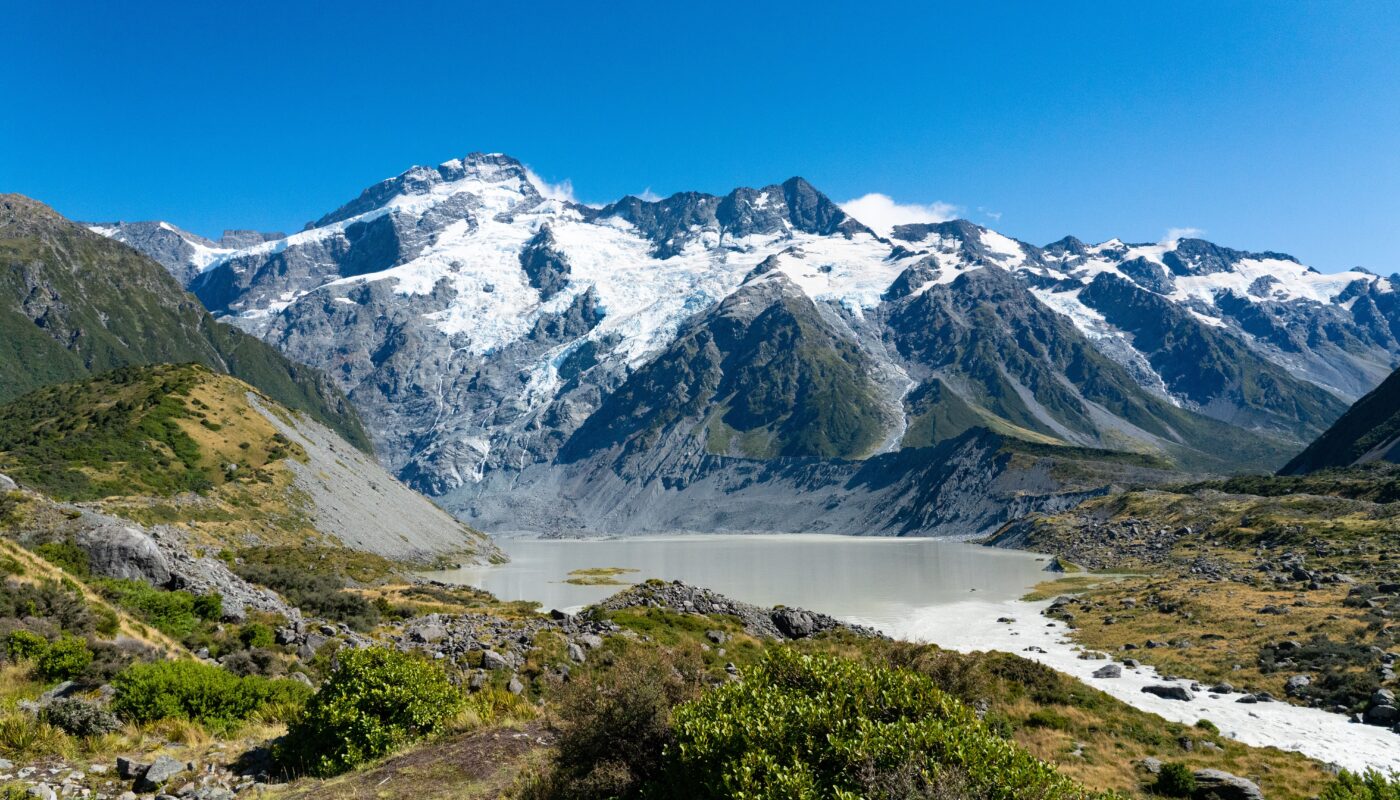
The glacier begins high in the mountains and flows generally toward the terminal lake known as Tasman Lake. Several impressive peaks surround the wider glacier region, including Aoraki/Mount Cook, New Zealand’s highest mountain.
The remote mountain environment gives Tasman Glacier a dramatic setting. Visitors can experience views of rugged peaks, glacial valleys, exposed rock, ice formations, and the distinctive milky-blue water produced by glacial erosion.
The main access point for visitors is the Tasman Valley, reached by road from the Aoraki/Mount Cook Village area. From there, walking tracks and viewpoints provide opportunities to see the glacier and surrounding landscape.
Why Is Tasman Glacier New Zealand’s Largest Glacier?
Tasman Glacier is recognized as New Zealand’s largest glacier by area and is one of the country’s most significant ice bodies.
At its greatest extent, the glacier covered a much larger area than it does today. Like many glaciers around the world, Tasman Glacier has experienced substantial retreat over the modern period.
Its enormous size comes partly from the geography of the Southern Alps. Snow accumulates at high elevations, where cold conditions allow it to survive from one winter to the next. Over time, layers of snow become compressed into dense glacier ice.
Gravity then causes the accumulated ice to move slowly downhill.
This process can take centuries or longer, creating a huge flowing body of ice that gradually reshapes the surrounding mountains.
How Was Tasman Glacier Formed?
Glaciers begin with something deceptively simple: snow.
In high mountain environments, more snow can accumulate during winter than melts during warmer months. When this process continues year after year, the weight of new snow compresses the older layers underneath.
The snow gradually changes into firn, a compacted form of old snow. Eventually, increasing pressure transforms it into solid glacier ice.
Once enough ice accumulates, gravity causes the glacier to flow.
Tasman Glacier developed through this long-term accumulation and movement of ice in the Southern Alps. As it moved through the mountainous landscape, the glacier acted like a gigantic conveyor belt of ice and rock.
Its movement helped deepen valleys, transport sediment, grind rocks, and alter the shape of the terrain.
A Glacier Is Not Frozen in Place
One of the most interesting things about Tasman Glacier is that a glacier is not actually stationary.
Although it may appear motionless from a distance, glacier ice is constantly moving.
The movement can be extremely slow, making it almost impossible to notice during a short visit. However, over years, decades, and centuries, glacier movement can dramatically change the landscape.
Ice can flow around obstacles, fracture under stress, and carry rocks and sediment toward lower elevations.
This is why glaciers are often described as rivers of ice.
Tasman Glacier demonstrates this process on a huge scale.
The Retreat of Tasman Glacier
Tasman Glacier has undergone significant retreat, particularly during the past several decades.
Glacier retreat occurs when a glacier loses more ice through melting and ice loss than it gains through snowfall and accumulation.
This does not necessarily mean the entire glacier is melting uniformly. Different parts of a glacier can behave differently depending on elevation, snow accumulation, ice thickness, debris cover, and local weather conditions.
Tasman Glacier’s retreat has also produced a fascinating new landscape.
As the glacier has withdrawn, Tasman Lake has expanded in front of the glacier. Icebergs can sometimes float in the lake, creating a striking contrast between blue-gray water, white ice, dark rocks, and towering mountains.
The landscape that visitors see today is therefore very different from what earlier generations would have encountered.
Tasman Lake and Floating Icebergs
One of the most memorable features of the Tasman Glacier region is Tasman Lake.
The lake developed as the glacier retreated, leaving water occupying part of the valley formerly covered by ice.
Large pieces of ice can break away from the glacier’s terminus and enter the lake. These icebergs vary greatly in size and shape.
Some appear white, while others have blue or gray tones.
The blue color of glacier ice is related to the way dense ice absorbs and transmits different wavelengths of light. The age and density of the ice can influence its appearance.
Seeing icebergs floating in a mountain lake beneath the Southern Alps makes the Tasman Valley particularly photogenic.
What Makes Glacial Ice Blue?
Many people expect ice to be completely white, so the deep blue tones sometimes seen in glacier ice can be surprising.
Fresh snow contains many air spaces and reflects a broad range of visible light, giving it a bright white appearance.
Older glacier ice becomes increasingly compressed. As air bubbles are removed, the ice becomes denser.
Dense ice absorbs certain wavelengths of light more strongly than others, allowing more blue light to be scattered back toward the observer.
This can produce the beautiful blue color associated with deep crevasses, old glacier ice, and some icebergs.
The Role of Rock and Debris
Tasman Glacier is not simply a huge sheet of clean white ice.
Large quantities of rock and sediment are transported by the glacier.
As ice moves over the landscape, it can pick up rocks from the valley floor and surrounding slopes. These materials may become embedded within the ice or carried along the glacier’s surface.
The dark debris can dramatically affect the glacier’s appearance.
In some areas, the glacier may look gray, brown, or almost black rather than bright white.
This debris also has an important physical effect. Dark material absorbs more solar energy than clean snow and ice, potentially influencing melting where debris conditions are favorable.
The Geology of the Tasman Valley
Tasman Glacier is closely connected to the geology of the Southern Alps.
The Southern Alps formed through powerful tectonic processes associated with the boundary between the Australian and Pacific tectonic plates.
Mountain building created enormous elevations and rugged terrain. Glaciers subsequently became major forces shaping those mountains.
As ice moved downhill, it eroded the rock beneath and along the sides of the valley.
This helped produce the broad U-shaped valleys characteristic of glacial landscapes.
The Tasman Valley therefore represents a combination of tectonic activity and glacial erosion.
Mountains were raised by geological forces, while glaciers gradually carved and reshaped them.
Aoraki/Mount Cook and the Tasman Glacier Landscape
Tasman Glacier is located within one of the most spectacular mountain environments in New Zealand.
Aoraki/Mount Cook dominates the wider landscape and is deeply connected to the country’s mountaineering history.
The mountain and surrounding peaks create an impressive backdrop for the glacier.
On clear days, visitors can see enormous mountain walls rising above the valleys. Clouds and changing weather can transform the scenery within minutes, making the region particularly appealing to photographers.
The contrast between permanent-looking mountains and constantly changing ice and weather creates a landscape that feels both ancient and alive.
How to See Tasman Glacier
Travelers do not need to be professional mountaineers to experience the Tasman Glacier landscape.
One of the easiest ways to see the area is by visiting the Tasman Valley and following established walking tracks.
The Tasman Glacier View Track is a popular short walk that leads to viewpoints overlooking Tasman Lake and the glacier region.
Another option is the Blue Lakes and Tasman Glacier walk, which combines views of glacial features with a relatively accessible walking experience.
Conditions can change quickly in alpine environments, so visitors should always check current track conditions and weather information before setting out.
For those wanting a closer experience, guided glacier and lake excursions may be available depending on seasonal conditions and local operators.
Glacier Boat Tours
One of the unique ways to experience the Tasman Glacier landscape is from the water.
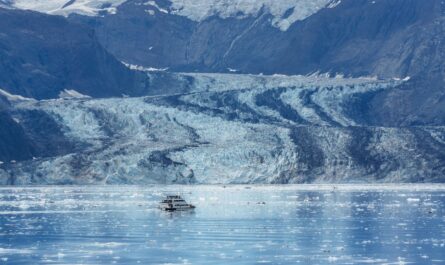
Boat excursions on Tasman Lake can allow visitors to travel among floating icebergs and see the glacier’s terminal area from a different perspective.
The experience can be especially impressive when large pieces of ice are visible in the lake.
However, glacier lakes are dynamic environments. Icebergs can move unexpectedly, and conditions can change quickly.
For this reason, visitors should use authorized operators and follow safety instructions carefully.
When Is the Best Time to Visit?
Tasman Glacier can be visited throughout much of the year, but the experience varies significantly between seasons.
Summer
Summer generally provides longer daylight hours and more favorable conditions for many hiking activities.
The landscape can be particularly accessible, although mountain weather can still change quickly.
Summer is also a popular travel period, so visitors may encounter more people on major tracks and at popular viewpoints.
Autumn
Autumn can bring cooler temperatures and changing colors in the surrounding vegetation.
The combination of autumn scenery, mountains, and glacier landscapes can be particularly attractive to photographers.
Winter
Winter brings snow and a very different atmosphere to the Southern Alps.
Road and track conditions can become more challenging, and some activities may be limited by weather.
However, snow-covered mountains can create spectacular scenery.
Spring
Spring brings changing weather, fresh snow at higher elevations, and increasing daylight.
It can be a rewarding time for visitors who want a quieter experience while still enjoying dramatic mountain scenery.
Photography at Tasman Glacier
Tasman Glacier is an excellent location for landscape photography.
Rather than photographing only the glacier itself, consider including several elements in the same composition.
For example, a photograph can combine:
- Floating icebergs
- Tasman Lake
- Mountain peaks
- Glacier-covered slopes
- Dark rocks
- Clouds and changing weather
- Reflections in calm water
Early morning and late afternoon can provide softer light and stronger shadows.
However, weather is often the most important factor.
A cloudy day can create dramatic atmosphere, while a clear day can reveal the enormous scale of the mountains.
Why Tasman Glacier Matters for Climate Research
Tasman Glacier is also scientifically important.
Glaciers act as natural indicators of environmental change because their size and behavior respond to variations in temperature, precipitation, and other climatic conditions.
Scientists can study changes in glacier length, surface elevation, ice volume, snow accumulation, and melt patterns.
Long-term observations help researchers understand how mountain glaciers respond to changing climate conditions.
Tasman Glacier is therefore not only a tourist attraction. It is part of a much larger scientific story involving glacier dynamics, water resources, mountain ecosystems, and global climate change.
What Happens When a Glacier Retreats?
When a glacier retreats, the landscape does not simply become empty.
New lakes may form.
Rivers can change their pathways.
Freshly exposed rock becomes available for colonization by plants and microorganisms.
Sediment transported by the glacier can reshape river channels and lake environments.
Over time, vegetation can begin to establish itself in areas previously occupied by ice.
This means glacier retreat can create a sequence of ecological changes.
The Tasman Valley offers an opportunity to see some of these processes taking place in a real landscape.
Tasman Glacier and New Zealand’s Water Resources
Mountain glaciers can contribute to freshwater systems, particularly during periods when snow and ice melt.
Glacial meltwater eventually enters streams and rivers, connecting high mountain environments with lower valleys.
However, glacier retreat can change the timing and amount of meltwater entering these systems.
In the short term, increased melting can contribute additional water. Over longer periods, substantial ice loss can reduce the amount of stored glacier water available.
This is one reason why glaciers are important beyond their scenic value.
They are part of interconnected mountain water systems.
Responsible Tourism Around Tasman Glacier
Visitors have an important role in protecting the Tasman Glacier environment.
The landscape may appear extremely tough, but alpine ecosystems can be fragile.
Travelers should remain on designated tracks, follow park regulations, avoid disturbing wildlife, and take rubbish with them.
It is also important to respect warning signs around lakes, ice, cliffs, and unstable terrain.
Glacial environments can contain hidden hazards such as unstable ice, rockfall, rapidly changing weather, and cold water.
A beautiful landscape should never encourage visitors to ignore safety instructions.
Why Tasman Glacier Is Worth Visiting
Tasman Glacier offers much more than a spectacular view.
It allows travelers to witness geological processes, glacial erosion, climate-driven landscape change, and the relationship between ice, mountains, lakes, and rivers.
For photographers, the region provides extraordinary opportunities.
For hikers, it offers accessible viewpoints and walking tracks.
For science enthusiasts, it provides a real-world example of glacier dynamics.
And for ordinary travelers, it offers the rare experience of standing in a landscape shaped by enormous forces operating over thousands of years.
Perhaps the most meaningful aspect of visiting Tasman Glacier is recognizing that the landscape is changing.
The glacier that visitors see today will not necessarily look the same in future decades.
Its retreat is part of a continuing natural and climatic story.
Conclusion
Tasman Glacier is New Zealand’s largest glacier and one of the most remarkable natural features of the Southern Alps. Located near Aoraki/Mount Cook, it combines enormous mountains, ancient ice, glacial lakes, floating icebergs, and a landscape shaped by powerful geological forces.
Its retreat has transformed the valley, creating Tasman Lake and exposing new terrain. At the same time, the glacier remains an important subject for scientific research and an unforgettable destination for travelers.
Whether viewed from a hiking track, photographed from a mountain viewpoint, or experienced from the waters of Tasman Lake, Tasman Glacier demonstrates the extraordinary power of ice.
It is a reminder that landscapes are never truly permanent. Mountains rise, glaciers move, lakes expand, and valleys evolve. Tasman Glacier allows visitors to witness this transformation while experiencing one of New Zealand’s most spectacular alpine environments.