by
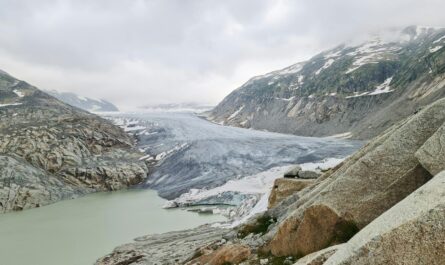
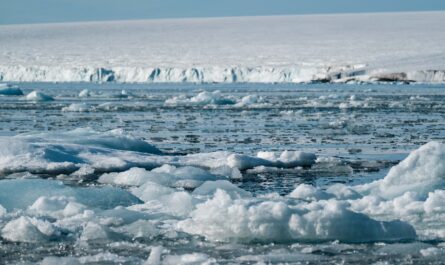
Tidewater glaciers occupy one of the most dynamic boundaries on Earth: the place where land-based ice meets the ocean. These glaciers flow from mountains or ice sheets toward the coast, eventually reaching seawater. At their fronts, ice can melt directly into the ocean, break away as icebergs, or respond to changes in ocean conditions by accelerating or retreating.
For many years, attention was focused primarily on warmer air temperatures as a cause of glacier loss. Scientists now understand that the ocean can be equally important for glaciers that terminate in seawater. Warm ocean currents can reach glacier fronts, transfer heat to submerged ice, increase underwater melting, and contribute to changes in the stability and position of glacier termini. Research in Greenland has demonstrated that ocean conditions can play a major role in determining how rapidly individual tidewater glaciers change.
The relationship is complex, however. Ocean warming does not simply “melt a glacier from below” in isolation. Ocean temperature interacts with glacier thickness, fjord geometry, submarine bedrock, freshwater discharge, ocean circulation, calving, sea ice, and ice flow. In some locations, warm water can trigger retreat, while nearby glaciers exposed to colder water or shallow underwater barriers may behave very differently.
Understanding the role of ocean warming in melting tidewater glaciers is therefore essential for understanding glacier retreat, ice-sheet stability, and future sea-level change.
What Is a Tidewater Glacier?
A tidewater glacier is a glacier that terminates in the ocean and is affected by tidal conditions.
Unlike a mountain glacier that ends on land, a tidewater glacier reaches a marine environment. Its front can be grounded on the seafloor, partially floating, or connected to an ice tongue or ice shelf depending on its location and geometry.
Tidewater glaciers are found in several parts of the world, including:
- Greenland
- Antarctica
- Alaska
- Patagonia
- The Canadian Arctic
- Svalbard
- Other high-latitude coastal regions
These glaciers lose ice through several processes. Ice can melt at the surface, melt beneath the waterline, flow into the sea and break apart through calving, or experience combinations of these processes.
Because their termini interact directly with seawater, they are particularly sensitive to changes in the marine environment. Reviews of water-terminating glaciers show that subaqueous melting can be an important trigger for glacier change, while calving and ice dynamics determine how the glacier responds.
Why Ocean Temperature Matters
Ice melts when heat is transferred into it. The ocean contains an enormous amount of heat, and even relatively modest temperature differences between seawater and glacier ice can influence melting at a submerged glacier front.
The important point is that ocean temperature at the glacier terminus is not necessarily the same as the temperature measured at the surface.
In Greenland, for example, relatively warm Atlantic-origin water can occupy deeper layers of some fjords. Underwater ridges and shallow areas can restrict the movement of this water in some locations, while deep channels can allow it to reach glacier fronts.
NASA observations have shown that underwater topography is an important factor in determining whether warm Atlantic water can reach individual glaciers.
This means that two glaciers located relatively close together can experience very different ocean forcing.
How Warm Ocean Water Reaches a Glacier
The journey of warm water toward a glacier is controlled by ocean circulation and the physical structure of the surrounding coastline.
A fjord can contain several layers of water with different temperatures and salinities. Warmer, saltier water may exist beneath a colder surface layer.
If a deep channel connects the fjord with the open ocean, this warmer water can travel toward the glacier.
However, a shallow submarine ridge, often called a sill, can restrict this movement.
This creates an important contrast:
Deep fjord → warm deep water can reach the glacier → greater potential for submarine melting
Shallow sill → warm deep water may be blocked → reduced ocean heat reaching the glacier
This helps explain why nearby glaciers can have very different retreat histories.
Submarine Melting: The Hidden Side of Glacier Loss
One of the most important consequences of ocean warming is submarine melting.
Submarine melting occurs when seawater directly melts ice below the waterline.
This process is difficult to observe because much of it occurs underwater. A glacier may appear relatively stable when viewed from land or satellite imagery while significant melting is taking place beneath the surface.
Researchers have found that underwater melting can be particularly important at glacier fronts exposed to warm water. An early NASA-supported study of Greenland glaciers found exceptionally high rates of melting at submerged glacier termini compared with surface melting at those locations.
The hidden nature of this process is one reason why scientists increasingly study ocean temperatures, fjord circulation, underwater bathymetry, and glacier geometry together.
Warm Water Can Undercut a Glacier
Ocean warming does not necessarily cause a glacier to disappear evenly from its front.
Instead, melting can create an undercut terminus.
Imagine looking at the side of a glacier entering the sea. If warmer water melts ice beneath the waterline faster than ice above it, a cavity can develop at the submerged face.
This can make the terminus mechanically weaker.
A weakened ice front may become more vulnerable to calving, allowing large pieces of ice to break away.
This distinction is important because ocean warming can influence glacier retreat indirectly:
Warmer water → submarine melting → undercutting → increased instability → enhanced calving → glacier retreat
The process is not identical at every glacier, but observations from Greenland show that ocean-induced undercutting can be associated with retreat even when calving remains the dominant form of ice loss at the front.
The Connection Between Ocean Warming and Calving
Calving is the process through which pieces of glacier ice break away and enter the ocean.
It is one of the most visible signs of change at a tidewater glacier.
However, calving should not automatically be interpreted as direct melting caused by warm water.
Ocean warming can affect calving by changing the shape and strength of the glacier front.
For example, underwater melting may carve cavities into the terminus. This can leave unsupported sections of ice above the water. Eventually, those sections may fracture and collapse.
Therefore, the ocean can influence glacier mass loss even when the actual removal of ice occurs primarily through calving.
Research from northwest Greenland illustrates this complexity. A study of 37 glaciers found evidence that increased ocean-induced undercutting was associated with retreat at many glaciers, while calving accounted for a large share of frontal ablation.
Ocean Warming and Glacier Acceleration
Ocean warming can also influence how quickly a glacier flows toward the sea.
When the terminus thins or retreats, the stress conditions affecting the glacier can change. A glacier may respond by flowing faster, delivering more ice toward the ocean.
This creates another possible sequence:
Ocean warming → increased submarine melt → terminus thinning or retreat → reduced resistance to flow → faster glacier movement → increased ice discharge
The exact response depends heavily on the glacier’s geometry and bed conditions.
Some glaciers accelerate dramatically following retreat, while others respond more slowly.
Scientists therefore avoid treating ocean warming as a simple universal switch that causes identical behavior everywhere.
The Importance of Fjord Geometry
The shape of a fjord can determine how strongly a glacier responds to ocean warming.
A fjord is not simply an empty valley filled with seawater. Its underwater floor contains ridges, channels, basins, slopes, and other features.
These structures control water movement.
A glacier located behind a shallow sill may be protected from some deeper warm water. Another glacier situated beside a deep submarine channel may have direct access to warmer ocean layers.
NASA research has emphasized that underwater topography around Greenland can either restrict or allow warm Atlantic water to reach glacier fronts.
This is one reason bathymetric mapping is so important in modern glacier research.
Freshwater From the Glacier Can Change Ocean Circulation
Interestingly, glacier melting can also affect the water that surrounds the glacier.
Meltwater from the glacier enters the fjord through surface runoff and subglacial drainage.
Subglacial meltwater can emerge near the glacier’s submerged front as relatively fresh water. Because this water is less dense than salty seawater, it rises.
As it rises, it can draw deeper ocean water toward the glacier.
This process can create circulation that brings relatively warm seawater into contact with the ice.
Research on Greenland fjords has shown that glacier runoff and fjord circulation are closely connected to submarine melting.
This creates an important feedback involving both the atmosphere and ocean.
Atmospheric Warming Can Strengthen Ocean-Induced Melting
Ocean warming and atmospheric warming should not be viewed as completely separate processes.
Warmer air can increase surface melting. That produces additional freshwater runoff from the glacier.
When this freshwater enters the fjord, it can intensify circulation near the glacier front and promote the movement of ocean water toward the ice.
A 2022 study concluded that atmospheric warming can amplify submarine melting through increased surface meltwater and associated ocean circulation, even without a corresponding increase in ocean temperature.
This finding highlights an important concept:
Air warming and ocean warming can interact.
The glacier may therefore experience heat from above while changes in meltwater-driven circulation influence heat transfer from below.
Why Greenland Is an Important Case Study
Greenland contains numerous tidewater glaciers draining the Greenland Ice Sheet directly into the ocean.
These outlet glaciers are particularly important because changes in their flow can influence how quickly ice from the interior reaches the sea.
Research has shown that warming in the North Atlantic and increased transport of warm waters toward Greenland contributed to enhanced submarine melting and glacier retreat.
However, Greenland’s glaciers do not all respond in the same way.
Some are strongly exposed to warm Atlantic-origin water. Others are protected by shallow submarine terrain or experience colder fjord conditions.
NASA’s Oceans Melting Greenland mission was designed in part to investigate these differences by combining observations of ocean temperature, glacier fronts, and underwater terrain.
What About Antarctica?
The interaction between ocean water and ice is also critically important in Antarctica.
Many Antarctic glaciers flow into floating ice shelves or terminate directly in the ocean. In several regions, relatively warm ocean water can reach the undersides of floating ice.
When this happens, basal melting can thin ice shelves.
Ice shelves can act as a form of resistance to the inland flow of ice. If they thin or weaken, the glaciers feeding them can potentially accelerate.
The Antarctic system is especially complex because ocean circulation, sea-floor topography, ice-shelf geometry, sea ice, atmospheric conditions, and subglacial processes all interact.
NASA notes that ocean melting is particularly important for understanding ice loss in Antarctica, although the response varies substantially between regions.
Why Some Glaciers Retreat Faster Than Others
Ocean temperature is only one part of the equation.
Scientists also consider:
Glacier Thickness
A thick glacier may behave differently from a relatively thin glacier when its terminus retreats.
Bedrock Shape
If a glacier retreats into a deepening bed, retreat can become dynamically important. Conversely, a rising bed may eventually slow retreat.
Fjord Width
A narrow fjord can constrain ice flow and influence calving patterns.
Submarine Ridges
A shallow ridge can reduce the amount of warm water reaching a glacier.
Meltwater Discharge
Greater freshwater runoff can influence circulation near the glacier.
Sea Ice and Ice Mélange
Floating sea ice and mixtures of icebergs can mechanically interact with glacier fronts and influence terminus behavior. Recent research continues to investigate how these effects interact with ocean-driven melting.
Does Ocean Warming Always Cause Immediate Retreat?
No.
This is one of the most important points when discussing tidewater glaciers.
A glacier can experience submarine melting without immediately retreating.
Its response may depend on the shape of the glacier bed, ice thickness, terminus geometry, calving dynamics, and the presence of stabilizing features.
Some tidewater glaciers also experience natural cycles of advance and retreat that are not controlled solely by short-term climate changes.
Researchers describe a phenomenon known as the tidewater glacier cycle, in which glacier geometry and sediment accumulation can influence periods of advance, instability, retreat, and renewed stabilization.
Consequently, scientists examine long-term observations rather than attributing every individual retreat event to a single cause.
How Scientists Measure Ocean Influence
Studying the ocean beneath and around a glacier is challenging.
Researchers use several methods to understand the relationship between ocean conditions and glacier change.
Satellite Observations
Satellites can measure:
- Glacier-front position
- Ice elevation
- Surface velocity
- Changes in ice thickness
- Calving events
Long satellite records allow researchers to compare glacier changes with ocean and atmospheric conditions.
Ocean Sensors
Ships, instruments, and autonomous systems can measure:
- Temperature
- Salinity
- Current speed
- Water depth
- Ocean circulation
These measurements help scientists identify warm water entering fjords.
Sonar and Bathymetry
Sonar can map the underwater terrain around glacier fronts.
This is crucial because a hidden ridge or deep channel can strongly influence how warm water reaches a glacier.
Computer Models
Scientists combine observations with numerical models to simulate:
- Ocean circulation
- Submarine melting
- Glacier flow
- Calving
- Future retreat
Using several methods together provides a much clearer picture than relying on any single measurement.
The Connection to Sea-Level Rise
When a tidewater glacier loses ice that originated on land, the process can contribute to global sea-level rise.
There is an important distinction between floating ice and grounded land ice.
Melting floating ice does not directly raise sea level by the same amount as melting ice that was previously supported by land. However, if ocean-driven melting or calving causes grounded glacier ice to flow more rapidly into the ocean, it adds additional water to the ocean system.
This is why scientists closely monitor marine-terminating glaciers in Greenland and Antarctica.
NASA observations indicate that both surface melting and ocean-related processes contribute to ice loss, with their relative importance varying by region and glacier.
Why the Future Is Difficult to Predict
Predicting tidewater glacier behavior remains challenging because several systems interact simultaneously.
Scientists must understand:
- Future ocean temperatures
- Ocean circulation
- Glacier meltwater production
- Ice flow
- Calving behavior
- Fjord geometry
- Bedrock topography
- Sea-ice conditions
- Ice-shelf stability
Even if the ocean warms, the amount of heat reaching an individual glacier can vary considerably.
A deep fjord may allow warm water to reach a glacier, while a nearby shallow sill can block it.
This means regional ocean observations are essential for improving future projections.
Why Studying Tidewater Glaciers Matters
Tidewater glaciers are more than spectacular features of polar landscapes.
They are indicators of interactions between the atmosphere, ocean, and cryosphere.
Their behavior can reveal changes in:
- Ocean heat
- Atmospheric temperature
- Freshwater discharge
- Ice-sheet dynamics
- Ocean circulation
- Sea-level processes
They also provide an opportunity to study how quickly Earth’s frozen regions respond to environmental change.
Because some glacier responses can be rapid, monitoring them provides valuable information about changes occurring far beyond the glacier itself.
Final Thoughts
Ocean warming plays a significant role in the melting and retreat of many tidewater glaciers, particularly where warm ocean water can reach submerged glacier fronts. Rather than simply melting ice uniformly from below, ocean heat can create complex changes involving submarine melting, terminus undercutting, calving, glacier acceleration, and retreat.
The impact depends strongly on local geography. Deep fjords can provide pathways for warm water, while underwater ridges may restrict it. Freshwater runoff from melting glaciers can alter circulation and increase heat transfer near glacier fronts. At the same time, atmospheric warming can increase surface melt and indirectly strengthen submarine melting.
Research from Greenland demonstrates particularly clearly that the ocean can act as a powerful influence on tidewater glacier behavior. Studies have linked warmer Atlantic-origin waters with enhanced submarine melting and retreat, while also showing that calving, glacier geometry, and other processes remain critical parts of the overall system.
The central lesson is that tidewater glaciers cannot be understood by studying the ice alone. Their future is closely connected to the water surrounding them. As the world’s oceans continue to accumulate heat, understanding that ice-ocean relationship will remain essential for explaining glacier change and improving projections of future sea-level rise.