 by
Glaciers are among the most fascinating features of the natural world. These enormous bodies of ice move gradually across mountains, valleys, and polar landscapes, shaping the land as they travel. Although a glacier may appear motionless from a distance, it is constantly responding to gravity, temperature, snowfall, and changes in its surroundings.
One of the most interesting parts of a glacier is its lower end, where the ice finally meets the landscape, a lake, or the ocean. This area is commonly known as the glacier snout or glacier terminus. In some cases, the ice stretches outward in a long, narrow extension called a glacier tongue.
These features are important because they reveal how a glacier moves, where it is losing ice, and how the surrounding environment is changing. Studying them also helps scientists understand the effects of rising temperatures and changing snowfall patterns.
This article explores the meaning of glacier snouts and tongues, how they develop, why they matter, and what they can teach us about the future of Earth’s icy regions.
What Is a Glacier Snout?
A glacier snout is the lower end or front edge of a glacier. It marks the point where the glacier’s ice currently finishes as it moves through a mountain valley or across a landscape.
Imagine a slow-moving river made of ice. The upper part may collect snow in high mountains, while the lower part travels toward warmer elevations. The last part of this icy voyage is the snout.
Its position is not permanent. During periods when a glacier gains enough ice to compensate for melting, its terminus may move forward. When ice loss exceeds the amount replaced by new snowfall, the terminus commonly retreats.
The movement of the snout does not mean that the entire glacier is moving backward. Ice can continue flowing downhill even while the glacier’s front becomes shorter because melting removes ice faster than it arrives.
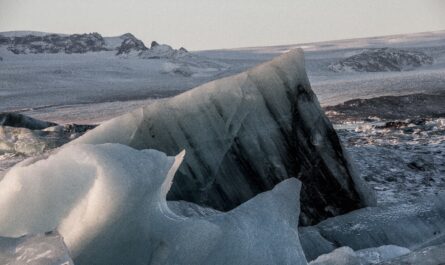
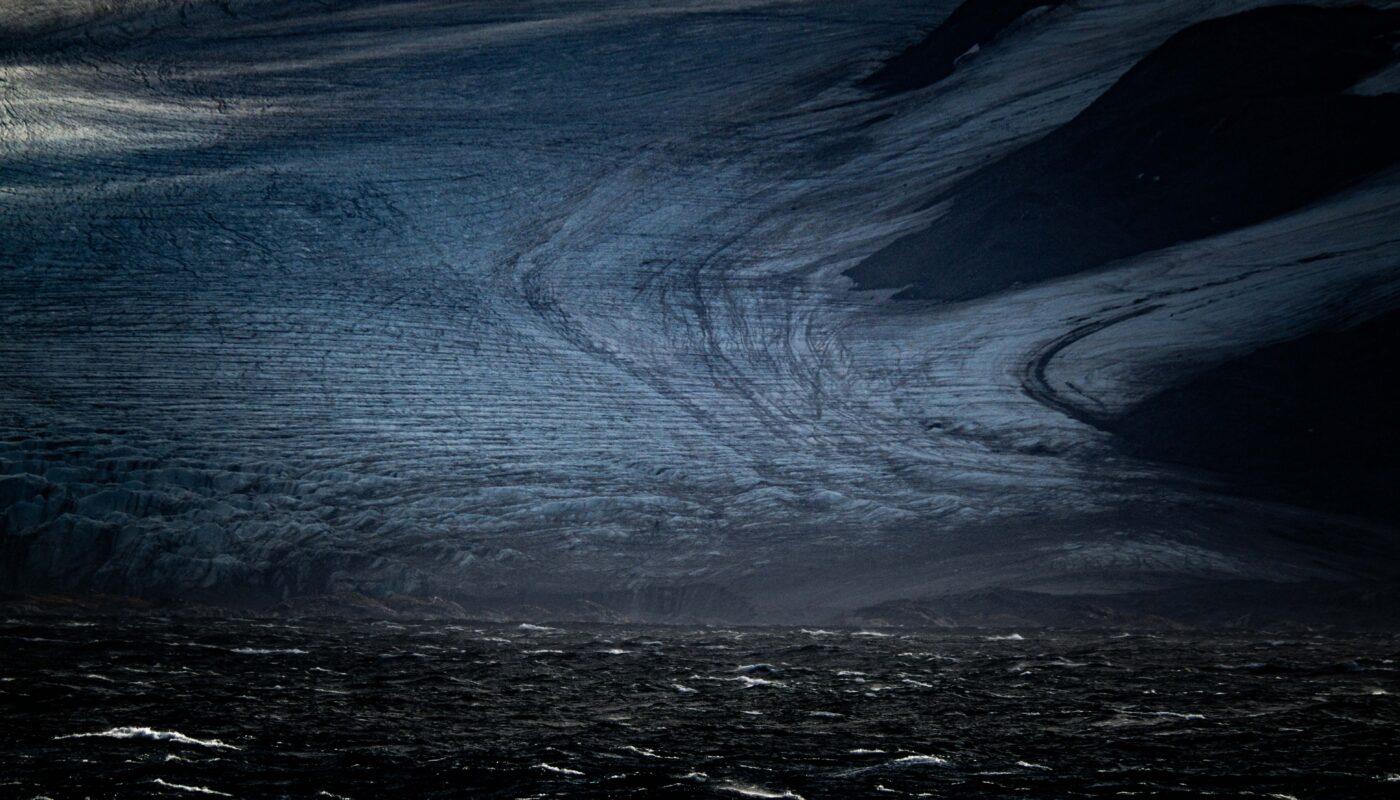
A glacier snout may look like a wall of ice, a sloping mass of snow and ice, or a rough surface surrounded by rocks and meltwater. Its appearance depends on the glacier’s size, shape, climate, and underlying terrain.
What Is a Glacier Tongue?
A glacier tongue is an extended section of glacier ice that projects away from the main body. The term is particularly familiar in polar environments, where glaciers may extend into the sea, but it is also used for elongated glacier sections in other settings.
Some glacier tongues reach into lakes or oceans. Others stretch down narrow valleys, creating long corridors of ice between rocky slopes.
The shape of a tongue is influenced by the landscape beneath it and the forces acting on the ice. A glacier flowing through a narrow valley may form a long, confined extension, while ice spreading across a broad area can develop a different shape.
The words tongue and snout are sometimes used loosely or interchangeably. However, they emphasize different features: a snout identifies the glacier’s front end, while a tongue usually describes an elongated extension of ice.
A glacier tongue can therefore have a snout at its outermost end.
How Do Glacier Snouts and Tongues Form?
The formation of these features begins with snowfall and the gradual transformation of snow into ice.
1. Snow accumulates over time
Snow may stay on the ground all year round in frigid alpine regions and polar habitats. When additional snowfall arrives before the older snow has completely melted, layers begin to build up.
2. Snow becomes compacted
As new snow accumulates, its weight presses down on the older layers. The snow crystals gradually change, becoming denser and transforming into glacial ice over time.
This process takes years in many settings and may take much longer in large glaciers.
3. Ice begins to flow
Once a glacier develops sufficient thickness, gravity causes the ice to deform and move downhill. Depending on the conditions, the glacier may also slide over the ground beneath it.
Although this movement is often extremely slow, it can transport enormous quantities of ice over long distances.
4. The glacier follows the landscape
Valleys, slopes, and underlying rock formations influence the direction and shape of the moving ice. Narrow valleys can guide the glacier into a long extension, while flatter terrain may allow it to spread outward.
5. The lower end develops
As the glacier advances, the ice reaches lower elevations or extends into a body of water. Its front becomes the terminus or snout. If the ice forms a distinct elongated projection, it may be described as a glacier tongue.
The final shape is constantly influenced by the balance between incoming ice, melting, ice breaking away, and changes in the surrounding environment.
Why Does a Glacier Snout Move?
The position of a glacier’s snout depends on the relationship between ice supply and ice loss.
When a glacier receives enough snow and retains sufficient ice, its lower end may remain stable or advance. When melting and other forms of ice loss exceed the supply of ice, the terminus may retreat.
Several factors influence this process.
Temperature: Warmer air can increase surface melting, particularly during summer. Rain and warmer conditions may also contribute to ice loss.
Snowfall: Heavy snowfall can add ice to a glacier over time, provided enough of that snow survives the warmer season.
Glacier thickness: Thick glaciers contain more ice and may respond differently to environmental changes than thin glaciers.
Terrain: The slope, shape, and composition of the ground beneath a glacier affect how ice moves.
Contact with water: Where glacier ice reaches the sea or a lake, water temperature, water depth, and the breaking away of icebergs can influence the terminus.
A glacier’s response may take years or decades to reflect changes in snowfall and temperature. Because of this, scientists look at long-term records rather than just one image or observation.
The Difference Between a Glacier Tongue and a Glacier Snout
Although the terms are related, they do not always describe exactly the same feature.
| Feature | Glacier snout | Glacier tongue |
|---|---|---|
| Meaning | The front or lower end of a glacier | An elongated extension of glacier ice |
| Main focus | The glacier’s endpoint | The shape and extension of the ice |
| Typical appearance | An ice front, slope, or irregular edge | A long projection of ice |
| Relationship | Marks the end of the glacier | May terminate in a snout |
| Scientific importance | Helps track changes in glacier length | Helps examine ice flow and extension into valleys or water |
These terms are descriptive rather than completely separate categories. Their exact usage can vary with the type of glacier and the scientific context.
What Can You Find Near a Glacier Snout?
The area around a glacier’s front often contains evidence of the glacier’s interaction with the surrounding land.
Moraines and exposed rocks
As glaciers move, they can carry stones, gravel, and larger pieces of rock. When the ice melts, this material may remain behind in ridges or scattered deposits called moraines and glacial debris.
These deposits help scientists reconstruct earlier glacier positions and understand how the landscape developed.
Meltwater streams
Water produced by melting ice may flow away from the glacier through small channels or larger streams. These waterways can carry fine sediment, giving the water a cloudy or milky appearance.
Glacier-fed rivers may supply water to communities and ecosystems downstream, although their flow can change as glaciers lose mass.
Ice cliffs and crevasses
Some glacier fronts contain steep walls of ice, especially where the ice meets a lake or the sea. Cracks known as crevasses may develop as the glacier moves over uneven ground or experiences changes in speed and stress.
These features can make the glacier front visually impressive, but they also create serious hazards for visitors.
Icebergs
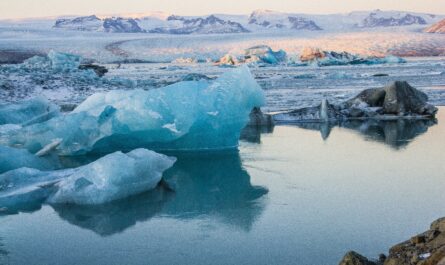
When a glacier reaches water, blocks of ice can break away from its front. This process is known as calving. The detached pieces may become icebergs or smaller floating fragments.
Calving is a natural process, but changes in water temperature, glacier structure, and ice flow can influence how frequently it occurs.
Famous Examples of Glacier Tongues and Snouts
Glacier fronts vary considerably across the world. Some are surrounded by forests and mountains, while others extend into polar seas.
Perito Moreno Glacier, Argentina
<PRIVATE_PERSON>ito Moreno Glacier is located in Los Glaciares National Park in Patagonia. It is widely known for its striking ice face and the dramatic breaking away of ice into nearby water.
Its accessible viewpoints allow visitors to observe the glacier from a distance. Although it has attracted attention for periods of relative stability and advance, its behaviour should not be taken as representative of every glacier in the region.
Mendenhall Glacier, Alaska, United States
Mendenhall Glacier lies near Juneau, Alaska. Its ice, surrounding mountains, and nearby lake create a landscape that has become popular with visitors and researchers.
The glacier has experienced substantial retreat over the past century. Its changing terminus illustrates how a glacier can alter the surrounding environment as its ice front withdraws.
Nigardsbreen, Norway
Nigardsbreen is an outlet glacier associated with the Jostedalsbreen ice cap in western Norway. It descends through a mountainous landscape and is known for its accessible viewing areas and guided glacier experiences.
The glacier demonstrates how ice can extend from a larger ice mass into a valley, where its shape is strongly influenced by the terrain.
Drygalski Ice Tongue, Antarctica
The Drygalski Ice Tongue is a long extension of glacier ice projecting into the ocean in Antarctica. Unlike a small mountain-glacier terminus, it is part of a vast polar environment.
Its length and interaction with surrounding sea ice make it an important feature for understanding ice movement in Antarctica.
Each example shows that glacier tongues and snouts can develop under very different environmental conditions.
Why Do Scientists Study Glacier Snouts?
A glacier’s front provides valuable information about changes in the ice system. However, its position is only one part of the picture.
Measuring glacier retreat
Scientists compare maps, historical photographs, satellite images, and modern measurements to determine whether a glacier’s terminus has advanced, remained stable, or retreated.
Long-term observations can reveal patterns that are difficult to recognize from a single visit.
Understanding climate change
Many glaciers around the world are losing mass as temperatures rise and snowfall patterns change. Retreating snouts can provide visible evidence of these changes, although individual glaciers may respond differently because of local conditions.
To understand the overall health of a glacier, scientists also measure its thickness, surface elevation, snow accumulation, and melting.
Studying water resources
Glaciers store freshwater that can contribute to rivers and lakes. Changes in glacier size and seasonal melting can influence downstream water supplies, agriculture, hydropower, and natural habitats.
In some regions, increased melting may temporarily raise meltwater flows. Over the longer term, continued glacier loss can reduce the amount of ice available to supply rivers during warmer or drier periods.
Improving hazard assessments
Changes near a glacier front may create or worsen certain hazards, including unstable ice cliffs, rockfalls, sudden releases of water, and dangerous lake conditions.
Monitoring helps researchers and local authorities assess risks, although it cannot eliminate all uncertainty.
How Technology Helps Monitor Glacier Tongues
Modern glacier research combines several techniques to track changes in ice.
Satellite imagery allows scientists to observe remote glaciers repeatedly and compare their positions over time.
GPS measurements can help track ice movement and determine how quickly parts of a glacier are travelling.
Drones can collect detailed images of accessible areas, helping researchers map the surface and document changes.
Laser scanning and elevation surveys can measure changes in the glacier’s height and surface shape.
Field observations provide direct information about ice conditions, meltwater, sediment, and the landscape around the glacier.
By combining these methods, scientists can build a more complete picture of glacier behaviour than they could obtain from photographs alone.
Are Glacier Snouts and Tongues Dangerous to Visit?
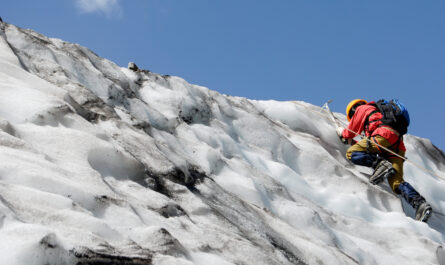
Glaciers can be beautiful destinations, but their appearance may hide serious risks. Ice is constantly changing, and a surface that looks solid from a distance may contain cracks, unstable sections, or hidden meltwater channels.
Visitors should never assume that a glacier’s front is safe simply because other people have approached it.
Important precautions include:
- Follow official signs, barriers, and local safety instructions.
- Observe glacier fronts from designated viewpoints unless a guided route is specifically permitted.
- Never walk onto glacier ice without suitable training, equipment, and appropriate guidance.
- Keep a safe distance from steep ice faces and areas where ice may break away.
- Check local weather conditions and any warnings about flooding, rockfalls, or unstable terrain.
- Use a qualified glacier guide when an activity requires travel on the ice.
Even a glacier that appears stable can change unexpectedly. Safe viewing areas and guided excursions offer ways to experience these environments without unnecessarily approaching dangerous ice.
What Happens to Glacier Snouts as the Climate Warms?
Rising temperatures can increase melting at the lower end of a glacier. When ice loss remains greater than the supply of new ice, the terminus may retreat and the glacier may become shorter.
However, retreat does not occur at the same rate everywhere. Some glaciers are influenced by local snowfall, shading, valley shape, and the depth of nearby lakes or oceans. Certain glacier fronts may remain stable or advance temporarily even while the wider region experiences ice loss.
A retreating snout also does not reveal the glacier’s entire condition. A glacier might lose substantial thickness while its front changes very little, or its terminus might retreat quickly because it has moved into deeper water.
Scientists therefore assess several measurements together to determine whether a glacier is gaining or losing mass.
The effects of glacier loss can extend far beyond the ice itself. Changes may affect seasonal water availability, river ecosystems, tourism, mountain hazards, and landscapes that have developed around glaciers over thousands of years.
Understanding these connections makes monitoring glacier tongues and snouts important for both scientific research and communities living near glacier-fed rivers.
Conclusion
A glacier snout is the front end of a glacier, while a glacier tongue is an elongated extension of ice that may stretch down a valley or into a lake or ocean. Although the terms are related, they describe different aspects of a glacier’s shape.
These features offer valuable clues about the movement of ice, the balance between snowfall and melting, and the effects of changing environmental conditions. They also help researchers understand how glaciers influence water systems and shape the land.
From the mountains of Norway to the icy landscapes of Antarctica, glacier fronts reveal a world that is constantly changing. Observing them carefully helps us appreciate their natural beauty while recognizing their scientific importance and the risks associated with approaching them.
As global temperatures and snowfall patterns continue to change, long-term monitoring of glacier tongues and snouts will remain essential for understanding the future of Earth’s frozen landscapes.