 by
One of the planet’s most breathtaking natural beauties is the glacier. Massive rivers of ice move slowly through mountain valleys, surrounded by snow-covered peaks, rocky landscapes, waterfalls, and dramatic wilderness. For many travelers, seeing a glacier is a once-in-a-lifetime experience.
But for people who use wheelchairs or have limited mobility, glacier travel can raise an important question: Are there wheelchair-accessible glacier experiences?
The answer is yes, but accessibility depends heavily on the destination and the type of experience being considered.
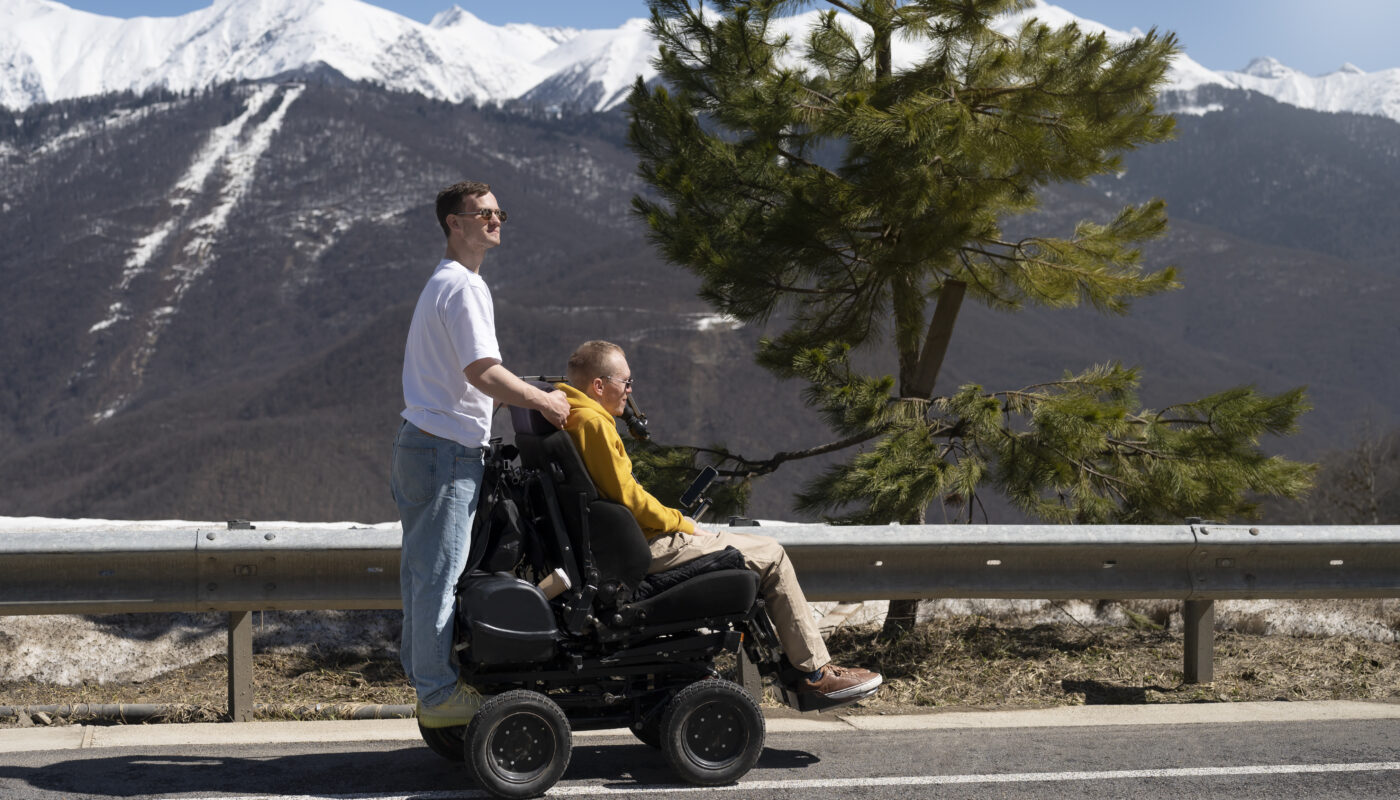
A person using a wheelchair may not be able to walk across a steep, uneven glacier, but that does not mean they have to miss out on the experience. Many glacier destinations offer accessible viewpoints, paved paths, accessible visitor facilities, specially equipped vehicles, scenic drives, boat trips, cable cars, or guided experiences that allow visitors with limited mobility to get remarkably close to glaciers.
In some destinations, specialized operators have also developed adaptive equipment and accessible transportation options. The level of accessibility can range from simply viewing a glacier from a wheelchair-friendly platform to participating in a carefully designed excursion.
The most important step is to research the specific glacier, transportation method, trail conditions, facilities, and accessibility arrangements before traveling.
What Does “Wheelchair Accessible” Mean at a Glacier?
Accessibility can mean different things to different travelers.
A glacier destination might have an accessible parking area and viewing platform but no accessible trail onto the ice. Another location may offer a wheelchair-accessible shuttle that brings visitors close to the glacier.
It is therefore useful to think about accessibility in several stages:
- Getting to the glacier destination
- Parking or unloading from a vehicle
- Entering the visitor center
- Reaching a viewpoint
- Using toilets and other facilities
- Traveling along nearby paths
- Taking transportation such as a cable car or boat
- Getting close to the glacier
- Actually entering glacial terrain
A destination may be highly accessible at the first seven stages but unsuitable for wheelchair users at the final stage.
This distinction can prevent disappointment and make trip planning much easier.
Glacier Viewpoints Are Often the Most Accessible Option
The simplest way to experience a glacier is from a designated viewpoint.
Many famous glaciers can be seen without walking onto the ice. Roads, visitor centers, platforms, and observation areas may provide excellent views from relatively stable ground.
For wheelchair users, this can be an ideal option.
An accessible viewpoint can provide opportunities to:
- Photograph the glacier
- Observe ice formations
- Watch waterfalls and meltwater
- Enjoy mountain scenery
- Learn about glacial geology
- Experience the surrounding landscape without dangerous terrain
The quality of the view does not necessarily depend on physically standing on the glacier.
In fact, viewing a glacier from a distance can provide a better understanding of its enormous scale.
Glacier National Park in Canada
One of the most recognizable glacier landscapes in Canada can be experienced along the Icefields Parkway, which connects the mountain environments of Banff and Jasper.
The Columbia Icefield is an important attraction in the Canadian Rockies, and several tourism facilities in the area have accessibility provisions.
The famous Athabasca Glacier can be viewed from nearby areas, while specialized glacier sightseeing experiences operate seasonally.
Visitors with mobility limitations should distinguish between the accessible viewing areas and excursions that actually travel onto the glacier.
Some glacier vehicles are specifically designed to operate on ice, but accessibility arrangements can vary. Travelers should contact the operator before booking and explain their exact requirements, including whether they use a manual wheelchair, power wheelchair, or mobility scooter.
Iceland Offers Several Accessible Glacier Viewpoints
Iceland is famous for its glaciers, including Vatnajökull, one of Europe’s largest ice caps.
The country has become a popular destination for travelers who want to see glaciers without necessarily participating in physically demanding glacier hikes.
Accessible travel in Iceland can often involve:
- Scenic roads
- Designated viewpoints
- Visitor centers
- Boat or lagoon experiences
- Short accessible walks
- Guided sightseeing excursions
One particularly memorable experience is visiting a glacier lagoon, where icebergs that have broken away from a glacier float in the water.
For a wheelchair user, a lagoon experience can sometimes be more practical than a traditional glacier hike.
The scenery is still directly connected to the glacier, but the terrain does not require walking across uneven ice.
Glacier Lagoons Can Be Excellent Accessible Experiences
A glacier lagoon offers a completely different way to experience glacial landscapes.
Instead of traveling onto the glacier, visitors observe enormous pieces of floating ice in a lake or coastal lagoon.
This type of experience may be easier for wheelchair users because the surrounding landscape can be accessed by roads, viewing areas, or specially designed paths.
The advantages include:
- No need to walk on ice
- Easier photography
- Lower physical demands
- Close views of floating ice
- Accessible sightseeing opportunities in some locations
Accessibility still varies, however, so travelers should verify the surface, slope, distance from parking, and restroom facilities before arrival.
Norway and Accessible Glacier Experiences
Norway contains some of Europe’s most spectacular glacier landscapes, including glaciers connected to the large Jostedalsbreen ice cap.
The country is well known for scenic roads, fjords, mountain viewpoints, and nature attractions, many of which can be enjoyed without demanding physical activity.
For wheelchair travelers, an accessible glacier experience in Norway may involve a combination of:
- Scenic driving
- Accessible viewpoints
- Visitor centers
- Fjord cruises
- Boat excursions
- Cable cars
- Short adapted trails
A fjord cruise can be particularly valuable because it allows visitors to experience the relationship between mountains, glaciers, waterfalls, and seawater without navigating difficult mountain terrain.
The cruise itself may be accessible even when the glacier trails are not.
Switzerland: Glaciers From Cable Cars and Mountain Stations
Switzerland provides another useful example of how accessibility can be approached creatively.
Several Swiss mountain destinations use cable cars, trains, or mountain transport systems to reach high elevations.
For wheelchair users, these transportation systems can sometimes provide access to spectacular alpine scenery that would otherwise require strenuous hiking.
However, travelers should never assume that every cable car is automatically wheelchair accessible.
Important questions include:
- Is the station step-free?
- Is there an elevator?
- Can a wheelchair enter the cabin?
- Are there weight or size restrictions?
- Can a power wheelchair be accommodated?
- Is assistance available when boarding?
Mountain stations may also contain uneven surfaces or steep sections even when the transportation itself is accessible.
Can Wheelchair Users Actually Go Onto a Glacier?
This is where accessibility becomes much more complicated.
Walking directly on a glacier is physically demanding even for people without mobility limitations.
Glacial terrain can contain:
- Deep cracks
- Uneven ice
- Loose rocks
- Meltwater channels
- Slopes
- Snow bridges
- Unstable ice
- Rapidly changing conditions
Traditional glacier trekking therefore requires specialized footwear, balance, and the ability to move across uneven terrain.
For a wheelchair user, a conventional glacier hike may not be realistic.
However, that does not mean every opportunity to reach glacier ice is impossible.
Some destinations and specialist operators use adapted vehicles or specialized equipment to bring visitors onto or very close to glacial surfaces.
The availability of such experiences is limited and should always be confirmed directly with the operator.
Specialized Glacier Vehicles
One of the most interesting developments in accessible glacier tourism is the use of specially designed vehicles.
Large tracked vehicles can travel across certain types of snow and ice where ordinary cars cannot.
In some destinations, these vehicles transport tourists across glacier surfaces or high-altitude snowfields.
For a wheelchair user, the key issue is not simply whether the vehicle travels onto the glacier. The important question is whether the passenger can safely board it.
Travelers should ask:
- Is there a wheelchair lift?
- Can the wheelchair remain on board?
- Must the passenger transfer to another seat?
- Can the wheelchair be stored safely?
- What is the maximum wheelchair weight?
- What are the vehicle’s door dimensions?
- Is the route suitable for people with limited balance?
A detailed conversation with the operator before booking is essential.
Accessible Boat Trips Near Glaciers
Boat excursions can provide one of the easiest ways to experience a glacier without climbing over difficult terrain.
In places such as Alaska, Iceland, Greenland, and parts of Norway and Canada, boats can travel through fjords, lakes, or coastal waters near glaciers.
Depending on the vessel, accessibility may include:
- Boarding ramps
- Wide entrances
- Accessible seating
- Accessible toilets
- Staff assistance
- Space for wheelchairs
However, not every boat is accessible.
Small rigid inflatable boats, traditional sightseeing boats, and older vessels may have narrow entrances or require passengers to climb several steps.
A larger sightseeing vessel may be a better option for someone who wants to remain in their wheelchair.
Accessible Scenic Flights
Another alternative is an aerial glacier experience.
Helicopter and fixed-wing sightseeing flights can provide spectacular views of glaciers without requiring visitors to navigate difficult terrain.
For some wheelchair users, this may be one of the most practical ways to see remote glacier landscapes.
However, accessibility depends heavily on the aircraft.
Some helicopters require passengers to transfer from a wheelchair into a seat. Others may have strict limits on mobility equipment.
Fixed-wing aircraft may offer more cabin space, but again, the details vary.
Anyone considering an aerial excursion should explain their mobility needs before making a reservation.
What About Glacier Hikes?
Traditional glacier hikes are generally among the least accessible glacier activities.
A typical glacier excursion may require participants to:
- Walk on uneven ground
- Climb over rocks
- Cross snow
- Use crampons
- Maintain balance
- Navigate narrow spaces
- Step over cracks
- Follow a guide through changing terrain
These requirements can make conventional glacier trekking unsuitable for many wheelchair users.
That does not mean travelers should automatically give up on the destination.
Instead, they can look for alternative ways to experience the same glacier.
A scenic viewpoint, boat trip, accessible road, visitor center, or specialized vehicle can provide an equally memorable experience without requiring a conventional hike.
Planning an Accessible Glacier Trip
Good planning is the most important part of an accessible glacier vacation.
Do not rely only on the phrase “wheelchair accessible” on a tourism website.
Ask specific questions.
For example:
How far is the accessible parking area from the viewpoint?
Is the route completely step-free?
What type of surface is used?
Are there steep sections?
Can a power wheelchair be used?
Is there an accessible toilet?
Can the wheelchair fit inside the vehicle or boat?
Will the passenger need to transfer?
Can staff provide physical assistance?
The more specific the questions, the more likely travelers are to receive useful answers.
Manual Wheelchairs and Power Wheelchairs Are Different
Another important consideration is the type of wheelchair.
An experience that can accommodate a lightweight manual wheelchair may not be suitable for a large power wheelchair.
Power wheelchairs can be heavier and wider, and some equipment may have batteries that create additional transportation requirements.
Before booking, provide the operator with:
- Wheelchair width
- Wheelchair weight
- Overall height
- Turning requirements
- Battery type
- Whether the wheelchair folds
- Whether a transfer is possible
Photographs of the wheelchair can also help an operator understand what equipment will be involved.
Weather Can Affect Accessibility
Glacier destinations are strongly influenced by weather.
Rain, snow, ice, mud, and freezing temperatures can transform an accessible route into a difficult one.
A pathway that is relatively easy during summer may become slippery or obstructed during winter.
Cold temperatures can also create challenges for wheelchair users.
Travelers should consider:
- Warm clothing
- Waterproof outer layers
- Gloves
- Appropriate footwear
- Protection from wind
- Battery performance in cold conditions
For power wheelchair users, cold weather can also affect battery performance, making planning particularly important.
Accessibility Is About More Than the Glacier
A wheelchair-accessible glacier trip requires more than an accessible attraction.
The entire travel chain matters.
Consider accessibility from:
Airport → Hotel → Transportation → Glacier attraction → Restroom → Restaurant → Return transportation
If any major part of this chain is inaccessible, the overall experience can become difficult.
Hotels should therefore be checked for accessible entrances, elevators, bathrooms, bed height, and room layout.
Transportation should also be confirmed before arrival.
Best Types of Glacier Experiences for Wheelchair Users
For travelers who want to experience glaciers with minimal physical difficulty, several options are particularly promising.
1. Glacier viewpoints
These are often the simplest and most affordable option.
2. Glacier lagoons
Floating ice and dramatic glacier scenery can be experienced without walking across ice.
3. Accessible boat tours
These can provide close views of glaciers from the water.
4. Scenic drives
Some glaciers can be viewed directly from roads or nearby parking areas.
5. Cable cars and mountain railways
Where accessible, these can provide spectacular alpine views.
6. Specialized glacier vehicles
These may offer the closest possible experience to traveling directly onto glacial terrain.
7. Scenic flights
Aerial experiences can reveal enormous glacier systems without requiring physical access to the ice.
Safety Should Always Come First
Glaciers are beautiful but unpredictable.
Even experienced hikers and mountaineers can encounter serious hazards.
For wheelchair travelers, attempting to reach inaccessible terrain without professional assistance can be particularly dangerous.
Never improvise a route across unstable ice simply to get closer to a glacier.
Instead, ask the destination or tour operator for a safer alternative.
A good accessible experience should provide both meaningful access and appropriate safety.
The Future of Accessible Glacier Tourism
Accessible tourism is becoming increasingly important throughout the travel industry.
As destinations improve their infrastructure, more travelers with mobility limitations can experience natural attractions that were once considered inaccessible.
Future improvements may include:
- Better accessible trails
- More adaptive vehicles
- Improved wheelchair lifts
- Accessible boat designs
- Better visitor information
- More accessible toilets
- Adaptive outdoor equipment
- Improved transportation connections
The goal should not be to make every glacier physically accessible to every person. That would often be unrealistic and potentially damaging to fragile environments.
Instead, the goal is to provide safe, meaningful, and dignified ways for more people to experience glacier landscapes.
Final Thoughts
So, are there wheelchair-accessible glacier experiences?
Yes—but the answer depends on what you mean by “glacier experience.”
A traditional glacier hike across steep, uneven ice may not be suitable for many wheelchair users. However, there are numerous other ways to experience glaciers, including accessible viewpoints, scenic drives, glacier lagoons, boat trips, cable cars, specialized vehicles, and aerial sightseeing.
The most important thing is to research the entire experience rather than simply looking for a destination labeled “accessible.”
A successful wheelchair-friendly glacier trip should consider transportation, parking, surfaces, toilets, weather, equipment, boarding procedures, and emergency arrangements.
With careful planning, wheelchair users can experience some of the world’s most extraordinary frozen landscapes without having to compromise on safety or enjoyment.
A glacier does not have to be physically accessible in every part to be emotionally and visually accessible to everyone. Sometimes the best experience comes from standing at a safe viewpoint, watching a vast wall of blue-white ice stretch across a mountain valley, listening to distant waterfalls, and realizing that nature’s greatest landscapes can be appreciated in many different ways.