 by
by Glaciers are often seen as slow-moving giants—vast bodies of ice that shift almost imperceptibly over time. Tsunamis, on the other hand, are associated with sudden, violent events such as earthquakes beneath the ocean floor. At first glance, these two natural phenomena seem unrelated.
Yet scientists have increasingly begun to connect them through a more complex chain of processes. While melting glaciers do not directly create traditional ocean-wide tsunamis, they can set the stage for powerful wave events that behave in similar ways—especially in confined environments like fjords and glacial lakes.
So, can melting glaciers trigger tsunamis? The answer is nuanced: not directly, but they can indirectly cause tsunami-like waves through a series of linked events. To understand this, we need to explore how glaciers interact with water, land, and climate.
What Defines a Tsunami?
A tsunami is not just a large wave. It is a sequence of waves generated by the sudden displacement of a significant volume of water. The most common causes include:
- Underwater earthquakes
- Volcanic eruptions
- Massive landslides
The defining feature is speed and force—the water must be moved abruptly, not gradually.
This distinction is critical when considering glaciers. Melting ice typically adds water slowly to oceans and lakes, which contributes to sea-level rise but does not produce the rapid displacement needed for a tsunami.
The Indirect Path: How Glacier Melt Leads to Sudden Events
Although melting itself is gradual, it changes landscapes in ways that can trigger sudden and dramatic events. These changes include:
- The formation of unstable glacial lakes
- The weakening of mountain slopes
- Increased frequency of landslides and ice collapses
Each of these can lead to rapid water displacement—the essential ingredient for a tsunami-like wave.
Glacial Lakes: Quiet but Potentially Dangerous
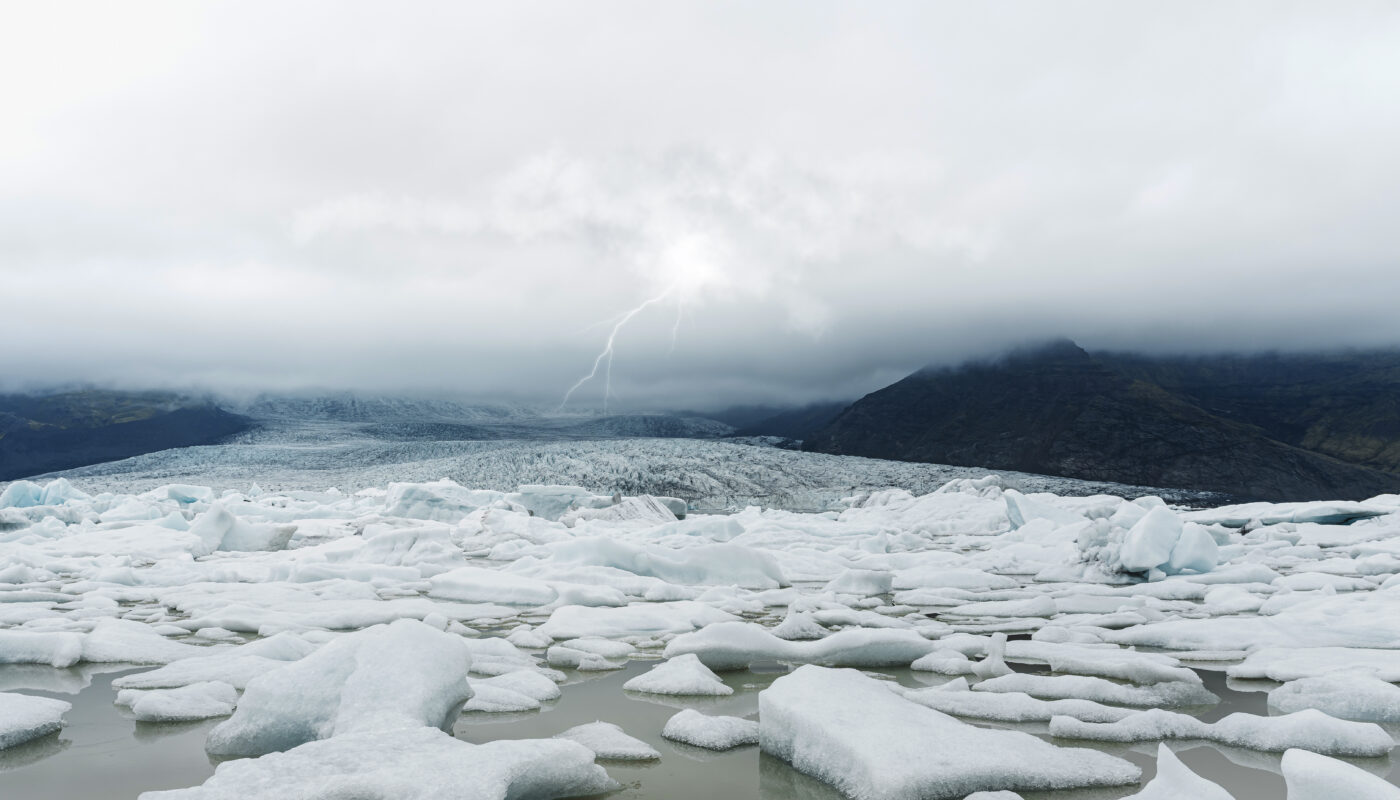
As glaciers retreat, they often leave behind depressions that fill with meltwater. These bodies of water are known as glacial lakes.
Unlike typical lakes, glacial lakes are often held back by natural barriers such as:
- Ice formations
- Loose rock and sediment (moraines)
These barriers are inherently unstable. Over time, melting ice and erosion weaken them further, increasing the risk of sudden failure.
When Glacial Lakes Burst
A sudden release of water from a glacial lake is called a Glacial Lake Outburst Flood.
These events can be triggered by:
- Heavy rainfall or rapid snowmelt
- Ice breaking off into the lake
- Landslides entering the water
- Structural collapse of the natural dam
When a breach occurs, water can rush downstream with tremendous force. While this is primarily a flooding event, it can also generate large waves within the lake itself—especially if the trigger involves a sudden impact.
Wave Generation Inside Glacial Lakes
If a large mass—such as a chunk of ice or rock—falls into a glacial lake, it displaces water almost instantly. This displacement can produce waves that:
- Travel rapidly across the lake
- Rise to significant heights
- Overtop natural barriers
These waves are not technically classified as tsunamis in the oceanographic sense, but they follow the same physical principles. In confined environments, they can be just as destructive.
Fjords: Natural Amplifiers of Wave Energy
Fjords are long, narrow inlets carved by glaciers and later filled with seawater. Their unique shape makes them especially prone to large wave events.
Here’s why:
- Narrow channels concentrate energy
- Steep walls reflect and amplify waves
- Deep water allows for strong displacement effects
When a landslide or ice collapse enters a fjord, it can generate a powerful wave that travels quickly along its length. In some cases, these waves can reach extraordinary heights before dissipating.
Landslides: The Critical Link
One of the most important connections between melting glaciers and tsunami-like waves is landslides.
As glaciers shrink, they remove the ice that once supported surrounding rock formations. This leads to:
- Increased instability in mountain slopes
- Greater likelihood of rockfalls and landslides
- Large sections of terrain collapsing into nearby water bodies
When a landslide enters a lake or fjord, it displaces water violently, creating waves that can resemble tsunamis in both speed and impact.
Real-World Examples of Glacier-Linked Waves
There have been documented cases where glacier-related processes have triggered massive waves.
In polar and alpine regions, warming temperatures have caused glaciers to retreat rapidly. This has destabilized slopes and increased landslide activity.
In one well-known event, a large landslide into a fjord generated a wave hundreds of meters high—far exceeding typical tsunami heights. Although rare, such events demonstrate the extreme potential of these processes.
Climate Change: Increasing the Risk
Climate change plays a central role in intensifying these risks.
More Glacial Lakes
Glacial lakes grow in quantity and size when glaciers melt. Many of these lakes are unstable and prone to sudden drainage.
Weakened Natural Barriers
Ice dams and moraine dams become less stable as temperatures rise, making them more likely to fail.
Greater Slope Instability
Melting ice and permafrost reduce the structural integrity of mountain slopes, increasing the frequency of landslides.
More Extreme Weather
Heavy rainfall and rapid temperature changes can accelerate melting and increase pressure on natural dams.
Can Glacier Melt Cause Ocean-Wide Tsunamis?
Directly, the answer is no.
The gradual addition of meltwater to the ocean does not create the sudden displacement needed for a traditional tsunami.
However, indirect effects are possible:
- Coastal landslides triggered by glacier retreat can enter the ocean
- Ice collapses from glaciers terminating in water can generate local waves
These events are typically localized, affecting nearby coastlines rather than entire ocean basins.
Comparing Glacier-Related Waves and Traditional Tsunamis
| Feature | Traditional Tsunami | Glacier-Triggered Wave |
|---|---|---|
| Cause | Earthquake or volcanic activity | Landslide, ice fall, or lake burst |
| Scope | Ocean-wide | Usually local or regional |
| Speed | Extremely fast over long distances | Fast but confined |
| Frequency | Rare | Increasing in some regions |
Who Is Most at Risk?
The risk is highest in regions where glaciers, steep terrain, and water bodies intersect.
High-risk areas include:
- Fjord regions in northern countries
- Mountain ranges with glacial lakes
- Valleys downstream of unstable lakes
Millions of people live in areas where glacial lake outburst floods and related wave events could occur.
Monitoring and Risk Reduction
Scientists and governments are actively working to reduce these risks through:
- Satellite monitoring of glacial lakes
- Early warning systems for floods
- Engineering solutions to stabilize or drain lakes
- Hazard mapping to identify vulnerable regions
These efforts are essential as climate change continues to reshape glacial landscapes.
The Broader Implications
The connection between glacier melt and tsunami-like waves highlights a larger issue: the interconnected nature of Earth’s systems.
A change in one part of the environment—such as rising temperatures—can trigger a chain reaction:
- Glaciers melt
- Landscapes destabilize
- Water systems change
- Sudden, high-energy events occur
Understanding these links is crucial for predicting and managing future risks.
Final Answer: Can Melting Glaciers Trigger Tsunamis?
Yes—but only indirectly.
Melting glaciers do not directly generate traditional tsunamis. However, they create conditions that can lead to:
- Sudden lake outbursts
- Landslides into water bodies
- Rapid displacement of water
These events can produce powerful waves that behave much like tsunamis, particularly in fjords and glacial lakes.
Final Thoughts
Glaciers may seem slow and predictable, but the changes they undergo can have sudden and dramatic consequences. As they retreat, they reshape landscapes in ways that increase the likelihood of extreme events.
While the idea of glacier-triggered tsunamis might sound unusual, it reflects a deeper reality: natural systems are interconnected, and gradual changes can sometimes lead to abrupt outcomes.
By studying these processes and improving monitoring systems, scientists hope to better understand—and ultimately reduce—the risks associated with a warming world.