 by
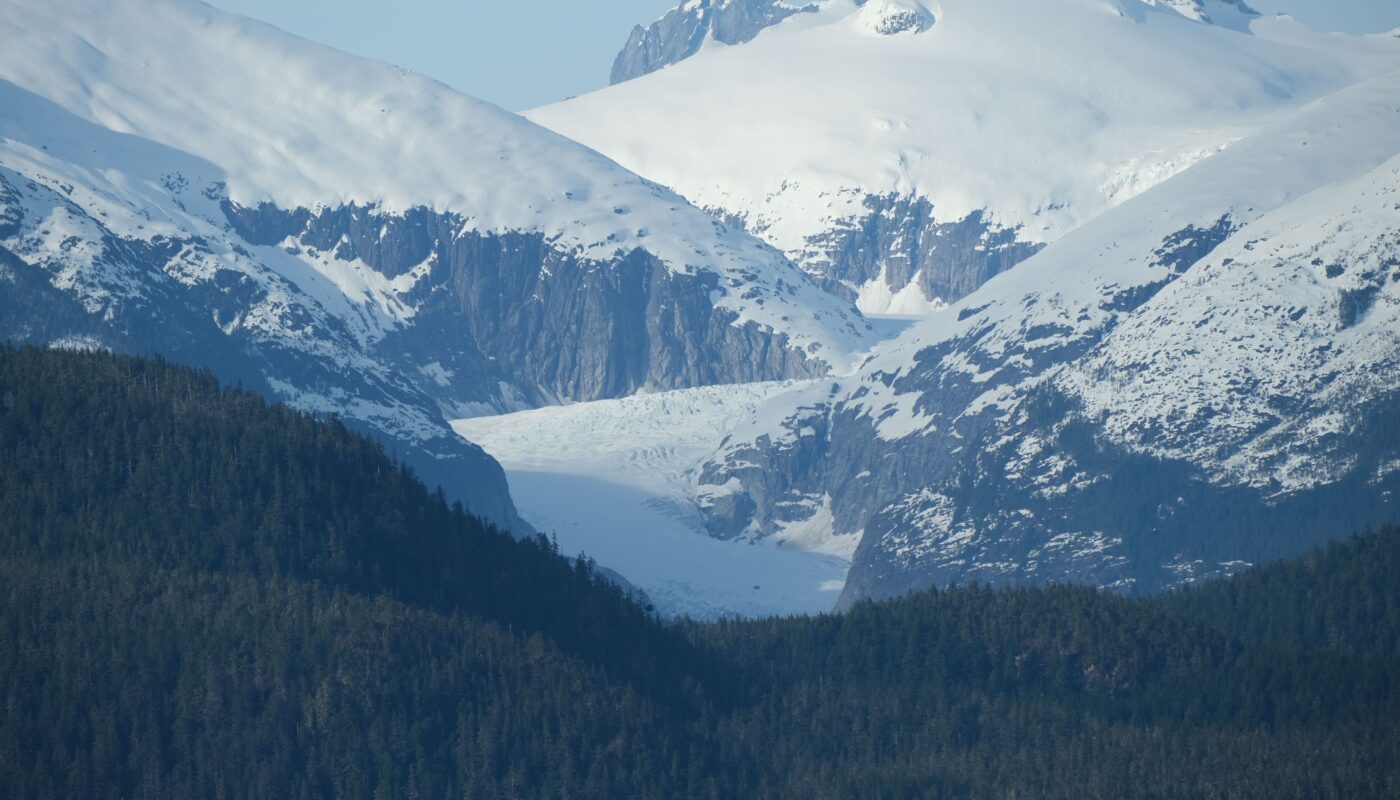
When people think about glaciers in the United States, Alaska usually comes to mind first. That makes sense: Alaska contains the overwhelming majority of the country’s glacier ice and some of the largest and most dramatic glaciers in North America.
But Alaska is not the only part of the United States where glaciers still exist.
Across the mountains of the western contiguous United States, hundreds of glaciers and thousands of smaller perennial snow and ice features survive at high elevations. They cling to volcanic peaks in Washington and Oregon, fill mountain cirques in Montana and Wyoming, persist in the Sierra Nevada of California, and survive in isolated locations as far south as Nevada.
These glaciers are generally much smaller than Alaska’s vast icefields and valley glaciers. Yet they are scientifically important, ecologically significant, and deeply connected to the landscapes and water systems around them.
They also tell a powerful story about environmental change.
An updated scientific inventory identified 1,331 glaciers in the conterminous United States, covering approximately 366.5 square kilometers, along with 1,176 perennial snowfields. The inventory used imagery collected mainly between 2013 and 2020 and classified features across the lower 48 states.
The exact number of glaciers depends partly on how scientists define and classify very small bodies of ice. Some glaciers are shrinking toward the point where they may no longer flow under their own weight, making the distinction between a glacier and a permanent snowfield increasingly important.
So, where are America’s glaciers outside Alaska, and what is happening to them?
This guide explores the major glacier regions of the contiguous United States, from the wet mountains of the Pacific Northwest to the isolated ice of Nevada.
Where Are Glaciers Found Outside Alaska?
According to the U.S. Geological Survey, active glaciers in the contiguous United States are found primarily in:
- Washington
- Oregon
- California
- Montana
- Wyoming
- Colorado
- Nevada
The USGS also notes that Utah’s former Timpanogos Glacier is now considered a rock glacier, while Idaho’s Otto Glacier has disappeared.
Most of these glaciers are found at high elevations where winter snowfall is heavy enough and summer temperatures are cool enough for snow and ice to survive from year to year.
They are generally alpine glaciers.
Unlike continental ice sheets, alpine glaciers form in mountainous environments. Snow accumulates year after year, becomes compressed into dense ice, and eventually flows downhill under its own weight.
The western United States provides several environments where this process can still occur, although the number and size of glaciers have declined substantially since the end of the Little Ice Age.
Washington: The Most Important Glacier State Outside Alaska
Washington is the center of modern glaciation in the lower 48 states.
The state’s combination of high mountains, abundant Pacific moisture, and relatively cool temperatures creates ideal conditions for alpine glaciers.
The Washington State Department of Natural Resources reports that the state contains more than 3,000 alpine glaciers, making Washington the second most glaciated state in the United States after Alaska.
Mount Rainier
Mount Rainier is perhaps the most famous glacier-covered mountain in the contiguous United States.
The enormous volcanic peak rises above western Washington and supports approximately 25 named glaciers. According to Washington’s Department of Natural Resources, Mount Rainier has the greatest glacier surface area of any mountain in the contiguous United States.
Its glaciers include:
- Emmons Glacier
- Carbon Glacier
- Nisqually Glacier
- Tahoma Glacier
- Winthrop Glacier
These glaciers have played a major role in shaping the mountain’s valleys and supplying water to rivers.
Mount Rainier’s glaciers are also important because of volcanic hazards. A volcano covered by large amounts of ice can produce destructive mudflows, known as lahars, if volcanic activity or other processes rapidly melt or destabilize ice and snow.
This makes Rainier’s glaciers important not only as indicators of climate change but also as part of the region’s natural hazard system.
North Cascades
North Cascades National Park contains the greatest concentration of glaciers in any U.S. national park outside Alaska.
The surrounding Cascade Mountains contain hundreds of small glaciers, many located in steep, remote valleys and high cirques.
The North Cascades, Olympic Mountains, and Mount Rainier region together form the most heavily glaciated area of the United States outside Alaska.
The region’s heavy winter snowfall historically helped sustain its glaciers.
However, warmer temperatures have placed increasing pressure on this ice.
USGS monitoring reported that South Cascade Glacier in Washington experienced its highest recorded annual mass loss in 2025, illustrating the continued vulnerability of glaciers in the contiguous United States.
Olympic Mountains
The Olympic Mountains may not be as famous for glaciers as Mount Rainier, but they contain important alpine ice.
Blue Glacier, on Mount Olympus, is among the largest glaciers in Olympic National Park. The National Park Service describes it as approximately 2.6 miles long, descending from Mount Olympus through a dramatic mountain environment.
The Olympic glaciers are especially interesting because they exist in a region strongly influenced by Pacific storms.
Heavy snowfall has historically supported the glaciers, while warmer summers and changing precipitation patterns now influence their long-term survival.
Their meltwater contributes to rivers that support forests and cold-water species, including salmon and bull trout.
Oregon: Glaciers on Volcanic Mountains
Oregon’s glaciers are concentrated on high Cascade volcanoes.
Mount Hood is the state’s best-known glacier-covered mountain.
Other glaciated volcanic peaks include:
- Mount Jefferson
- Three Sisters
- Mount Adams, just across the border in Washington but part of the wider Cascade volcanic landscape
Mount Hood supports several named glaciers, including Eliot Glacier, Sandy Glacier, Coe Glacier, and White River Glacier.
These glaciers are much smaller than the largest glaciers in Alaska, but they remain active examples of alpine ice.
Volcanic glaciers can be particularly dynamic environments because they combine steep terrain, ice, rock, and volcanic activity.
The glaciers also help shape the mountain landscape by eroding rock and transporting sediment.
Oregon’s glaciers have generally declined over time, reflecting the broader trend affecting the western United States.
California: Glaciers of the Sierra Nevada
California may be famous for beaches, deserts, and warm weather, but its highest mountains still contain several small glaciers.
Most are found in the Sierra Nevada, particularly around high peaks in and near Yosemite National Park and the Kings Canyon and Sequoia regions.
Some of the best-known California glaciers include:
- Palisade Glacier
- Lyell Glacier
- Dana Glacier
- Maclure Glacier
These glaciers occupy high mountain basins and shaded areas where snow can accumulate and survive.
Palisade Glacier, located in the Sierra Nevada, is generally recognized as California’s largest remaining glacier.
The Sierra Nevada glaciers are remnants of a much colder past.
During the Ice Age, far larger glaciers flowed through many of California’s mountain valleys, carving the dramatic landscapes that visitors see today.
Yosemite Valley itself is a product of both geological processes and extensive glacial modification.
Today, however, the surviving glaciers are small compared with the ancient ice that once occupied the region.
The National Park Service identifies Yosemite and Sequoia and Kings Canyon among the national parks associated with alpine glaciation and glacial features.
The Sierra glaciers are particularly vulnerable because many are small and exist near the climatic limits of glacier survival.
A few unusually warm summers or several years of reduced snowfall can have a major effect on their size.
Montana: The Glaciers of Glacier National Park
Glacier National Park in Montana is one of the most famous glacier landscapes in the United States.
The park’s name itself reflects the much greater amount of ice that existed there in the past.
Around the end of the Little Ice Age, approximately 1850, the area that later became Glacier National Park contained about 80 glaciers.
Based on aerial imagery from 2015, only 26 named glaciers still met the commonly used size criteria of 0.1 square kilometers, and some of those may now be too small to qualify as active glaciers.
Among the best-known glaciers are:
- Grinnell Glacier
- Sperry Glacier
- Jackson Glacier
- Blackfoot Glacier
These glaciers are often tucked into high, shaded areas along the Continental Divide.
Despite their small size, they remain important sources of scientific information.
Sperry Glacier is one of the USGS Benchmark Glaciers used to monitor long-term glacier change. In 2025, it recorded its second-highest annual mass loss in the measurement record.
The decline of Glacier National Park’s ice has implications for ecosystems, stream temperatures, water availability, and the character of the landscape itself. The National Park Service notes that glacier meltwater contributes to irrigation, cold-water streams, and lakes.
Glacier National Park is therefore both a beautiful travel destination and a living record of environmental change.
Wyoming: The Glaciers of the Wind River Range and Grand Teton
Wyoming contains some of the most significant glaciers in the central Rocky Mountains.
The Wind River Range contains numerous glaciers, including:
- Gannett Glacier
- Dinwoody Glacier
- Fremont Glacier
Gannett Glacier is generally regarded as the largest glacier in the Rocky Mountains of the contiguous United States.
The high elevation of the Wind River Range provides an environment cold enough for glacier ice to survive, although these glaciers have also experienced substantial retreat.
Grand Teton National Park also contains several small glaciers, including:
- Teton Glacier
- Middle Teton Glacier
- Skillet Glacier
The National Park Service lists Grand Teton among the national parks where visitors can observe active alpine glaciation.
Wyoming’s glaciers are important sources of meltwater for high mountain streams and provide evidence of how climate conditions affect the central Rocky Mountains.
Colorado: Small but Significant Rocky Mountain Glaciers
Colorado’s glaciers are generally small compared with those in Washington or Montana.
Nevertheless, several glaciers survive at high elevations in the Rocky Mountains.
Among the best known are:
- Andrews Glacier
- Rowe Glacier
- Arapaho Glacier
- Isabelle Glacier
Some are located in or near Rocky Mountain National Park and the Indian Peaks Wilderness.
Colorado’s glaciers survive in protected cirques and shaded mountain environments.
However, they are particularly sensitive to temperature changes because many are relatively small.
As glaciers shrink, they can transition into stagnant ice masses or perennial snowfields.
The National Park Service identifies Rocky Mountain National Park as a landscape with important alpine glacial features, even though its surviving modern glaciers are much smaller than the ice that shaped the region during earlier glacial periods.
This distinction is important.
A landscape can be profoundly glacial even when few active glaciers remain.
Colorado’s valleys, cirques, moraines, and alpine lakes all provide evidence of the much larger glaciers that once occupied the mountains.
Nevada: Home to One of America’s Southernmost Glaciers
Perhaps the most surprising location on this list is Nevada.
Great Basin National Park is home to Wheeler Peak Glacier, the only recognized glacier in Nevada and one of the southernmost glaciers in the United States.
The glacier sits near Wheeler Peak at approximately 11,500 feet within a protected cirque.
The National Park Service describes Wheeler Peak Glacier as an alpine glacier of roughly two acres. Its crevasse, which appears during summer, provides evidence that the ice is still moving.
Its existence demonstrates how local geography can create a cold refuge even in a generally dry and relatively warm region.
The glacier is protected by:
- High elevation
- A north-facing cirque
- Shading from surrounding terrain
- Local snow accumulation
However, its small size also makes it vulnerable.
Wheeler Peak Glacier is a reminder that the future of many glaciers in the lower 48 may depend on small pockets of favorable geography.
What Happened to the Glaciers of Idaho and Utah?
The distribution of glaciers in the United States has changed.
USGS notes that Idaho’s Otto Glacier has melted away, while Utah’s former Timpanogos Glacier is now classified as a rock glacier rather than an active glacier.
A rock glacier is different from a traditional glacier.
It consists of ice and frozen material covered or mixed with rock and debris. In many cases, the ice is largely hidden beneath a rocky surface.
The disappearance or transformation of glaciers in these areas demonstrates an important point: glacier change is not only about glaciers becoming smaller.
Eventually, a shrinking glacier can lose the characteristics that define an active glacier.
It may fragment, become stagnant, or disappear entirely.
Why Are These Glaciers Important?
The glaciers of the lower 48 may be small compared with Alaska’s enormous ice systems, but their importance goes beyond their size.
Water Resources
Glaciers store frozen water and release meltwater during warm periods.
In mountain regions, this can contribute to streams and rivers during late summer.
USGS notes that glaciers in the United States contribute to seasonal runoff and alpine lake systems.
As glaciers shrink, the timing and quantity of this water can change.
Initially, increased melting may temporarily increase runoff. Eventually, however, a much smaller glacier has less ice available to melt.
Ecosystems
Glacier-fed streams can provide cold-water habitat for plants and animals adapted to low temperatures.
Changes in glacier melt can alter stream flow, water temperature, and sediment levels.
The National Park Service specifically highlights the importance of glacier-fed water for cold-water species such as salmon and bull trout in the Pacific Northwest.
Scientific Research
Glaciers are natural climate indicators.
Their mass balance reflects the relationship between snowfall and melting.
The USGS monitors benchmark glaciers to understand how climate and weather influence long-term ice change.
Scientists measure snow accumulation, ice melt, glacier thickness, surface elevation, and changes in glacier area using fieldwork and remote sensing.
Landscape Formation
Even where glaciers disappear, their impact remains visible.
Glaciers carved:
- U-shaped valleys
- Cirques
- Moraines
- Hanging valleys
- Alpine lakes
- Sharp mountain ridges
Much of the spectacular scenery in America’s western mountains is the result of ancient and modern glaciation.
Are the Glaciers Outside Alaska Shrinking?
The overall answer is yes.
The USGS reports that glaciers in the contiguous United States have experienced substantial retreat, and twentieth-century research found widespread glacier recession across the western United States. Losses between 1900 and 2000 varied considerably by region, ranging from roughly 24 percent in the Mount Rainier region to approximately 66 percent in Montana’s Lewis Range.
The recent picture is also concerning.
USGS data for 2025 showed record mass loss at South Cascade Glacier in Washington and near-record loss at Sperry Glacier in Montana, driven primarily by warm summer conditions.
Not every glacier changes at exactly the same rate.
Some may experience years of heavy snowfall and temporary growth. Others may lose ice rapidly during unusually warm summers.
However, the long-term trend across the contiguous United States is one of widespread glacier decline.
USGS states that nearly all of Earth’s alpine glaciers are losing mass, with western North America among the regions experiencing some of the highest rates of glacier mass loss.
The Difference Between a Glacier and a Snowfield
As glaciers shrink, distinguishing them from snowfields becomes increasingly important.
A perennial snowfield survives through multiple summers but does not necessarily flow under its own weight.
A glacier, by contrast, is a mass of ice that moves because of gravity.
The National Park Service notes that a commonly used glacier-size threshold is approximately 0.1 square kilometers, although smaller bodies of ice can sometimes remain active and larger ones can sometimes become stagnant.
This explains why different inventories may report different glacier totals.
Classification depends on:
- Size
- Movement
- Ice thickness
- Imagery resolution
- The date of observation
- Whether small or debris-covered ice bodies are included
The updated USGS inventory included features as small as 0.01 square kilometers, which helps explain why its count of 1,331 glaciers is much larger than older counts based on different classification methods.
Can Visitors See These Glaciers?
Yes, although accessibility varies greatly.
Some glaciers can be viewed from roads or relatively short trails.
Others require long hikes or technical mountaineering.
National parks where visitors can experience active alpine glaciers include:
- Mount Rainier National Park
- North Cascades National Park
- Olympic National Park
- Glacier National Park
- Grand Teton National Park
The National Park Service specifically lists these parks among destinations offering opportunities to see active glaciers.
However, visitors should remember that glaciers are hazardous environments.
Crevasses may be hidden beneath snow. Ice can collapse. Meltwater streams can be dangerous.
Seeing a glacier does not require walking on it.
For most visitors, designated viewpoints and maintained trails provide the safest and most enjoyable experience.
What Does the Future Hold?
The future of glaciers in the contiguous United States will depend heavily on temperature and snowfall.
Some high-elevation glaciers may survive longer because of favorable local conditions.
Others may shrink rapidly or disappear.
The smallest glaciers are particularly vulnerable because they have limited ice reserves.
As a glacier becomes smaller, its ability to survive a sequence of warm years also decreases.
The USGS continues to monitor glacier mass balance and landscape change to improve understanding of these processes.
The loss of glaciers will not mean the disappearance of every glacial landscape.
The mountains, valleys, moraines, and lakes shaped by ancient ice will remain.
But the living glaciers that continue to move and transform those landscapes may become increasingly rare.
Conclusion
The glaciers of the United States outside Alaska are scattered across some of the country’s most spectacular mountain regions.
Washington contains the greatest concentration, with the heavily glaciated peaks of the Cascades and Olympic Mountains. Oregon’s volcanoes support shrinking alpine glaciers, while California’s Sierra Nevada preserves some of the southernmost traditional glaciers in the country.
Montana’s Glacier National Park still contains several dozen named glaciers, although far fewer than existed during the Little Ice Age. Wyoming’s Wind River Range and Grand Teton region preserve important Rocky Mountain ice, while Colorado’s remaining glaciers survive in high alpine basins. Farther south and west, Nevada’s tiny Wheeler Peak Glacier represents one of the most remarkable examples of ice surviving in an unexpected environment.
Together, these glaciers form a remarkable network of frozen landscapes outside Alaska.
They provide water, support ecosystems, shape mountains, preserve evidence of climate conditions, and attract scientists and visitors from around the world.
Yet they are also changing.
From Washington’s benchmark glaciers to Montana’s shrinking ice and Nevada’s isolated Wheeler Peak Glacier, the remaining glaciers of the lower 48 are increasingly vulnerable to warming temperatures.
Their future is uncertain, but their significance is clear.
These glaciers may be small compared with Alaska’s enormous icefields, but they are powerful reminders that glaciers are not distant features found only in polar regions. They are part of the living landscape of the United States—and their continued transformation is already reshaping the mountains, rivers, ecosystems, and stories of the American West.