by
by Glaciers do not simply melt because the air becomes warmer. The reality is far more complicated—and more alarming.
As a glacier begins to lose ice, the changes caused by that melting can sometimes create conditions that encourage even more melting. Scientists describe these self-reinforcing processes as positive feedback loops. In this context, “positive” does not mean beneficial. It means that an initial change triggers additional changes that strengthen the original effect.
A simple example is easy to understand. Rising temperatures melt snow. The melting snow exposes darker ice or rock beneath it. Darker surfaces absorb more sunlight than bright snow. More absorbed heat causes more melting, which exposes even more dark material.
The process then continues.
This is one of several feedback loops influencing glaciers and ice sheets. Some operate directly on the glacier surface, while others involve meltwater, elevation, ocean temperatures, dust, biological activity, and changes beneath the ice.
These processes help explain why glacier loss can sometimes accelerate rather than progress at a perfectly steady rate. A glacier may cross a threshold where several interacting changes begin reinforcing one another.
Understanding these hidden feedback loops is essential because glaciers are not merely passive blocks of frozen water. They are dynamic systems connected to the atmosphere, oceans, landscapes, rivers, and climate.
What Is a Feedback Loop?
A feedback loop occurs when the result of a process influences the process itself.
There are two basic types.
Negative Feedback
A negative feedback tends to slow or reduce the original change.
For example, if a process creates conditions that make further melting less likely, it acts as a stabilizing influence.
Positive Feedback
A positive feedback strengthens the original change.
In glacier systems, the basic pattern may look like this:
Warming → melting → environmental change → more energy absorbed or more ice exposed → additional melting
The important point is that feedback loops can interact.
One process may darken the glacier surface while another lowers the glacier into warmer air. At the same time, meltwater may change the way the glacier moves, and warmer ocean water may attack the ice from below.
When several feedbacks operate together, glacier loss can become increasingly complex.
1. The Ice-Albedo Feedback: The Most Famous Self-Reinforcing Loop
One of the most important feedback mechanisms affecting snow and ice is the ice-albedo feedback.
Albedo describes how much incoming sunlight a surface reflects.
Fresh snow is extremely bright and reflective. It sends a large amount of solar energy back into the atmosphere and space.
Dark surfaces behave differently.
Bare glacier ice, rock, soil, and water absorb more solar energy.
This creates a powerful sequence:
Warmer temperatures → snow melts → darker ice is exposed → more sunlight is absorbed → more melting occurs
The IPCC identifies surface-albedo feedback as an important climate feedback, with changes in snow and ice cover strongly affecting how much solar energy the Earth absorbs.
On a glacier, the process can be especially important during summer.
A layer of fresh snow can temporarily protect glacier ice from intense sunlight. Once that snow disappears, darker underlying ice becomes exposed.
The newly exposed surface absorbs additional solar energy.
That extra energy produces more meltwater and can expand the area of exposed ice.
The glacier effectively becomes easier to heat.
2. The Darkening Feedback: When a Glacier Becomes Its Own Heat Absorber
The loss of bright snow is only one part of the story.
Glaciers can also become darker because of materials accumulating on their surfaces.
These may include:
- Dust
- Black carbon
- Mineral particles
- Organic material
- Biological activity
- Cryoconite
A darker glacier reflects less sunlight.
That means it absorbs more energy.
More absorbed energy leads to additional melting.
The melting process can then concentrate impurities near the surface, making the ice darker still.
Research on Greenland and other glacier regions has shown that dust, black carbon, and biological processes can contribute to surface darkening and reduced reflectivity.
This creates another reinforcing cycle:
Surface darkening → increased solar absorption → increased melting → further concentration or exposure of dark material → more darkening and melt
In some regions, this process can be particularly important during the melt season.
A glacier does not need to be covered in thick layers of pollution to experience an effect. Even relatively small changes in surface reflectivity can influence how much solar energy is absorbed over a large area.
3. Meltwater Lakes: When Water Absorbs More Heat Than Ice
One of the less obvious feedback loops involves water collecting directly on top of glaciers and ice sheets.
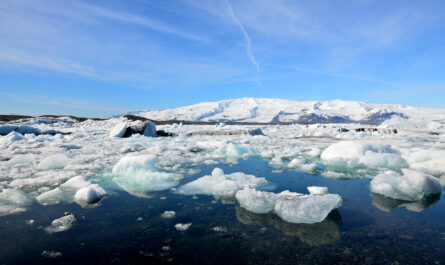
During warm periods, meltwater can gather in depressions and form supraglacial lakes.
These lakes are much darker than fresh snow.
Because darker water absorbs more solar radiation, the lake can warm and promote additional melting of the surrounding or underlying ice.
The process can develop like this:
Warming → surface melting → meltwater lakes form → darker water absorbs more sunlight → more energy reaches the ice → additional melting → lakes expand or deepen
Scientific research has identified this lake-albedo feedback as an important mechanism because supraglacial water lowers surface reflectivity and can enhance melting.
A recent study of a Greenland supraglacial lake found that the lake-albedo feedback could substantially increase modeled summer melt under the conditions studied.
This does not mean every meltwater lake behaves identically. Lake depth, drainage, snowfall, temperature, and local geography all matter.
But the broader principle remains important:
When bright ice is replaced by darker water, the surface can absorb more solar energy.
4. Meltwater Can Change the Glacier From the Inside
Meltwater does not always remain on the surface.
Water can travel into cracks, channels, and vertical shafts known as moulins.
Eventually, some of that water can reach the base of the glacier.
This can influence glacier movement.
In certain situations, water beneath the ice can reduce friction between the glacier and the bedrock, allowing parts of the ice to slide more easily.
The relationship between meltwater and glacier flow is complicated and varies by location and time. Increased water does not always produce a simple, permanent increase in glacier speed because drainage systems beneath glaciers can evolve.
However, meltwater can still play an important role in glacier dynamics.
The broader feedback can sometimes be described as:
More surface melting → more meltwater reaches the glacier system → changes in basal conditions and ice flow → increased delivery of ice toward lower, warmer areas or the ocean → further ice loss
Reviews of ice-sheet feedbacks describe how surface meltwater can move through moulins and influence conditions at the ice-sheet base.
The important lesson is that melting at the surface can affect processes far below the ice.
5. The Elevation Feedback: As Glaciers Shrink, They Move Into Warmer Air
This is one of the most powerful and often overlooked feedback loops affecting mountain glaciers.
Temperature generally decreases with elevation.
High mountains are colder than low valleys.
A glacier that occupies a high-altitude environment may therefore experience relatively cool conditions.
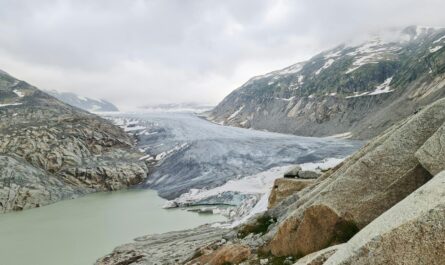
But as the glacier melts and becomes thinner, its surface lowers.
The remaining ice may then exist at a lower elevation.
Lower elevation usually means warmer air.
This creates a dangerous cycle:
Glacier melts → glacier surface lowers → ice enters warmer atmospheric conditions → melting increases → glacier lowers even further
Scientists refer to this type of interaction as a height–mass balance feedback.
It can be especially important for mountain glaciers because a reduction in ice thickness can expose the remaining glacier to increasingly warm conditions. Reviews of ice-sheet feedbacks describe how decreasing ice elevation can work together with albedo changes to reinforce melting over time.
This process can make glacier loss increasingly difficult to reverse.
The glacier is not only becoming smaller—it may also be losing the colder environment that helped preserve it.
6. The Snowline Feedback: Less Protective Snow, More Exposed Ice
Snow acts like a protective cover.
Fresh snow is bright and highly reflective.
It can delay the exposure of darker glacier ice beneath it.
When temperatures rise, the seasonal snowline can move upward.
This means a larger portion of the glacier may become exposed earlier in the year.
The result is a longer period during which darker ice absorbs solar radiation.
The feedback looks like this:
Warmer conditions → earlier snowmelt → larger area of exposed ice → more solar absorption → stronger melting → snowline rises further
Research examining Greenland’s melt-albedo processes has found that the timing and movement of snowlines are strongly influenced by temperature, affecting when darker ice becomes exposed.
This is particularly important because the timing of snow loss matters.
If bright snow disappears early in the summer, the glacier may spend many additional weeks absorbing strong sunlight.
7. The Firn Saturation Feedback: When the Glacier Loses Its Ability to Store Meltwater
Not all meltwater immediately runs off a glacier.
In many regions, a layer of compacted old snow called firn can absorb and refreeze some meltwater.
This acts as a temporary buffer.
But warming can change that system.
As more meltwater enters the firn, refreezing releases heat. Over time, the firn can become warmer and denser.
Its ability to absorb additional meltwater may decline.
Once this buffering capacity is reduced, more meltwater may remain on the surface or run off the glacier.
The sequence can become:
More melting → more meltwater enters the firn → firn structure and temperature change → reduced capacity to store future meltwater → more surface water and runoff → additional ice loss
Scientific reviews describe how refreezing can warm firn and progressively reduce its ability to buffer meltwater.
This is a hidden process because much of it happens within the upper layers of the glacier rather than being immediately visible from the surface.
8. Warm Oceans Can Attack Glaciers From Below
For glaciers that end in the ocean, melting does not happen only from above.
Warm ocean water can reach the submerged front or underside of a glacier.
This can cause undercutting.
As the ice melts below the waterline, the glacier front may become unstable.
Surface meltwater can also intensify this interaction.
When meltwater flows beneath a glacier and enters the ocean, it can rise because freshwater is less dense than salty seawater.
As it rises, it can draw warmer ocean water toward the glacier.
NASA describes this interaction as an important mechanism accelerating the retreat of some Greenland glaciers.
The feedback can work like this:
Warmer air → more surface meltwater → greater freshwater discharge beneath the glacier → warmer ocean water is drawn toward the ice → stronger melting and undercutting → glacier retreats
At the same time:
Warmer ocean temperatures → stronger submarine melting → weaker glacier front → increased instability and retreat
This creates a powerful connection between atmospheric warming, glacier meltwater, and ocean heat.
9. Retreat Can Expose Ice to New Forms of Instability
A glacier is supported by its surrounding landscape.
As it retreats, that relationship can change.
The glacier may lose contact with features that once helped stabilize it.
In some cases, retreat can move the ice into deeper water or terrain where further retreat becomes easier.
This does not happen to every glacier in the same way, but glacier geometry matters enormously.
A change in location can create a new set of physical conditions.
For example:
Initial retreat → glacier front enters a less stable position → faster ice loss → additional retreat
These threshold-like behaviors are especially important when studying large ice sheets and marine-terminating glaciers.
The key idea is that the landscape beneath the ice can influence how quickly retreat continues.
10. Ice Shelf Weakening and the Meltwater Fracture Feedback
Floating ice shelves play an important role in some polar regions.
They can slow the movement of glaciers and ice streams behind them.
However, surface melting can create lakes on top of an ice shelf.
If water enters cracks, its weight and pressure can force fractures deeper into the ice.
This process is known as hydrofracturing.
Scientific research has linked extensive surface meltwater to the weakening and collapse of vulnerable Antarctic ice shelves, including the role of meltwater-filled fractures in destabilizing ice.
The potential sequence is:
Warming → more surface melt → more lakes and water-filled fractures → deeper cracking → ice shelf weakening or collapse → reduced resistance to inland glacier flow
Once an ice shelf loses its ability to hold back inland ice, glaciers behind it may accelerate toward the ocean.
This shows how a process occurring on the surface can influence enormous amounts of ice farther inland.
11. Biological Darkening: When Life Contributes to Melt
One of the most surprising glacier feedbacks involves microscopic life.
Glacier surfaces are not always lifeless.
Certain microorganisms and algae can live in wet conditions on snow and ice.
Some of these biological processes contribute to surface darkening.
A darker surface absorbs more solar energy.
More melting can create additional wet conditions that may support biological activity.
The feedback can therefore resemble:
Warmer conditions → more meltwater → favorable wet surface conditions → increased biological darkening → lower reflectivity → more solar absorption → additional melting
Scientific reviews of ice-sheet interactions identify biological activity, including algae and cryoconite, as contributors to reduced ice reflectivity.
This feedback is particularly fascinating because it demonstrates that glacier melt is influenced not only by physics but also by biological processes.
Why Multiple Feedback Loops Are More Dangerous Together
The greatest concern is not any single feedback operating alone.
The real challenge is interaction.
Imagine a glacier experiencing several changes simultaneously:
- Air temperatures rise.
- Seasonal snow melts earlier.
- Darker ice becomes exposed.
- The surface absorbs more sunlight.
- Meltwater lakes form.
- The glacier thins and lowers into warmer air.
- Its ability to store meltwater decreases.
- More water runs through and beneath the glacier.
- If the glacier reaches the sea, warmer water attacks the ice from below.
Each process can strengthen another.
This creates a connected system rather than a single cause-and-effect chain.
That is why glacier science can be so challenging.
The future of a glacier depends not only on temperature but also on:
- Snowfall
- Surface darkness
- Elevation
- Meltwater drainage
- Ocean conditions
- Glacier geometry
- Local weather
- Biological activity
- The shape of the underlying landscape
Can These Feedback Loops Be Stopped?
Some feedback processes can weaken naturally under certain conditions.
For example, fresh snowfall can temporarily brighten a glacier surface and increase reflectivity.
Cold periods can reduce meltwater production.
Changes in drainage systems can alter the effects of water beneath a glacier.
However, continued warming increases the likelihood that several positive feedbacks will remain active for longer periods.
The most important long-term solution is reducing the underlying warming that initiates and strengthens many of these processes.
Protecting glaciers is not simply about preserving beautiful landscapes.
Glaciers influence:
- Global sea levels
- Freshwater supplies
- River systems
- Mountain ecosystems
- Agriculture
- Hydropower
- Coastal communities
The loss of glacier ice therefore affects far more than remote mountain regions.
Final Thoughts
Glacier melt is not always a simple story of warmer air turning ice into water.
Once melting begins, the glacier and its surroundings can change in ways that encourage additional ice loss.
Bright snow disappears and darker ice absorbs more sunlight.
Meltwater lakes form and absorb additional energy.
Glaciers become thinner and lower, placing their surfaces in warmer air.
Firn loses some of its ability to store meltwater.
Dark particles and biological activity can reduce reflectivity.
Meltwater and warmer oceans can destabilize glaciers from below.
These hidden feedback loops help explain why glacier change can sometimes accelerate.
The most important lesson is that glaciers are active parts of the Earth system. They respond to warming, but their response can also create new conditions that influence future melting.
Understanding these feedbacks gives us a clearer picture of why glacier loss is such a serious global issue.
A glacier does not simply shrink.
As it shrinks, it can change the very conditions controlling its survival.
And that is what makes the hidden feedback loops of glacier melt so important: the loss of ice can sometimes create the conditions for even faster loss in the future.