 by
by Glaciers are often imagined as enormous, permanent rivers of ice flowing slowly through mountain valleys and polar landscapes. Although their movement may be almost impossible to notice with the human eye, healthy glaciers are dynamic systems. Snow accumulates, ice forms, gravity pulls the glacier downhill, meltwater flows, and the glacier constantly interacts with the landscape around it.
But what happens when a glacier stops behaving like an active glacier?
The term “dead glacier” is sometimes used to describe ice that has become stagnant, detached from its main accumulation area, or no longer moves as an active glacier. A dead glacier is not literally dead in the biological sense. Ice is not alive. Instead, the term describes a glacier or section of glacier that has lost the ability to function as a self-sustaining, flowing body of ice.
A dead or stagnant glacier may still look impressive. It may contain thick ice, deep crevasses, meltwater streams, and snow-covered surfaces. However, beneath this appearance, the glacier may be undergoing a fundamental transformation.
Rather than continuously receiving enough new ice from higher elevations to maintain its movement, the stagnant ice may be slowly thinning, melting, breaking apart, and disappearing.
Understanding the idea of a dead glacier helps explain an important stage in the life cycle of ice landscapes. It also provides insight into how changing climate conditions can transform mountain environments, create new lakes, destabilize slopes, and reshape rivers and ecosystems.
A Glacier Is More Than a Large Block of Ice
To understand what makes a glacier “dead,” it is first important to understand what makes a glacier active.
A glacier is not simply frozen water sitting on a mountain.
A functioning glacier is part of a larger system.
In a healthy glacial environment, snow accumulates in an upper region known as the accumulation area. Over time, the weight of additional snowfall compresses older snow. The snow gradually changes into denser material called firn and eventually becomes glacial ice.
As enough ice accumulates, gravity causes it to deform and flow.
The glacier then transports ice from higher elevations toward lower areas.
At lower elevations, melting may occur. Ice can also be lost through processes such as evaporation, sublimation, or, in the case of glaciers that reach the sea or a lake, calving.
A glacier can therefore be thought of as a moving system with a supply of ice.
New ice is created or added in one part of the glacier, while ice is lost in another.
When this system becomes severely disrupted, the glacier may enter a state of stagnation.
What Does “Dead Glacier” Actually Mean?
The term dead glacier is generally an informal or descriptive expression rather than a strict category used in every scientific classification system.
It usually refers to glacier ice that has become stagnant.
Stagnant ice is ice that is no longer moving or is moving so slowly that it has effectively become disconnected from the active glacier system.
This can happen when the lower portion of a glacier becomes separated from the main ice supply.
Imagine a large glacier flowing downhill.
As the glacier retreats, the upper section may continue to move slowly because it is still connected to the accumulation zone.
However, a lower section may become isolated.
Once it no longer receives enough fresh ice from above, it may stop flowing as an active part of the glacier.
This isolated mass of ice can then become stagnant.
It may remain in the landscape for years, decades, or even longer, depending on its size and the local climate.
Eventually, it continues to melt and break apart.
This is often what people mean when they describe a glacier as “dead.”
How Does a Glacier Become Stagnant?
There are several processes that can contribute to glacier stagnation.
1. The Glacier Loses Its Connection to the Accumulation Zone
A glacier depends on a continuing supply of ice from higher elevations.
If the connection between the upper and lower sections weakens or disappears, the lower ice may become isolated.
Without a regular supply of new ice, the detached section begins to shrink.
It may eventually stop moving.
2. The Glacier Becomes Thinner
As temperatures rise or snowfall patterns change, a glacier may lose more ice than it gains.
Over time, the glacier becomes thinner.
Thinner ice may have less ability to flow effectively.
This can contribute to stagnation, particularly in the lower parts of a glacier.
3. The Glacier Retreats Rapidly
When a glacier retreats, its lower section may become fragmented.
Instead of one continuous body of flowing ice, the glacier may break into smaller sections.
Some of these remaining pieces may become stagnant.
4. The Glacier Surface Becomes Covered with Debris
In some mountain environments, rock and sediment can accumulate on glacier ice.
A thin layer of debris may sometimes increase melting by absorbing heat.
A thick layer can insulate the ice beneath it.
As a glacier thins and becomes increasingly covered with debris, its surface may become uneven and complicated.
This can contribute to the development of stagnant ice zones.
Dead Ice and Stagnant Ice: Are They the Same?
The terms dead ice and stagnant ice are often closely related.
Dead ice usually refers to a mass of glacier ice that has become detached from the active glacier.
It no longer receives a significant supply of ice from the glacier’s accumulation zone.
Because it is disconnected, it is no longer part of the main flowing ice system.
Stagnant ice refers more directly to the lack of movement.
In practice, a detached mass of dead ice is often stagnant.
However, the exact terminology may vary depending on the scientific context and the way researchers describe a particular glacier.
The important idea is that the ice is no longer behaving like a healthy, continuously replenished and flowing glacier.
Does a Dead Glacier Still Look Like a Glacier?
Yes.
This can make the situation confusing.
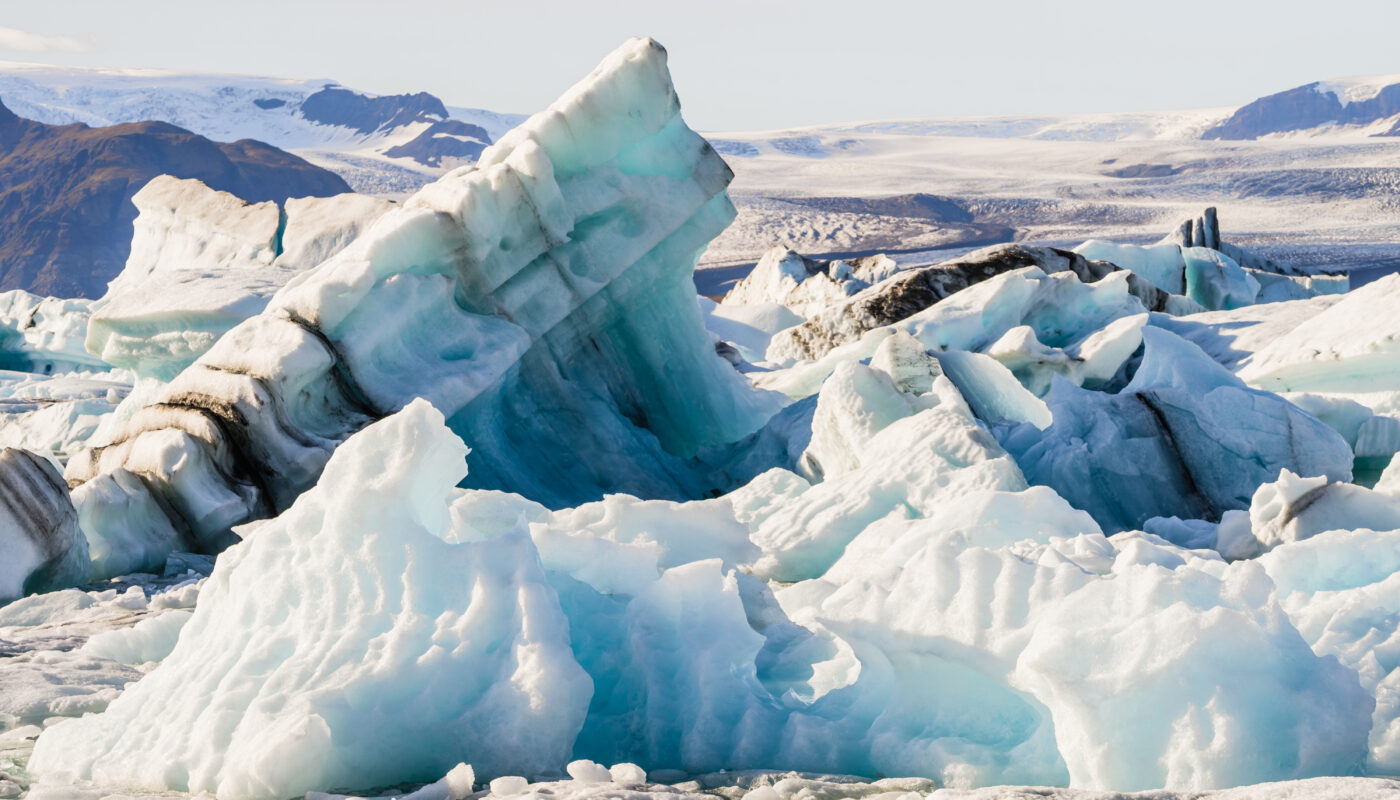
A dead glacier may still contain a large amount of ice.
From a distance, it may appear similar to an active glacier.
It may have:
- Snow-covered areas
- Crevasses
- Blue ice
- Meltwater streams
- Ice cliffs
- Moraines along its edges
However, appearances can be misleading.
The key difference is not simply how much ice remains.
The important question is whether the ice is still part of an active, connected glacial system.
A large body of stagnant ice may remain after the main glacier has retreated.
Eventually, that ice can become increasingly fragmented.
What once looked like a continuous glacier may transform into isolated ice masses separated by rock, water, or vegetation.
What Happens After a Glacier Dies?
The disappearance of an active glacier does not mean the landscape suddenly becomes empty.
Instead, the region begins a new stage of transformation.
The Ice Continues to Melt
Even after movement stops, stagnant ice can remain for a long time.
It continues to melt from the surface and edges.
Meltwater may form streams and ponds.
Lakes Can Form
As stagnant ice melts, depressions can develop in the landscape.
These depressions may fill with water.
In some cases, melting dead ice can contribute to the formation of small lakes and ponds.
If large amounts of ice are buried beneath sediment, the surface may collapse as the ice disappears.
This can create irregular depressions known as kettle holes or kettle lakes when filled with water.
Rivers May Change Their Course
Glaciers influence the flow of water.
As ice retreats or stagnant ice melts, rivers can reorganize.
New channels may develop, while older ones may disappear.
Vegetation Begins to Colonize the Area
Once ice retreats, newly exposed ground becomes available for plants.
The first colonizing organisms may include mosses, lichens, and hardy plants.
Over time, more complex ecosystems can develop.
This process is known as ecological succession.
The transformation can continue for decades or centuries.
A landscape that was once entirely dominated by ice can gradually become a valley containing rivers, lakes, grasses, shrubs, and forests.
How Dead Ice Can Create Kettle Lakes
One of the most interesting effects of stagnant glacier ice is the creation of kettle landscapes.
Imagine a large block of glacier ice becoming detached from the main glacier.
The glacier may deposit sediment around or over the ice.
The ice then remains buried.
Over time, the climate becomes warmer and the buried ice melts.
As the ice disappears, the ground above it collapses.
This creates a depression.
If the depression fills with water, it becomes a kettle lake.
Kettle lakes are therefore connected to the final stages of glacial retreat.
They are geological reminders that ice once existed beneath the surface.
A modern landscape may contain lakes, wetlands, or irregular depressions without an obvious glacier nearby.
Yet those features may have originated from dead ice left behind thousands of years earlier.
Why Dead Glaciers Can Be Dangerous
A stagnant or dying glacier can create certain hazards.
As the ice melts, the landscape can become unstable.
Unstable Ice
Dead ice may contain hidden cracks, weak surfaces, or thin layers that cannot support a person’s weight.
Walking on an unmonitored glacier can therefore be dangerous.
Glacier-Related Lakes
Meltwater can accumulate near or beneath ice.
In some locations, sudden releases of water can create flooding hazards.
Unstable Slopes
When a glacier retreats, it can remove physical support from nearby rock and sediment.
Slopes that were once stabilized or supported by ice may become unstable.
This can increase the possibility of rockfalls or landslides in certain environments.
Changing Rivers
As meltwater routes change, rivers may suddenly shift or increase in volume.
This is particularly important in areas with rapidly changing glacier conditions.
For these reasons, visitors should never assume that a shrinking or stagnant glacier is safe simply because it appears less active.
A glacier can be dangerous even when it is dying.
Can a “Dead” Glacier Come Back to Life?
This is a more complicated question.
If a glacier has truly become detached from its accumulation area and has stopped functioning as an active glacier, it cannot simply restart without a major change in conditions.
For a glacier to grow and become active again, it would need a sustained period in which it gained more snow and ice than it lost.
The accumulation area would need to rebuild.
Ice would need to become thick enough to flow.
In some situations, glaciers can advance again after periods of retreat.
Glaciers naturally respond to changes in snowfall and temperature, although these responses can take years or decades.
However, an isolated block of dead ice is different.
Once it has become completely disconnected from the glacier’s source of new ice, it generally continues melting until it disappears.
A glacier can recover from temporary retreat under favorable conditions.
But dead ice that has been separated from the active system has no natural supply of new ice flowing into it.
Are Dead Glaciers Caused Only by Climate Change?
No.
Glaciers naturally advance and retreat in response to changing environmental conditions.
Throughout Earth’s history, glaciers have expanded and shrunk.
A glacier can stagnate because of local conditions, changes in ice flow, variations in snowfall, or changes in the surrounding landscape.
However, modern climate warming is an important factor affecting glaciers in many regions.
When temperatures increase over long periods, glaciers may experience greater melting.
If snowfall does not compensate for these losses, the glacier loses mass.
Continued mass loss can lead to thinning and retreat.
As glaciers retreat, portions of the ice may become disconnected and stagnant.
Therefore, climate change is not the only possible cause of glacier stagnation, but it can contribute significantly to conditions that increase glacier loss.
How Can Scientists Tell Whether a Glacier Is Dying?
Scientists study glaciers using a variety of methods.
They may measure:
- Glacier length
- Ice thickness
- Surface elevation
- Ice movement
- Snow accumulation
- Melting rates
- Changes in glacier area
Satellite images can reveal how a glacier changes over time.
Researchers can compare photographs taken years or decades apart.
GPS equipment and other instruments can measure movement.
If a glacier is thinning, retreating, and slowing down, scientists may investigate whether parts of the glacier are becoming stagnant.
The loss of connection between different sections of the ice can also provide important information.
A glacier does not suddenly change from healthy to dead overnight.
The process is usually gradual.
Scientists study these changes to understand how glaciers respond to environmental conditions and what may happen in the future.
Dead Glaciers and the Changing Landscape
When people hear that a glacier is disappearing, they often focus only on the loss of ice.
However, the consequences extend far beyond the glacier itself.
A shrinking or dead glacier can change:
- Water availability
- River systems
- Lake formation
- Sediment movement
- Mountain ecosystems
- Tourism
- Natural hazards
Communities and ecosystems downstream may depend on seasonal meltwater.
Changes in glacier behavior can therefore influence environments far beyond the ice itself.
A glacier is part of a much larger system.
When that system changes, the landscape around it changes as well.
Why the Term “Dead Glacier” Is So Powerful
The phrase “dead glacier” creates a strong emotional image.
It makes people imagine that a glacier has reached the end of its existence.
Scientifically, however, it is useful to remember that glaciers are not living organisms.
They do not literally live or die.
The term is a convenient way of describing ice that has become inactive, stagnant, or disconnected from the main glacier.
In scientific discussions, more precise terms such as stagnant ice, dead ice, detached glacier ice, or glacier stagnation may provide a clearer explanation of what is actually happening.
Still, the expression “dead glacier” can help the public understand an important concept.
A glacier can remain visible while losing the characteristics that made it an active glacier.
It may still be ice.
It may still look impressive.
But it may no longer be moving, growing, or receiving enough new ice to survive over the long term.
Final Thoughts
A “dead glacier” is not a glacier that has suddenly vanished.
Instead, the term generally describes glacier ice that has become stagnant, inactive, or disconnected from the main supply of new ice.
A healthy glacier is a dynamic system. Snow accumulates at higher elevations, ice forms, gravity drives the glacier forward, and the glacier continuously interacts with the surrounding landscape.
When that connection and movement begin to break down, parts of the glacier may become stagnant.
These isolated sections of dead ice can remain for years or decades. During that time, they continue melting, thinning, fragmenting, and changing the landscape around them.
The disappearance of stagnant ice can create lakes, alter rivers, produce kettle holes, expose new land, and allow ecosystems to begin developing.
A dead glacier therefore represents more than the end of an ice mass.
It marks the beginning of a new stage in landscape evolution.
The valleys, lakes, rivers, and ecosystems left behind may continue changing long after the ice has disappeared.
Understanding dead glaciers also reminds us that glaciers are dynamic features rather than permanent objects. They respond to snowfall, temperature, ice flow, and changing environmental conditions.
When we see a glacier, we are not simply looking at frozen water.
We are looking at a moving—or sometimes no longer moving—part of Earth’s constantly changing landscape.
Whether active, retreating, stagnant, or reduced to isolated pieces of dead ice, glaciers leave a powerful mark on the world around them.
And even after a glacier stops flowing, its influence on the landscape can continue for generations.