 by
The Caucasus Mountains are among the most dramatic mountain systems on Earth. Stretching between the Black Sea and the Caspian Sea, this vast region forms a natural bridge between Europe and Asia and contains some of the highest and most heavily glaciated mountains outside the polar regions.
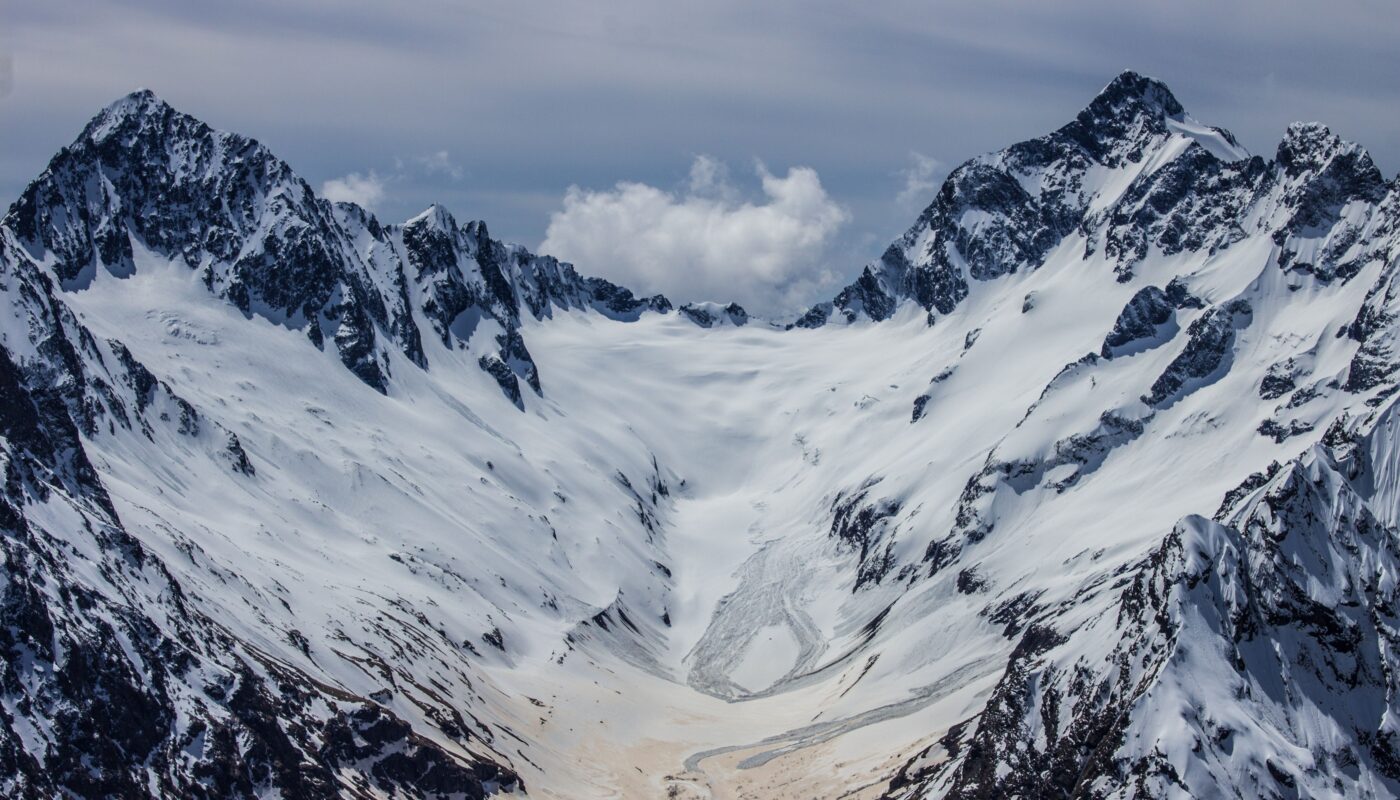
Snow-covered summits, deep valleys, steep rock walls, and ancient glaciers define much of the high Caucasus landscape. These glaciers have shaped rivers, carved valleys, influenced ecosystems, and supported communities for centuries.
Yet the glaciers of the Caucasus are changing rapidly.
Many have been shrinking as temperatures rise, and scientific research shows that glacier loss across the Greater Caucasus has accelerated in recent decades. A modern high-resolution glacier inventory published in 2026 identified 2,341 glaciers covering approximately 964 square kilometers across the Greater Caucasus and reported accelerating glacier-area loss since 2014.
The story of the Caucasus glaciers is therefore both ancient and modern.
It is a story about powerful natural forces that created some of the world’s most spectacular landscapes—but also about a changing climate that is transforming those landscapes faster than many people realize.
Where Are the Caucasus Mountains?
The Caucasus Mountains lie between two major bodies of water:
- The Black Sea to the west
- The Caspian Sea to the east
The mountain system is usually divided into two major sections:
The Greater Caucasus
The Greater Caucasus is the higher and more heavily glaciated part of the mountain system. It stretches for roughly 1,300 kilometers from northwest to southeast and contains the region’s tallest peaks.
This is where most of the Caucasus glaciers are found.
The Greater Caucasus extends across or near territories associated with Russia, Georgia, Azerbaijan, and surrounding parts of the region.
The Lesser Caucasus
The Lesser Caucasus lies farther south and generally has lower elevations.
Because it is less elevated, it contains far fewer significant modern glaciers.
For this reason, when scientists and travelers discuss the glaciers of the Caucasus, they are usually referring mainly to glaciers in the Greater Caucasus.
Why Does the Caucasus Have So Many Glaciers?
Glaciers require a combination of cold temperatures and sufficient snowfall.
The Caucasus Mountains provide both in their highest regions.
During winter, large amounts of snow can accumulate at high elevations. In places where summer temperatures are cool enough, not all of that snow melts.
Over many years, snow builds up.
The lower layers become compressed under the weight of newer snowfall.
Eventually, the snow transforms into dense glacial ice.
Gravity then causes the ice to move downhill.
This process creates glaciers.
The highest and wettest parts of the Caucasus are therefore particularly suitable for glacier formation.
Most of the glacier area is concentrated at high elevations, with a major portion historically occurring between approximately 3,000 and 4,000 meters above sea level.
Mount Elbrus: The Most Famous Glaciated Mountain
No discussion of the Caucasus glaciers would be complete without mentioning Mount Elbrus.
At 5,642 meters, Elbrus is the highest mountain in the Caucasus and is widely recognized as the highest peak in Europe under the commonly used geographic definition that places the Greater Caucasus within Europe.
Its enormous volcanic massif supports extensive ice and snow.
Glaciers descend from the mountain’s upper slopes in several directions.
Elbrus has become internationally famous for mountaineering.
Thousands of climbers attempt its summit, attracted by the combination of high altitude and relatively accessible climbing routes.
However, Elbrus is more than a mountaineering destination.
Its glaciers are important sources of meltwater and an important part of the wider Caucasus cryosphere.
The mountain also demonstrates how altitude can help glaciers survive.
Even as lower glaciers retreat, the highest elevations remain cold enough to preserve significant amounts of snow and ice.
Mount Kazbek and Georgia’s Glacial Landscapes
Another iconic Caucasus peak is Mount Kazbek, located near the border between Georgia and Russia.
Kazbek rises dramatically above the surrounding landscape and is associated with one of Georgia’s most famous glacier regions.
Georgia contains many important Caucasus glaciers, particularly along the southern slopes of the Greater Caucasus.
Notable glaciers in Georgia include:
- Gergeti Glacier
- Devdoraki Glacier
- Chalaati Glacier
- Adishi Glacier
- Lekhziri Glacier
- Tsaneri Glacier
- Tviberi Glacier
Glacier distribution varies significantly across Georgia.
Western parts of the country generally receive more precipitation, helping support more extensive glaciation.
Farther east, conditions become increasingly continental and generally drier, reducing the ability of glaciers to survive at lower elevations.
This west-to-east contrast is one of the defining characteristics of Caucasus glaciation.
The Great Glaciers of Svaneti
The Svaneti region of northwestern Georgia is famous for its dramatic mountain scenery and historic villages.
It is also one of the most important glacier regions in the southern Caucasus.
Towering peaks surround deep valleys, while glaciers descend from some of the highest mountains.
The region includes several well-known glaciers, including the Chalaati Glacier near Mestia.
Chalaati is particularly notable because it is relatively accessible compared with many other high mountain glaciers.
Travelers can hike toward viewpoints that reveal the glacier and surrounding peaks.
Svaneti demonstrates the close relationship between glaciers and human settlement.
Mountain communities developed in valleys shaped by ancient and modern ice.
Today, glaciers remain part of the visual identity and tourism appeal of the region.
However, retreating ice is changing the scenery.
Areas once dominated by glaciers are gradually being replaced by exposed rock, streams, vegetation, and newly developing landscapes.
What Types of Glaciers Exist in the Caucasus?
The Caucasus contains several forms of mountain glaciers.
Valley Glaciers
These are glaciers that flow through mountain valleys.
They can be relatively large and may extend for several kilometers.
Their movement helps carve broad, steep-sided valleys.
Cirque Glaciers
Cirque glaciers occupy bowl-shaped depressions high in mountain areas.
These basins are often surrounded by steep rock walls.
Hanging Glaciers
These glaciers cling to steep mountain slopes above valleys.
They can appear to hang from the sides of mountains.
Debris-Covered Glaciers
Some glaciers are partially covered by rock and sediment.
This material can influence melting.
A thin layer of debris may absorb heat and increase melting, while a thick layer can sometimes insulate the underlying ice.
The expansion of debris cover has been observed on some Caucasus glaciers as they retreat.
How Caucasus Glaciers Shaped the Landscape
The Caucasus would look completely different without glaciers.
Over thousands of years, moving ice has transformed the mountains.
Glaciers have:
- Deepened valleys
- Carved cirques
- Transported huge rocks
- Created moraines
- Shaped mountain slopes
- Influenced river systems
A glacier acts like an enormous natural machine.
As it moves, rock fragments frozen into the ice scrape against the ground beneath.
The glacier can also pull blocks of rock away from mountain walls.
Over long periods, these processes reshape entire valleys.
When glaciers retreat, they leave behind evidence of their former positions.
Moraines—ridges of rock and sediment—can mark where the glacier once stood.
These features allow scientists to reconstruct the history of glacier expansion and retreat.
The Caucasus Glacier Inventory: A Changing Picture
Scientists have spent decades mapping the glaciers of the Greater Caucasus.
A major regional inventory compared glacier conditions in 1960, 1986, and 2014.
The results revealed a substantial decline.
In 1960, the Greater Caucasus contained approximately 2,349 glaciers covering around 1,675 square kilometers.
By 1986, glacier area had fallen to about 1,482 square kilometers.
By 2014, it had declined further to approximately 1,193 square kilometers.
This represented a major long-term loss of glacier area.
The research also showed that the rate of glacier loss increased during the later period.
The glaciers were not simply changing—they were shrinking faster.
More recent research has reinforced this concern.
A 2026 high-resolution inventory found that the Greater Caucasus contained 2,341 glaciers covering about 964 square kilometers and reported glacier-area loss rates exceeding 1.8% per year since 2014.
Different inventories use different methods and resolutions, so their totals should not be compared casually as if they were identical measurements. However, together they clearly show a long-term pattern of substantial and accelerating ice loss.
Why Are the Caucasus Glaciers Shrinking?
The primary reason is an imbalance between snow accumulation and ice loss.
A healthy glacier depends on receiving enough snow during colder months to replace the ice lost during warmer periods.
When summer melting becomes stronger and snowfall is insufficient to compensate, the glacier loses mass.
Several factors contribute to glacier retreat.
Rising Temperatures
Warmer temperatures increase the amount of ice that melts during the summer.
Research examining climate influences on Greater Caucasus glacier recession found significant summer warming across the region.
Changes in Snowfall
Glaciers depend on snowfall.
If winter precipitation falls as rain rather than snow, or if total snowfall decreases, less new ice is added to the glacier.
Longer Melting Seasons
A warmer climate can extend the period during which glaciers lose ice.
Lower Elevation
Glaciers at lower elevations are generally exposed to warmer conditions and can be particularly vulnerable.
Glacier Size
Small glaciers often have limited high-altitude accumulation areas and may struggle to survive sustained warming.
Are All Caucasus Glaciers Retreating?
Most glaciers in the region have shown retreat, but glacier behavior is not identical everywhere.
The 2018 Greater Caucasus glacier inventory found that 29 of 30 sampled glaciers retreated between 1986 and 2014, while one showed an advance during that period.
Earlier studies also found that a small minority of glaciers could remain stable or temporarily advance.
This is an important reminder that glaciers respond to local conditions.
A glacier’s behavior depends on:
- Altitude
- Snowfall
- Temperature
- Slope direction
- Debris cover
- Ice dynamics
- Local geography
Therefore, the fact that one glacier advances temporarily does not contradict the broader regional trend of glacier loss.
The overall pattern across the Caucasus remains one of substantial shrinkage.
Eastern Caucasus Glaciers Are Especially Vulnerable
The Caucasus is not climatically uniform.
Western regions generally receive more moisture.
Eastern areas are often drier and more continental.
This difference affects glaciers.
The Greater Caucasus inventory found that glaciers in the eastern section experienced the highest relative glacier-area loss between 1960 and 2014.
Smaller glaciers in drier regions may be especially vulnerable because they have less snowfall available to replace melting ice.
If warming continues, many small glaciers could eventually disappear.
This would transform the appearance of high mountain landscapes.
Glaciers and Water Resources
Caucasus glaciers are important because they store water.
During warmer periods, melting ice contributes to rivers and streams.
This water can support:
- Ecosystems
- Agriculture
- Communities
- Hydropower
- Downstream river systems
Glaciers act as natural reservoirs.
They store precipitation as ice and release water gradually through melting.
However, glacier loss creates a complicated situation.
At first, increased melting may temporarily produce more water.
But as glaciers become smaller, the long-term amount of ice available to melt decreases.
Eventually, river systems may experience changes in seasonal flow.
This is one reason glacier loss is not simply a problem for mountaineers or scientists.
It can affect people living far downstream.
UNESCO emphasizes that glacier loss can disrupt water systems and create major consequences for communities and ecosystems.
Glacial Lakes and Natural Hazards
As glaciers retreat, they can leave behind depressions that fill with water.
These new lakes are called glacial lakes.
Some glacial lakes are harmless.
Others can become dangerous if they are held back by unstable ice or loose sediment.
A sudden release of water can produce a glacial lake outburst flood, sometimes called a GLOF.
These floods can travel rapidly through mountain valleys.
They may threaten:
- Villages
- Roads
- Bridges
- Hydropower facilities
- Farmland
Scientific research on the Greater Caucasus has linked glacier retreat with the expansion of proglacial lakes and increased concerns about glacier-related hazards and debris flows.
As the climate continues to warm, monitoring these changing mountain environments becomes increasingly important.
Debris-Covered Glaciers: Ice Hidden Under Rock
Not all glacier ice is bright white.
In the Caucasus, some glaciers are increasingly covered with rocks and sediment.
This material comes from surrounding mountains.
As glaciers thin and retreat, more rock can fall onto their surfaces.
Debris changes how the glacier interacts with heat.
A very thin debris layer can sometimes increase melting by absorbing solar energy.
A thicker layer can act as insulation.
This makes debris-covered glaciers difficult to study visually.
From a distance, a heavily debris-covered glacier may look like an ordinary rocky valley.
Scientists therefore increasingly rely on satellite imagery, aerial surveys, field observations, and high-resolution mapping techniques to identify glacier boundaries accurately.
Mountaineering and Caucasus Glaciers
The glaciers of the Caucasus have long attracted climbers.
Mount Elbrus and Mount Kazbek are internationally famous.
But many other peaks offer serious mountaineering challenges.
Glacier travel introduces additional dangers, including:
- Crevasses
- Avalanches
- Falling ice
- Sudden weather changes
- Rockfall
- Altitude sickness
A glacier that looks smooth from a distance may contain deep hidden cracks.
Fresh snow can cover dangerous crevasses.
For this reason, independent glacier travel requires specialized knowledge and equipment.
In many areas, traveling with experienced guides is the safest option.
Climate change can also alter mountaineering conditions.
Melting ice may expose unstable rock, increase rockfall, and change traditional climbing routes.
Tourism and the Beauty of the Caucasus Glaciers
Glaciers are a major attraction for mountain tourism.
Visitors come to the Caucasus for:
- Hiking
- Photography
- Mountaineering
- Ski touring
- Cultural tourism
- Scenic road trips
Georgia’s mountain regions, particularly Kazbegi and Svaneti, have become increasingly popular with international travelers.
The glaciers add a dramatic visual dimension to these destinations.
Yet tourism creates a difficult question.
People want to see glaciers before they change further.
At the same time, increased tourism can place pressure on fragile mountain environments.
Responsible travel is therefore essential.
Visitors should:
- Stay on safe routes
- Respect local communities
- Avoid littering
- Follow guide instructions
- Avoid damaging vegetation
- Respect protected areas
The goal should be to experience the glaciers without adding unnecessary pressure to the landscapes around them.
Scientists Are Watching the Caucasus From Space
Modern glacier research increasingly depends on satellites.
Scientists can compare images taken years or decades apart to measure changes in glacier area.
Satellite technology can reveal:
- Retreating glacier fronts
- Surface lowering
- New glacial lakes
- Changes in snow cover
- Expansion of debris-covered areas
A recent 2026 study used high-resolution satellite imagery to create a detailed inventory of glaciers across the Greater Caucasus. The researchers emphasized that higher-resolution imagery improves the detection of small and debris-covered glaciers, helping reduce uncertainty in regional glacier measurements.
Other recent work has used ICESat-2 satellite laser measurements to study glacier elevation change and mass balance in the Central Caucasus through 2024.
These technologies are helping scientists understand glacier change with greater precision than ever before.
What Will Happen to Caucasus Glaciers in the Future?
The future depends largely on climate conditions.
If temperatures continue rising, glaciers will face continued pressure.
Small and low-elevation glaciers are particularly vulnerable.
Some may disappear completely.
Larger glaciers at high elevations may survive longer, but even they can lose substantial amounts of ice.
The disappearance of glaciers would transform the Caucasus landscape.
Valleys would change.
New lakes could form.
River systems could experience altered seasonal flows.
Tourism patterns could change.
Mountain hazards could increase in some areas.
The Caucasus may remain spectacular, but it may not look the same.
Why the Caucasus Glaciers Matter Globally
The Caucasus glaciers are important for more than regional geography.
They are part of a worldwide pattern of mountain glacier change.
From the Alps and Andes to the Himalayas and Alaska, glaciers are responding to a warming climate.
UNESCO describes glaciers as important indicators of climate change and emphasizes their role in water resources and ecosystem stability.
The Caucasus provides a particularly valuable case study because the region contains:
- Large mountain glaciers
- Major river systems
- Diverse climates
- High biodiversity
- Mountain communities
- Important tourism destinations
Studying glacier change here can help scientists understand how mountain environments respond to long-term climate shifts.
Final Thoughts
The glaciers of the Caucasus Mountains are among the region’s greatest natural treasures.
They have shaped valleys, created spectacular landscapes, supplied water to rivers, and helped define the identity of famous mountain regions such as Svaneti, Kazbegi, and Mount Elbrus.
For thousands of years, these glaciers have been powerful forces of nature.
But today, they are also symbols of rapid environmental change.
Scientific inventories show that glacier area across the Greater Caucasus has declined substantially over recent decades, while newer research indicates that the pace of loss has intensified in recent years.
This does not mean every glacier will disappear immediately.
Some high-altitude glaciers may survive for a long time, and individual glaciers can respond differently to local conditions.
However, the overall direction is clear.
The Caucasus is losing ice.
As glaciers retreat, the consequences will extend beyond the mountains themselves.
Water systems may change. New glacial lakes may form. Natural hazards may develop. Tourism landscapes may be transformed, and communities downstream may need to adapt.
The glaciers of the Caucasus are therefore not simply frozen attractions for photographers and climbers.
They are living parts of a complex mountain system.
They connect snow-covered peaks with rivers, valleys, forests, farms, towns, and people.
Their future will help shape the future of the Caucasus itself.